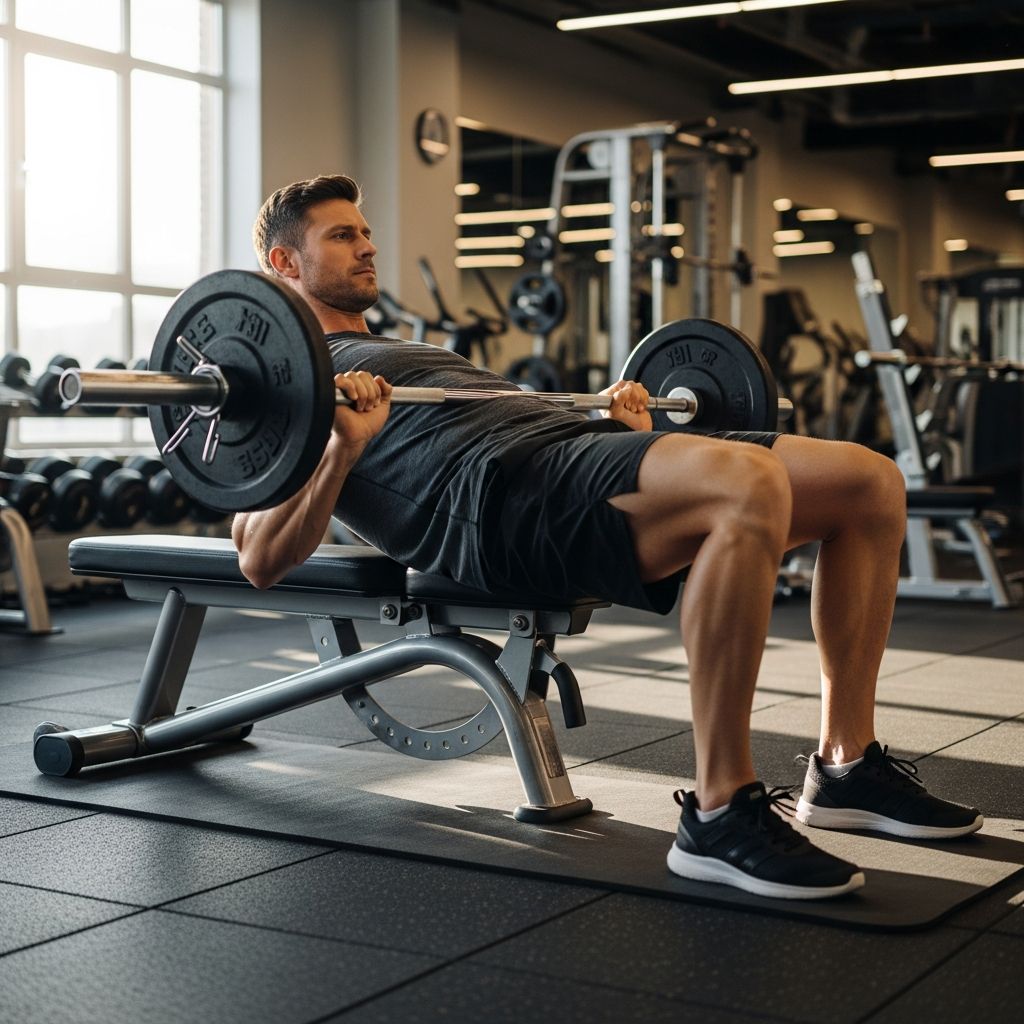
At some point between sleepless newborn nights, endless snack refills, and late-night streaming, many dads notice the same two things in the mirror: the belly is creeping forward, and the butt seems to have disappeared. That soft, flattened backside is more than a cosmetic issue; it is often a sign that the glutes have checked out of daily movement, leaving your back, knees, and hips to do all the work.
The good news is that you do not need a gym membership, fancy equipment, or huge blocks of free time to fix this. What you do need is a clear plan, a handful of smart exercises, and the willingness to train consistently for 15–25 minutes a few times per week. This guide shows you how to bring your glutes back online, support your spine, and trade the “dad bod slump” for a stronger, more athletic shape.
Why Dads Need Strong Glutes More Than Ever
Glutes are the largest and most powerful muscles in the lower body, but modern dad life often shuts them down. Hours at a desk, driving, and slouching on the couch mean the hips rarely move through their full range, and the glutes slowly lose strength and coordination.
- Posture and pain protection: Strong glutes stabilize the pelvis and lower back, reducing strain that often shows up as lower back tightness or hip discomfort after long days.
- Everyday performance: Lifting a car seat, hauling a stroller upstairs, or sprinting after a toddler all depend on powerful hip extension, which is exactly what the glutes are built to do.
- Metabolism and appearance: Muscle tissue is metabolically active; building the glutes helps burn more calories at rest and can visually balance the waistline by adding shape to the backside and improving overall proportions.
Signs Your Glutes Have Gone On Vacation
You do not need a lab test to know your glutes are underperforming. Several everyday signals suggest your hips are not pulling their weight.
- You feel leg or back fatigue before you feel any work in your butt during squats or stairs.
- Your knees cave inward when you stand up, lunge, or climb steps.
- You lean heavily on one side when holding your child, often arching your lower back to compensate.
- From the side, your posture shows a forward-tilting pelvis (belt line slants down in front) and a “sway” in your lower back.
If one or more of these sound familiar, it is time to deliberately wake up and train your glutes instead of relying on random movements throughout the day.
Glute Training Principles for Busy Fathers
Before diving into specific moves, it helps to set a few realistic rules. Most dads are not looking to become bodybuilders; they simply want to move better, look better in jeans, and feel less beat up after a long week.
- Short, focused sessions: Aim for 15–25 minutes, 2–4 times per week. Intensity and consistency matter more than marathon workouts.
- Quality over quantity: Slow reps, controlled positions, and full range of motion beat fast, sloppy sets every time.
- Minimal equipment: You can build impressive glute strength with body weight, a single dumbbell or kettlebell, and a sturdy bench or couch.
- Progressive overload: Gradually increase difficulty by adding reps, sets, tempo control, or resistance week by week rather than jumping to advanced moves overnight.
Key Glute Movements Every Dad Should Master
Instead of memorizing a long list of exercises, focus on mastering a few movement patterns that hit the glutes from different angles. Each category below includes at least one beginner-friendly move and one progression.
| Movement Pattern | Primary Focus | Beginner Option | Progression Option |
|---|---|---|---|
| Hip hinge | Glute and hamstring strength | Bodyweight good morning | Dumbbell or kettlebell deadlift |
| Bridge / thrust | Direct glute contraction | Floor glute bridge | Single-leg hip thrust on bench |
| Split stance / lunge | Glute stability, balance | Short-range split squat | Rear-foot elevated split squat |
| Lateral movement | Glute medius (side butt) | Side-lying clamshell | Band lateral walk |
Exercise Breakdown: The Core Dad Glute Routine
Use the following exercises as the backbone of your routine. Start with the beginner options; progress when sets feel challenging but controlled and your form stays sharp.
1. Floor Glute Bridge
This is the simplest way to relearn how to squeeze the glutes without overusing the lower back. It is safe, joint-friendly, and easy to perform at home.
- Setup: Lie on your back with knees bent, feet flat and hip-width apart, arms by your sides, and head relaxed.
- Movement: Press your heels into the floor, squeeze your butt, and lift your hips until your body forms a straight line from shoulders to knees. Pause briefly, then lower slowly.
- Coaching cues: Think about driving the floor away with your heels and shortening the distance between your glutes and the back of your thighs.
- Target: 3 sets of 10–15 controlled reps.
2. Bodyweight Hip Hinge (Good Morning)
The hip hinge teaches you to bend from the hips instead of rounding through the spine, a vital skill for lifting kids, groceries, or anything heavy off the ground without wrecking your back.
- Setup: Stand tall with feet about hip-width apart and hands crossed on your chest or placed at the hips.
- Movement: Push your hips straight back as if closing a car door with your butt, keeping a slight bend in the knees and your chest proud. Stop when you feel a stretch in your hamstrings, then drive the hips forward to stand up.
- Coaching cues: Keep the weight in the middle of your feet, and imagine your torso as a plank hinging from your hips, not your lower spine.
- Target: 3 sets of 8–12 reps.
3. Split Squat
The split squat builds single-leg strength, balance, and hip stability—essential when you are carrying a child on one side or climbing stairs with uneven loads.
- Setup: Stand in a staggered stance with one foot forward and the other behind you, both pointing forward, hip-width apart side to side.
- Movement: Drop your back knee toward the floor by bending both knees, keeping most of your weight on the front heel. Push through the front foot to stand back up.
- Coaching cues: Visualize sitting down between your feet, not lunging forward. Your front knee should track roughly over the middle of your foot, not collapsing inward.
- Target: 2–3 sets of 8–10 reps per leg.
4. Side-Lying Clamshell
This small, precise move wakes up the side glutes that help keep your knees aligned and your hips stable when you walk, run, or carry loads.
- Setup: Lie on your side with knees bent and stacked, hips slightly bent, and feet together. Rest your head on your lower arm.
- Movement: Keeping your feet touching, open your top knee like a clamshell without letting your hips roll backward, then lower with control.
- Coaching cues: Think about rotating the thigh bone rather than simply lifting the knee, and keep your waist gently braced so your torso does not rock.
- Target: 2–3 sets of 12–15 reps per side.
Turning Moves Into a Time-Efficient Dad Workout
Once you understand the basic movements, the next step is to organize them into a routine that fits into busy evenings and early mornings. The sample below is only a template; adjust reps and rest periods according to your fitness level.
Sample 20-Minute Home Glute Workout
Perform this circuit 2–3 times per week, leaving at least one rest day in between sessions. Rest 45–60 seconds between exercises and 1–2 minutes between rounds.
- 1. Glute bridges: 12–15 reps
- 2. Bodyweight hip hinges: 10–12 reps
- 3. Split squats: 8–10 reps per side
- 4. Clamshells: 12–15 reps per side
- 5. Optional finisher: 30–45 seconds of fast step-ups on a low step or stairs
As this becomes easier, you can increase the difficulty by holding a dumbbell during the hip hinge and split squat, pausing for 2 seconds at the top of each bridge, or adding an extra circuit round.
Progressions: From Flat to Powerful
Glutes respond best when you gradually ask them to do more. Muscles grow and strengthen in response to challenge, not comfort. Once the basic routine feels manageable, choose one or two progressions at a time.
- Elevated hip thrusts: Place your upper back on a sturdy couch or bench, feet on the floor, and perform hip thrusts with or without weight across your hips.
- Single-leg bridges: Lift one foot off the floor and perform the bridge with the other leg, keeping hips level and resisting rotation.
- Rear-foot elevated split squats: Put your back foot on a low bench or step to increase the range of motion and demand on the front glute.
- Loaded hinges: Hold a dumbbell or kettlebell close to your body while performing hip hinges, focusing on driving the hips forward strongly at the top.
- Band lateral walks: Loop a light resistance band around your ankles or above the knees and take slow, controlled side steps to light up the outer glutes.
Weekly Plan: Fitting Glute Work Into Real Dad Life
A plan that ignores fatigue, family obligations, and work stress will not last. A realistic schedule respects your workload and still nudges your body toward progress.
| Day | Focus | Suggested Work |
|---|---|---|
| Monday | Glute strength | 20-minute core glute circuit |
| Wednesday | Glutes + cardio | Short glute circuit + 10–15 min brisk walk |
| Friday | Glute strength | Core circuit with 1–2 progressions |
| Weekend | Active play | Walking, hiking, park time, or sports with kids |
If three formal sessions feel like too much at first, start with two and treat active play with your kids as bonus movement. Over time, you can add more structure as your body adapts and your energy improves.
Form Tips to Protect Joints and Maximize Glute Activation
Proper technique not only keeps your joints safe, it also ensures the work reaches the muscles you want to train. A few simple cues can transform how effective these exercises feel.
- Neutral spine: Keep your ribcage stacked over your pelvis and avoid aggressively arching or rounding the lower back, especially at the top of bridges and hip hinges.
- Heel drive: In most glute moves, focus on pushing through the heels or mid-foot rather than the toes, which encourages more glute activation and less strain on the knees.
- Knee alignment: Track knees in line with the second and third toes during squats and lunges; resist the tendency for them to collapse inward.
- Controlled tempo: Lower into each movement slowly, pause briefly, and then drive up with intent instead of bouncing or rushing through reps.
Beyond Aesthetics: Health Benefits of Strong Glutes
While a firmer butt and better-fitting jeans can be motivating, the deeper benefits of glute training reach far beyond the mirror. As you strengthen these muscles, everyday life becomes smoother and less painful.
- Reduced lower back stress: When the glutes and hamstrings share more of the workload, the lower spine endures fewer repetitive strains from bending, lifting, and standing.
- Improved balance and stability: Strong hips help prevent missteps and awkward landings, which can reduce the risk of ankle, knee, and hip tweaks.
- Better athleticism: Whether you are playing pick-up basketball, sprinting onto a soccer field with your kids, or simply accelerating up a hill, powerful glutes translate into stronger strides and quicker responses.
Making It Stick: Motivation Strategies for Tired Parents
Even the best program fails if it never gets done. The challenge for most dads is not knowledge, but consistency. Small motivational tactics can separate another abandoned plan from a lasting habit.
- Set micro-goals: Instead of chasing an abstract dream of a “perfect” body, aim for concrete milestones like “3 workouts this week” or “hold a strong bridge for 30 seconds.”
- Pair with existing routines: Attach your workout to a fixed daily event, such as during a child’s nap, right after school drop-off, or immediately before a shower in the evening.
- Involve your kids: Turn bridges and clamshells into a mini game, let your child count reps, or challenge older kids to join for a few sets.
- Track visible progress: Keep a simple log of exercises, sets, and reps; watching numbers climb over weeks provides tangible proof that your effort is paying off.
FAQs: Glute Training for Dads
How many days a week should I train my glutes?
Most dads do well with 2–3 focused sessions per week, especially when they are also juggling sleep debt, stress, and general fatigue. This is enough frequency to build strength and muscle without overwhelming your recovery.
Can I do glute exercises on consecutive days?
You can perform lighter or lower-volume glute work on back-to-back days, but heavy or high-intensity sessions are best separated by at least one rest or light-movement day. If your butt and hips are excessively sore, reduce volume and intensity instead of pushing through pain.
Do I need weights to see results?
Bodyweight exercises are sufficient to make noticeable improvements in shape and strength when you are starting out, especially if you control the tempo and emphasize full range of motion. Over time, adding resistance with dumbbells, bands, or household items helps you continue progressing.
Will glute training help reduce my belly?
Glute workouts alone do not directly shrink belly fat, but they build muscle and increase overall energy expenditure, which supports fat loss when paired with reasonable nutrition. As your legs and hips grow stronger and more defined, your overall proportions often look leaner and more athletic.
What if my knees hurt during squats or lunges?
If you feel discomfort in the knees, shorten your range of motion, slow down your tempo, and double-check that your knees stay aligned over your toes rather than caving inward. You can prioritize bridges and hip hinges while your strength and control improve, and if pain persists, consult a qualified professional before increasing load or volume.
Bringing It All Together
Reclaiming your glutes does not require a complete lifestyle overhaul, only a consistent commitment to move with intention. With 15–25 minutes a few times per week, a focus on quality reps, and gradual progression, you can rebuild the powerful hips that protect your back, support your daily dad duties, and reshape your silhouette from the waist down.
The next step is simple: pick a day, lay out a mat or towel, and run through the basic circuit once. Your future self—and your future backside—will be glad you started.