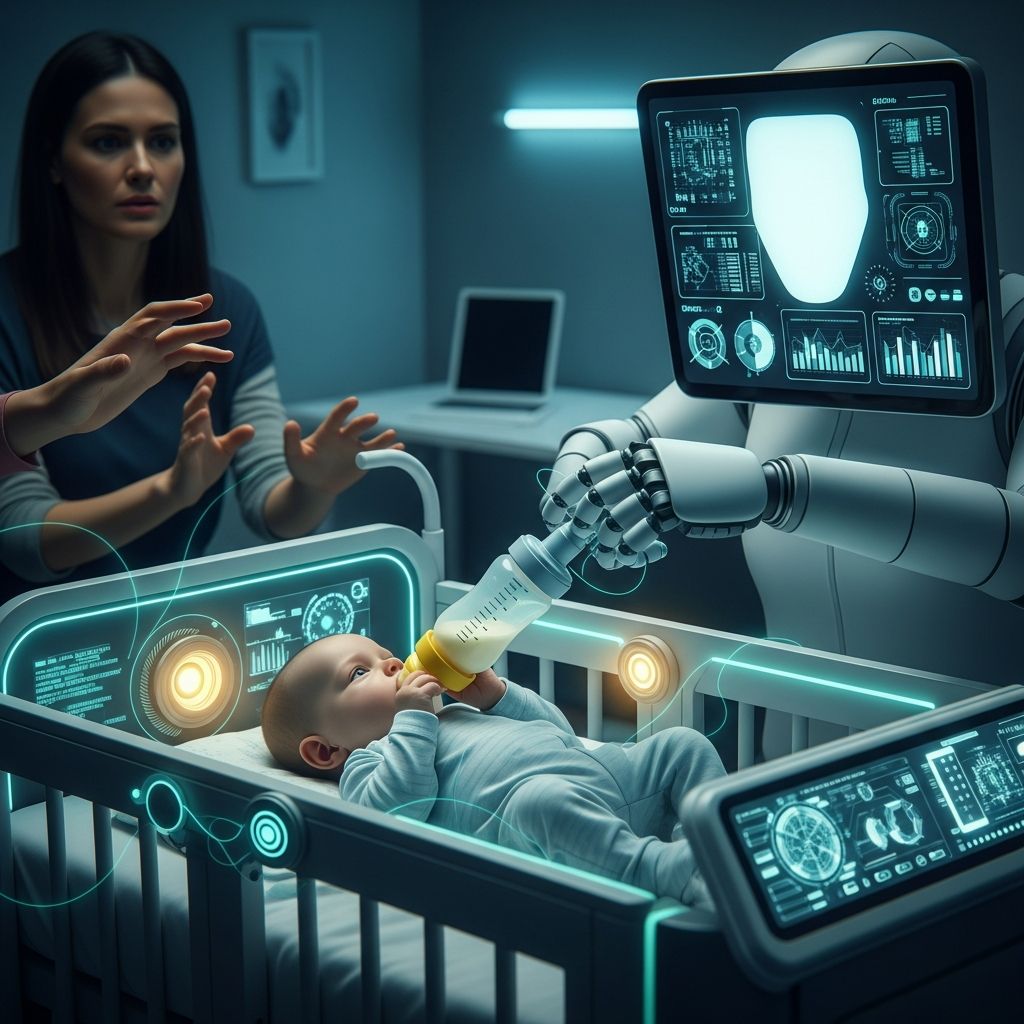
Artificial intelligence has infiltrated nearly every aspect of modern life, including parenting. From AI-powered apps that track baby sleep patterns to chatbots offering child-rearing advice, parents increasingly turn to technology for guidance. While these tools promise convenience and expertise, excessive dependence can undermine essential parenting skills, hinder child development, and introduce unforeseen dangers. This article delves into the multifaceted risks, drawing on expert insights to help families navigate AI’s role responsibly.
Understanding AI Overreliance in Family Dynamics
Overreliance on AI happens when parents accept technology outputs without question, often due to its apparent efficiency and authority. In parenting, this manifests as outsourcing decisions on discipline, nutrition, or emotional support to algorithms. Research shows that users with high automation bias— a tendency to favor AI advice over human judgment—struggle to calibrate trust appropriately, especially when systems falter. This bias is amplified in unfamiliar tasks like interpreting infant cries or managing toddler tantrums, where parents lack baseline expertise.
Initially, AI performs well, building complacency. However, as systems err, trust plummets disproportionately, yet recovery is slow. Parents may then swing to under-reliance, creating inconsistency in child-rearing approaches. High-expertise users, ironically, exhibit algorithmic aversion but still lean heavily on AI, leading to suboptimal human-AI teamwork.
Impacts on Children’s Cognitive and Emotional Growth
One of the gravest concerns is AI’s potential to stunt cognitive development. Children learn through trial-and-error, social cues, and parental intuition—processes algorithms cannot replicate authentically. Overuse of AI tutors or educational apps displaces interactive play, which fosters creativity and problem-solving. Studies indicate that excessive screen-based learning correlates with reduced attention spans and weaker executive function skills.
- Reduced Critical Thinking: AI provides instant answers, discouraging kids from reasoning independently. Parents who default to app-generated homework solutions model this passivity.
- Emotional Disconnect: Chatbots offering empathy simulations lack genuine emotional reciprocity, potentially desensitizing children to human interactions.
- Skill Atrophy: Reliance on voice assistants for facts erodes memory retention and research abilities in youth.
In education, AI’s integration risks embedding biases that affect learning equity. Marginalized groups may face amplified disparities if biased datasets inform personalized learning paths.
Privacy and Data Security Threats to Families
Parenting apps collect vast troves of sensitive data—sleep logs, feeding schedules, behavioral patterns. De-identified data can still be re-identified, enabling surveillance or exploitation. Malicious actors could leverage this for targeted scams, identity theft, or worse, like engineered health manipulations.
Consider health-tracking wearables on children: they monitor vitals but transmit data vulnerable to breaches. Scaled deployment risks systemic privacy erosion, fostering distrust in digital tools and broader societal paranoia.
| Risk Type | Examples in Parenting | Potential Consequences |
|---|---|---|
| Data Breaches | Baby monitor hacks | Stalker access to home routines |
| Re-identification | De-anonymized growth charts | Targeted marketing or blackmail |
| Surveillance | AI nanny cams | Loss of family autonomy |
Erosion of Parental Instincts and Decision-Making
Human parenting thrives on intuition honed by experience. AI, lacking contextual nuance, offers generalized advice that ignores cultural, familial, or individual variances. Over time, parents risk ‘deskilling,’ losing confidence in their judgments. Microsoft research highlights how overreliance leads to poor team performance between humans and AI, as users fail to detect errors.
Confirmation bias exacerbates this: parents interpret AI outputs as aligning with their views, ignoring flaws. In high-stakes scenarios like allergy detection or milestone assessments, this can delay interventions.
Social and Relational Consequences for Families
AI integration into family life can weaken bonds. Screen-mediated interactions replace face-to-face engagement, compromising autonomy and social ties. Children may develop overdependence, mirroring parental habits, leading to enfeeblement where self-governance atrophies.
Economically, AI-driven job shifts in caregiving sectors (e.g., automated childcare) displace opportunities, hitting underserved communities hardest and widening inequities.
Health and Safety Hazards from AI Errors
AI in healthcare apps for parenting—symptom checkers, vaccination schedulers—can misdiagnose due to incomplete data. Overtrust leads to ignored professional advice, risking health crises. Biased systems may underserved marginalized families, eroding trust and sparking disparities.
Automation bias causes parents to overlook AI failures, like erroneous sleep predictions causing exhaustion or unsafe co-sleeping recommendations.
Economic and Accessibility Pitfalls
Not all families access premium AI tools, creating a digital divide. Wealthier parents gain optimized advice, while others rely on free, ad-riddled versions with lower accuracy. This entrenches inequality, as AI amplifies existing power imbalances.
Strategies for Balanced AI Use in Parenting
To mitigate risks, adopt mindful integration:
- Verify AI advice with pediatricians or trusted networks.
- Limit screen time per AAP guidelines, prioritizing human play.
- Teach children AI literacy to foster discernment.
- Opt for transparent tools disclosing data practices.
- Regularly audit app permissions and delete unused data.
Enhance AI literacy: understand limitations to avoid overtrust. Provide real-time feedback loops and effective explanations to calibrate reliance.
Real-World Examples of AI Parenting Pitfalls
Case studies reveal issues: An app misadvised formula ratios, leading to infant distress. Another’s biased milestone tracker pathologized diverse development paces, causing unnecessary anxiety. These underscore the need for human oversight.
Future Outlook: Responsible AI in Family Life
AI holds promise for augmenting parenting—early detection aids, personalized nutrition—but demands safeguards. Policymakers urge human oversight; developers prioritize bias audits and explainability. Parents must champion hybrid approaches, blending tech with timeless wisdom.
Frequently Asked Questions
Can AI completely replace parental judgment?
No, AI lacks emotional depth and context. Use it as a supplement, not a substitute, to maintain instinct development.
How does AI affect children’s screen addiction?
Overreliance encourages constant device use, heightening addiction risks and reducing real-world exploration.
Is it safe to use AI for baby monitoring?
With caveats: Choose secure devices, review data policies, and combine with physical checks.
What age is best to introduce AI educational tools?
After age 5, sparingly, to avoid displacing foundational human-led learning.
How can parents spot AI biases?
Cross-check diverse sources and observe if outputs favor certain demographics.
References
- Potential for near-term AI risks to evolve into existential threats — National Institutes of Health (NIH). 2024. https://pmc.ncbi.nlm.nih.gov/articles/PMC12035420/
- Overreliance on AI Literature Review — Microsoft Research. 2022-06-21. https://www.microsoft.com/en-us/research/wp-content/uploads/2022/06/Aether-Overreliance-on-AI-Review-Final-6.21.22.pdf
- The MIT AI Risk Repository — Massachusetts Institute of Technology. Accessed 2026. https://airisk.mit.edu
- Unraveling the Social Impacts of Artificial Intelligence — University of California, Davis Research. 2024. https://research.ucdavis.edu/unraveling-the-social-impacts-of-artificial-intelligence/