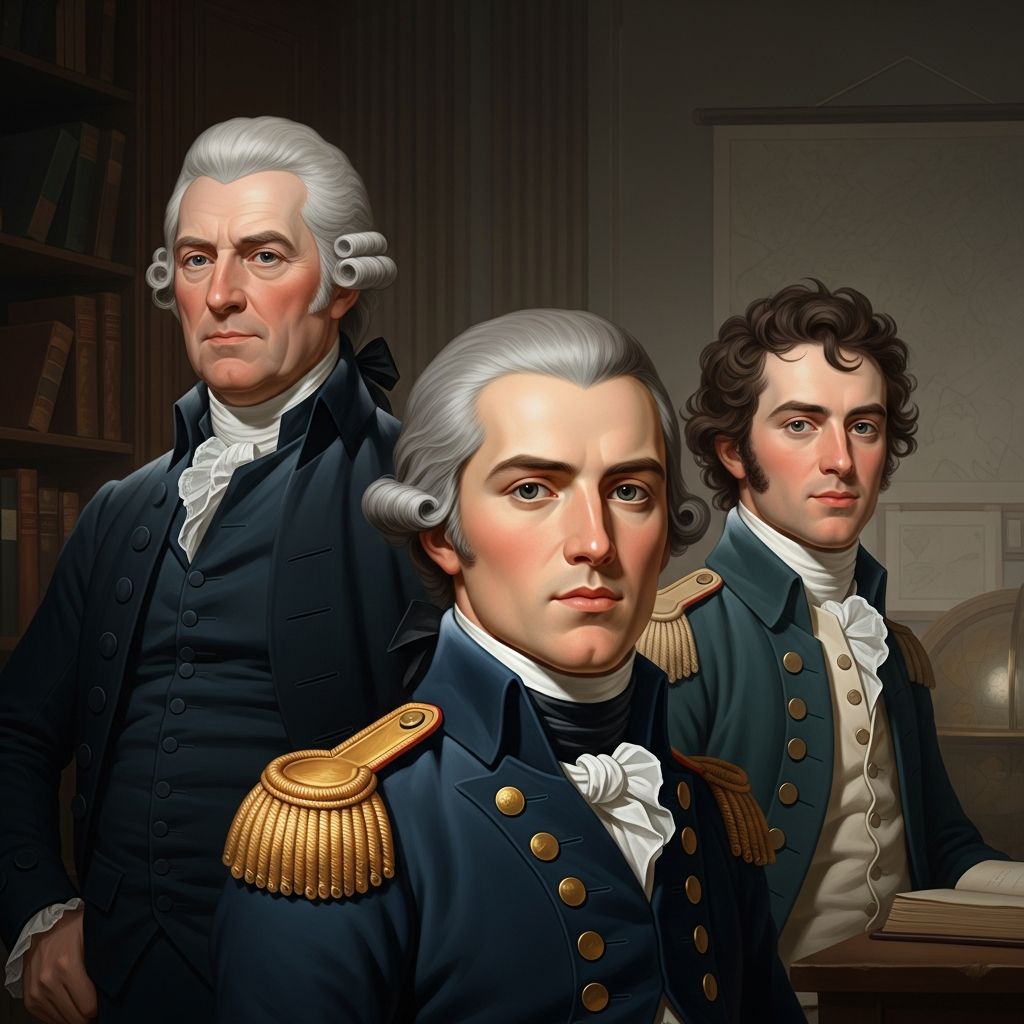
The stage musical Hamilton turned a dense slice of Revolutionary history into a vivid pop-culture phenomenon. Yet behind the lyrics and choreography stand real people whose lives were often stranger, messier, and more complicated than anything that could fit in a three-hour show.
This article looks at three central figures from Alexander Hamilton’s circle — the Marquis de Lafayette, the Schuyler women, and John Laurens — and asks what history can tell us about who they were, what they did, and how their stories differ from the Broadway versions.
The Revolutionary Stage vs. the Historical Record
Any dramatization of the American Revolution has to compress time, merge events, and heighten emotion. Musical theater, especially, needs:
- Clear character arcs instead of scattered, evolving relationships
- Recognizable conflicts rather than bureaucratic debates and half-finished plans
- Personal stakes that make political ideas feel immediate and emotional
Because of this, Hamilton often:
- Condenses real people’s roles into a single character
- Moves encounters to new locations for dramatic impact
- Shifts timing so that important events coincide onstage
These changes do not make the show unreliable; they simply mean that it is story-first, with history as its raw material. To understand the real Lafayette, the real Schuylers, and the real Laurens, we have to go back to primary evidence and serious scholarship from historians, archives, and institutions that preserve Revolutionary-era documents.
Lafayette: The Young French Aristocrat Who Crossed an Ocean
In the musical, Gilbert du Motier, Marquis de Lafayette, is a fast-rapping, energetic ally whose friendship helps Hamilton and Washington win the war. Historically, Lafayette was young, idealistic, and close to Washington, but his story is broader and more politically complex.
From French Noble to American Volunteer
Lafayette was born into a wealthy aristocratic family in 1757 and raised in the French military tradition. As a teenager, he devoured Enlightenment ideas about liberty and admired the American colonists’ defiance of British authority.
- At about age 19, he secretly purchased a ship and sailed to North America, defying French royal orders to stay out of the conflict.
- He offered to serve in the Continental Army without pay, framing his service as a commitment to liberty rather than profit.
- Congress appointed him a major general, a remarkable rank for someone so young and foreign.
Lafayette and Washington: A Chosen Family
Primary accounts describe Lafayette’s bond with George Washington as unusually strong. Washington, who had no biological sons, called Lafayette his “adopted” son, while Lafayette referred to Washington as a father figure.
Lafayette’s contributions included:
- Fighting bravely at the Battle of Brandywine, where he was wounded but helped organize an orderly retreat.
- Serving as both field officer and political connector, relaying information between American leaders and French officials.
- Participating in the Yorktown Campaign in 1781, a pivotal operation that trapped British forces under Cornwallis.
Lafayette as Diplomat and Symbol
Onstage, Lafayette is mostly shown as a charismatic soldier. Historically, his biggest impact may have been as a symbolic bridge between American revolutionaries and French power.
While Benjamin Franklin and other American envoys worked in Paris to secure formal treaties, Lafayette amplified those efforts by:
- Leveraging his aristocratic status at the French court to argue that aiding the Americans would weaken Britain.
- Reinforcing to French leaders that American forces were serious, organized, and worth backing.
- Later becoming a key figure in early phases of the French Revolution, again associating his name with constitutional liberty.
By the time the war ended with the Treaty of Paris in 1783, negotiated by American diplomats such as Franklin and John Adams, France’s military and financial support—partly tied to Lafayette’s advocacy—had proven essential to the patriots’ victory.
The Schuyler Women: Power, Property, and Politics in Elite New York
The musical features the Schuyler sisters as stylish, witty observers of the Revolution who navigate romance and politics in equal measure. The historical Schuyler family, centered in upstate New York, formed part of a powerful network of landowners and military leaders. The women moved through that world with constraints, but also with avenues to influence.
Life Inside a Political Dynasty
The Schuylers were part of New York’s elite Dutch-descended families, deeply involved in trade, landholding, and regional politics.
- Philip Schuyler, the family patriarch, served as a major general in the Continental Army and a member of the Continental Congress.
- Their large Albany home functioned as a logistical hub during the war, hosting officers, planning sessions, and constant correspondence.
- Family alliances through marriage tied the Schuylers to other emerging political dynasties, such as the Van Rensselaers and, eventually, the Hamiltons.
Women’s Roles Beyond the Drawing Room
Women of the Revolutionary era could not vote and had limited legal rights, but they were not confined to passive domesticity. Scholars and archives describe women who:
- Managed estates while male relatives served in the army or legislature
- Coordinated supplies, food, and medical care for soldiers encamped nearby
- Participated in boycotts of British goods and organized local political discussions
Within that context, the Schuyler women likely:
- Handled substantial household and financial responsibilities at the family properties
- Maintained correspondence networks that carried news, opinion, and requests among political allies
- Shaped the social environment in which alliances among Revolutionary leaders were tested and maintained
Marriage to Hamilton: More Than a Love Story
Alexander Hamilton’s marriage into the Schuyler family connected an ambitious immigrant officer with one of New York’s most influential clans.
Through this marriage, Hamilton gained:
- Access to wealth and land that he had never possessed himself
- Political sponsorship from Philip Schuyler, supporting Hamilton’s rise in law and finance
- A social platform in New York that later underpinned his Federalist Party organizing
For the Schuyler family, the match linked them to one of George Washington’s most trusted aides, who would go on to shape the new nation’s fiscal and legal structure. As Secretary of the Treasury, Hamilton played a central role in establishing the public credit and creating systems of federal finance that historians widely regard as foundational to the survival of the early United States.
Eliza’s Life After Hamilton
Long after the war ended and Hamilton died in 1804 after his duel with Aaron Burr, his widow spent decades preserving and shaping his legacy. Archival evidence shows that she:
- Organized and edited Hamilton’s papers, helping future biographers reconstruct his career
- Supported charitable projects, including orphan care, reflecting a broader trend of women’s civic activism in the early republic
- Acted as a living link between the Revolutionary generation and later Americans curious about the nation’s founding
In this sense, the Schuyler women’s influence did not end with the Treaty of Paris or their husbands’ careers. They were active participants in the creation of what historians sometimes call the “memory” of the Revolution—how it would be told, celebrated, and contested by later generations.
John Laurens: Radical Ideas in a Slave Society
John Laurens, portrayed in the musical as Hamilton’s intense and idealistic friend, really did hold unusually radical views about slavery for his time. His story, though, sits within a deeply conflicted society where the struggle for independence coexisted with the continued exploitation of enslaved people.
A South Carolinian Who Challenged His Own World
Laurens was born into a prominent South Carolina family that owned large plantations and enslaved laborers. Yet his personal writings and political actions reveal a determination to strike at the institution of slavery during the war itself.
Laurens proposed a controversial plan:
- Recruit enslaved men into a dedicated military unit for the Continental Army
- Offer them freedom in exchange for their service
- Use this effort both to strengthen the American war effort and begin dismantling slavery in his region
His plan echoed broader debates going on in the colonies and among European observers about whether a nation that proclaimed that “all men are created equal” could legitimately maintain a system of hereditary bondage.
Supporters, Opponents, and Political Roadblocks
Laurens’ proposal won some support from Revolutionary leaders who saw the need for manpower and recognized the contradiction between liberty and slavery. However, it also met fierce resistance from slaveholders, especially in the southern states, who feared both losing their labor force and arming enslaved people.
As a result:
- Efforts to create large, state-sponsored Black regiments rooted in emancipation largely stalled in the Deep South
- Smaller-scale enlistment of Black soldiers occurred in various colonies and states, sometimes with promises of freedom, but these policies were inconsistent and often contested
- Laurens’ vision of a broad military emancipation in South Carolina was never fully realized
Laurens in Battle and in Memory
Beyond his antislavery activism, Laurens also served with distinction in several military campaigns, including operations in the Carolinas and diplomatic missions to Europe. He died in combat in 1782, near the end of the war, which meant that he did not live to see whether his ideas about emancipation would gain wider acceptance.
Historians and public history institutions today often highlight figures like Laurens when discussing the contradictions of the Revolution:
- The war for independence produced soaring rhetoric about rights and equality
- Yet slavery persisted, especially in the South, for generations afterward
- Some individuals, like Laurens, pushed harder against that contradiction than many of their contemporaries
Comparing Broadway and the Archive
| Figure | Musical Emphasis | Historical Emphasis |
|---|---|---|
| Lafayette | Charismatic French ally, witty and fearless on the battlefield | Crucial political connector between American leaders and the French state; symbol of transatlantic liberty |
| Schuyler Women | Romantic interests and sharp observers of politics | Members of a political dynasty, managers of estates, preservers of Revolutionary memory |
| John Laurens | Passionate friend of Hamilton, tied to the theme of fighting slavery | Southern elite who seriously pursued military emancipation, facing intense local opposition |
Why These Stories Still Matter
Lafayette, the Schuylers, and Laurens show that the Revolution was not a simple story of unified patriots versus tyrannical British rulers. Instead, it was:
- A global conflict involving European powers like France and Spain, as well as Native nations and enslaved people seeking their own futures
- A struggle among Americans about what independence should mean—economically, politically, and morally
- A crucible where idealists, pragmatists, and profiteers often collided within the same families and friendships
The people celebrated onstage and in textbooks were embedded in webs of kinship, property, and power. Understanding that context helps explain not only the successes of the American Revolution, but also its limits — including the persistence of racial hierarchy and inequality long after the shooting stopped.
Frequently Asked Questions (FAQs)
Did Lafayette really fight directly under George Washington?
Yes. Lafayette served as a major general in the Continental Army, fought in key battles such as Brandywine, and developed a close quasi-familial relationship with Washington, who treated him as an adopted son.
Were the Schuyler sisters politically active in their own right?
While they could not hold office or vote, women in elite families like the Schuylers influenced politics by managing estates, sustaining social networks, hosting strategic gatherings, and preserving documents and memories that shaped how the Revolution was later remembered.
Did John Laurens’ plan to arm enslaved people ever succeed?
Laurens campaigned for a regiment of enslaved men to be freed in exchange for military service, particularly in South Carolina, but local resistance meant his vision was never fully implemented, despite some limited enlistment of Black soldiers in various colonies.
How important was French support to the American victory?
French military aid, naval power, and financial backing were central to the American victory, especially in campaigns like Yorktown and in diplomatic efforts culminating in the Treaty of Paris in 1783. Figures such as Benjamin Franklin and Lafayette were vital to securing and using that support.
Is the musical Hamilton historically accurate?
The musical is grounded in serious historical research but rearranges timelines, simplifies relationships, and heightens drama for storytelling purposes. For a full understanding of the period, historians recommend pairing the show with primary sources and reputable history texts or museum resources.
References
- 19 key figures of the American Revolution — BBC History Magazine (Immediate Media). 2020-06-30. https://www.historyextra.com/period/georgian/key-figures-players-who-american-revolution-famous-people/
- List of military leaders in the American Revolutionary War — Compiled from historical records. Accessed via Wikipedia entry’s underlying sources. 2024-01-01. https://en.wikipedia.org/wiki/List_of_military_leaders_in_the_American_Revolutionary_War
- Important People of the American Revolution — Students of History. 2023-05-01. https://www.studentsofhistory.com/people-american-revolution
- 8 Key Figures from the Revolutionary War — Norwich University Online. 2019-07-16. https://online.norwich.edu/online/about/resource-library/8-key-figures-revolutionary-war
- People of the American Revolution — U.S. National Park Service. 2022-04-15. https://www.nps.gov/subjects/americanrevolution/people.htm
- Coming of the American Revolution: Biographies — Massachusetts Historical Society. 2018-01-01. https://www.masshist.org/revolution/resources/biographies.php