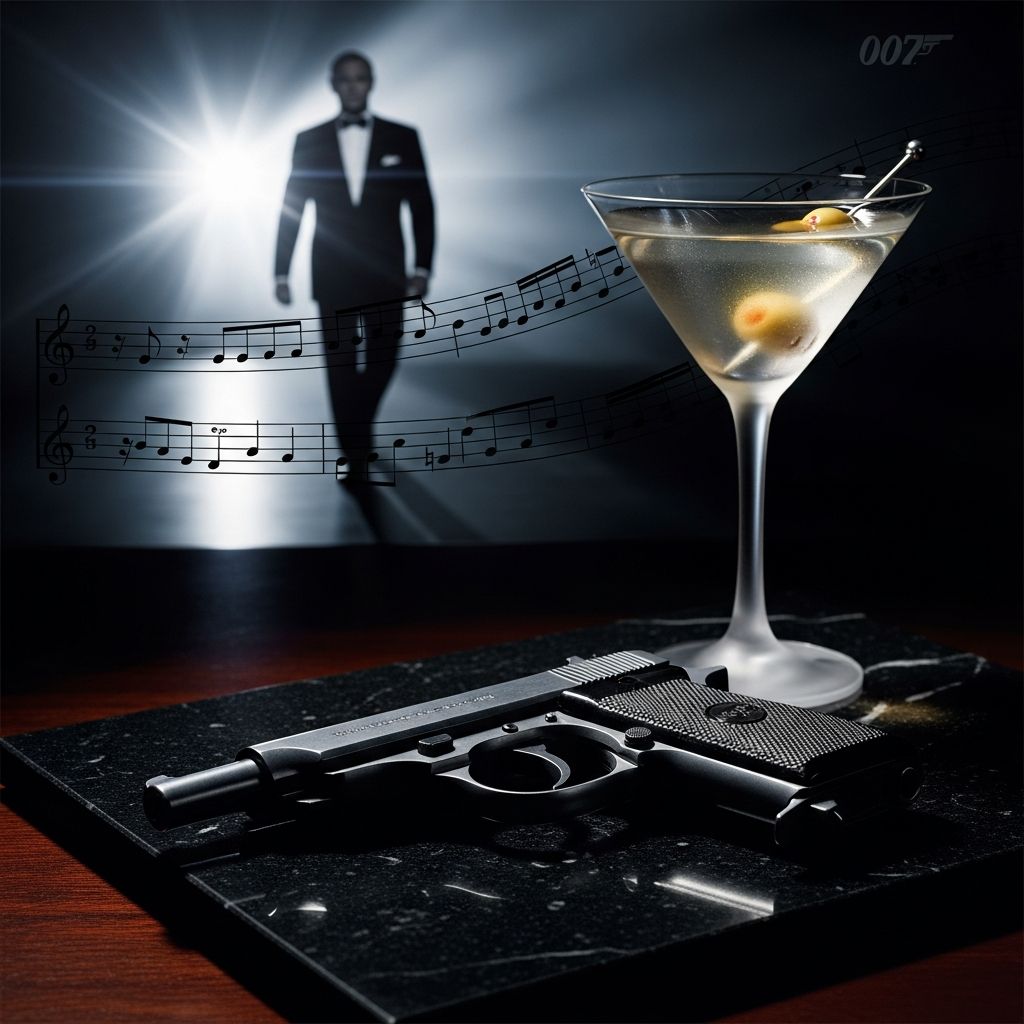
The James Bond Theme is one of the most instantly recognizable pieces of music in film history, yet its creation is wrapped in controversy, competing legends, and decades of legal battles. What began as a melody for an abandoned stage musical became the musical DNA of a franchise and the soundtrack to a cultural icon.
This article unpacks how the theme came to be, why its authorship became so contentious, and how a single piece of music helped define the modern blockbuster.
The Birth of an Iconic Spy Sound
When producers Harry Saltzman and Albert R. Broccoli set out to launch Dr. No in the early 1960s, they needed more than an actor to play James Bond. They needed a sound that could instantly tell audiences who this character was—dangerous, seductive, modern, and unmistakably British.
Composer Monty Norman was hired to write the score for the first Bond film, bringing with him sketches and unused material from earlier projects. At the same time, the producers also needed commercial polish and cinematic punch, so they later turned to arranger and bandleader John Barry, already known for his work with the John Barry Seven on British pop and film projects.
From Stage Musical to Spy Thriller
The core melody of the Bond theme famously traces back to a song Norman had developed for a stage musical based on V. S. Naipaul’s novel A House for Mr. Biswas. In that musical concept, the tune—later identified as “Good Sign, Bad Sign”—appeared in a very different form, with Indian inflections and a vocal line. The producers of Dr. No initially disliked this theatrical, song-based approach. However, they recognized that the melodic contour had potential if it could be reshaped into something sharper and more modern.
Enter John Barry, who transformed the source melody into a bold orchestral cue driven by electric guitar, brass, and rhythm section. This collaboration—part adaptation, part reinvention—formed the basis of the now-classic theme.
What Makes the James Bond Theme Sound So Unique?
Even a brief listen to the main theme reveals elements that have become shorthand for “spy music” across popular culture.
- Minor-key harmony: The theme is usually described as being in E minor, giving it a dark, mysterious quality that suits espionage and intrigue.
- Surf-style electric guitar: The twangy guitar riff, played originally by session musician Vic Flick, evokes contemporary rock and surf music, connecting Bond to youth culture rather than old-world gentility.
- Jazz-influenced brass: Punchy horn stabs and big-band voicings lend the cue an almost nightclub swagger, suggesting glamour and danger combined.
- Driving rhythm: The propulsive, almost relentless rhythmic foundation mirrors Bond’s forward momentum and capacity for explosive action.
This mix of orchestral, jazz, and rock elements was unusually modern for a 1962 British film score, and it helped redefine what mainstream action cinema could sound like.
| Element | Function in the Theme | Emotional Effect |
|---|---|---|
| Minor-key harmony | Anchors the main riff and melodic line | Creates tension, mystery, and unease |
| Surf-rock guitar | Carries the iconic riff | Feels modern, edgy, and slightly rebellious |
| Big-band brass | Answers the guitar phrases and swells in the chorus | Signals confidence, luxury, and cinematic scale |
| Rhythmic ostinato | Repeating rhythmic figure in the accompaniment | Maintains drive and suspense during action |
Monty Norman vs. John Barry: Who Wrote It?
For decades, fans and commentators have debated a simple but explosive question: Who is really responsible for the James Bond Theme?
The Official Credit
On paper, the theme’s composition credit belongs to Monty Norman. The producers commissioned him to score Dr. No, and documentation from the period consistently lists him as the composer of the theme used in the finished film. Royalties, performing rights, and official soundtrack releases have long reflected this authorship.
John Barry’s Transformative Role
At the same time, John Barry is widely acknowledged as the architect of the sound audiences recognize as the Bond theme. The producers brought Barry in when they were dissatisfied with the early attempts at a main title cue; he reorchestrated Norman’s melody, altered harmony and structure, and recorded the definitive 1962 arrangement with his band and studio orchestra.
Barry went on to score numerous later Bond films, embedding his musical language so thoroughly into the franchise that the theme and his style became almost inseparable from the brand.
The Libel Case and Legal Confirmation
The tension between popular belief and legal reality eventually ended up in court. In the late 1990s, a British newspaper suggested that Barry—not Norman—was the true composer of the James Bond Theme, implying that Norman had been improperly credited. Norman sued for libel, arguing that the article effectively accused him of taking credit for someone else’s work.
In 2001, a London High Court jury found in Norman’s favor, reaffirming that he was the legal composer of the theme and awarding him damages. The court accepted that Barry’s contribution, though musically crucial, was an arrangement of Norman’s underlying material rather than an independent composition that superseded it.
How the Theme Evolved Across the Bond Era
One reason the James Bond Theme has endured is its remarkable flexibility. Each cinematic era reshaped it to match changes in fashion, technology, and the evolving image of 007.
Sean Connery and the Birth of the Guitar-Driven Spy Theme
In the early films starring Sean Connery, the theme appears frequently, usually in its guitar-driven, jazzy incarnation. It serves almost as a musical calling card: when Bond steps into frame, orders a drink, or casually walks away from danger, the music reinforces his confidence and dangerous charm.
Across films like Dr. No, From Russia with Love, and Goldfinger, Barry’s arrangements gradually shifted the theme from a simple identity cue to a more versatile tool, supporting everything from suspenseful sneaking sequences to full-scale action set pieces.
Roger Moore and Orchestral, Genre-Bending Variations
By the time Roger Moore took over, popular music had moved through psychedelia, funk, and disco. The Bond scores followed suit. The theme was often woven into lush string textures or funk-influenced rhythms, echoing the trends of the 1970s while still retaining its core melodic profile.
In some Moore-era films, the theme would briefly surface inside more contemporary arrangements—clueing viewers in that, no matter how outrageous the gadgets or exotic the locations, this was still very much a James Bond adventure.
Modern Reboots and Reinventions
Later Bonds—from Timothy Dalton and Pierce Brosnan to Daniel Craig—saw the theme constantly revisited and reshaped, sometimes pushed to the background to let new title songs stand out, other times thrust into the spotlight during climactic battles.
Composer David Arnold, who scored several Brosnan and Craig films, frequently referenced Barry’s harmonic language while updating the orchestration with modern electronics and denser percussion. In Casino Royale, the classic theme is deliberately withheld in its full form until the film’s closing moments, underlining Bond’s transformation into the fully realized 007 persona.
The Bond Theme vs. Individual Title Songs
Over six decades, each film has featured its own title song—often performed by high-profile pop artists—yet the original instrumental theme has remained the franchise’s sonic anchor.
- Core instrumental theme: Used for the gun barrel sequence, action scenes, and key Bond moments across almost every Eon-produced film.
- Title songs: From Shirley Bassey’s “Goldfinger” to Adele’s “Skyfall” and Billie Eilish’s “No Time to Die,” each song reflects its era’s pop sound while quoting or echoing the underlying Bond harmonic style.
- Brand identity: The coexistence of a fixed instrumental theme and rotating vocal themes allows the series to feel both stable and contemporary.
Why the James Bond Theme Still Matters
The endurance of the James Bond Theme goes beyond nostalgia. It has shaped how composers approach recurring motifs in long-running franchises, influenced the sound of spy and action films worldwide, and demonstrated how much narrative power can be packed into a brief musical gesture.
Influence on Film Music and Pop Culture
Film scholars often point to the Bond theme as a landmark in modern movie scoring because it fuses pop idioms with orchestral writing in a way that anticipated later blockbuster franchises. The approach—creating a flexible, instantly recognizable leitmotif that can survive new directors, actors, and storylines—has echoes in later franchises from superheroes to space sagas.
Outside cinemas, the theme has become a cultural shorthand. A few bars hummed or played on a guitar are often enough to evoke the entire world of secret agents, tuxedos, and high-stakes espionage, even for people who have never watched a Bond film from start to finish.
Lessons from a Legendary Theme
The story behind the James Bond Theme highlights several broader truths about creative work in film and popular media:
- Collaboration can be messy: Great results often emerge from tension between different creative visions. Norman and Barry approached music from different backgrounds, and their uneasy combination produced something neither might have created alone.
- Arrangement matters: The legal composer is not always the person who defines how the public hears a piece of music. Barry’s arrangement demonstrated how orchestration and performance can completely reinvent a melody.
- Branding through sound: The Bond producers understood, consciously or not, that a distinctive audio logo could be as important as a visual one. The theme effectively serves as the franchise’s sonic logo.
- Adaptability keeps music alive: By allowing each era to reshape the theme, the producers ensured it never became a mere museum piece.
Frequently Asked Questions (FAQs)
Who is officially credited with composing the James Bond Theme?
Monty Norman is officially credited as the composer of the James Bond Theme, and a 2001 High Court ruling in London reaffirmed his legal authorship after a libel case concerning the theme’s origins.
What role did John Barry play in creating the theme?
John Barry was hired to arrange and record the main theme for Dr. No. He reworked Norman’s melody into the iconic electric-guitar-and-orchestra version that audiences recognize, and later developed the Bond musical style across many subsequent films.
In which key is the James Bond Theme usually described?
The theme is commonly described as being composed in E minor, a key that supports its dark and suspenseful character.
Has the James Bond Theme appeared in every Bond film?
The theme, or clear derivatives of it, has been used in every Eon Productions Bond film since Dr. No, though the way it appears and how prominently it is featured has varied from movie to movie.
How has the sound of the theme changed over time?
Early versions emphasized surf-rock guitar and jazz-influenced brass. Later films integrated funk, disco, synths, and more modern orchestration, but each version preserves the essential melodic and harmonic core that makes the theme identifiable as “Bond.”
References
- James Bond Theme — Wikipedia (summary of legal authorship, musical analysis, and film usage). 2024-03-12. https://en.wikipedia.org/wiki/James_Bond_Theme
- James Bond: A history of every theme song through the years — Rayo / Magic Radio. 2023-10-01. https://hellorayo.co.uk/magic-classical/entertainment/music/james-bond-themes
- A not-so-brief history of every James Bond song — Global News. 2021-10-05. https://globalnews.ca/news/8233071/every-james-bond-song/
- Every Generation Gets the James Bond Theme It Deserves — Mark Slavonia. 2012-06-01. http://markslavonia.com/bondtheme/