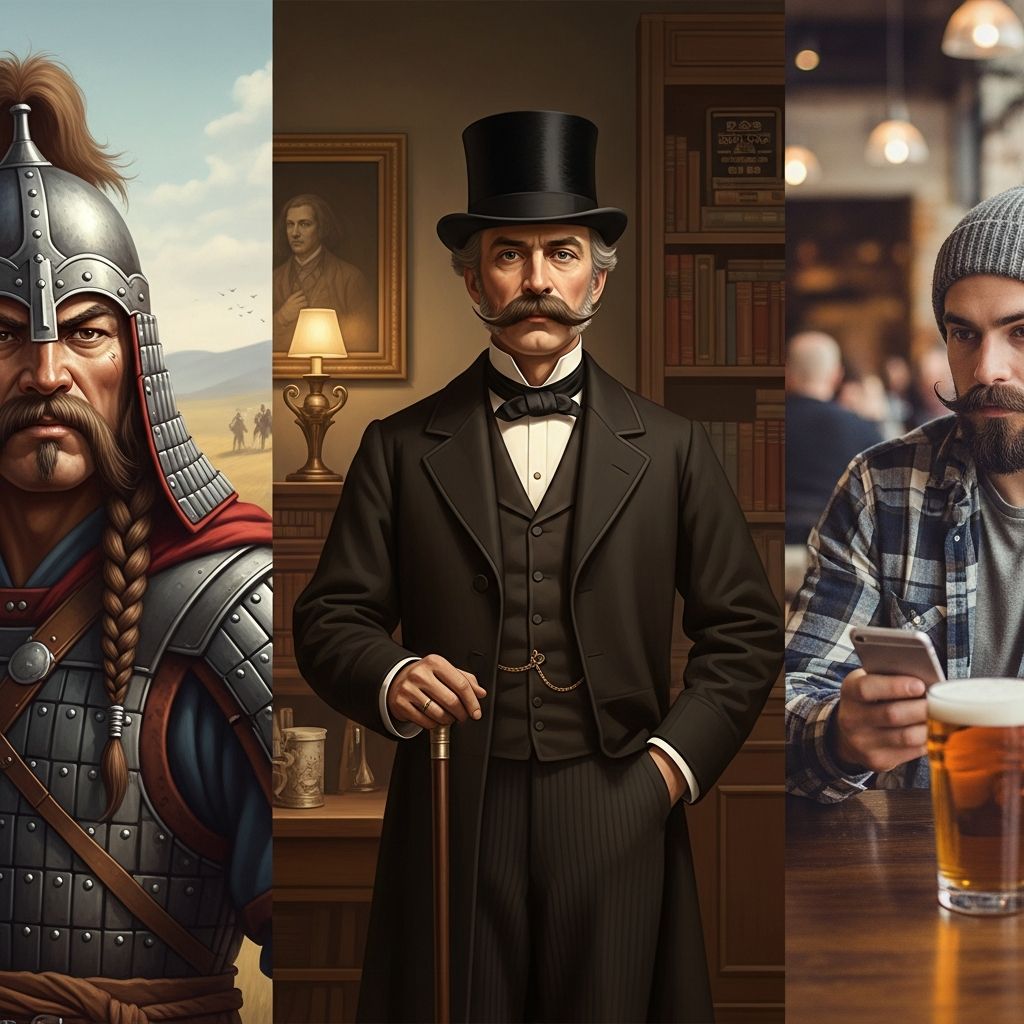
The mustache is more than a strip of hair on the upper lip; it is a moving timeline of how cultures have understood power, masculinity, rebellion, and even health across the centuries.
Across different eras, the mustache has been a royal badge, a military requirement, a symbol of bohemian rebellion, and, most recently, a playful style choice that crosses gender lines.
Ancient Faces, Powerful Whiskers
In some of the earliest civilizations, prominent facial hair on the upper lip was closely linked to status, wisdom, and leadership, especially among rulers and high officials.
Depictions of elite figures in regions like ancient Egypt and Mesopotamia show carefully shaped facial hair that signaled maturity and the authority to govern, rather than casual neglect of grooming.
- Mustaches helped visually separate rulers from common laborers.
- Groomed facial hair communicated experience, age, and the right to command.
- Early barbers and grooming rituals became part of elite identity.
Knights, Nobles, and Chivalrous Lips
In medieval Europe, the mustache began to appear alongside armor and heraldry, especially among knights and nobles who wanted to demonstrate courage and status.
While full beards came and went, a defined mustache could project a blend of refinement and ferocity, fitting perfectly into a world obsessed with honor and hierarchy.
- Mounted warriors and aristocrats often favored prominent facial hair to appear more imposing.
- Elaborate grooming reflected the time and resources of the upper classes.
- Art and sculpture helped spread idealized images of mustachioed nobility.
When the Military Owned the Mustache
By the 18th and 19th centuries, the mustache had become so intertwined with soldiering that it could function almost like part of a uniform.
In many European armies, certain regiments either encouraged or outright required mustaches, believing they made soldiers look fiercer and more intimidating in battle.
| Region/Group | Role of the Mustache | Symbolism |
|---|---|---|
| Central European cavalry | Paired with dramatic uniforms to unnerve opponents. | Bravery, martial flair, elite status. |
| British forces in colonial India | Officers grew larger mustaches to gain respect from local troops. | Virility, authority, and cultural legitimacy. |
| French and German regiments | Facial hair often standard for specific units. | Discipline, toughness, and group identity. |
In some cases, commanders believed that putting heavily mustachioed troops at the front of a formation would demoralize the enemy even before contact.
Military regulations and illustrations of officers helped lock in the idea that a real fighter should have visible hair on his upper lip.
The Victorian Grooming Boom
The 19th century saw a huge swing toward elaborate grooming, with the mustache taking on a starring role, especially in Britain.
During this period, fashionable men invested in combs, waxes, and barbers to sculpt their facial hair into intricate shapes, turning the mustache into a visible sign of discipline and social rank.
- Handlebar styles became associated with high-ranking officers and upper-class professionals.
- Well cared-for facial hair marked a man as respectable and self-controlled.
- Public images of leaders with dramatic mustaches influenced everyday styles.
Clean-Shaven Modernity and the Backlash
As the 20th century progressed, new technologies like safety razors and changing ideas about hygiene pushed many men toward smooth cheeks and upper lips.
Urban professionals increasingly associated a clean-shaven look with modern life, efficiency, and seriousness, especially in business and politics.
Yet this very shift opened up new meaning for those who kept their mustaches:
- Artists and bohemians used unusual styles to signal nonconformity.
- Certain professions, like police and firefighters in some regions, held onto the mustache as a tradition.
- Film and advertising cemented a few iconic mustached archetypes, from authority figures to comic characters.
Global Meanings: More Than Western Fashion
Outside Europe and North America, mustaches have long carried distinct cultural meanings tied to honor, caste, and adulthood.
In parts of South Asia, for example, prominent upper-lip hair can signal dignity and high standing, and some military units still see it as a badge of pride.
- Certain Indian regiments encourage or valorize large mustaches as symbols of courage.
- In many communities, shaving off a mustache can be associated with shame or loss of status.
- Regional movies and folk art help preserve heroic mustachioed images.
The Mustache Revival: Irony, Charity, and Identity
Late 20th and early 21st century culture brought the mustache back in a new way, often mixing nostalgia with humor and social commentary.
Subcultures like punk, indie, and hipster scenes reclaimed vintage facial-hair styles, turning old-fashioned looks into statements about individuality and anti-corporate attitudes.
At the same time, organized campaigns began using mustache growth as a tool for activism:
- Charity drives encourage temporary mustaches to raise funds and awareness for health causes.
- Social media turned the month-long mustache into a shareable, meme-ready event.
- Participants often treat the awkward early stages of growth as part of the message, not something to hide.
What Your Mustache Says About You (Today)
In contemporary style, the mustache tends to function less as a mandatory marker of manhood and more as a flexible tool for self-expression.
Because society now tolerates a wide range of looks—from clean-shaven to full beard to carefully sculpted mustache—choosing one specific style can act like a visual introduction.
| Style | Perception | Best For |
|---|---|---|
| Subtle, neatly trimmed | Approachable, professional, low-drama. | Office environments, minimal grooming routines. |
| Thick and bold | Confident, attention-seeking, slightly retro. | Creative fields, nightlife, statement looks. |
| Handlebar with curled ends | Playful, eccentric, detail-oriented. | Events, bar culture, vintage enthusiasts. |
| Paired with full beard | Rugged, mature, outdoorsy. | Colder climates, beard-friendly workplaces. |
Practical Tips for Would-Be Mustache Wearers
The long history of mustaches shows that they demand some level of intention—both in growth and in maintenance.
Even if your goal is a relaxed or ironic look, a bit of structure keeps the line between “deliberately scruffy” and “accidentally neglected” from blurring.
- Start with a clear goal: subtle accent, bold statement, or part of a full beard.
- Trim around the lip line so hair does not constantly enter your mouth.
- Use a small comb and a touch of product if you want defined edges or curls.
- Match the shape to your face: wider styles for longer faces, slightly shorter for rounder faces.
FAQs About Mustaches
Are mustaches still considered professional?
In many modern workplaces, a well-groomed mustache is accepted as long as it looks intentional and clean, especially in industries that already tolerate beards and visible tattoos.
Highly conservative fields may still lean toward clean-shaven norms, but overall the range of acceptable facial hair has widened significantly.
How long does it take to grow a noticeable mustache?
Most people will see a recognizable mustache shape in three to six weeks, depending on genetics, age, and health.
Thicker, fuller styles may take several months to reach their ideal density, especially if hair grows more slowly at the corners of the mouth.
Is there a cultural risk to wearing certain styles?
Some mustache shapes have strong historical or political associations in specific countries, so it is worth learning about regional context before copying an iconic look.
In general, respectful curiosity about local meanings can help you avoid unintentionally echoing controversial figures or symbols.
Can women and non-binary people take part in mustache culture?
Yes; contemporary facial-hair culture increasingly celebrates anyone who wants to play with upper-lip hair, whether through natural growth, makeup, or temporary props.
This broader participation challenges the long-standing link between mustaches and narrow ideas of masculinity, turning them into tools for exploring identity rather than enforcing a standard.
Why do mustaches keep coming back into fashion?
The mustache endures because it is highly visible, easy to modify, and simple to remove, making it a low-risk way to signal shifts in attitude or to join a movement.
Whenever culture renegotiates what strength, rebellion, or humor should look like, the upper lip becomes an obvious canvas for that debate.
From Status Symbol to Personal Statement
Looking back, the mustache traces a path from royal courts and cavalry units to barbershops, charity campaigns, and street style, mirroring changes in how societies understand power and gender.
Whether worn as a subtle accent or a bold flag of individuality, the modern mustache carries centuries of meaning while remaining refreshingly customizable—proof that a small patch of hair can hold a very big story.