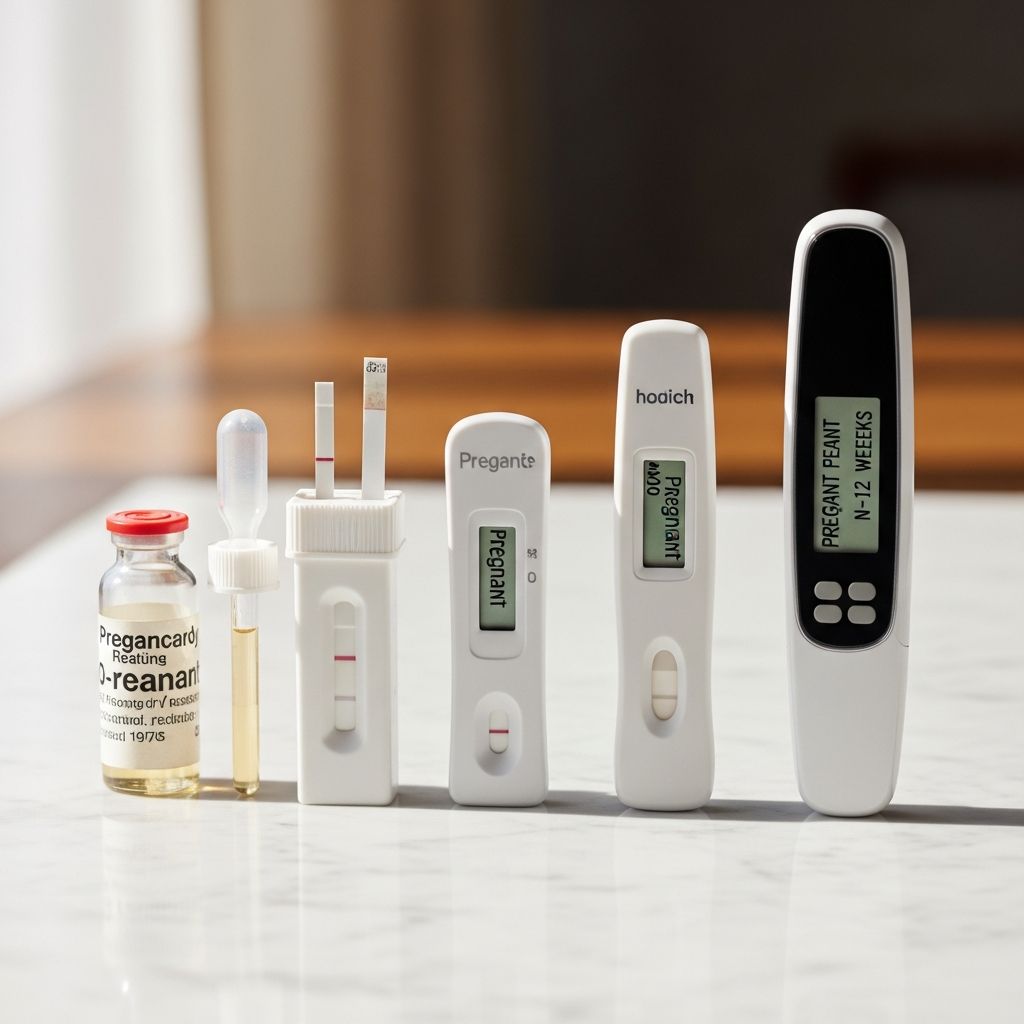
The journey of pregnancy detection spans millennia, transforming from mystical practices and animal-based experiments to precise, private at-home devices. This evolution reflects advances in biology, immunology, and consumer health technology, empowering millions with quick, reliable answers to one of life’s most profound questions.
Ancient Origins of Pregnancy Detection
Long before scientific instruments, ancient civilizations relied on rudimentary methods to discern pregnancy. In ancient Egypt around 1350 BCE, women observed the growth of wheat and barley seeds sprinkled with their urine. Faster sprouting of barley was interpreted as a sign of a female fetus, while wheat growth suggested a male one. Though not scientifically validated, this wheat-and-barley test demonstrated early recognition of urine’s potential as a diagnostic medium.
Similar folklore persisted across cultures. Greek physicians like Hippocrates noted symptoms such as missed periods and nausea, but lacked objective tests. These intuitive approaches laid conceptual groundwork, highlighting urine’s role in bodily diagnostics, even if results were inconsistent and prone to coincidence.
Animal-Based Bioassays: The Early 20th Century Breakthrough
The first reliable scientific pregnancy test emerged in 1927, developed by Bernhard Aschheim and Selmar Zondek, known as the A-Z test. This bioassay involved injecting a woman’s urine into immature female mice or rats. Pregnancy triggered an estrous reaction—swelling and blood spots in the ovaries—due to human chorionic gonadotropin (hCG), a hormone produced by the placenta shortly after implantation.
Refinements followed. In the 1930s, the Friedman test used rabbits, sacrificing them to examine ovaries for hCG-induced changes. By the 1940s, the Hogben test employed African clawed frogs (Xenopus laevis). Injecting urine into a female frog’s lymph sac prompted egg release within hours if hCG was present; males were checked for sperm production. These tests were accurate but ethically fraught, resource-intensive, and required lab settings.
- Key advantages: High specificity for hCG detection.
- Drawbacks: Animal sacrifice, 24-48 hour wait times, and clinic dependency.
These bioassays confirmed hCG’s role as the definitive pregnancy marker, paving the way for humane alternatives.
Immunological Revolution: From Labs to Faster Results
The 1960s marked a shift to immunoassays, eliminating animals. In 1960, Lars Wide and Carl Gemzell introduced the hemagglutination inhibition (HI) test. This mixed urine with anti-hCG antibodies and red blood cells coated in hCG. In non-pregnant samples, cells clumped; pregnancy hCG blocked clumping, creating a visible pattern. Performed in labs, it took hours but was cheaper and quicker.
Radioimmunoassays (RIAs) arrived soon after, using radioactive-labeled hCG for precise quantification. Developed post-1959, RIAs measured hCG via competition with sample hormones but required specialized equipment and radiation safety. By the 1970s, beta-hCG-specific RIAs distinguished pregnancy hormone from luteinizing hormone (LH), boosting accuracy.
| Milestone | Year | Test Type | Key Feature |
|---|---|---|---|
| A-Z Test | 1927 | Bioassay | Mouse/rat ovarian reaction |
| HI Test | 1960 | Immunoassay | Red cell clumping pattern |
| RIA | 1960s | Radioimmunoassay | Radioactive hCG detection |
These innovations made testing scalable, setting the stage for consumer products.
The Birth of At-Home Testing: Empowerment and Controversy
Home pregnancy tests debuted amid 1970s feminist movements emphasizing bodily autonomy. In 1967, graphic designer Margaret Crane, working for Organon Pharmaceuticals, prototyped the first kit after observing simple lab procedures. Patented in 1969, it launched in Canada as Predictor in 1971 and the U.S. in 1977, delayed by FDA concerns over user reliability and moral implications of self-testing.
In 1976, Warner-Chilcott’s e.p.t (Error Proof Test) gained U.S. FDA approval under the Medical Device Amendments, classifying it as a Class II device. Others like Predictor, ACU-TEST, and Answer followed. Early kits resembled mini-labs: users mixed urine with reagents in test tubes, waiting 2 hours for color changes. Positive results were reliable, but false negatives reached 20% due to low sensitivity.
These tests offered unprecedented privacy, allowing women to confirm pregnancy without immediate medical visits, aligning with growing reproductive rights advocacy.
Refinements and Digital Advancements
The 1980s-1990s brought user-friendly strips using enzyme-linked immunosorbent assays (ELISA) and lateral flow technology. Monoclonal antibodies enabled one-step dipsticks: urine wicks along a membrane, capturing hCG to form colored lines in minutes. Sensitivity improved to detect 25 mIU/mL hCG, allowing testing 4-5 days pre-missed period.
2003 introduced Clearblue Easy Digital, displaying “Pregnant” or “Not Pregnant” on screens, eliminating line interpretation ambiguity. Today’s tests boast 99% accuracy from the missed period day, with features like week estimators via hCG gradients.
- Modern benefits: Instant results, high sensitivity, over-the-counter availability.
- Ongoing innovations: Smartphone-linked apps and ultra-early detection.
Scientific Foundation: Understanding hCG
Central to all tests is hCG, produced by trophoblast cells post-implantation (6-8 days after fertilization). Urine levels peak at 8-11 weeks, mirroring blood concentrations. Tests target the beta subunit for specificity. Beyond pregnancy, elevated hCG signals tumors, aiding oncology.
Cultural and Societal Impact
Home tests democratized reproductive health, reducing unintended pregnancies via early confirmation and enabling timely prenatal care. Public health campaigns in the 1980s highlighted folic acid and fetal risks, amplified by accessible testing. Privacy empowered women, bypassing stigma around sexual activity. Globally, tests support family planning in resource-limited areas.
Challenges persist: misuse, ectopic pregnancy oversight (hCG rises slower), and psychological impacts of results. Education remains key.
Future Directions in Pregnancy Detection
Emerging tech promises non-invasive, app-integrated tests using microfluidics and AI for predictive analytics. Saliva or breath-based hCG detection and wearable biosensors could redefine early monitoring. Research focuses on distinguishing viable pregnancies via hCG patterns.
Frequently Asked Questions
What was the first scientific pregnancy test?
The 1927 Aschheim-Zondek test used mice to detect hCG via ovarian changes.
When did home pregnancy tests become available in the U.S.?
1976-1977, with e.p.t and Predictor leading after FDA approval.
How accurate are modern home tests?
Over 99% from the day of expected period, detecting low hCG levels.
Who invented the first home test?
Margaret Crane prototyped it in 1967 for Organon.
Can pregnancy tests detect ectopic pregnancies?
Yes, but slower hCG rise may require follow-up blood tests.
This comprehensive history underscores how pregnancy testing evolved from speculative rituals to empowering tools, blending science, ethics, and innovation for global health impact.
References
- Thin Blue Line: A History of the Pregnancy Test — National Institutes of Health (NIH). 2023. https://history.nih.gov/illustrated-histories/thin-blue-line-the-history-of-the-pregnancy-test/
- Pregnancy test — Wikipedia (citing primary historical sources). 2024. https://en.wikipedia.org/wiki/Pregnancy_test
- Pregnancy Testing Through the Ages — Association for Diagnostics & Laboratory Medicine (ADLM). 2020-10-01. https://myadlm.org/cln/cln-industry-insights/2020/pregnancy-testing-through-the-ages
- History of Pregnancy Testing — Ectopic Pregnancy Trust (.org.uk, patient education from clinical sources). 2023. https://www.ectopicpregnancy.co.uk/for-patients/pregnancy-testing/
- Development History of Pregnancy Test Technology — Semantic Scholar (peer-reviewed paper). 2020. https://www.semanticscholar.org/paper/Development-History-of-Pregnancy-Test-Technology-Kwon/2b890a37e5d638b3d6a606b7191125c4c6df5e0c