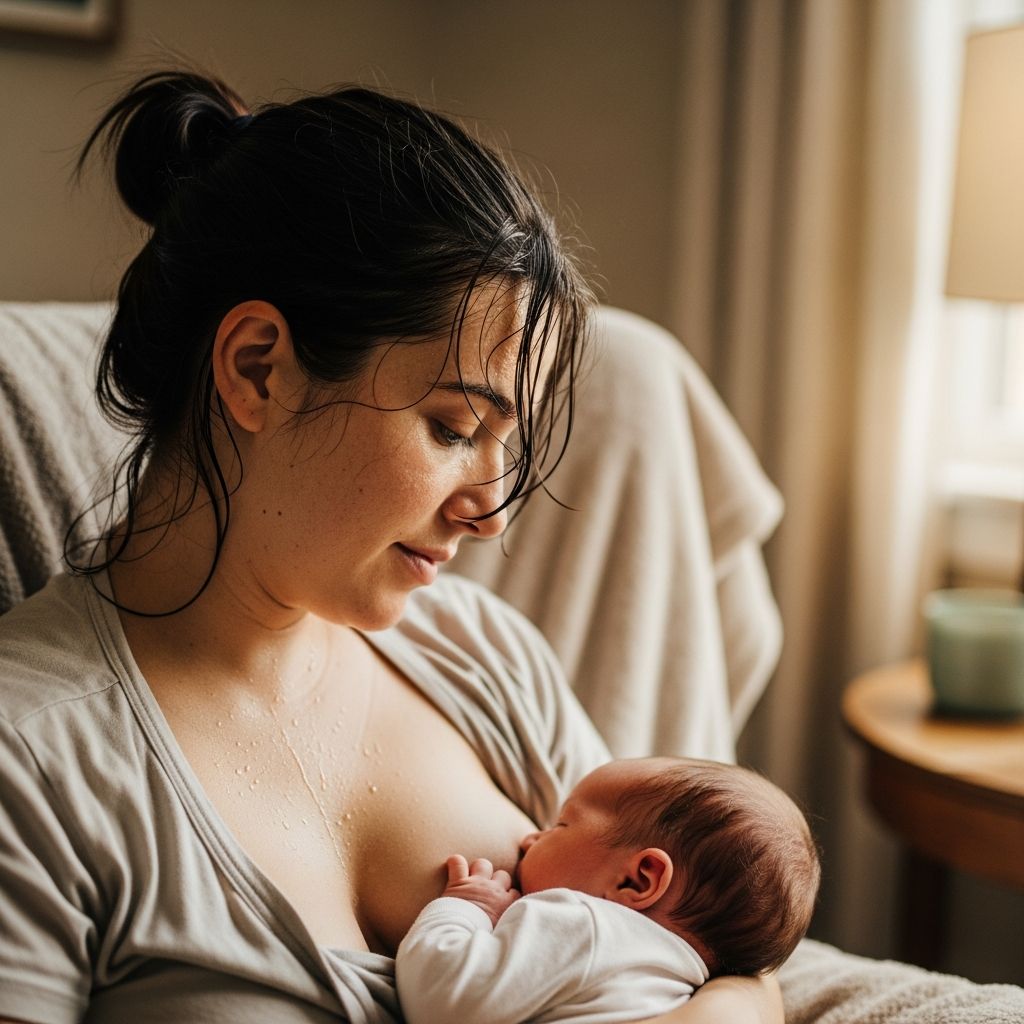
Breastfeeding is often described as peaceful and serene, but many new parents quickly discover a far less glamorous reality: waking up drenched, peeling off damp pajamas, and wondering why feeding a tiny baby feels like running a marathon in a sauna. If you are leaking milk from your chest and sweat from everywhere else, you are not alone.
When Feeding Feels Like a Heat Wave
In the first weeks after birth, it is common to experience sudden waves of heat, flushed skin, and intense sweating during or after breastfeeding sessions. These episodes may show up mostly at night, but they can strike at any time of day, often just as you finally sit down with the baby and a cup of water you will inevitably forget to drink.
Some parents notice that the sweating is most intense in the chest, neck, and scalp, while others feel it all over, from damp hairline to sticky socks. The good news: in most cases, this is a normal part of the postpartum adjustment as your body shifts from pregnancy mode to milk-production mode.
The Hormonal Story Behind Postpartum Sweats
Pregnancy raises the levels of hormones like estrogen and progesterone, which help support the pregnancy and prepare your body for birth. After delivery, especially once the placenta is out, those hormone levels drop rapidly. That hormonal free-fall can confuse the body’s internal thermostat and lead to hot flashes and sweating, very similar to what many people experience in perimenopause.
When you breastfeed, your body also releases prolactin to drive milk production and oxytocin to help your uterus contract and encourage letdown. Prolactin tends to keep estrogen levels lower, which can prolong or intensify those episodes of feeling overheated. The result: your body tries to cool you by opening up blood vessels near the skin and turning on the sweat taps.
Why Breastfeeding Makes It Feel Worse
Breastfeeding does not just involve hormones; it also involves physical effort and a lot of skin-to-skin contact. You are holding a warm, snuggly baby against your chest, often wrapped in blankets, and both of you may be layered in soft but not-always-breathable fabrics. The combined body heat can turn a regular feeding into a mini steam room session.
On top of that, many new parents are exhausted, dehydrated, and recovering from blood loss and physical stress. All of these factors can make your body more sensitive to temperature swings, so even mild warmth can feel like an inferno while you are nursing.
Common Patterns: How Postpartum Sweats Tend to Show Up
Everyone’s experience is different, but some patterns are especially common during breastfeeding:
- Night sweats: Waking up drenched, needing to change pajamas or sheets, often after a long feeding stretch or cluster feeding.
- During letdown: Feeling a sudden rush of warmth or a flush in the face and chest when milk lets down or when the baby starts to suck more vigorously.
- Post-feed chills: Feeling hot and sweaty during the feed, then strangely chilled once the sweating slows and your damp clothes start to cool.
- Early weeks intensity: The first two to six weeks after birth often feel the most dramatic, with episodes gradually easing as your hormones settle and your milk supply stabilizes.
Normal Sweats vs. Warning Signs
While most breastfeeding sweats are harmless, it is important to know when they might signal something more serious. Normal postpartum sweating tends to come in waves, especially at night, and is not usually paired with severe pain or feeling very unwell.
Red flags that deserve a call to your healthcare provider include persistent high fever, severe headache, burning or pain when urinating, significant breast pain with redness, or feeling shaky and ill in a way that does not improve with rest and fluids. Trust your instincts—if something feels off, it is always worth asking.
Quick reference: Heat vs. Health Concerns
| Symptom | Likely Normal | Needs Medical Advice |
|---|---|---|
| Sudden warmth during or after feeds | Yes, especially in early weeks | Only if paired with other worrisome symptoms |
| Night sweats that soak pajamas | Common in first weeks postpartum | Concerning if paired with chills and high fever |
| Mild breast tenderness and fullness | Often normal engorgement | Check in if you see redness, feel a hard lump, or have fever |
| Feeling tired but otherwise okay | Expected with a newborn | Seek help if fatigue is severe or sudden |
| Feeling lightheaded with fast heartbeat | Sometimes from standing quickly or dehydration | Call your provider if persistent or severe |
Practical Ways to Stay Cooler While Nursing
You cannot control your hormones, but you can change your surroundings and routines to feel less overheated. Small, realistic adjustments often make feeding sessions more comfortable, even when your body insists on turning on the internal space heater.
Consider layering, airflow, and hydration as your three main tools. The goal is not to eliminate sweating entirely, but to make it more manageable so that you are not constantly peeling yourself off the couch or changing your clothes at 3 a.m.
Cooling strategies you can try
- Think breathable, not bulky: Choose loose, cotton or moisture-wicking tops instead of thick or synthetic fabrics, and use a lightweight nursing bra when possible.
- Layer your bedding: Use several thin blankets instead of one heavy comforter so you can quickly peel layers off if you overheat during a feed.
- Use targeted airflow: A small fan near your usual nursing spot can help cool your face and chest without blasting the baby.
- Keep a towel handy: Store a soft hand towel or small muslin cloth in your feeding area to dab sweat from your neck, chest, and hairline.
- Cool cloth trick: A cool (not icy) washcloth on the back of your neck or across your forehead during feeds can feel surprisingly soothing.
- Hydrate regularly: Keep a large water bottle at every nursing station and take sips whenever the baby latches or switches sides.
Setting Up a Sweat-Friendly Nursing Nest
Your feeding corner can make a big difference in how intense the heat feels. A cozy, cushioned chair is wonderful, but if it traps body heat and lacks airflow, it may amplify those sweaty moments. With a few tweaks, you can create a space that supports both comfort and bonding.
Think of your nursing environment as part rest stop, part command center. A few strategic items within arm’s reach can reduce stress and keep you from feeling trapped under a sleeping baby and a blanket while sweat trickles down your back.
Checklist for a cooler feeding space
- Chair or spot with good back support that does not overheat easily (fabric over leather can help).
- Adjustable lamp to avoid feeling overheated under bright, hot lights.
- Small fan or open window nearby for fresh air.
- Thin, breathable baby blanket that can be partially lifted if both of you start to sweat.
- Table or shelf within reach for water, snacks, burp cloths, and a fresh top if needed.
- Optional: a change of pillowcase or cover for your nursing pillow if it gets damp regularly.
Clothing Choices for You and Baby
The clothes you and your baby wear can either trap heat or help it escape. Newborns need warmth, but they also share your body heat when pressed against your chest. If both of you are overdressed, your postpartum hot flashes will feel even more intense and the baby may get uncomfortable, too.
Light layers allow you to adjust quickly without fully undressing a sleepy baby or yourself. This is especially helpful for middle-of-the-night feeds when the temperature in your home can fluctuate more dramatically.
Wardrobe tips that help
- For you: Breathable nursing tanks, button-up shirts, and soft bralettes made from natural fibers.
- For baby: One light onesie or bodysuit, with a thin swaddle or blanket added only if needed.
- Skip the extras: Hats, thick socks, and heavy swaddles during feeds can trap heat on baby’s head and body.
- Moisture-conscious fabrics: If you are sweating heavily, moisture-wicking maternity underwear and lounge pants can keep you from feeling clammy and chilled later.
Emotional Side of Being Constantly Damp
The physical discomfort of breastfeeding sweats is only part of the story. Many new parents already feel vulnerable, tender, and unsure of their changing bodies. Constant dampness, odor worries, and the need to change clothes often can make it harder to feel like yourself.
It can help to remember that sweating is a sign that your body is actively healing and adjusting, not failing you. Sharing your experience with trusted friends, a partner, or an online support group can normalize what you are going through and lessen the sense of isolation that often creeps in during those warm, sleepless nights.
When to Call Your Healthcare Provider
Most postpartum sweats, even the dramatic ones, do not require treatment beyond time, rest, and common-sense comfort measures. However, you should reach out to a healthcare professional sooner rather than later if you notice symptoms that might indicate infection, thyroid changes, or other complications.
Contact your provider if you experience any of the following in addition to sweating:
- Fever that is 38°C (100.4°F) or higher, especially if it lasts more than a day.
- Severe breast pain, hardness, or redness, which may suggest mastitis.
- Racing heart, shaking, or feeling faint and weak that does not improve with hydration and rest.
- Unexplained weight changes, feeling extremely hot or cold all the time, or mood changes that are unusually intense.
- Any symptom that makes caring for yourself or your baby feel unsafe or impossible.
Support Partners: How You Can Help
If you are supporting someone who is breastfeeding and sweating through the postpartum period, your presence and small, practical gestures can make a big difference. You cannot change their hormones, but you can help create a cooler, calmer environment.
Partners, family members, and friends can take on tasks that feel small but add up—like changing damp sheets, refilling water bottles, or ensuring there is a clean, dry shirt ready after a particularly sweaty feed.
Simple support ideas
- Offer to change bed linens or lay down a clean towel after a night of heavy sweating.
- Bring cold water, a light snack, or a cool washcloth during longer feeding sessions.
- Handle household tasks so the nursing parent can shower or rest without rushing.
- Listen without minimizing; “It’s just hormones” may be true but rarely feels comforting by itself.
Frequently Asked Questions About Breastfeeding Sweats
How long do postpartum sweats usually last?
For many people, the most intense sweating fades within the first several weeks after birth as hormone levels begin to stabilize and the body sheds extra pregnancy fluid. However, if you are breastfeeding, milder episodes may linger longer, especially during growth spurts or major sleep disruptions. If your symptoms feel unusually intense or do not gradually improve, it is reasonable to check in with your healthcare provider.
Is it safe to sleep in a room with a fan on if I am breastfeeding?
Yes, in most situations it is safe and often helpful to use a fan, as long as the baby is dressed appropriately and not in a direct cold draft. Aim the fan so that it circulates air around the room rather than blowing straight on your newborn. This can help you feel cooler during feeds without making the baby too chilly.
Can my sweating affect my milk supply?
Normal postpartum sweating itself does not typically reduce milk supply. However, if you become significantly dehydrated because you are losing fluid through both milk and sweat and not drinking enough, your supply may be affected over time. Sipping water regularly, eating balanced meals when you can, and resting when possible will support both your comfort and your milk production.
Do breastfeeding sweats mean I am sick?
Not necessarily. In many cases, they simply reflect hormonal shifts, fluid loss from pregnancy, and the exertion of feeding and caring for a newborn. That said, any sweating paired with symptoms like high fever, chest pain, severe headache, or strong feelings of being unwell deserves prompt medical attention, even if you suspect hormones are involved.
Will switching to formula feeding stop the sweats?
Stopping breastfeeding may eventually reduce some hormonally-driven sweating, but it will not always bring instant relief, because your body still needs time to readjust. The decision to wean should be based on a combination of factors—your physical comfort, emotional well-being, baby’s needs, and guidance from your healthcare provider—rather than sweating alone. If the heat surges are making life unmanageable, discuss both cooling strategies and feeding options with a professional who understands your overall health.
Looking Ahead: This Phase Will Shift
Breastfeeding sweats can be annoying, uncomfortable, and even discouraging, especially when you are already navigating exhaustion and recovery. Yet they are often a temporary part of the larger postpartum adjustment, a sign that your body is processing fluid and recalibrating after the enormous task of pregnancy and birth.
With practical cooling strategies, support from those around you, and a willingness to reach out for medical advice when needed, most people find that the heat waves gradually quiet down. Until then, there is no shame in extra showers, spare pajamas by the bed, and reminding yourself that your body is working very hard on your behalf—even if it feels a little too warm about it.