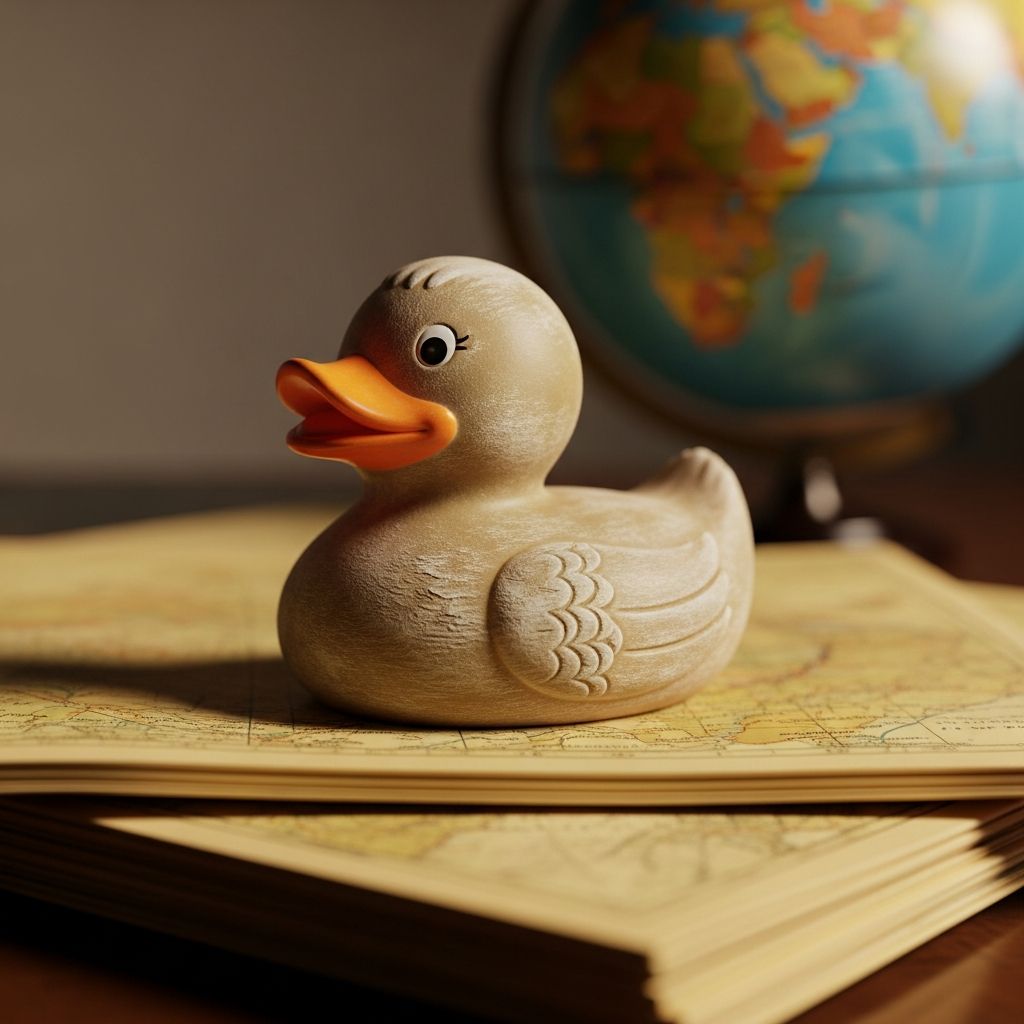
The cheerful yellow duck bobbing in a bathtub looks simple, but its story stretches across chemistry breakthroughs, changing ideas about childhood, clever marketing, and even environmental debates. Over more than a century, the rubber ducky has evolved from a heavy lump of molded rubber into a powerful symbol of comfort, nostalgia, and playful design.
This article explores how that transformation happened, why the ducky still matters to families today, and how a tiny toy can reveal a lot about technology, parenting, and popular culture.
Early Days: When Duckies Didn’t Float
The roots of the rubber ducky lie in the 19th-century revolution in rubber manufacturing, when new processes made rubber easier to mold and more resistant to water and temperature changes. Early duck-shaped toys from this era were solid, heavy, and better suited for chewing or rolling than for floating elegantly in bathwater.
These first duck figures were closer to novelty objects than to the lightweight bath companions we know today. They often sank instead of floating, and they lacked squeakers, bright colors, or child-focused safety standards. In other words, they were duck-shaped, but they weren’t yet “rubber duckies” in the modern sense.
- Materials were dense and rigid, designed for durability rather than buoyancy.
- Ducks were used as chew toys, display pieces, or generic playthings, not as bath-centric toys.
- The connection between ducks and bath time had not yet formed in parents’ minds.
How the Duck Moved into the Tub
The association between ducks and bathtime formed as manufacturers realized that waterproof toys could make washing young children less stressful. As indoor plumbing improved and bathtubs became common household fixtures, toy makers saw a new opportunity: design objects that made the tub feel like a play space rather than a place for chores.
Ducks were a natural choice. Their shape suggested water, they looked friendly, and they could be simplified into rounded, safe forms that were kind to small hands. Over time, parents began to see bath toys not as frivolous extras but as small tools that could help children relax and cooperate with daily hygiene.
The Design Evolution: From Hard Rubber to Squeaky Smile
As materials science advanced in the 20th century, toy ducks transformed from heavy rubber blocks into hollow, floating objects made from lighter compounds like vinyl and flexible plastics. This shift was crucial: it allowed ducks to ride the surface of the water, squeak when squeezed, and survive countless bath sessions without cracking.
Manufacturers also refined the duck’s appearance. The most enduring design elements—soft curves, a rounded beak, and minimal facial features—were deliberate choices that made the duck seem gentle and non-threatening, tapping into what designers call “cuteness” cues: big head, small body, simple features, and bright colors.
| Feature | Early Duck Toys | Modern Rubber Ducky |
|---|---|---|
| Material | Solid, hard rubber; heavy and rigid | Soft vinyl or plastic; flexible and lightweight |
| Buoyancy | Often sank or only partially floated | Designed to float upright on water |
| Sound | No squeaker; largely silent | Built-in squeaker for audio feedback and play |
| Color palette | Muted or variable colors | Iconic bright yellow with orange beak |
| Purpose | Chew toy, novelty, or generic plaything | Dedicated bath toy and comfort object |
Yellow, Squeaky, and Universally Recognizable
One of the most fascinating aspects of the rubber ducky is how a very specific visual formula became globally recognizable: sunny yellow body, orange bill, black dot eyes, and a simple smile. Even when ducks come in wild variations—pirate ducks, superhero ducks, medical ducks—the classic configuration remains the anchor.
Yellow is not just cheerful; it is highly visible in water, which helps both children and caregivers keep track of the toy during bath time. The squeak, meanwhile, gives children direct sensory feedback. That sound turns the duck into an object that responds to their actions, building an early sense of cause and effect.
Why Parents Still Reach for the Ducky
The rubber ducky’s staying power is closely tied to how it supports simple but important aspects of child development. While it is not a sophisticated educational tool, it nudges children to explore water, sound, and imaginative play in a low-stakes environment. For parents, it doubles as a quiet ally in the nightly bath routine.
Rubber duckies can help children feel in control during a moment that otherwise involves a lot of adult-directed tasks like washing hair or rinsing soap. Giving a child a familiar toy to “wash” or “talk to” shifts part of the focus away from discomfort and toward play.
Developmental benefits in the bathtub
- Sensory exploration: Squeezing, splashing, and pouring around the duck introduce basic physics and tactile sensations.
- Fine motor skills: Gripping, dunking, and balancing the duck work small hand muscles.
- Language practice: Naming colors, counting ducks, and inventing stories encourage early vocabulary.
- Emotional comfort: A consistent bath companion provides predictability, which can reduce anxiety.
From Bath Toy to Pop Culture Star
The rubber ducky’s leap from bathroom corner to pop culture fame came through music, television, advertising, and visual art. Songs and TV skits featuring rubber ducks turned them into shorthand for childlike joy, innocence, and goofy affection, so that even adults without children could instantly recognize the symbol.
As the duck gained this cultural visibility, it began to appear far beyond household tubs: in photographs, cartoons, greeting cards, and even large-scale public art installations. Its simplicity makes it easy to stylize, parody, or exaggerate, which has helped the ducky adapt to each new media era without losing its core identity.
Everyday symbolism of a small toy
- As a visual joke, the duck signals silliness and light-heartedness.
- As a design motif, it can represent childhood or domestic life in a single image.
- As a nostalgic object, it reminds adults of early routines, caregivers, and family rituals.
The Rise of Rubber Ducky Collecting
What began as a mass-produced bath toy has also become a surprisingly serious collectible. Limited editions, themed series, and travel souvenirs have turned the duck into a miniature canvas for designers. Some enthusiasts track down rare ducks from specific manufacturers or decades, while others focus on quirky interpretations like rock star ducks or holiday-themed versions.
Collecting taps into nostalgia and the pleasure of variation on a simple theme. Each duck is a playful remix of an iconic form, which makes them ideal for display on shelves, office desks, or bathroom ledges. In some cities, shops and small museums even dedicate entire walls to thousands of duck designs.
Popular types of collectible duckies
- Location ducks: Souvenir ducks representing cities, landmarks, or national flags.
- Character ducks: Ducks styled as superheroes, historical figures, or professions.
- Seasonal ducks: Holiday-themed designs for winter celebrations, Halloween, or springtime.
- Artist-designed ducks: Limited series created by illustrators or product designers.
Rubber Ducky as Design Classic
Design critics and museums have increasingly paid attention to everyday objects that combine function, emotion, and instantly recognizable form. The rubber ducky fits neatly into this conversation. It delivers on its practical role as a bath toy while also existing as a small piece of industrial design with a clear aesthetic language.
Many design principles are at work in the classic duck: use of bold color for visibility, reduction of details to avoid clutter, and smooth, forgiving forms that encourage touch. The object answers a simple question—“What shape feels friendly in water?”—and refines that answer to the point where almost any viewer can identify the silhouette in a split second.
Modern Concerns: Safety and Sustainability
Today’s caregivers weigh factors that early duck owners rarely considered: chemical safety, mold buildup, and plastic waste. Traditional squeaky ducks with a small hole in the bottom can trap water inside, leading to hidden mold growth if they are not cleaned and dried carefully. This has driven some parents to seek sealed designs or hole-free ducks for peace of mind.
Environmental concerns have also entered the conversation. Rubber ducks are usually made from plastics that do not biodegrade quickly, raising questions about what happens when a bath toy is discarded—or when it accidentally escapes into rivers and oceans. Stories of shipping containers spilling thousands of ducks into the sea have become a symbol for how industrial goods can end up in unexpected places.
Choosing a safer, more eco-conscious duck
- Look for ducks made from materials free from controversial additives and labeled for infant or toddler use.
- Consider solid or sealed designs to reduce the risk of trapped water and mold.
- Replace heavily worn or damaged ducks instead of passing them down indefinitely.
- Explore options made from alternative or partially recycled materials when available.
Simple Cleaning and Care Tips
With a few easy habits, a rubber ducky can remain a safe and pleasant part of bathtime for a long time. Regular cleaning matters because warm water, soap, and bathroom humidity create conditions where microbes can grow inside and on the surface of bath toys.
Developing a quick routine after each bath also reinforces for children that taking care of things is part of play. When kids help line up ducks to dry, it turns an end-of-bath chore into one more small game.
Basic care checklist
- Rinse the duck in clean water after each bath to remove soap residue.
- Squeeze out as much water as possible if the duck has an air hole.
- Let ducks dry in an open, well-ventilated area instead of a closed container.
- Inspect regularly for discoloration, odor, or visible residue inside the toy.
- Retire ducks that show persistent buildup, cracks, or deformities.
Turning Bath Time Into a Mini Adventure
Beyond its role as a simple floaty friend, the rubber ducky can anchor small rituals that transform bath time into a predictable, soothing experience for children. Rituals are powerful: they tell a child what to expect, and they help caregivers move through the evening without renegotiating every step.
Using a duck as the “host” or “captain” of bath time is a low-effort way to add personality to the routine. The same toy appears every night, announces the next step, and then “says goodnight” at the end, creating a story arc even in a short bath.
Ideas for duck-centered bath rituals
- Give the duck a name and let your child greet it at the start of the bath.
- Use the duck to “demonstrate” rinsing hair or washing toes on itself first.
- Invent a simple recurring storyline, such as the duck visiting different “islands” (toys or corners of the tub).
- End each bath with the duck “going to sleep” on a shelf or in a small container.
Rubber Ducky in the Digital Age
Even as screens have moved into almost every corner of daily life, the physical rubber ducky remains stubbornly relevant. Digital animations and apps sometimes depict duckies, but the analog version—warm water, real toy—offers a kind of sensory experience that screens cannot easily replace.
This contrast may be one reason the duck endures. It belongs firmly to the tactile world, where weight, temperature, and texture matter. For families trying to balance technology with hands-on play, the ducky can function as a small, comforting reminder of the value of simple, screen-free moments.
Frequently Asked Questions About Rubber Duckies
1. Are rubber duckies actually made of rubber?
Most contemporary “rubber” duckies are made from plastics such as vinyl or other synthetic materials rather than natural rubber. The term “rubber duck” has become more about the shape and idea than about the exact material.
2. At what age is a rubber ducky appropriate?
Many duckies are marketed for infants and toddlers, but age recommendations vary according to size and design. Caregivers should check packaging for safety labels and avoid very small ducks or detachable parts for babies who still explore primarily by mouthing objects.
3. How often should bath toys like rubber duckies be replaced?
There is no single timeline, but a good rule of thumb is to replace duckies when they show visible wear, persistent odors, or stains that do not come off with regular cleaning. Heavy daily use, very hard water, or frequent soap buildup may shorten a toy’s lifespan.
4. Can rubber duckies go in the dishwasher?
Some bath toys are labeled as dishwasher-safe, but not all. Putting a duck that is not designed for high heat into a dishwasher can warp its shape, damage the squeaker, or weaken seams. When in doubt, a warm, soapy hand wash and thorough rinse is safer.
5. Why are so many rubber ducks yellow?
The yellow color makes ducks easy to see in water, reads as cheerful, and contrasts well with typical bathroom and bathtub colors. Over time, the yellow duck became the default visual standard, so even unusual designs are often understood by comparison to that classic version.
More Than Just a Toy
From industrial byproduct to bath staple, from children’s toy to design icon, the rubber ducky has floated through many roles without losing its core appeal. It offers a case study in how a simple object can become emotionally loaded: symbolizing warmth, safety, and playful connection between caregiver and child.
In a world full of complex devices and fast-changing trends, the enduring charm of the ducky comes from its simplicity. It does one thing very well—float, squeak, and smile—and in doing so, it quietly shapes memories of some of the most ordinary, and most meaningful, moments of early childhood.