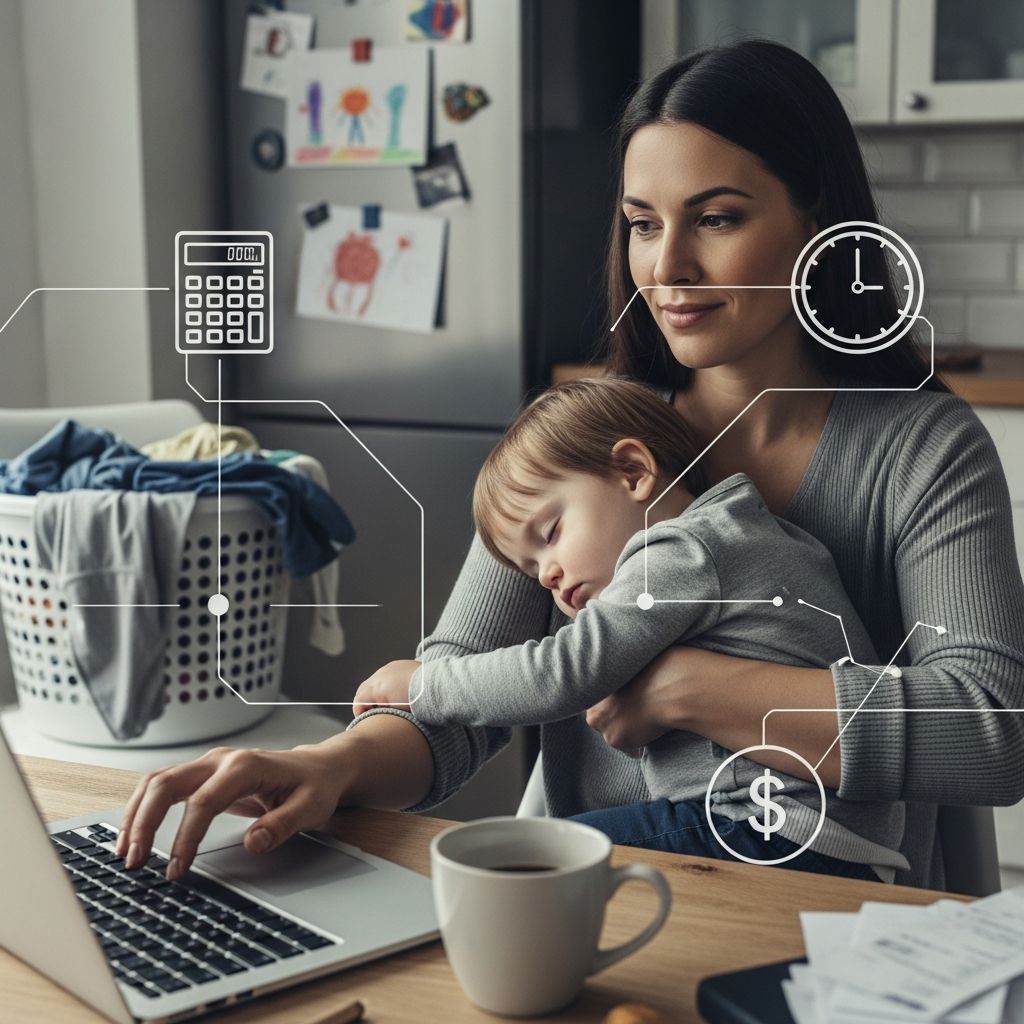
Mothers worldwide shoulder a disproportionate share of unpaid care and household tasks, forming an essential but overlooked pillar of modern economies. This labor, encompassing childcare, cooking, cleaning, and emotional support, sustains families and fuels societal productivity, yet remains statistically invisible and undervalued.
Defining the Scope of Unseen Family Labor
Unpaid family care work addresses a broad spectrum of needs, from physical care for children, the elderly, or ill relatives to emotional nurturing and domestic maintenance. Globally, women—predominantly mothers—dedicate over two and a half times more hours to these tasks than men, with disparities reaching tenfold in regions like India and Morocco. In low-income rural areas, women may spend up to 14 hours daily on such duties, compounded by inadequate infrastructure like water access or sanitation.
This work is not merely supplemental; it underpins the paid economy by enabling workforce participation. For instance, in the U.S., 74% of mothers with children under 18 are in the labor force, yet they manage additional unpaid responsibilities at home. Without this invisible support, economies would grind to a halt, as it prepares the next generation for education and employment while maintaining household stability.
The Massive Economic Footprint Ignored by GDP
Estimates place the value of unpaid care work at 10% to 39% of GDP across nations, rivaling major industries yet excluded from official metrics. Women and girls perform over 75% of global unpaid care, comprising two-thirds of the paid care workforce as well. In the U.S., the gender gap persists despite narrowing trends, with women spending significantly more lifetime hours on these tasks.
Consider these stark global realities:
- 45% of working-age women are sidelined from paid labor due to care duties, versus just 5% of men.
- 42% of women worldwide cannot take jobs because of caregiving, compared to 6% of men.
- 80% of 67 million domestic workers are women, with 90% lacking social security and over half facing unlimited hours.
This exclusion perpetuates cycles where mothers’ contributions prop up economies without remuneration or recognition, distorting true productivity measures.
Gender Disparities: Mothers Bear the Brunt
The unequal division creates a ‘second shift’ for working mothers, who after full-time jobs return to exhaustive home duties. In the U.S., most mothers are breadwinners or co-breadwinners, yet handle the bulk of childcare and chores. Demographic factors amplify this: married women, those with lower education, or from certain racial/ethnic groups face heavier loads.
| Factor | Impact on Women’s Unpaid Work | Data Insight |
|---|---|---|
| Employment Status | Working mothers average more total hours (paid + unpaid) | U.S. mothers: 74% employed, plus full home load |
| Global Region | Rural low-income: up to 14 hrs/day | Women 2.5-10x more time than men |
| Marital Status | Married women do more household tasks | Persistent U.S. gender gap |
| Care Workforce | Women dominate paid/unpaid care | 75%+ unpaid globally |
Such imbalances limit career advancement, as unexpected family needs clash with work demands, leaving mothers without flexible options.
Economic Penalties and Poverty Traps
Mothers face a ‘motherhood wage penalty,’ earning less post-childbirth even after adjusting for education and occupation. Lifetime losses exceed $295,000 per U.S. mother due to reduced hours and wages from caregiving. Globally, this traps women in dependency, especially single mothers or those in developing nations lacking public services.
Unpaid work blocks economic participation: without time for paid jobs, mothers remain vulnerable to poverty. Care jobs, often filled by women, are undervalued and low-paid, reinforcing inequality. High-income families may outsource to low-wage workers—disproportionately women of color—highlighting class and racial divides.
Health and Well-Being Toll on Mothers
The relentless load leads to burnout, chronic stress, and public health crises. Juggling paid work with home duties erodes rest and leisure, heightening exhaustion risks. In the U.S., working mothers’ dual burdens exacerbate time conflicts during illnesses or emergencies.
Long-term, this affects physical health (e.g., from physical labor) and mental well-being, with women reporting higher fatigue. Policies ignoring this contribute to broader societal costs, as healthier mothers yield productive families and communities.
Pathways to Visibility and Equity
Addressing this requires systemic shifts. Key recommendations include:
- Conduct regular Time Use Surveys to quantify and integrate unpaid work into GDP and labor stats.
- Provide social protections like pensions crediting care periods and training for carers.
- Invest in infrastructure: childcare, water, healthcare to reduce unpaid burdens.
- Promote shared household responsibilities via paternity leave and cultural campaigns.
- Enact policies per UN SDG 5.4: value unpaid work through services and family sharing.
U.S.-specific steps: family leave expansions, subsidized childcare, and paid sick days to ease the second shift. Globally, recognizing care as human rights advances gender equality.
Frequently Asked Questions
What percentage of global unpaid care work do women perform?
Women and girls handle over 75% of unpaid care worldwide, often 2.5 to 10 times more than men.
How does unpaid labor impact mothers’ earnings?
It causes a motherhood wage penalty, with U.S. mothers losing over $295,000 lifetime from lower wages and hours.
Why is unpaid work excluded from GDP?
It’s deemed non-market, yet valued at 10-39% of GDP; Time Use Surveys can make it visible.
What policies can reduce gender gaps in care work?
Infrastructure, public services, shared responsibility promotions, and care credits in pensions per SDG 5.4.
Does the care burden vary by demographics?
Yes—higher for rural, low-income, married women; U.S. gaps persist by race, employment.
This FAQ section addresses common queries, optimizing for search intent on mothers’ labor issues.
Societal Benefits of Recognizing Care Work
Valuing mothers’ unpaid labor yields ripple effects: better child development, stronger economies, and gender parity. Early care investments build future workforces, while equitable sharing boosts women’s participation, growing GDPs by billions. Nations prioritizing this—via policies like those in SDG frameworks—see healthier populations and reduced poverty.
Ultimately, reframing care as economic infrastructure dismantles inequalities, empowering mothers as equal economic actors.
References
- Mothers’ unpaid family care work: vital but invisible and unrecognised — Make Mothers Matter. 2023. https://makemothersmatter.org/poles-of-action/mothers-and-the-economy/unpaid-family-care-work-vital-but-invisible-and-unrecognised/
- An Unequal Division of Labor — Center for American Progress. 2015-10-26. https://www.americanprogress.org/article/unequal-division-labor/
- Eco-mom-ics: 5 fast facts about mothers in the U.S. economy — U.S. Department of Labor Blog. 2024-05-09. http://blog.dol.gov/2024/05/09/eco-mom-ics-5-fast-facts-about-mothers-in-the-us-economy
- Not all gaps are created equal: the true value of care work — Oxfam. 2020. https://www.oxfam.org/en/not-all-gaps-are-created-equal-true-value-care-work
- Providing Unpaid Household and Care Work in the United States: Uncovering Inequality — Institute for Women’s Policy Research (IWPR). 2020. https://iwpr.org/providing-unpaid-household-and-care-work-in-the-united-states-uncovering-inequality/
- FAQs: What is unpaid care work and how does it power the economy? — UN Women. 2023. https://www.unwomen.org/en/articles/faqs/faqs-what-is-unpaid-care-work-and-how-does-it-power-the-economy