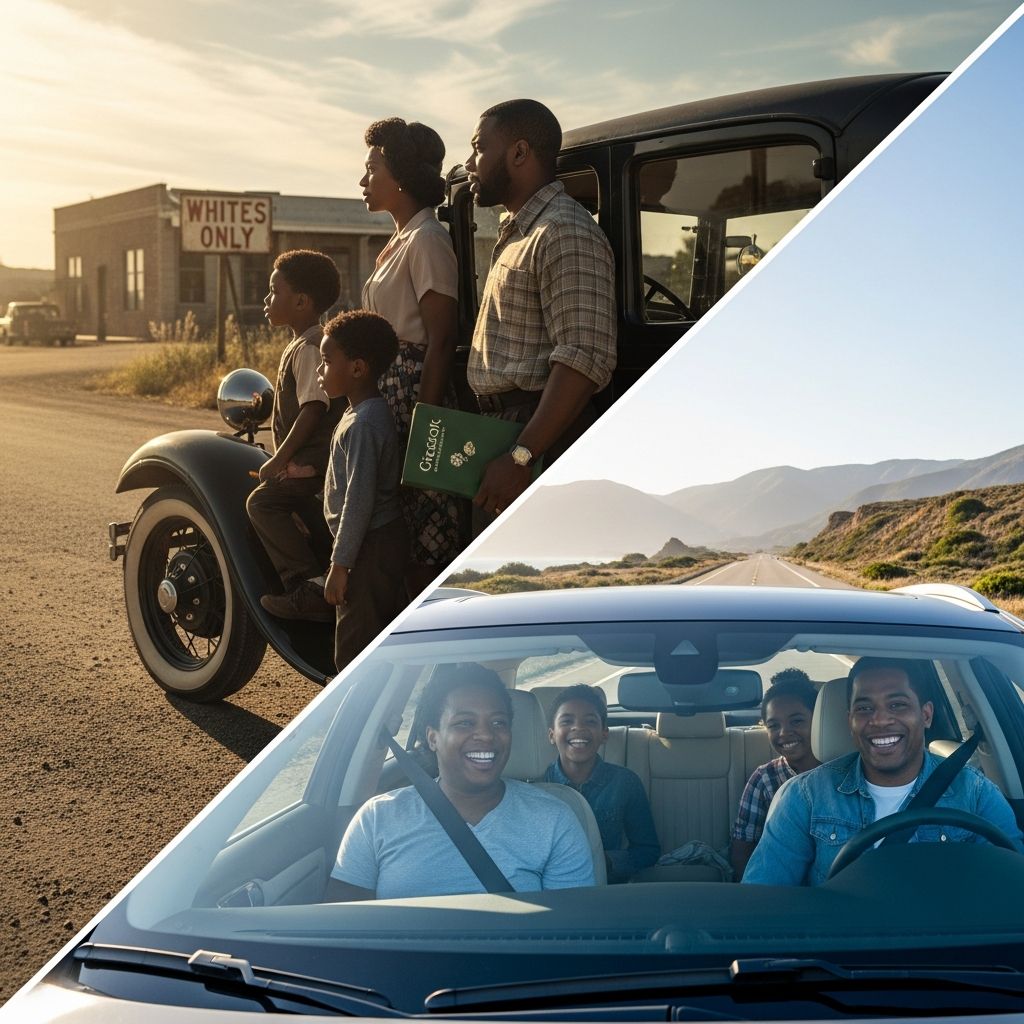
Travel by car offered a semblance of freedom during America’s segregation era, but for Black motorists, it was fraught with peril. Essential stops for fuel, food, and rest often meant denial, humiliation, or violence, prompting innovative survival strategies that persist in cultural memory today.
The Shadow of Segregation on American Highways
In the mid-20th century, Jim Crow laws turned routine drives into high-stakes gambles for African American families. Highways symbolized mobility for white Americans chasing the open road dream, yet Black drivers faced systemic exclusion from motels, diners, and rest areas. A wrong stop could lead to harassment or worse, especially after dark in unfamiliar territories.
Communities enforced unwritten rules through intimidation. Certain towns posted warnings or enforced curfews for non-whites after sunset, creating invisible barriers that shaped travel routes. Families packed meals, used the restroom before departure, and limited stops to trusted networks, turning vacations into endurance tests.
- Denial of basic services like gas stations and bathrooms was commonplace.
- Violence risks escalated in rural areas away from urban protections.
- Word-of-mouth advice formed the backbone of safe passage before printed guides emerged.
Birth of the Negro Motorist Green Book: A Lifeline for Travelers
Victor H. Green, a Harlem postal worker, recognized the dire need for reliable information in 1936. His Negro Motorist Green Book began as a slim 15-page directory for New York, expanding nationally by leveraging postal colleagues, salespeople, and Black business owners for listings of welcoming establishments.
Distributed at Esso stations via a partnership with Standard Oil, the guide listed hotels, eateries, service stations, and more. By 1966, its final edition covered all states and some abroad, fulfilling Green’s vision of equal access post-Civil Rights Act. He optimistically noted in 1948 that such a guide would soon be obsolete with true equality.
| Edition Year | Scope | Key Features |
|---|---|---|
| 1936 | New York State | 15 pages, local hotels and restaurants |
| 1948 | National expansion | Includes Green’s hopeful editorial |
| 1957 | Full U.S. coverage | Simple directories with addresses |
| 1966 | Final edition | International listings added |
This resource not only boosted Black-owned businesses but empowered travelers to plan confidently, fostering economic loops in underserved communities.
Everyday Realities: Stories from the Road
Personal accounts reveal the tension. One family’s cross-country trek avoided side-window service at eateries, opting for home-packed provisions. Night driving was taboo due to heightened dangers on dimly lit backroads before interstates matured.
Boarding houses run by middle-class Black families dotted routes, like a Phoenix musician’s back rooms or El Paso’s grocer apartments. Cities like Meridian, Mississippi, segregated starkly along railroad tracks, underscoring geographic divides.
Green Book sites were lifelines in small towns hours from highways, prioritizing safety over convenience. Travelers navigated these with caution, aware that even listed spots could falter under pressure.
Legal Milestones Paving the Way Forward
The Civil Rights Act of 1964 outlawed discrimination in public accommodations, theoretically ending the Green Book’s necessity. Interstate expansion further democratized travel, reducing reliance on perilous detours.
Yet progress was uneven. Enforcement lagged in rural pockets, and subtle biases endured. The shift marked a turning point, allowing Black families to explore without constant fear, though vigilance remained.
Reviving History: Modern Recreations of Green Book Routes
Today, enthusiasts retrace these paths to honor resilience. Writer Lawrence Ross followed the 1957 edition on a 2,700-mile journey from Los Angeles to Virginia, seeking original sites without prior research for authenticity.
He patronized Black-owned spots where possible, discovering abandoned stores in El Paso and vibrant eateries in Dallas like Island Spot for oxtails or Recipe Oak Cliff for vegan fare. Avoiding night travel mirrored era-specific risks.
Route 66, an iconic path, highlights this via National Park Service initiatives tying the Green Book to Black experiences, from Chicago to Illinois towns.
Embracing Heritage: Civil Rights Road Trips Today
Contemporary Black travel celebrates history through themed itineraries. The U.S. Civil Rights Trail spans Southern states, hitting Montgomery’s boycott sites, Selma’s interpretive centers, and Jackson’s Medgar Evers Museum.
From Charleston’s Civil War flashpoints to St. Augustine’s movement hubs, these routes via I-95 and beyond blend education with adventure. Tougaloo College and Farish Street in Mississippi showcase Black enterprise.
- Montgomery: Rosa Parks Museum and Freedom Rides exhibits.
- Selma: Brown Chapel and Voting Rights Museum.
- Jackson: Civil Rights Museum with interactive stories.
RV enthusiasts explore Black History Month destinations, amplifying cultural immersion.
Persistent Challenges in the Post-Segregation Era
Despite advances, modern Black road trippers report profiling, unwelcoming service, and safety concerns in certain areas. Sundown legacies linger in attitudes, prompting apps and networks akin to the Green Book for current recommendations.
Statistics show traffic stops disproportionately affect Black drivers, evoking historical anxieties. Families still strategize routes, choosing diverse or urban stops.
Tools and Tips for Safe, Enriching Black Road Trips
Leverage digital aids:
- Apps listing Black-owned businesses and safe havens.
- Virtual tours like Route History’s 2025 Route 66 Black Experience.
- Communities sharing real-time advice on social platforms.
Plan heritage stops for meaning, pack essentials, and travel in groups for security. Support Black entrepreneurs to sustain the legacy.
Frequently Asked Questions
What was the primary purpose of the Negro Motorist Green Book?
It guided Black travelers to safe hotels, restaurants, and services during segregation, published from 1936 to 1966.
Are sundown towns still a concern today?
While illegal, some areas retain hostile vibes; research routes via modern networks.
How can I plan a civil rights-focused road trip?
Follow the U.S. Civil Rights Trail, visiting sites in Alabama, Mississippi, and beyond.
What modern equivalents exist to the Green Book?
Apps and online directories highlight Black-friendly spots and businesses.
Was travel safer after the Civil Rights Act?
Legally yes, but cultural shifts took time; biases persist subtly.
References
- Traveling Through Jim Crow America — National Museum of African American History and Culture. Accessed 2026. https://nmaahc.si.edu/explore/stories/traveling-through-jim-crow-america
- Modern Trips & the ‘Negro Motorist Green-Book’ — Marriott Traveler. Accessed 2026. https://traveler.marriott.com/black-travel/lawrence-ross-modern-day-travels-with-the-green-book/
- Route 66 and the Historic Negro Motorist Green Book — U.S. National Park Service. 2025-01-21. https://www.nps.gov/articles/000/route-66-and-the-historic-negro-motorist-green-book.htm
- Southeast USA Tour: Driving Through Civil Rights History — Visit The USA. Accessed 2026. https://www.visittheusa.com/trip/changing-course-freedom-civil-rights-history-tour
- African American History Road Trip — AAA Trip Canvas. Accessed 2026. https://www.aaa.com/tripcanvas/roadtrip/african-american-history-road-trip-AA147
- Route History: Highlighting the African American Experience on Route 66 — Google Arts & Culture. Accessed 2026. https://artsandculture.google.com/story/oQUxUVQepkYnhA
- Following the Footsteps of Civil Rights Giants on Your Own Road Trip — U.S. Civil Rights Trail. Accessed 2026. https://civilrightstrail.com/experience/following-the-footsteps-of-civil-rights-giants-on-your-own-road-trip/
- Three Destinations to Explore Black History in the U.S. — Thor Industries. Accessed 2026. https://www.thorindustries.com/stories/rv-destinations-black-history-month