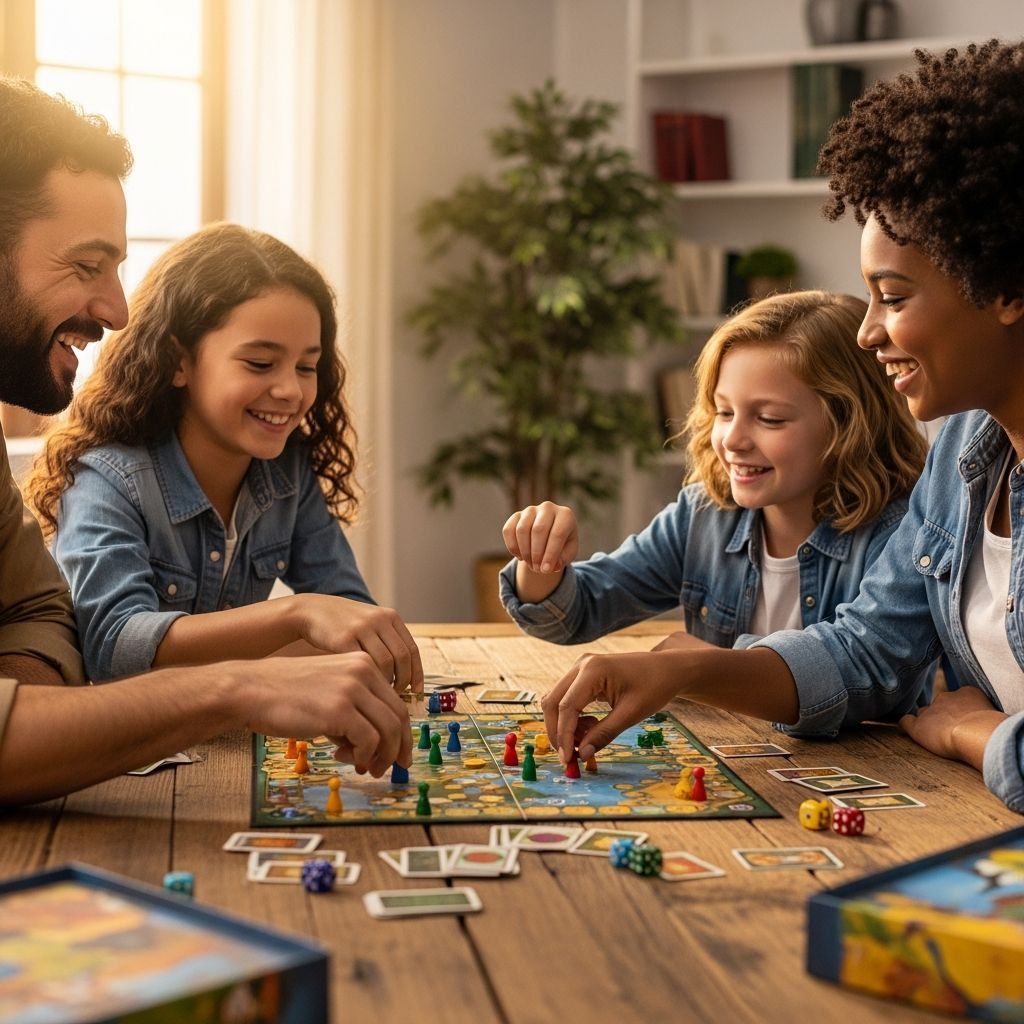
Board games transform ordinary evenings into opportunities for learning and connection. Families who prioritize these activities witness improvements in children’s focus, empathy, and problem-solving abilities while creating cherished memories.
Why Board Games Matter for Child Development
Engaging in board games provides multifaceted advantages that extend beyond mere entertainment. They stimulate brain activity, foster social interactions, and instill essential life lessons in a playful context.
- Cognitive Enhancement: Games demand strategic planning and quick decision-making, sharpening memory and logical reasoning skills.
- Social Skill Building: Turn-taking and rule-following teach patience and cooperation.
- Emotional Regulation: Handling wins and losses gracefully builds resilience and sportsmanship.
Research highlights these impacts. For instance, studies show that regular play improves executive functions like planning and impulse control in young children.
Age-Appropriate Games for Every Stage
Selecting games matched to developmental stages ensures maximum engagement and benefit. Here’s a guide to recommendations across age groups.
For Toddlers (Ages 2-4)
Simple games introduce basic concepts like colors, numbers, and sequencing without overwhelming young players.
| Game | Key Skills | Why It Works |
|---|---|---|
| Candy Land | Color matching, following paths | Visual cues keep it exciting and easy. |
| Chutes and Ladders | Counting, turn-taking | Chance-based play reduces frustration. |
| Hi-Ho! Cherry-O | Basic addition/subtraction | Fruit-picking theme adds fun. |
These titles help toddlers grasp foundational skills through repetition and joy.
For Preschoolers (Ages 5-7)
As children grow, introduce mild strategy to build confidence.
- Connect Four: Encourages pattern recognition and foresight.
- Trouble: Popping the dice builds anticipation and counting.
- Memory Match: Enhances recall and focus.
Play sessions here develop attention spans and decision-making.
For School-Agers (Ages 8-12)
Older kids thrive on complexity, promoting deeper thinking.
| Game | Key Skills | Player Count |
|---|---|---|
| Monopoly | Resource management, negotiation | 2-6 |
| Chess | Strategy, patience | 2 |
| Risk | Planning, risk assessment | 2-6 |
Such games mirror real-world scenarios, teaching budgeting and tactics.
Teen-Friendly and Family Classics
For mixed ages, opt for adaptable games like Ticket to Ride or Settlers of Catan, which scale in difficulty and accommodate larger groups.
Building Stronger Family Connections
Board games create distraction-free zones where conversations flow naturally. Without screens, families share laughs, stories, and emotions, reinforcing bonds.
- Stress Relief: Laughter and endorphin release from play counter daily tensions.
- Quality Time: Dedicated nights provide routine and security for kids.
- Shared Experiences: Joint victories or funny mishaps become lasting anecdotes.
Experts note that these interactions boost emotional intelligence and family cohesion.
Educational Gains Backed by Science
Board games embed learning seamlessly. Math operations appear in scoring, reading in card instructions, and logic in moves.
A University of Wisconsin-Madison study links early game play to better executive functions. Similarly, University of Florida research shows strategy games enhance independent problem-solving.
For health benefits, a review in PMC indicates board games support cognitive maintenance and even aid in managing chronic conditions through structured play.
Practical Strategies for Successful Game Nights
To maximize enjoyment, plan thoughtfully.
- Set a Schedule: Weekly evenings build anticipation.
- Match Skill Levels: Use house rules to include everyone.
- Keep Sessions Short: 20-45 minutes prevents fatigue.
- Debrief Positively: Discuss fun moments post-game.
- Rotate Games: Variety sustains interest.
Address resistance by starting with favorites and gradually introducing new ones. For frustrated players, model calm responses.
Overcoming Common Challenges
Disagreements or uneven skills can arise, but they offer teaching moments.
- Cheating temptations: Emphasize integrity early.
- Sibling rivalry: Pair teams or use neutral facilitation.
- Long games: Time limits keep pace lively.
Psychologists recommend games as alternatives to timeouts, fostering repair over punishment.
Expanding Horizons with Themed Games
Beyond classics, explore themes for targeted growth.
- Geography: Ticket to Ride teaches routes and maps.
- History: Wingspan introduces ecosystems subtly.
- Creativity: Dixit sparks storytelling.
These broaden knowledge while maintaining fun.
Frequently Asked Questions
How often should families play board games?
Once or twice weekly suffices for benefits without overwhelming schedules. Consistency matters more than frequency.
Are board games suitable for large families?
Yes, many support 4-8 players or can be teamed up for inclusivity.
What if my child hates losing?
Start with cooperative games like Pandemic, then transition to competitive ones while coaching graciousness.
Can board games replace formal education?
No, but they reinforce skills playfully, complementing schoolwork effectively.
Which game is best for beginners?
Candy Land or Memory for instant accessibility and quick wins.
Long-Term Impacts on Kids
Consistent play correlates with better academic performance, social adeptness, and emotional stability. Children learn boundaries, fairness, and adaptability—skills vital for adulthood.
Parents report heightened confidence as kids master rules and lead games. In nursing homes, similar activities combat cognitive decline, suggesting lifelong value.
Investing time now yields dividends in resilient, connected families.
References
- The Benefits of Family Board Game Nights — Cornell Blogs Service. 2025-12-19. https://blogs.cornell.edu/communityeducation/2025/12/19/the-benefits-of-family-board-game-nights/
- The Educational Benefits of Board Games — Second Ave Photography. N/A. https://www.secondavephotography.com/educational-benefits-of-board-games/
- The Surprising Benefits Your Kids Get From Playing Board Games — Scholastic. N/A. https://www.scholastic.com/parents/kids-activities-and-printables/activities-for-kids/arts-and-craft-ideas/benefits-board-games.html
- A Narrative Review of the Benefits of Board Games in Health — PMC (PubMed Central). N/A. https://pmc.ncbi.nlm.nih.gov/articles/PMC12535416/
- The Benefits of Board Games — Rhode Island Moms. N/A. https://rhodeislandmoms.com/for-the-family/the-benefits-of-board-games/