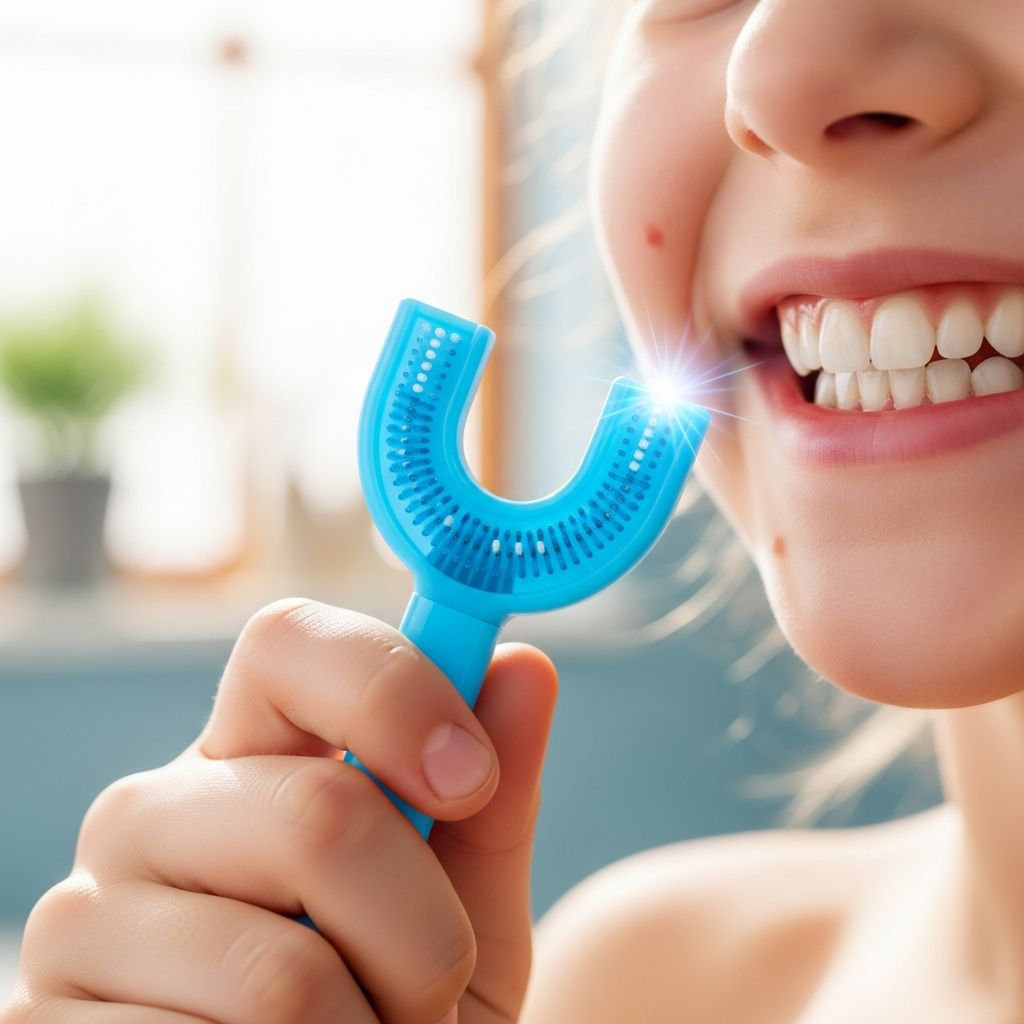
Innovative oral care tools like U-shaped toothbrushes promise to simplify brushing for kids by fitting the mouth’s natural curve, but parents often question their reliability for thorough cleaning and safety. These devices aim to clean multiple teeth simultaneously in seconds, potentially boosting compliance among reluctant brushers, though scientific evidence reveals mixed outcomes on plaque reduction and proper use.
Understanding the Design of U-Shaped Toothbrushes
U-shaped toothbrushes feature a curved, horseshoe-like head that wraps around the dental arch, contrasting with flat-headed traditional brushes. This structure allows insertion into the mouth for simultaneous contact with upper and lower teeth, often paired with vibrations or sonic technology in electric models. Manufacturers claim reduced brushing time—sometimes to 30 seconds—and broader coverage, making them appealing for children with limited dexterity or short attention spans.
Materials typically include soft, BPA-free silicone or nylon bristles to minimize gum irritation. Kid-oriented versions incorporate vibrant colors, character motifs, lights, or music to gamify the process, transforming routine hygiene into an engaging activity. However, the one-size-fits-most approach raises concerns about fit for varying mouth sizes, particularly in toddlers versus older children.
Potential Benefits for Young Brushers
One key advantage lies in fostering brushing habits. Children who resist two-minute sessions with standard brushes may embrace the quick, fun nature of U-shaped models. Pediatric dentists note improved consistency in families where nightly battles occur, as the design encourages independence while parents oversee.
- Time Efficiency: Claims of 20-30 second cleans appeal to busy parents, potentially ensuring twice-daily routines.
- Engagement Boost: Interactive elements like timers or songs help build positive associations with oral care.
- Accessibility: The curve may reach posterior molars better for kids lacking coordination.
- Gentleness: Soft bristles suit sensitive gums, and some models work with braces or dental appliances without harm.
Brands like AutoBrush, which gained American Dental Association (ADA) acceptance, highlight clinical backing for specific sonic U-shaped variants, suggesting viability as a supplementary tool.
Scientific Evidence on Cleaning Performance
Research presents a divided picture. A study in the Journal of Clinical and Experimental Dentistry tested a U-shaped automatic electric toothbrush and found it ineffective for plaque removal compared to manual brushes, attributing shortcomings to inadequate interproximal cleaning. Conversely, other investigations indicate certain models reduce plaque efficiently when properly fitted, with sonic vibrations aiding dislodgement.
Consumer Reports evaluated the AutoBrush Sonic Pro, noting it falls short of conventional electric brushes in stain removal and overall cleaning but excels in ease for special needs users. The ADA emphasizes child-sized heads with soft bristles and fluoridated toothpaste smears for under-3s, without endorsing U-shaped designs broadly.
| Aspect | U-Shaped Toothbrushes | Traditional Brushes |
|---|---|---|
| Plaque Removal | Mixed; weaker in tight spaces | Superior with proper technique |
| Brushing Time | 20-30 seconds | 2 minutes recommended |
| Kid Compliance | High due to fun features | Variable; requires supervision |
| Cost | Higher (replacements needed) | Lower upfront |
Safety Considerations for Children’s Oral Health
These toothbrushes pose low risk when used correctly, thanks to gentle materials that avoid enamel abrasion or gum trauma. No widespread reports link them to injuries, but improper fit—too large for small mouths—can cause discomfort or gagging. Supervision remains essential, especially for ages 2-6, to guide insertion, angling, and toothpaste amounts (a rice-grain smear for toddlers).
Electric variants require battery safety checks to prevent choking hazards. Parents should inspect for bristle wear, replacing heads every 3 months per ADA guidelines. Those with orthodontic work or sensitivities benefit from the non-aggressive design, but consulting a dentist ensures compatibility.
Role of Parental Oversight and Technique
No toothbrush replaces guidance. U-shaped models demand a chewing-like motion rather than scrubbing, which kids may not intuitively master. Demonstrate by having the child bite down gently while vibrating, then follow with flossing and rinsing. Combine with traditional brushes for targeted cleaning of fronts, backs, and chewing surfaces.
Dental professionals stress hybrid approaches: Use U-shaped for habit-building, then a standard brush for precision. Regular check-ups monitor progress, adjusting based on plaque scores or cavities.
Comparing Popular U-Shaped Options
Not all U-shaped brushes perform equally. ADA-accepted models like AutoBrush undergo rigorous testing, outperforming unverified imports. Manual U-shapes lack power, relying on parental assistance, while sonic electrics vibrate at 30,000-40,000 strokes per minute for better results.
- AutoBrush: ADA seal, customizable heads, app integration.
- Generic Silicone: Affordable, manual, best for teething infants.
- Littloo/Feno: Kid-themed, vibration optional, braces-friendly.
Expert Recommendations from Pediatric Dentists
The ADA advises small-headed, soft-bristled brushes for children, prioritizing fluoride toothpaste over design novelty. Pediatric specialists endorse U-shaped for non-compliant kids or those with disabilities, citing compliance gains outweighing moderate cleaning deficits. However, for diligent brushers, conventional options suffice without extra cost.
Ask your child’s dentist: Does my kid need motivation aids? Is mouth size suitable? Always prioritize evidence-based choices.
Frequently Asked Questions
Are U-shaped toothbrushes safe for toddlers?
Yes, with supervision and age-appropriate sizing; soft bristles prevent injury, but monitor for fit.
Do they remove plaque as well as regular brushes?
Evidence varies; some studies show inferiority in interproximal areas, so supplement with traditional methods.
Can kids with braces use them?
Generally safe; gentle action cleans around wires without damage—confirm with orthodontist.
How often replace U-shaped brush heads?
Every 3 months or when frayed, similar to standard electrics.
Are they worth the higher price?
For habit struggles, yes; otherwise, stick to affordable manuals.
Building Lifelong Oral Hygiene Habits
Integrate U-shaped toothbrushes thoughtfully into routines emphasizing education: Explain why brushing matters, model techniques, and celebrate progress. Pair with diet tips—limit sugars—and biannual dental visits. While innovative, they complement—not replace—fundamentals like 2-minute sessions and flossing.
Ultimately, the best tool motivates consistent use. Test under dental advice, tracking improvements in check-ups. Healthy smiles stem from routine, not gadgets alone.
References
- Is it safe to use a U shaped toothbrush for kids? — Littloo. 2023. https://littloo.in/blogs/best-baby-blog/u-shaped-toothbrush-is-it-safe-for-kids
- U-Shaped Toothbrushes for Kids: Are They Worth the Hype? — Lone Star Kids DDS. 2024. https://lonestarkidsdds.com/u-shaped-toothbrushes-for-kids-are-they-worth-the-hype/
- Should I Use a U-shaped toothbrush? — AutoBrush. 2024. https://tryautobrush.com/blogs/dental/should-i-use-a-u-shaped-toothbrush
- U-Shaped Toothbrush – Brush Fast in 30 Seconds — Feno. 2024. https://feno.co/blogs/u-shaped-toothbrushes/brushing-in-30-seconds-can-u-shaped-toothbrushes-really-save-time
- Efficacy of a U-Shaped Automatic Electric Toothbrush in Dental Plaque Removal — National Library of Medicine (PMC). 2020-07-01. https://pmc.ncbi.nlm.nih.gov/articles/PMC7370079/
- We Tried It: Autobrush Sonic Pro U-Shaped Toothbrush — Consumer Reports. 2023. https://www.consumerreports.org/health/toothbrushes/autobrush-sonic-pro-u-shaped-toothbrush-review-a4862758640/
- Toothbrushes — American Dental Association. 2025 (updated). https://www.ada.org/resources/ada-library/oral-health-topics/toothbrushes