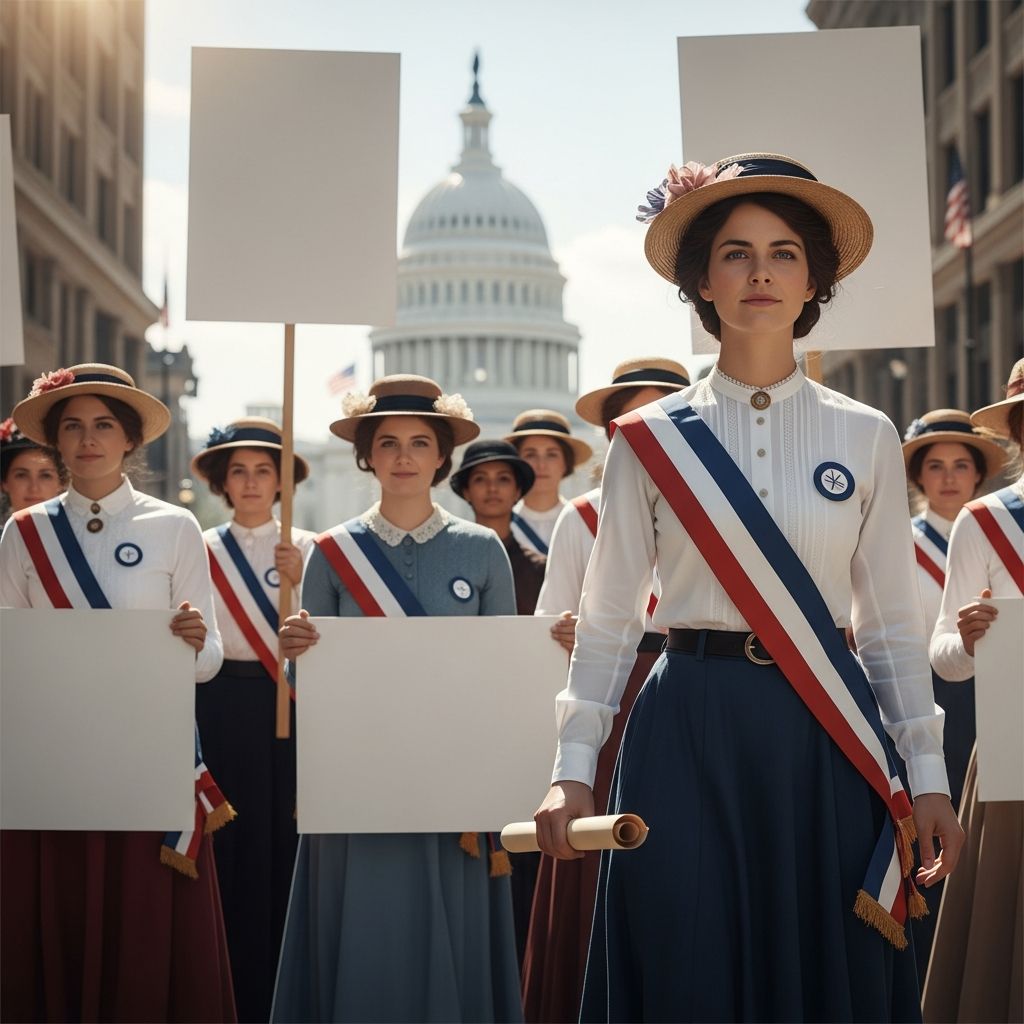
The 19th Amendment to the U.S. Constitution, ratified on August 18, 1920, prohibits denying citizens the right to vote based on sex, enfranchising approximately 26 million women just in time for the 1920 presidential election.
Roots of the Suffrage Movement
The push for women’s voting rights emerged in the mid-19th century amid broader calls for social reform. Activists drew inspiration from the abolitionist movement, where women like Elizabeth Cady Stanton and Lucretia Mott organized the 1848 Seneca Falls Convention. This gathering produced the Declaration of Sentiments, demanding equal rights including suffrage.
Early efforts focused on state-level victories. By 1919, several Western states like Wyoming and Colorado had granted women the vote, building momentum for a national amendment.
Key Organizations Driving Change
Two major groups led the charge: the National American Woman Suffrage Association (NAWSA), led by Carrie Chapman Catt, emphasized lobbying and education, while the more militant National Woman’s Party (NWP), under Alice Paul, employed parades, pickets, and hunger strikes.
These strategies highlighted the hypocrisy of U.S. democracy during World War I, when American women supported the war effort abroad yet lacked basic rights at home.
The Long Road Through Congress
First introduced in 1878, the suffrage amendment faced repeated defeats over four decades. It failed in Congress five times before gaining traction.
In 1918, intense public pressure led President Woodrow Wilson to shift support. He called a special session in May 1919, where the House passed it on May 21 (304-89) and the Senate on June 4 (56-25).
| Year | Event | Outcome |
|---|---|---|
| 1878 | First introduced | Failed |
| 1918 | Wilson’s initial support | House passes, Senate fails |
| 1919 | Special session | Passed by both houses |
Dramatic State Ratifications
Ratification required 36 states. By June 1920, 35 had approved, leaving Tennessee as the pivotal battleground.
In the Tennessee Senate, young legislator Harry T. Burn, initially opposed, received a letter from his mother, Febb Burn: “Hurrah, and vote for suffrage and don’t keep them in doubt.” He switched his vote, securing passage 49-47 on August 18, 1920. The House followed narrowly, 50-46.
Secretary of State Bainbridge Colby certified it on August 26, 1920.
Immediate Election Impact
In the November 1920 election, women voted nationwide for the first time. Turnout reached about 40% for women versus 70% for men, still marking a seismic shift.
- 26 million newly eligible voters added to rolls.
- Warren G. Harding won, but women’s participation influenced future campaigns.
- Candidates began courting female voters explicitly.
Limitations and Exclusions
While transformative, the amendment primarily benefited white women. Black women in the South faced Jim Crow barriers like poll taxes and literacy tests until the Voting Rights Act of 1965.
Native American, Asian American, and Latina women also encountered disenfranchisement based on citizenship or residency rules.
Enduring Legacy in Modern Democracy
The 19th Amendment set a precedent for equality amendments. It boosted women’s roles in politics, leading to figures like Jeannette Rankin, the first woman in Congress (1917, pre-amendment).
Today, it underscores ongoing fights for voting access, inspiring movements like #MeToo and equal pay advocacy.
Lessons from Suffragist Strategies
Suffragists mastered diverse tactics:
- Mass mobilization: Parades drew 5,000 in New York (1917).
- Civil disobedience: NWP “Silent Sentinels” endured arrests.
- Targeted lobbying: Catt’s “Winning Plan” secured Western states first.
Global Ripples
U.S. success influenced international suffrage. New Zealand led in 1893, but the 19th Amendment accelerated global momentum post-WWI.
Frequently Asked Questions
What does the 19th Amendment say exactly?
“The right of citizens of the United States to vote shall not be denied or abridged by the United States or by any State on account of sex.”
Who was Harry Burn and why did he change his vote?
24-year-old Tennessee legislator whose mother’s note swayed him from nay to yea, tipping ratification.
Did all women gain voting rights immediately?
No; racial and citizenship barriers persisted for many women of color until mid-20th century laws.
How long did the fight for suffrage last?
Over 70 years from Seneca Falls (1848) to ratification (1920).
What was women’s voter turnout in 1920?
About 40%, compared to 70% for men.
References
- The 19th Amendment was a Turning Point in American History — University of Virginia Engagement. 2025-08-18. https://engagement.virginia.edu/learn/thoughts-from-the-lawn/20250818-Borch
- Nineteenth Amendment to the United States Constitution — Wikipedia (informational, primary sources referenced). N/A. https://en.wikipedia.org/wiki/Nineteenth_Amendment_to_the_United_States_Constitution
- 19th Amendment to the U.S. Constitution: Women’s Right to Vote — National Archives (.gov). N/A. https://www.archives.gov/milestone-documents/19th-amendment
- The 19th Amendment — Rock the Vote. N/A. https://www.rockthevote.org/explainers/the-19th-amendment/
- 19th Amendment — Crusade for the Vote. N/A. https://www.crusadeforthevote.org/19-amendment
- Woman Suffrage Centennial – Nineteenth Amendment Vertical Timeline — U.S. Senate (.gov). N/A. https://www.senate.gov/about/women-of-the-senate/nineteenth-amendment-vertical-timeline.htm
- Impact of the Nineteenth Amendment Beyond the Supreme Court — Constitution Annotated, Congress.gov (.gov). N/A. https://constitution.congress.gov/browse/essay/amdt19-5/ALDE_00013829/