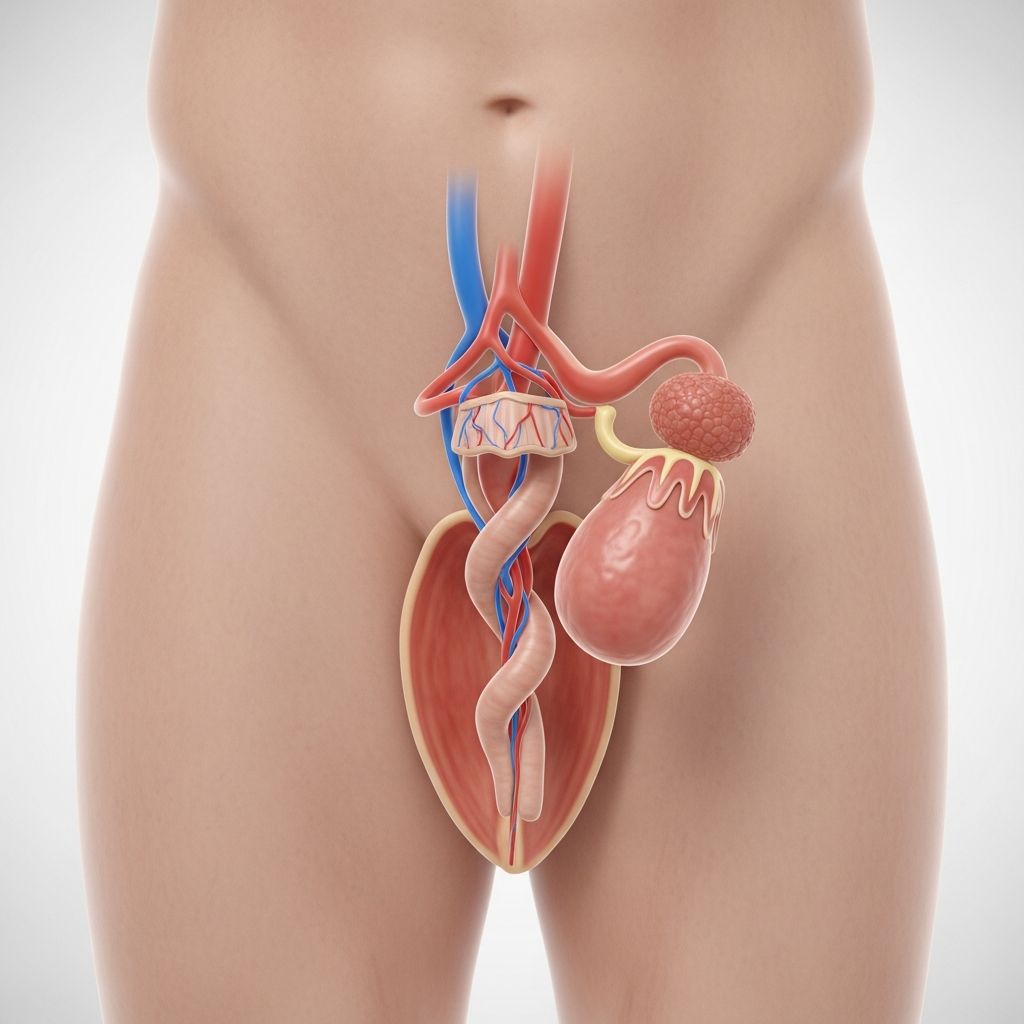
Sudden testicular pain in a child or teen is frightening, both for the young person and for caregivers trying to decide what to do. Testicular torsion is one of the most urgent causes of this pain, and it requires rapid action to save the affected testicle and protect future fertility.
What Is Testicular Torsion?
Testicular torsion happens when the spermatic cord, the bundle of blood vessels and tissues that supplies a testicle, twists on itself. This twisting blocks blood flow to the testicle, much like a kink in a garden hose stops water from reaching the end. Without enough blood, testicular tissue is quickly damaged and can die if the problem isn’t fixed in time.
Although it can sound intimidating, the key idea is simple: torsion cuts off circulation, and only surgery can untwist and stabilize the testicle. Time is the most important factor; the sooner treatment occurs, the higher the chance the testicle can be saved.
Who Is Most at Risk?
Testicular torsion can occur at almost any age, including in newborns and adults, but it appears most frequently in boys during childhood and adolescence. The teenage years, especially around early to mid-puberty, are a peak time because the testicles grow and move more, which can make twisting more likely in some anatomies.
- Most common in older children and teenagers.
- Can occur in newborns, though this is less frequent.
- Usually affects only one testicle at a time.
Some young people have a particular way their testicles sit in the scrotum that makes twisting easier, but often torsion appears without any known risk factor or obvious cause.
Why It Is a True Emergency
The testicles are very sensitive to interruptions in their blood supply. When the spermatic cord twists, damage can begin within a few hours. The longer the testicle is deprived of blood, the lower the likelihood that it can be saved, even with surgery.
Doctors consider testicular torsion a surgical emergency. This means it should be treated as urgently as a possible stroke or severe breathing problem. Waiting at home to see if the pain goes away, or delaying until a regular clinic opens, can result in loss of the testicle and may impact long-term hormone production and fertility.
Typical Time Window for Saving the Testicle
| Time from onset of pain | General outlook for the testicle* |
|---|---|
| 0–6 hours | Best chance of full recovery if surgically untwisted quickly. |
| 6–12 hours | Chance of saving the testicle decreases as hours pass. |
| 12–24 hours | Significant risk that damage is permanent, even after surgery. |
| More than 24 hours | Testicle is often too damaged and may need to be removed. |
*These ranges are general estimates; individual cases differ. Immediate evaluation offers the best protection.
Key Warning Signs Parents Should Know
Testicular torsion typically has a sudden and dramatic beginning. A boy who was completely fine earlier in the day can abruptly develop severe pain and distress. Recognizing these symptoms helps caregivers act quickly.
Common Symptoms
- Sudden, intense pain in one testicle, often described as sharp or throbbing.
- Swelling or enlargement of one side of the scrotum.
- Redness or a darker color of the scrotal skin.
- Nausea or vomiting that may start around the same time as the pain.
- Lower belly or groin pain, sometimes felt more in the abdomen than in the scrotum.
- Testicle that appears higher than usual or tilted at an unusual angle.
- Difficulty walking, standing upright, or participating in normal activities due to pain.
Occasionally, the pain may seem to come and go, especially if the testicle twists and partially untwists on its own. Even if discomfort improves temporarily, torsion can return and cause more serious damage. Any episode of unexplained testicular pain needs urgent medical assessment.
Subtle Signs in Younger Children and Babies
Infants and very young children cannot describe their pain, so signs may be more indirect. Caregivers might notice:
- Persistent fussiness or inconsolable crying, especially when the diaper area is touched.
- Swelling, firmness, or color changes in the scrotum.
- Reluctance to have the legs moved during diaper changes or when being dressed.
If something about the scrotum looks suddenly different or a baby seems unusually upset when the area is handled, emergency evaluation is essential.
How Is Testicular Torsion Diagnosed?
If torsion is suspected, the child or teen should be evaluated immediately in an emergency setting. Time spent arranging routine office visits can be dangerous. Once at the hospital, the healthcare team moves quickly to determine whether torsion is likely.
What to Expect at the Hospital
- Medical history: The clinician will ask when the pain started, how intense it is, and what other symptoms are present.
- Physical exam: A careful examination of the scrotum, testicles, abdomen, and groin looks for specific signs such as swelling, tenderness, and position changes.
- Imaging tests: An ultrasound of the scrotum may be ordered to assess blood flow to the testicles.
When the signs strongly suggest torsion, surgeons may recommend proceeding directly to surgery even before imaging is completed. In these situations, saving time takes priority over gathering every possible test result.
The Role of Surgery
Testicular torsion cannot be reversed with medicines or by waiting; surgery is required. The procedure is usually done under general anesthesia so the patient is asleep and does not feel pain.
What Happens During Surgery?
- The surgeon makes a small incision in the scrotum to access the affected testicle and spermatic cord.
- The twisted cord is gently untwisted to restore blood flow to the testicle.
- The surgeon assesses the color and appearance of the testicle to judge whether it is healthy enough to keep.
- If tissue appears viable, the testicle is stitched to the inner scrotal wall to prevent future twisting.
- The opposite testicle is usually secured in place during the same operation, since it may share the same tendency to twist.
If the testicle has been without blood supply too long and is severely damaged, it may need to be removed. Although this is upsetting to think about, removing a non-functioning testicle protects overall health and reduces the risk of complications such as infection.
Recovery and Long-Term Outlook
Most children and teens recover well after surgery for testicular torsion. The time needed to return to normal activities varies, but many can resume light daily tasks within a few days. More strenuous activities take longer to reintroduce.
Short-Term Recovery Tips
- Follow all pain control instructions and use medications exactly as prescribed.
- Keep the surgical area clean and dry as directed, watching for signs of infection such as increasing redness, swelling, or discharge.
- Encourage wearing supportive underwear or a scrotal support if recommended, which can reduce discomfort as healing occurs.
- Limit running, jumping, heavy lifting, and sports until the surgeon gives clear approval.
The emotional side of recovery is just as important. Teens, in particular, may feel embarrassed, scared, or angry about what happened. Open, nonjudgmental conversations and reassurance about long-term health are crucial.
Fertility and Hormone Considerations
Many patients maintain normal hormone levels and fertility if the affected testicle is saved and continues to function. Even when one testicle is removed, the remaining testicle can often produce sufficient testosterone and sperm to support puberty, sexual function, and the potential for future parenthood.
- Regular follow-up with a urologist or pediatric specialist helps monitor growth, hormone levels, and development.
- In older teens and adults, semen analysis or hormone testing may be recommended later if there are questions about fertility.
If self-image is a concern, especially following removal of a testicle, a testicular prosthesis (a soft implant placed in the scrotum) can be discussed with the surgical team once healing has progressed.
Helping Your Child Talk About Testicular Health
Talking about genitals can be awkward for families, but open conversations make early detection of problems more likely. Boys who understand what is normal are better prepared to notice and report changes right away.
Encouraging Healthy Communication
- Use correct anatomical terms such as “testicles” and “scrotum” from a young age to normalize the conversation.
- Explain that pain, swelling, or changes in the shape or color of the scrotum are always important to share with a trusted adult.
- Emphasize that no one will be angry or embarrassed if a child speaks up about these symptoms; prompt reporting is responsible and mature.
For teens, discussions can include testicular self-awareness: knowing how the testicles usually look and feel, so differences are noticed early. This does not need to be a formal monthly exam; simply paying attention during showering or dressing can help.
Can Testicular Torsion Be Prevented?
Not all cases of testicular torsion can be prevented, especially when the cause is related to how the testicles are attached inside the scrotum. However, once torsion has occurred, surgery that secures both testicles in place reduces the chance of future twisting.
- There is no reliable exercise or lifestyle change that completely removes the risk.
- Wearing protective gear during contact sports is still important to prevent other types of testicular injuries.
- The most effective “prevention” of serious harm is early recognition and rapid treatment.
If a child or teen has had sudden testicular pain in the past that improved on its own, this should be discussed with a doctor. Episodes of pain that come and go may represent intermittent torsion, which still deserves careful evaluation.
What Parents Should Do in an Emergency
When testicular torsion is a possibility, caregivers do not need to decide the exact diagnosis at home. The goal is to act quickly and let medical professionals determine the cause. Any significant testicular pain should be treated as an emergency until proven otherwise.
Action Steps
- Take sudden, severe scrotal or testicular pain seriously, even if it begins at night or during a weekend.
- Avoid giving food or drink if surgery is likely, unless instructed otherwise by medical staff.
- Go directly to an emergency department or call local emergency services if the child is in extreme pain or cannot travel safely by car.
- Do not wait to see whether the pain disappears; early hours are critical.
Parents often worry about “overreacting,” but in this situation, prompt evaluation is always the safer choice. If it is not torsion, the medical visit still addresses pain that needs attention and reassurance.
Frequently Asked Questions (FAQs)
1. Does testicular torsion only happen after an injury?
No. Although some cases follow a bump or minor trauma, many occur suddenly during sleep or ordinary daily activities. The underlying issue is usually how the testicle is attached inside the scrotum, not just an external injury.
2. Can testicular torsion fix itself without surgery?
Occasionally the testicle may twist and then untwist, causing pain that comes and goes. Even if symptoms improve, torsion can recur and may last longer the next time. Because there is no way to know at home whether twisting has completely resolved or whether damage has occurred, surgery is needed to secure the testicle and prevent future episodes.
3. Will my child be able to have children in the future?
Many individuals who experience testicular torsion go on to have normal fertility, especially if the affected testicle is saved. Even when one testicle is removed, the remaining one can often produce enough sperm and hormones for typical sexual development and the possibility of future parenthood.
4. How can I tell the difference between torsion and other causes of pain, like infection?
Torsion and infections such as epididymitis may share symptoms like pain and swelling, so it is difficult and sometimes impossible for families to distinguish them. Because torsion threatens the blood supply to the testicle, any sudden or intense testicular pain should be evaluated urgently; medical professionals will perform an exam and, if needed, imaging tests to identify the exact cause.
5. Is my child at higher risk if a relative has had testicular torsion?
Family history can suggest that a shared anatomical tendency, such as increased testicular mobility, might be present. While not every relative will experience torsion, it is reasonable to be extra alert to symptoms in a child whose close family member has had the condition.
6. Can a removed testicle be replaced with an implant?
Yes. After healing from the initial surgery, doctors can discuss placing a testicular prosthesis. This implant does not produce hormones or sperm, but it helps the scrotum look more symmetrical, which may be important for self-confidence during adolescence and adulthood.
Key Takeaways for Parents and Caregivers
- Sudden testicular pain is never something to ignore or wait out at home.
- Testicular torsion is a time-sensitive emergency; rapid surgery offers the best chance to save the testicle.
- Most young people recover well with proper treatment, and normal growth and future fertility are often still possible.
- Open, supportive communication about genital health encourages children and teens to speak up early when something feels wrong.
Understanding testicular torsion empowers parents and caregivers to act swiftly and confidently in a stressful situation. While no one wants to face a medical emergency, knowing the warning signs and next steps can make a crucial difference in protecting a child’s health and future.