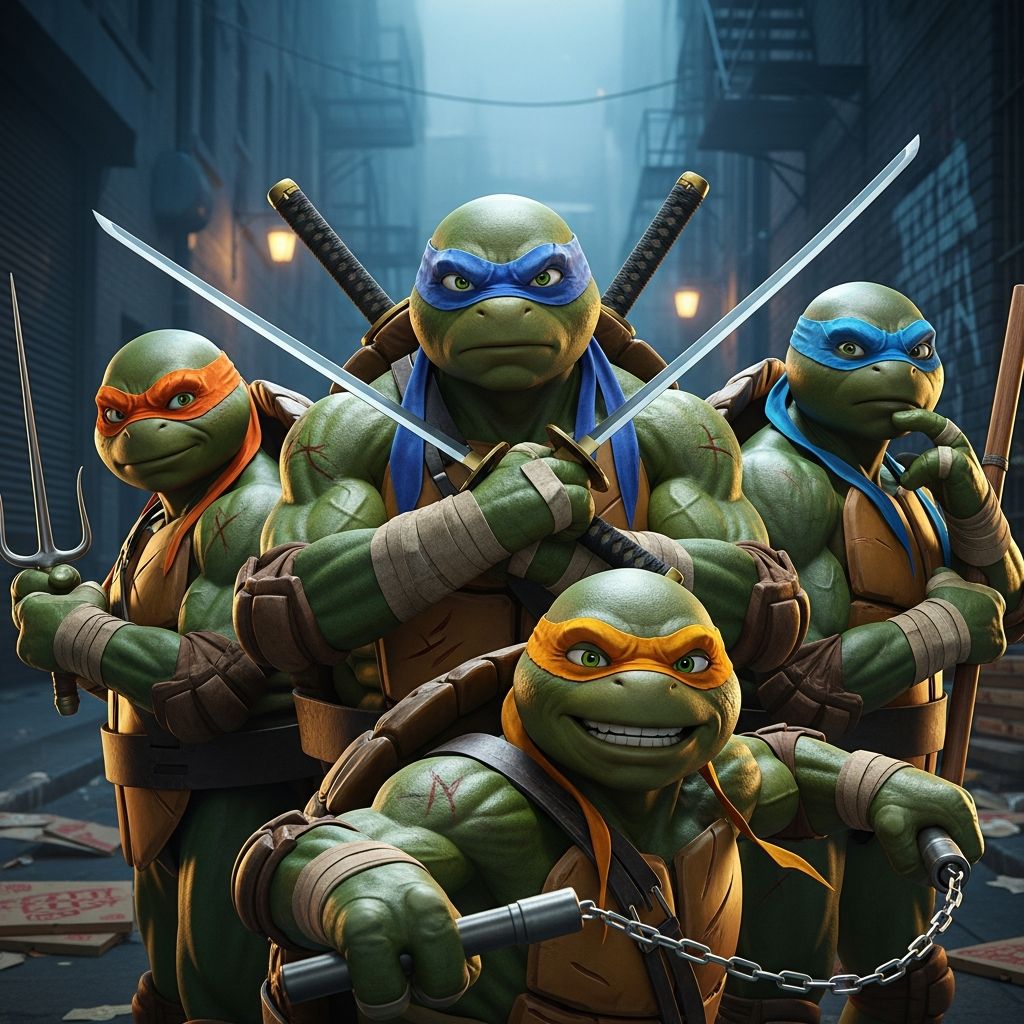
Four turtles, a sewer lair, a wise rat, and way too much pizza: Teenage Mutant Ninja Turtles has been part of childhood for more than four decades. It began as an indie parody comic in the 1980s and has since turned into a sprawling franchise of cartoons, movies, toys, and video games, constantly reinventing itself for new kids while tugging at the memories of their parents.
The latest animated film, Teenage Mutant Ninja Turtles: Mutant Mayhem, is built squarely on that mix of fresh energy and warm nostalgia. Parents who once shouted “Cowabunga!” on playgrounds are now taking their own kids to meet the heroes in a half-shell, discovering that the Turtles have changed just enough to feel new—without losing what made them magical in the first place.
From Kitchen-Table Comic to Global Phenomenon
The Turtles’ story starts humbly. In 1983–84, independent cartoonists Kevin Eastman and Peter Laird self-published the first Teenage Mutant Ninja Turtles comic through their tiny Mirage Studios, funding the print run with savings, a tax refund, and a family loan. The book was a dark, tongue-in-cheek riff on gritty superhero comics of the time—but it unexpectedly took off in the emerging direct-market comic scene.
Very quickly, that black-and-white comic evolved into a transmedia franchise:
- Licensing deals turned the Turtles into action figures, lunchboxes, and video game characters.
- An animated TV series launched in 1987, softening the tone and pushing the property into mainstream children’s entertainment.
- Live-action films followed in the 1990s, expanding their global reach.
What started as parody became earnest pop culture—yet the core remained: four brothers, each with a distinctive personality, trying to balance ninja heroics with very normal teenage anxieties.
The Core Ingredients of TMNT Nostalgia
For many adults, the phrase Teenage Mutant Ninja Turtles immediately summons specific sensory memories: the shouty theme song, plastic action figures with clunky weapons, VHS tapes worn thin from rewatching, and the squishy feel of cheap pizza at birthday parties. But beneath those details are deeper emotional anchors.
1. A Weird Concept That Shouldn’t Work—but Does
The Turtles are a bizarre mash-up of ideas—mutants, ninjas, teenagers, and reptiles—yet somehow they form a cohesive whole. Early comics leaned into this absurdity with deadpan seriousness, making the concept even funnier and more compelling. That tension between silliness and sincerity is part of why the franchise continues to feel unique.
2. Archetypal Brothers You Instantly “Get”
Each Turtle taps into a simple archetype that kids and adults immediately recognize:
| Turtle | Color | Weapon | Core Archetype |
|---|---|---|---|
| Leonardo | Blue | Katanas | Responsible leader |
| Raphael | Red | Sai | Hot-headed rebel |
| Donatello | Purple | Bō staff | Tech-minded brainiac |
| Michelangelo | Orange | Nunchaku | Party-loving goofball |
Within a few scenes, kids can see themselves—or their siblings—in one of the brothers. Adults revisit that simple personality test every time a reboot arrives: “I used to be a Michelangelo, but now I think I’m more of a Donatello.”
3. Comfort Food Storytelling
The Turtles’ world is built around comfort: greasy pizza, late-night TV, found family, and the familiar rhythm of fighting bad guys before heading home to the lair. Even when the franchise goes darker—as in some comics and the 2003 TV series—the bones of a feel-good formula remain: loyalty, humor, and the reassurance that the brothers will be there for each other in the end.
Reinvention Across Decades
Unlike many properties locked into one definitive version, TMNT has survived by reinventing itself repeatedly while keeping its basic DNA intact. Major eras include:
- Mirage comics era (1984–1990s) – Gritty, violent, aimed at older readers; more of a cult favorite, but the source of many storylines.
- 1987 animated series – Brighter, funnier, and kid-friendly; this is the version that cemented the Turtles as global icons, complete with colored masks and catchphrases.
- 1990s live-action films – Practical suits, street-level New York, and a tone that balanced comedy with moody visuals.
- 2003 & 2012 animated reboots – Reintroduced the Turtles to new generations, blending serialized storytelling with modern action and humor.
- 2014–2016 live-action reboots – Big-budget CGI-heavy blockbusters tapping into contemporary superhero trends.
Each new iteration sets its own rules for tone and design—yet the family relationships, the underground setting, and the core villain roster (Shredder, the Foot Clan, various mutants) keep everything recognizably TMNT.
Where Mutant Mayhem Fits In
Teenage Mutant Ninja Turtles: Mutant Mayhem positions itself as both a love letter to the past and a bold stylistic shift. It embraces a hand-drawn, sketchy look, rough edges, and a very contemporary sense of humor. Just as earlier shows modernized language and references, this film leans into the way actual teens speak today, while still honoring the hopeful, slightly chaotic spirit of the Turtles.
For nostalgic adults, it offers recognizable touchstones:
- The mentor-figure of Splinter guiding his sons.
- The tension between wanting to stay hidden and wanting to join the human world.
- The joy of found family and misfit solidarity among mutants.
For kids, it functions as:
- A fast-paced, visually inventive adventure.
- A story about belonging and identity during adolescence.
- An introduction to a franchise their parents probably grew up with—creating an instant family talking point.
Mutant Mayhem as a Bridge Between Generations
Family films today often rely on dual-audience design: jokes and references for adults layered beneath bright colors and slapstick for kids. TMNT, with its long history, is naturally suited for this approach. Parents who once collected figures or watched Saturday morning cartoons are now sharing that universe with their children in theaters and at home.
Watching Mutant Mayhem together can become a multigenerational experience in several ways:
- Shared language – Kids pick up character names and traits; parents add context from older versions (“In my cartoon, April looked different, and Shredder was…”).
- Comparing eras – The movie invites conversation about how animation styles, music, and jokes have changed since the 1980s and 1990s.
- Relating over adolescence – Parents remember their own teenage years as they watch the Turtles navigate acceptance, fear, and peer pressure.
Talking With Your Kids About TMNT Themes
Underneath the quips and action scenes, TMNT stories often explore themes that resonate with families. After seeing Mutant Mayhem or revisiting older shows, you can use the Turtles as a springboard for thoughtful discussions.
Identity and Feeling Different
The Turtles are literally outsiders: mutants living in the sewers, afraid of how the world might react. This makes them powerful metaphors for any child who feels different because of their interests, personality, appearance, or background.
- Ask: “Which Turtle do you feel most like, and why?”
- Discuss times when your child has felt like they were on the outside looking in.
- Highlight how the brothers support each other’s quirks instead of trying to be identical.
Sibling Rivalry and Teamwork
TMNT may be full of ninjutsu and mutant brawls, but the emotional heart is sibling dynamics. Leonardo struggles with leadership, Raphael with anger, Donatello with feeling overlooked, and Michelangelo with not being taken seriously.
- Compare the Turtles’ bickering to real-life sibling arguments.
- Note how they fight fiercely—but also apologize, adapt, and seek to understand one another.
- Reinforce the idea that disagreements don’t erase love or loyalty.
Role Models, Flaws, and Growth
Unlike some polished superheroes, the Turtles are messy. They make bad choices, rush into battle unprepared, and frequently ignore Splinter’s advice. This imperfection is a strength: it shows kids that growth comes from mistakes, persistence, and listening to others.
You can ask:
- “Who made the biggest mistake in this story, and how did they try to fix it?”
- “What would you have done differently if you were on the team?”
Balancing Nostalgia With Modern Sensibilities
Parents revisiting TMNT may notice differences from the versions they grew up with, and that can be both nostalgic and jarring. Violence, gender representation, and cultural stereotypes in older media often look different through today’s lens. Newer incarnations—including Mutant Mayhem—tend to adjust tone and character portrayals to better fit contemporary values.
If you explore older cartoons or movies with your child, consider:
- Contextualizing outdated elements – Briefly explain that certain jokes or character designs reflected a different era and why they might not be okay now.
- Highlighting positive constants – Courage, loyalty, and friendship still hold up, even if some surface details feel old-fashioned.
- Encouraging media literacy – Ask your child what feels different between the older and newer versions, and whose story gets more focus.
How TMNT Stacks Up in the Modern Superhero Landscape
Today’s kids are surrounded by superheroes, from the sprawling Marvel Cinematic Universe to DC icons and anime protagonists. TMNT holds a distinct space among them:
- Scale – The Turtles mostly protect one city, not the entire universe; their stories feel more intimate and personal.
- Tone – Even at their darkest, TMNT tales usually retain humor and a sense of fun, rather than pure cynicism.
- Setting – New York’s alleys, rooftops, and sewers give the franchise a concrete, lived-in backdrop.
- Grounded stakes – Saving friends, family, or a neighborhood can be just as compelling for kids as saving galaxies.
Creating New Traditions With Old Turtles
Nostalgic franchises thrive not just on what they were, but on how families use them to create new rituals. TMNT is particularly easy to build into small, meaningful traditions.
- Pizza-and-movie nights – Make homemade pizza (letting kids choose “mutant” toppings) while watching an episode or film.
- DIY ninja training – Turn safe, padded “training” into a game about balance, focus, and teamwork rather than combat.
- Art and storytelling – Encourage kids to design their own mutant characters or imagine a new villain for the Turtles to face.
- Library trips – Seek out TMNT graphic novels; comics remain the heart of the franchise’s storytelling craft.
Frequently Asked Questions (FAQs)
Is Mutant Mayhem a good entry point if my kids have never seen TMNT before?
Yes. It is designed as a standalone introduction, with updated designs and a self-contained story. Knowledge of earlier shows or movies is not required, but parents familiar with older versions will catch extra references and winks.
How old should kids be to watch most TMNT content?
Age appropriateness varies by version. The classic 1987 cartoon and many later animated series aim at elementary-age viewers, while some comics and live-action films are darker and more intense. Checking ratings and watching trailers together is a practical way to gauge fit for your child.
What makes TMNT different from other superhero teams?
The Turtles are a tight-knit family first and a superhero squad second. Their conflicts center on trust, responsibility, and acceptance rather than global politics or cosmic threats. Their status as mutants and outcasts also foregrounds themes of belonging and self-acceptance.
Why do adults stay attached to TMNT for so long?
The franchise often lines up with formative childhood memories: favorite toys, early cartoon watching, trips to the theater, and playground role-play. Because the property keeps rebooting, those memories get refreshed whenever a new version arrives, giving adults a reason to revisit the turtles with fresh eyes—and now with their own children.
Do I need to know the full TMNT history to enjoy Mutant Mayhem?
Not at all. The film works on its own. Understanding the broader history—from the 1984 comics to earlier films—can enrich your appreciation of how it evolves the formula, but it is not a prerequisite for enjoying the story.
References
- Teenage Mutant Ninja Turtles (TMNT) — Encyclopaedia Britannica. 2024-01-10. https://www.britannica.com/topic/Teenage-Mutant-Ninja-Turtles
- The Complete History of Teenage Mutant Ninja Turtles — Mental Floss (J. Garcia). 2012-03-21. https://www.mentalfloss.com/article/30862/complete-history-teenage-mutant-ninja-turtles
- ‘Teenage Mutant Ninja Turtles’ Franchise Explained: Comics, Shows, Films — Collider. 2023-07-26. https://collider.com/teenage-mutant-ninja-turtles-franchise-explained-comics-shows-films/
- Teenage Mutant Ninja Turtles in Film — Wikipedia (filmography overview; consult cited studio sources). 2023-08-01. https://en.wikipedia.org/wiki/Teenage_Mutant_Ninja_Turtles_in_film