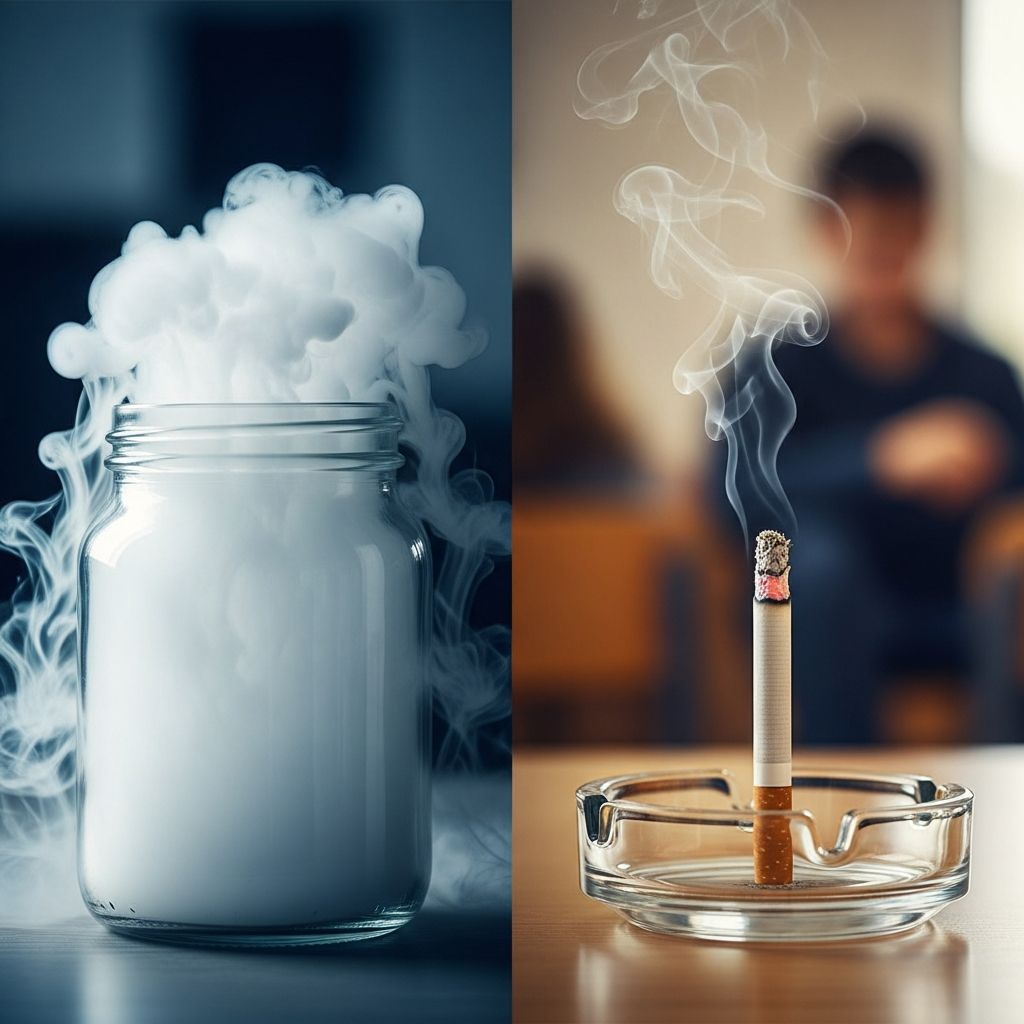
Many teens are curious about smoking or vaping, especially when friends are doing it or when it seems normal on social media. But nicotine products come with real risks that start early and can follow you into adulthood. This guide explains what happens to your body and brain, why quitting is hard, and how you can protect yourself and your future.
1. Why Teens Start Smoking or Vaping
People rarely decide to smoke or vape because they want health problems. Most of the time, it starts for everyday reasons that feel harmless in the moment.
- Curiosity: Wanting to know what it feels like to smoke or vape.
- Fitting in: Friends, classmates, or older siblings are doing it.
- Stress or emotions: Using nicotine to cope with anxiety, sadness, or boredom.
- Image and identity: Wanting to seem older, rebellious, or confident.
- Easy access: Someone offers a cigarette or vape, or products are easy to buy.
- Misleading beliefs: Thinking vaping is just flavored air or that “social smoking” is safe.
Almost all people who end up smoking as adults started when they were teens or young adults. That is exactly why tobacco and vape companies design flavors, ads, and products that appeal to younger people.
2. What Nicotine Does Inside a Teen Body
Nicotine is the chemical that makes cigarettes, e-cigarettes, and many vapes addictive. It affects nearly every part of your body, but it is especially powerful when your brain is still developing.
2.1 Brain development and thinking
Your brain keeps developing until about age 25, and nicotine can interfere with that process.
- Makes it harder to focus, learn, and remember information.
- Affects areas of the brain that control attention, mood, and impulse control.
- Increases the chance of future addiction to nicotine and other substances.
Because the teen brain is still wiring itself, it becomes addicted to nicotine more quickly and more strongly than an adult brain.
2.2 How addiction starts so fast
Many people think you have to smoke a lot to be addicted. Research shows that teens can feel early signs of dependence after only a short time of occasional use.
- Some teens feel nicotine withdrawal symptoms within weeks of experimenting.
- Cravings can appear even before daily use.
- Once addicted, quitting causes irritability, restlessness, and strong urges to use nicotine.
This is why “I’ll only vape sometimes” can quietly turn into “I can’t get through the day without it.”
3. Immediate Effects: What You Notice Right Away
You do not have to wait until you are older to feel the consequences of smoking or vaping. Many effects show up quickly, even within months.
3.1 Breathing and fitness
Cigarette and vape smoke irritate the lungs and airways. This can make everyday physical activity harder.
- More coughing, wheezing, and mucus.
- Shortness of breath, even with light exercise.
- Lower physical fitness and stamina in sports.
- More frequent and more severe colds and respiratory infections.
If you play sports, dance, run, or do anything active, smoking or vaping can quickly hold you back.
3.2 Appearance and hygiene
Nicotine products do not just affect invisible organs. They also change how you look, smell, and feel.
- Bad breath and lingering smoke odor on hair, clothes, and backpack.
- Stained teeth and higher risk of gum disease.
- Duller skin and earlier wrinkles over time due to reduced blood flow.
Many teens say they dislike the smell of smoke or vapor on others, even if they use nicotine themselves.
3.3 Mood, stress, and mental health
Some teens say they smoke or vape to calm down or handle stress. Nicotine, though, can actually make anxiety and low mood worse in the long run.
- Nicotine can make you feel temporarily better, but only because it stops withdrawal symptoms.
- Over time, it is linked with more anxiety, depression, and mood swings.
- Without nicotine, you may feel irritable, restless, or unable to concentrate, feeding a cycle of dependence.
This cycle is one key reason quitting feels hard: your brain starts to connect feeling “normal” with having nicotine in your system.
4. Long-Term Health Risks When Smoking Starts Young
Starting to smoke or vape in your teens shapes your risk of serious diseases across your whole life. The earlier and longer you use nicotine products, the higher your chances of long-term problems.
| Body system | Potential long-term effects of smoking |
|---|---|
| Lungs | Chronic bronchitis, reduced lung growth, chronic obstructive pulmonary disease (COPD), higher risk of lung infections. |
| Heart & blood vessels | Higher risk of heart disease, stroke, and circulation problems. |
| Cancer | Increased risk of cancers of the lung, mouth, throat, esophagus, bladder, pancreas, kidney, and other organs. |
| Metabolism | Higher risk of type 2 diabetes and complications. |
| Bones & teeth | Lower bone density and higher risk of fractures; tooth loss and severe gum disease. |
Because risk increases with the length of time you smoke, quitting early or never starting greatly reduces your chance of these problems.
5. Vaping vs. Smoking: Is One Safer?
Many teens believe that vaping is basically harmless or just flavored mist. But most vapes contain nicotine, and some contain high levels that can be more addictive than traditional cigarettes.
- Most e-cigarettes contain nicotine, which harms teen brain development and can lead to addiction.
- Vape aerosols can contain metal particles, chemicals, and other toxins from the device and liquid.
- Teens who vape are more likely to start smoking regular cigarettes later.
- Vaping does not protect against lung, heart, or addiction risks linked to nicotine use.
Using any nicotine product as a teen—whether it is a cigarette, cigarillo, vape, or another device—carries real health risks and makes future addiction more likely.
6. How Smoking and Vaping Affect Your Life Right Now
Beyond health, nicotine use shows up in many daily parts of your life that matter: money, relationships, school, and your future plans.
6.1 Money and time
Using nicotine is expensive. Even if someone else is paying now, the costs add up over time.
- Buying cigarettes, vapes, pods, or e-liquids can easily reach hundreds or thousands of dollars a year.
- Cravings lead to constant planning: when to use, where to find privacy, how to get more.
- That money could instead go toward trips, tech, hobbies, or savings.
6.2 School, work, and activities
- Nicotine withdrawal can make it harder to concentrate in class or study for long periods.
- More sick days from colds and breathing issues can affect grades and attendance.
- Many teams, clubs, and jobs have strict rules about tobacco and vaping, including suspensions or removal.
6.3 Friends, family, and role modeling
- Non-smoking friends may avoid smoke or vapor, or worry about your health.
- Younger siblings or kids who look up to you may copy what you do.
- Conflicts with parents or caregivers often increase when they find out about nicotine use.
Choosing not to smoke or vape supports your goals and sets a powerful example for people around you.
7. Secondhand Smoke and Vape: Why It Affects Others
Smoke and some vape aerosols do not just disappear. People around you breathe in many of the same chemicals.
- Children and teens exposed to secondhand smoke have more coughing, wheezing, and asthma attacks.
- Secondhand smoke increases the risk of respiratory infections and ear infections in younger children.
- Exposure at home or in cars can lead to worse lung growth and long-term breathing problems.
Keeping homes and cars completely smoke- and vape-free protects everyone, especially younger kids and people with asthma or other health conditions.
8. Staying Tobacco-Free: Practical Tips
Whether you have never tried nicotine or have already experimented, there are ways to protect yourself and make choices you feel good about.
8.1 If you have not started
- Decide your reasons for staying nicotine-free: health, sports, money, or personal goals.
- Plan what you will say if someone offers you a cigarette or vape, such as:
- “No thanks, I don’t want to mess up my lungs for sports.”
- “I’m good—I like my brain working at full power.”
- Spend more time with people whose choices support your goals.
- Get accurate information from reliable health sources instead of rumors or advertising.
8.2 If you already smoke or vape
It is never too early—or too late—to quit. Many teens have successfully stopped using nicotine, even after feeling very addicted.
- Pick a quit date and tell a few trusted people so they can support you.
- Notice what triggers you to use: stress, boredom, certain friends, or specific places.
- Replace nicotine with healthier coping tools, such as exercise, music, journaling, or talking with someone.
- Ask a health professional, school nurse, or counselor about quit resources designed for teens.
- Use supportive text lines, apps, or online programs from trusted health organizations.
Many people need several attempts before they quit for good. Each attempt teaches you more about what helps and what does not.
9. Quick Facts: Youth Smoking and Vaping
- Most adults who smoke daily tried their first cigarette before age 18, and almost all by age 21.
- Youth who use nicotine can show signs of addiction quickly, sometimes even before daily use.
- Smoking in childhood and adolescence leads to more respiratory illnesses, worse lung growth, and reduced physical fitness.
- Teen tobacco users are more likely to have physical health problems and to use other substances.
Frequently Asked Questions (FAQs)
Q1: Is it really that bad if I only smoke or vape on weekends?
Even occasional use exposes your brain to nicotine and can start the addiction process. Teens can develop dependence after a short period of light or irregular use, and weekend use can easily become more frequent over time.
Q2: My friends say vaping is just flavors and water vapor. Is that true?
No. Most e-cigarettes contain nicotine, and the aerosol is not water vapor. It can carry nicotine, ultrafine particles, and chemicals from the liquid and device into your lungs, which can harm your health and brain development.
Q3: If my parents smoke, does it even matter if I don’t?
Yes, it matters a lot. Choosing not to smoke protects your lungs, brain, and long-term health, even if others around you smoke. You also reduce your risk of addiction and set a powerful example for siblings or friends.
Q4: Can I quit on my own, or do I need help?
Some teens do quit on their own, but getting help makes success more likely. Support from friends, family, counselors, or quit programs can reduce cravings, manage stress, and give you tools to avoid relapse.
Q5: If I stop now, will my body recover?
Quitting in your teens gives your body a strong chance to heal. Lung function, breathing, and fitness can improve, and your future risk of heart disease, cancer, and other illnesses drops compared with continuing to smoke.
References
- Tobacco Use Among Children and Teens — American Lung Association. 2024-01-17. https://www.lung.org/quit-smoking/smoking-facts/impact-of-tobacco-use/tobacco-use-among-children
- Health Risks of Smoking Tobacco — American Cancer Society. 2023-06-09. https://www.cancer.org/cancer/risk-prevention/tobacco/health-risks-of-smoking-tobacco.html
- Health Effects of Vaping — Centers for Disease Control and Prevention (CDC). 2022-12-09. https://www.cdc.gov/tobacco/e-cigarettes/health-effects.html
- Commercial Tobacco Use: Nicotine and Nicotine Dependence — Minnesota Department of Health. 2023-08-01. https://www.health.state.mn.us/communities/tobacco/nicotine/index.html
- The Health Consequences of Tobacco Use Among Young People — U.S. Surgeon General (via NCBI Bookshelf). 2012-01-01. https://www.ncbi.nlm.nih.gov/books/NBK99242/
- Teens and Smoking Health Risks — National Jewish Health. 2020-05-15. https://www.nationaljewish.org/education/health-information/smoking-tobacco-use/health/teens-and-smoking
- Know the Risks: Teen Smoking — Smokefree Teen (U.S. National Cancer Institute). 2022-03-10. https://teen.smokefree.gov/the-risks-of-tobacco/know-the-risks