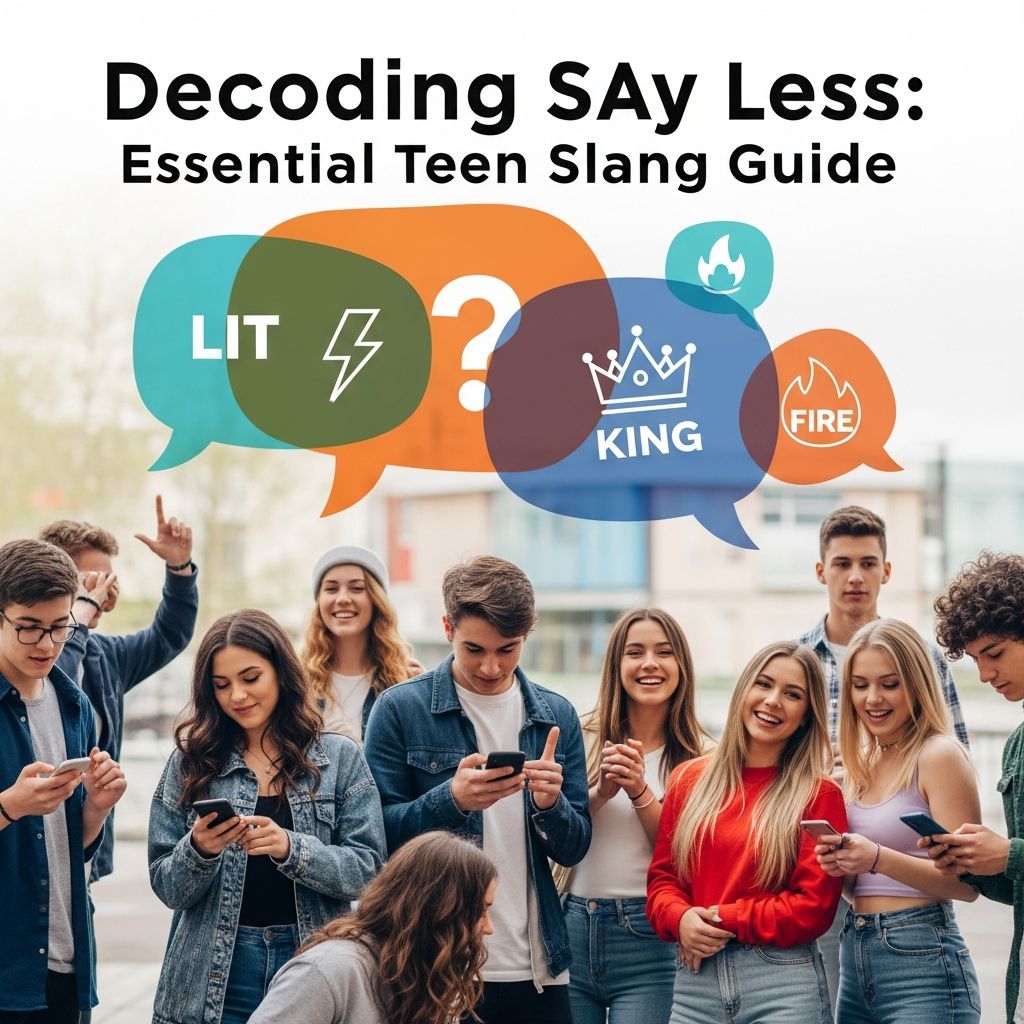
Teen slang evolves rapidly, driven by social media, music, and cultural trends. Terms like “say less” capture nuanced attitudes, helping youth express dismissal, agreement, or cool detachment. Understanding these words empowers parents to engage meaningfully without seeming out of touch.
Why Teen Slang Matters for Family Connections
Slang serves as a cultural shorthand for teenagers, signaling belonging and identity. It originates from platforms like TikTok, Instagram, and Snapchat, where brevity rules. For parents, decoding it reduces misunderstandings—such as mistaking sarcasm for rudeness—and fosters trust. Research from child development experts highlights that shared language strengthens bonds, making conversations flow naturally.
Today’s slang blends irony, exaggeration, and internet memes. “Say less”, for instance, means ‘I understand, no need to explain further’ or ‘stop talking, I’ve got it.’ It’s a versatile phrase dismissing unnecessary details while affirming coolness.
Core Meanings and Usage of Say Less
The phrase say less emerged from hip-hop and urban culture, popularized by artists like Drake. It conveys ‘your point is clear, spare me the rest.’ Teens use it to acknowledge advice sharply or hype agreement without verbosity.
- Affirmation: Friend: ‘This party will be lit.’ Response: ‘Say less.’ (Translation: ‘Cool, I’m in.’)
- Dismissal: Parent: ‘Study hard for finals.’ Teen: ‘Say less.’ (Meaning: ‘Got it, no lecture needed.’)
- Hype: ‘New sneakers dropped? Say less!’ (Excitement without elaboration.)
Context is key—tone determines if it’s appreciative or curt. Parents overhearing it shouldn’t panic; it’s efficient communication, not defiance.
Popular Slang Terms Teens Are Using Now
Beyond say less, here’s a curated list of 2026 slang dominating teen chats. Organized by category for easy reference.
Approval and Hype Words
| Term | Meaning | Example |
|---|---|---|
| Slay | Doing something exceptionally well, especially style or performance. | ‘You slayed that dance routine!’ |
| Fire | Amazing, exciting, or high-quality. | ‘This beat is fire!’ |
| Snatched | On point, perfectly styled. | ‘Your outfit is snatched.’ |
| Yeet | To throw forcefully or express strong yes. | ‘Yeet that homework away!’ |
| YAAS | Enthusiastic yes, often elongated. | ‘YAAS, queen!’ |
Attitude and Personality Descriptors
| Term | Meaning | Example |
|---|---|---|
| Delulu | Delusional, unrealistically optimistic. | ‘Thinking he’ll text back? You’re delulu.’ |
| Simp | Someone overly desperate for affection. | ‘Stop simping over her.’ |
| Rizz | Charisma, especially romantic appeal. | ‘He has mad rizz.’ |
| Sigma | Independent, lone-wolf type outside social hierarchies. | ‘He’s such a sigma.’ |
| Sus | Suspicious or shady. | ‘That story sounds sus.’ |
Everyday Reactions and States
- Dead/Ded: Hilariously funny. ‘That meme has me dead.’
- Chill: Relaxed or okay. ‘Let’s keep it chill.’
- Tea: Gossip. ‘Spill the tea!’
- Thicc: Curvy or substantial. ‘Those fries are thicc.’
- Vibing: In a good mood or flow. ‘Just vibing to music.’
Gen Alpha Additions for Younger Siblings
Gen Alpha (born 2010+) introduces absurd, meme-fueled terms. Skibidi means cool, bad, or nonsensical, from viral toilet animations. Brain rot describes excessive online time warping the mind. Mewing involves jaw exercises for looksmaxxing—improving appearance.
How Slang Evolves: From Origins to TikTok Stardom
Slang traces to African American Vernacular English (AAVE), hip-hop, and gaming communities. TikTok accelerates spread via challenges and sounds. Terms like GYAT (goddamn your ass thick) explode from viral videos, while ate that praises flawless execution.
Parents note: Slang cycles fast—mid (average) today might fade tomorrow. Track via apps or kid convos without prying.
Parent Strategies: Engage Without Overtrying
Use slang sparingly to avoid cringe. Try mirroring casually: If teen says ‘say less,’ respond ‘Bet’ (okay, confirmed). Observe group chats ethically—focus on patterns, not spying.
- Listen actively: Ask open questions like ‘What’s that mean?’
- Practice privately: Watch TikToks together.
- Set boundaries: Discuss when slang hides issues like bullying.
- Humor helps: Own slip-ups: ‘Am I saying this right?’
Experts from child psychology orgs stress slang bridges generational divides, reducing rebellion risks.
Red Flags: When Slang Signals Trouble
Most terms are harmless, but watch for coded risks:
- 420: Weed reference.
- Thot: Derogatory for promiscuity.
- Xan: Drug shorthand.
- GYAT/STFU: Potentially vulgar.
Context matters—sus might mean game cheating, not danger. Use tools like Bark for monitoring without invading privacy.
Quick Reference Table: Top 20 Slang Terms
| Term | Meaning | Vibe |
|---|---|---|
| Say Less | Got it, no more needed | Cool dismissal |
| Slay | Excelled perfectly | Hype |
| Rizz | Charm/flirt skills | Compliment |
| Delulu | Out of touch with reality | Tease |
| Tea | Gossip/news | Fun share |
| Yeet | Throw/yes emphatically | Energetic |
| Skibidi | Cool/bad/nonsense | Meme |
| Mogging | Outshining looks-wise | Competitive |
| Bet | Agreed/challenge accepted | Affirmation |
| Cap/No Cap | Lie/Truth | Verification |
| Flex | Brag/show off | Boast |
| Salty | Bitter/upset | Negative |
| Bussin | Delicious/amazing | Praise food |
| Glow Up | Transformation to better | Positive change |
| Stan | Obsessive fan | Devotion |
| Vibe Check | Assess mood/energy | Fun test |
| Periodt | End of discussion (emphatic) | Finality |
| Touch Grass | Go outside, stop online | Advice |
| Aura | Coolness points | Reputation |
| Cooked | In trouble/done for | Warning |
Frequently Asked Questions
What does ‘say less’ exactly mean in teen talk?
It signals understanding or agreement succinctly, like ‘enough said’ with a cool edge. Popularized in rap, it’s now ubiquitous on social media.
Is it okay for parents to use teen slang?
Yes, moderately. It shows effort and builds rapport, but authenticity matters—forced use backfires.
How can I learn more slang quickly?
Follow TikTok trends, watch teen shows, or use parent guides like Bark’s dictionary. Casual chats with kids are best.
Does slang indicate bad behavior?
Rarely. Most is playful, but terms like ‘xan’ or ‘thot’ warrant gentle check-ins for context.
Why do teens invent new words constantly?
To create in-groups, evolve culture, and adapt to digital speed. It’s natural linguistic innovation.
Building Lasting Conversations Beyond Slang
Slang is entry-level—deeper talks thrive on empathy. Share stories, ask opinions. Tools like family game nights amplify bonds. As 2026 progresses, slang will shift, but curiosity endures.
References
- 2026 Teen Slang Meanings Every Parent Should Know — Bark. 2026-01-01. https://www.bark.us/blog/teen-text-speak-codes-every-parent-should-know/
- 65 Gen Alpha Slang Words and Meanings — Your Teen Magazine. 2025-12-15. https://yourteenmag.com/family-life/communication/gen-alpha-slang-words
- 2026 Teen Slang Dictionary: Decode Gen Z Lingo — Gabb. 2026-01-10. https://gabb.com/blog/teen-slang/
- 120+ Teen Slang Terms: 2026 Guide For Parents — Axis.org. 2026-01-05. https://axis.org/resource/a-parent-guide-to-teen-slang/
- The TOP 10 American Slang Words for 2026 — Shorelight. 2025-11-20. https://shorelight.com/student-stories/a-guide-to-american-slang-words-in-2026