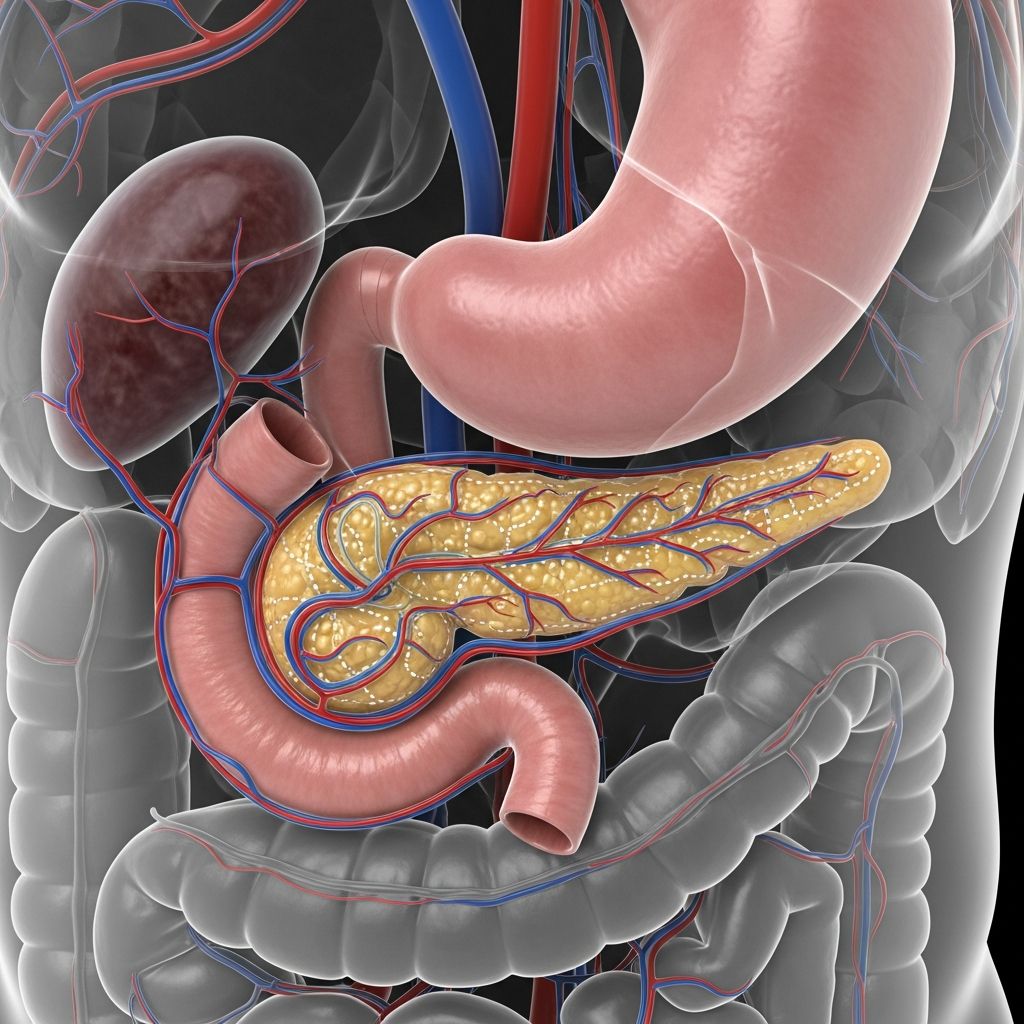
The pancreas is a vital glandular organ tucked away in the abdomen, performing dual roles that are indispensable for breaking down food and maintaining stable blood sugar levels. This organ ensures nutrients from meals are properly absorbed and energy is distributed efficiently throughout the body, making it particularly important for growing children who need consistent fuel for development.
Understanding the Anatomy and Position of the Pancreas
Situated deep within the upper abdomen, the pancreas lies behind the stomach and in front of the spine, nestled among key digestive organs like the liver, gallbladder, and small intestine. Its elongated, tapered shape resembles a flat pear, measuring about 6 inches long in adults, though proportionally smaller in children.
The pancreas is divided into distinct sections for functional clarity:
- Head: The widest part, located near the duodenum (the first segment of the small intestine), where it interfaces directly with digestive processes.
- Neck and Body: The central portion, bridging the head and tail, surrounded by major blood vessels such as the superior mesenteric artery and portal vein.
- Tail: The narrow end extending toward the left side of the body, close to the spleen.
This strategic positioning allows the pancreas to release its secretions precisely where they are needed most—into the digestive tract and bloodstream. Blood supply from nearby vessels ensures it receives ample oxygen and nutrients to sustain its high-output activities.
Dual Roles: Exocrine and Endocrine Functions Explained
The pancreas operates as both an exocrine and endocrine gland, a unique duality that sets it apart from other organs. Approximately 95% of its tissue handles exocrine duties, while tiny clusters of cells manage endocrine tasks.
Exocrine Function: Powering Digestion
In its exocrine capacity, the pancreas produces a clear, enzyme-rich fluid—up to 1-4 liters daily in adults, scaled down for children—that flows through a network of ducts culminating in the main pancreatic duct. This juice empties into the duodenum via the ampulla of Vater, joining bile from the liver and gallbladder.
Key enzymes include:
| Enzyme | Target Nutrient | Role |
|---|---|---|
| Amylase | Carbohydrates | Breaks starches into simple sugars like glucose for energy. |
| Lipase | Fats | Emulsifies lipids into fatty acids and glycerol for absorption. |
| Trypsin and Chymotrypsin | Proteins | Digests complex proteins into amino acids for tissue repair and growth. |
These enzymes activate only in the alkaline environment of the small intestine, protected by a coating that prevents self-digestion. The pancreas also secretes bicarbonate to neutralize stomach acid, creating optimal pH for enzyme activity.
Endocrine Function: Regulating Blood Glucose
The endocrine role is handled by islets of Langerhans, grape-like clusters comprising just 1-2% of pancreatic mass but producing critical hormones released directly into the blood. Primary hormones are insulin and glucagon, which maintain blood glucose homeostasis.
- Insulin: Secreted by beta cells when glucose rises (post-meal), it prompts cells to uptake sugar, lowering blood levels and storing excess as glycogen in the liver.
- Glucagon: From alpha cells, released during fasting or low sugar, it signals the liver to convert glycogen back to glucose.
- Other hormones like somatostatin, pancreatic polypeptide, and amylin fine-tune digestion and satiety.
This balance is crucial for brain function, muscle activity, and organ health, especially in active kids.
Common Pancreatic Disorders in Children
While robust, the pancreas can falter, leading to conditions that disrupt digestion or glucose control. Early recognition by parents is key to management.
Diabetes Mellitus
The most prevalent pancreatic issue, diabetes arises when insulin production fails. Type 1, often autoimmune and striking children, destroys beta cells, requiring lifelong insulin therapy. Type 2, linked to obesity, involves insulin resistance alongside reduced secretion. Symptoms include excessive thirst, frequent urination, fatigue, and unexplained weight loss. Unmanaged, it risks heart disease, neuropathy, retinopathy, and nephropathy.
Pancreatitis: Acute and Chronic Inflammation
Acute pancreatitis causes sudden, severe abdominal pain, nausea, and vomiting, often from gallstones, infections, or trauma—common in kids after abdominal injuries. Chronic form, from repeated insults like heavy alcohol exposure (rare in children) or genetic factors, leads to scarring, malabsorption, and diabetes. Treatment ranges from hydration for mild cases to surgery for severe ones.
Other Concerns: Cystic Fibrosis and Cancer
Cystic fibrosis thickens pancreatic secretions, blocking ducts and causing malnutrition. Pancreatic cancer, exceedingly rare in children, may present as jaundice or pain. Tumors like insulinomas can cause hypoglycemia.
Signs of Pancreatic Problems and When to Seek Help
Parents should watch for persistent belly pain (upper abdomen, radiating to back), greasy stools indicating poor fat digestion, unexplained sugar cravings or lethargy, jaundice, or growth delays. Blood tests for amylase/lipase, glucose levels, and imaging like ultrasound or CT confirm issues. Prompt pediatric consultation prevents complications.
Promoting Pancreatic Health in Growing Kids
A balanced lifestyle safeguards the pancreas. Encourage:
- Nutrient-rich diets low in processed sugars and fats to ease digestive load.
- Regular activity to enhance insulin sensitivity.
- Hydration and avoidance of excessive alcohol (not applicable for kids, but family modeling matters).
- Weight management to prevent type 2 diabetes risk.
Vaccinations, hygiene to curb infections, and routine check-ups aid early detection. Breastfeeding infants supports optimal development.
Diagnostic Approaches and Treatments
Diagnosis involves bloodwork (enzyme levels, glucose, A1C), stool tests for fat malabsorption, ERCP for duct visualization, or MRI. Treatments vary: insulin pumps for diabetes, enzyme supplements for exocrine insufficiency, pain management and dietary changes for pancreatitis, or surgery for blockages/tumors.
Frequently Asked Questions (FAQs)
What causes pancreatitis in children?
Common triggers include viral infections, abdominal trauma, medications, or genetic conditions like cystic fibrosis. Gallstones are less frequent in kids.
Can children live without a pancreas?
Yes, with management: insulin injections for endocrine loss and enzyme pills for digestion, plus dietary adjustments.
How does diet impact pancreatic function?
High-sugar/fat diets strain it, raising diabetes and pancreatitis risks. Fiber-rich, balanced meals support health.
Is pancreatic cancer common in kids?
Extremely rare; most cases occur in adults over 60. Symptoms warrant immediate medical review.
What role does the pancreas play in growth?
By ensuring nutrient absorption and steady energy via glucose regulation, it’s foundational for physical and cognitive development.
Future Directions in Pancreatic Care
Research advances include stem cell therapies for beta cell regeneration in type 1 diabetes, improved enzyme formulations, and minimally invasive surgeries. Pediatric protocols emphasize holistic care, integrating nutritionists and endocrinologists for better outcomes.
Understanding the pancreas empowers parents to foster resilience against disorders, ensuring kids thrive with sustained energy and growth.
References
- What Does the Pancreas Do and How to Keep It Healthy — Tenet Health. 2023. https://www.tenethealth.com/healthy-living/corporate-content/what-does-the-pancreas-do-and-how-to-keep-it-healthy
- Pancreas—Its Functions, Disorders, and Physiological Impact — PMC (NCBI). 2022-04-07. https://pmc.ncbi.nlm.nih.gov/articles/PMC9005876/
- Pancreas Functions, Location & Disease — Columbia Surgery. 2024-10. https://columbiasurgery.org/pancreas/pancreas-and-its-functions
- Pancreas — Better Health Channel (Victoria.gov.au). 2023. https://www.betterhealth.vic.gov.au/health/conditionsandtreatments/pancreas
- Pancreas: Function, Location, Anatomy & Living Without One — Cleveland Clinic. 2023-08-29. https://my.clevelandclinic.org/health/body/21743-pancreas
- What is the Pancreas? — Pancreatic Cancer Action Network. 2024. https://pancan.org/facing-pancreatic-cancer/about-pancreatic-cancer/what-is-the-pancreas/