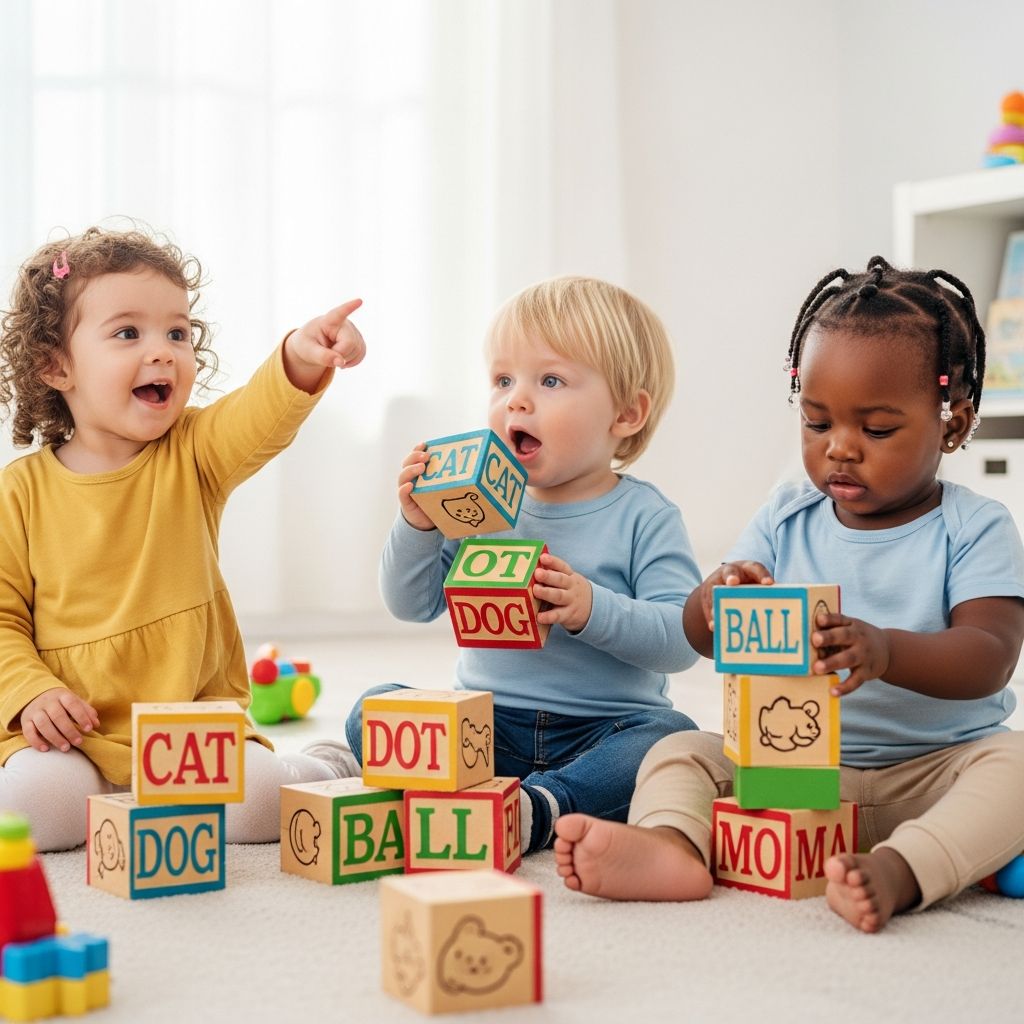
Parents need stretches of time to work, cook, rest, or simply think, and children need chances to explore the world on their own terms. Independent play sits exactly at that intersection: your child feels safe and connected, and you get some breathing room while they build real skills through self-directed activity.
Why Independent Play Matters More Than Ever
Independent play is not just a convenient way to keep children occupied; it is a core ingredient of healthy emotional, social, and intellectual development. When kids play without constant adult direction, they experiment, make small decisions, tolerate boredom, and discover what genuinely interests them.
Children who regularly engage in self-directed play practice problem-solving, creativity, frustration tolerance, and focus. These are the same capacities they will draw on later for homework, friendships, hobbies, and eventually work, so protecting space for independent activity is an investment in long-term resilience.
Setting Up a Home That Invites Independent Play
The physical environment does much of the heavy lifting when it comes to low-supervision activities. A child who can see interesting materials, reach them easily, and put them away independently is far more likely to engage on their own than a child who has to ask for help every few minutes.
Before focusing on specific activities, it helps to create a simple structure that keeps children safe and gives them clear boundaries. Consider the table below as a quick planning guide.
| Area | What Helps Kids Play Alone | What Often Gets In The Way |
|---|---|---|
| Space | Defined play corner, floor space, child-sized table. | Cluttered rooms, no clear play zone. |
| Storage | Open baskets, low shelves, labeled bins. | Toys stacked out of reach or in deep, overstuffed boxes. |
| Toys & Materials | Simple, open-ended items that can be used many ways. | Noisy, single-purpose toys that entertain but don’t invite creativity. |
| Rules | Clear limits about where children can be and what’s off-limits. | Vague expectations, constant changing of rules mid-activity. |
| Parent Presence | Calm, nearby, occasionally checking in without micromanaging. | Hovering, correcting, or frequently suggesting “the right way” to play. |
Small adjustments like rotating toys, decluttering, and placing materials in dedicated baskets can dramatically change how long a child stays absorbed in play. The goal is not to have an Instagram-perfect playroom, but a practical setup where children can reach what they need, know where it goes, and feel competent using it.
Core Principles for Low-Supervision Activities
Whether a child is three or ten, low-supervision activities work best when they are built around a few simple principles. Keeping these in mind makes it easier to improvise during a busy day or adapt activities to different ages.
- Safety first: Choose materials that you feel comfortable leaving with your child if you step away for a phone call or to stir a pot on the stove.
- Open-ended over complicated: Activities work better when there is no single “correct” outcome, and children can take the idea in many directions.
- Predictable routines: Independent play flourishes when children know there is a regular time for it, such as after lunch or while a parent works nearby.
- Connection before separation: A few minutes of warm interaction beforehand—reading a page, hearing about their idea—often leads to longer stretches of contented solo play.
When activities are safe, open-ended, predictable, and preceded by brief connection, kids are more likely to engage deeply and less likely to chase your attention through constant interruptions.
Independent Play Ideas for Preschoolers
Young children still need high physical safety oversight, but with thoughtful setup they can enjoy meaningful play without direct adult direction. The key is to offer rich sensory experiences, simple tools, and a clear boundary about where you will be.
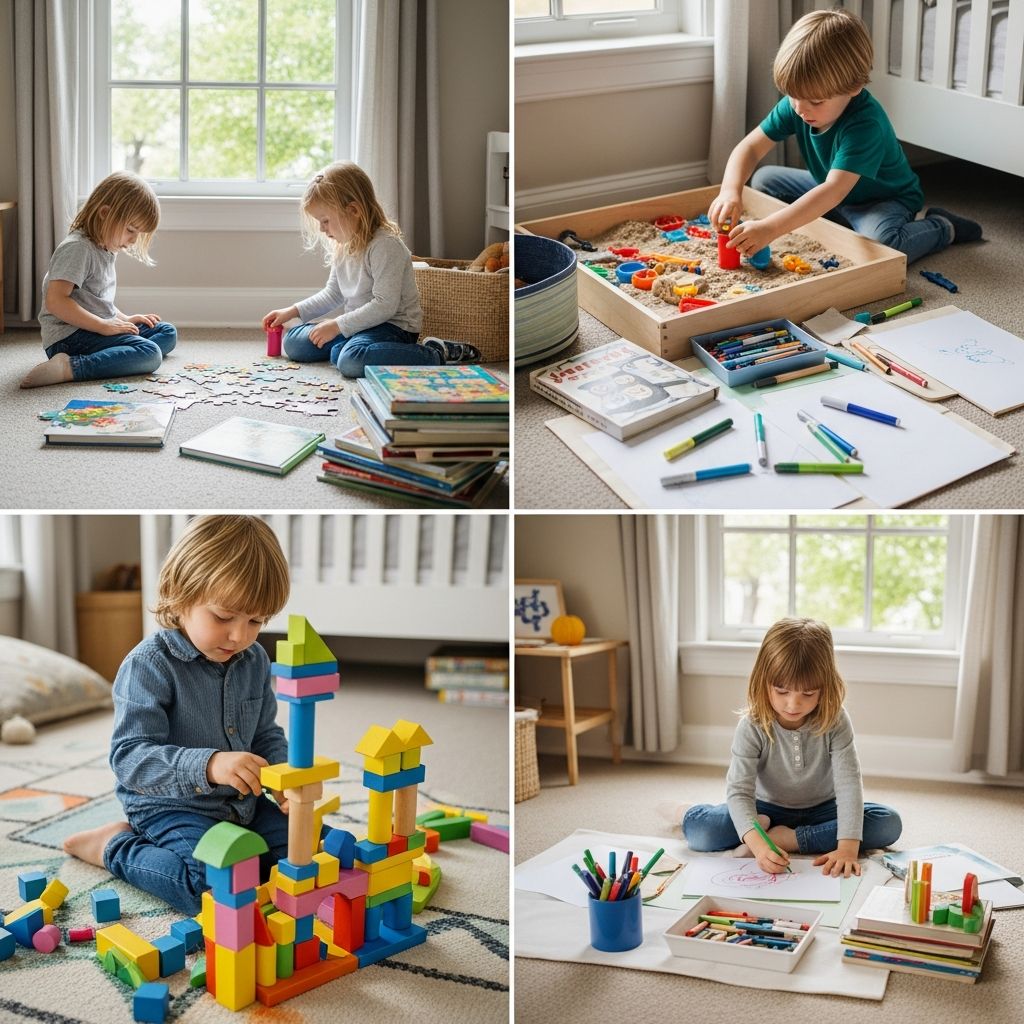
- Treasure baskets: Fill a low basket with safe household objects of different textures and shapes—wooden spoons, fabric scraps, silicone baking cups, large rings. Rotate items weekly to renew interest while keeping the concept familiar.
- Match and sort station: Provide muffin tins, small bowls, and a collection of large buttons, blocks, or pom-poms for sorting by color, size, or shape. Children will invent their own categories given time and space.
- Chunky building materials: Large blocks, cardboard tubes, and empty boxes invite stacking, knocking down, and rebuilding. This kind of play builds spatial awareness and balance while remaining simple to supervise from across the room.
- Low-mess art area: Offer a clipboard, crayons or washable markers, and a stack of paper. Limiting the choices can actually extend focus, because children are less likely to jump from material to material.
- Stuffed animal adventures: Place a few favorite soft toys in a small “home” made from a box or basket, add a pretend blanket or a napkin for a rug, and let your child create stories. You might seed a simple prompt—“They’re getting ready for a trip”—and then step back.
At this age, the goal is not long, uninterrupted hours; even ten to fifteen minutes of independent engagement is success. Over time, these short stretches can naturally grow longer as the child’s attention and confidence strengthen.
Independent Play Ideas for Early Elementary Kids
Children in the early school years often crave more challenge and variety, yet they still benefit from concrete, hands-on experiences. They also enjoy feeling trusted with “big kid” responsibilities and projects that feel purposeful.
- Mini maker corner: Stock a small bin with tape, child-safe scissors, scrap cardboard, string, and recycled containers. Invite your child to “invent something useful” or create a new kind of vehicle, and then let their imagination take over.
- Personal reading nook: Create a cozy corner with a pillow or beanbag and a small selection of books that are slightly below or at their reading level. Add a reading light or small lamp to make it feel special and grown-up.
- Sticker stories and simple comics: Provide stickers, blank paper, and pencils. Children can place stickers on the page and then draw or write around them to create original stories, word bubbles, or short comic strips.
- Solo board-game time: Many board and card games can be adapted to single-player mode by focusing on beating a personal score or completing the deck. This helps with rule-following and persistence while giving children a sense of accomplishment.
- Nature observation window: Place a small notebook and colored pencils near a window where birds, clouds, or neighborhood life can be seen. Encourage children to sketch what they notice or write short notes about changes over time.
Early elementary children are often ready to manage longer projects over several days, such as a cardboard city or a comic series. Keeping partially finished creations in a dedicated box makes it easy for them to return to a project during each independent play block.
Independent Projects for Older Kids
Older children and preteens usually have more defined interests and emerging skills. Low-supervision activities for this age group work best when they feel like real-world projects rather than “busywork” designed just to keep them occupied.
- Passion journals: Provide a notebook dedicated to a topic your child loves—animals, sports, space, fashion, or anything else—and encourage them to collect facts, sketches, lists, and ideas. The focus is on curiosity, not grades.
- DIY challenges: Offer occasional prompts like “Design a one-page guide for a younger kid who wants to learn your favorite hobby” or “Create a mini museum exhibit on your shelf using objects from around the house.”
- Self-led skill practice: Many kids enjoy practicing drawing, instrument playing, coding, or a second language independently once the initial setup is clear. A timer and a visible checklist can increase their sense of ownership.
- Household contribution projects: Give older children responsibility for a real task that can be handled solo, such as reorganizing a bookshelf, planning a simple snack menu, or tending a few potted plants.
- Creative media lab: Without relying solely on entertainment screens, older kids may enjoy using basic digital tools to design posters, write short stories, or experiment with simple slideshows about topics they choose.
At this stage, children benefit from adult respect for their growing autonomy. Asking their input on what projects matter to them, and following up with genuine interest afterward, reinforces that independent time is not a way to “get rid of them,” but an opportunity for growth.
Quick-Start Activity Ideas by Time Available
On busy days, it helps to match activities to the amount of time and energy available. You may only have a few minutes to set something up, or you might be able to prepare a longer-lasting invitation to play the night before.
| Parent Prep Time | Approximate Child Play Time | Example Activities |
|---|---|---|
| 2 minutes or less | 10–20 minutes | Drawing basket, block bin, treasure basket, simple puzzle shelf. |
| 5–10 minutes | 20–40 minutes | Sorting station, mini maker corner, sticker story setup, reading nook refresh. |
| 15–20 minutes (once) | Repeated several days | Cardboard city project, passion journal station, ongoing nature notebook, long-term construction set. |
Rather than trying to reinvent activities every day, choose one or two setups that can stay out for a full week. Children frequently return to familiar materials and go deeper over time as their ideas evolve.
Balancing Screens and Real-World Play
Screens can be part of a modern childhood, but relying on them as the only low-supervision option can crowd out the kind of messy, three-dimensional play that builds patience and problem-solving. A balanced approach treats digital tools as one option among many, not the default.
- Consider designating specific times for educational or creative digital activities and keeping them separate from open-ended offline play windows.
- When possible, frame screen time as a tool for learning or creating—such as following a drawing tutorial, looking up a how-to guide, or exploring an interactive map—rather than pure passive entertainment.
- Protect at least one portion of each day as a screen-free block where children know they will be using their hands, bodies, and imaginations.
Children may initially resist if they are used to defaulting to screens, but with consistent routines and genuinely engaging alternatives, most gradually rediscover the pleasure of self-initiated play.
Supporting Independence Without Disappearing
Low-supervision does not need to mean emotional distance. Children feel braver exploring on their own when they know a caring adult is nearby, available if needed, and interested in their efforts afterwards.
- Warm launch: Spend a couple of minutes getting your child started—help them choose materials, listen to their plan, or simply sit beside them as they begin.
- Predictable check-ins: Let children know when you’ll check back (for example, “I’ll come see your tower in ten minutes”) so they are less likely to interrupt just to be sure you are still paying attention.
- Genuine debrief: After their independent time, invite them to show you what they did. Ask open questions like “What part was trickiest?” or “What would you like to try next time?”
- Calm boundaries: When children demand constant attention, respond with empathy but hold the line on your own needs: “You really wish I could play the whole time. I’ll be working on my laptop for a bit, and I’ll look at your drawing when the timer rings.”
Over time, children internalize the message that they are capable and that their play has value, even when an adult is not actively directing every moment.
Frequently Asked Questions
How long should my child be able to play independently?
There is no single “correct” number, but a helpful guideline is to expect shorter spans for younger children and gradually longer periods as they grow. A preschooler might start with five to ten minutes, while an older elementary child could often manage forty minutes or more, especially if they are deeply engaged in a self-chosen project.
What if my child refuses to play alone?
Resistance is common, especially if independent play is a new idea or if screens have been the default. Begin small, with very short intervals, and emphasize connection before and after. Offer just one or two inviting choices instead of many, and stay calm and consistent even if your child complains at first.
Is it okay if my child says they are bored?
Boredom can feel uncomfortable for everyone, but it is often the starting point for more creative, self-driven play. Instead of rushing to fix boredom, acknowledge the feeling and gently point to the available materials or projects. Many children discover new ideas only after they have had time to sit with that restless feeling.
How do I balance safety and independence?
Start by choosing a play space where you feel comfortable stepping away—near your workspace, within earshot, and free of obvious hazards. Select age-appropriate materials and set clear rules about off-limits items or areas. You can always lengthen the leash gradually as you and your child gain confidence.
What if siblings constantly interrupt each other?
Some families find it useful to alternate “together play” and “solo play” blocks, or to assign each child a specific zone or table. Noise-canceling headphones for an older child, or a tangible sign like a small card that means “I’m working alone,” can help siblings learn to respect each other’s focus.
Bringing It All Together
Independent play does not require elaborate crafts or a perfectly organized playroom. It grows out of small, consistent choices: a few baskets of accessible materials, a regular routine, gentle boundaries, and authentic interest in what your child creates when left to their own ideas.
As your child practices playing on their own, you gain stretches of time to handle your own responsibilities. In the process, your home gradually becomes a place where everyone’s needs matter—where children are trusted to explore, and adults are allowed to work, rest, and recharge.