Your body is doing some of its fastest growing during the teen years. Bones are lengthening, muscles are getting stronger, and joints are learning to handle more and more movement and impact. Understanding what is happening under your skin can help you stay active, avoid injuries, and build a strong body for adulthood.
Big Picture: Your Body’s Movement System
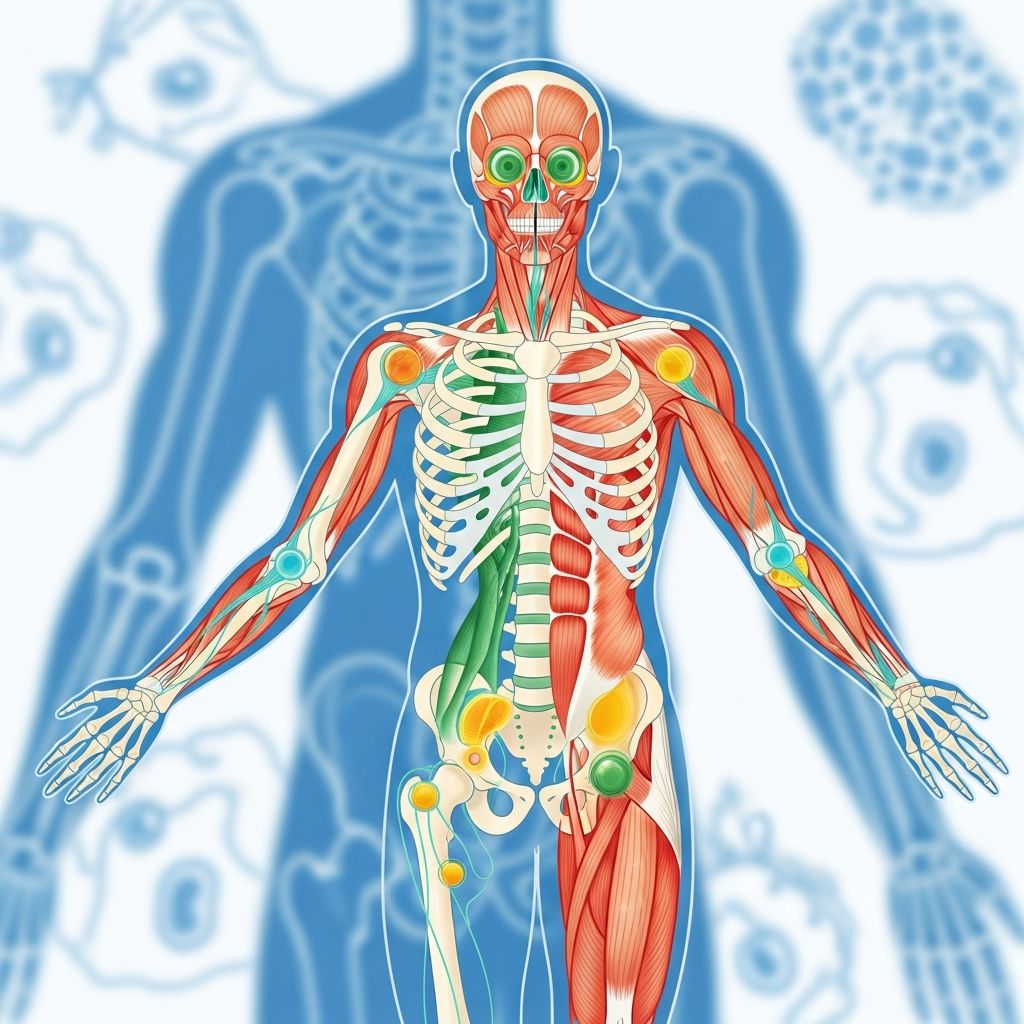
The parts of your body that help you stand, move, and stay upright are called the musculoskeletal system. It includes:
- Bones – the rigid framework that gives your body shape and protects organs.
- Muscles – the tissues that contract to create movement.
- Joints – where two or more bones meet, allowing bending, twisting, and rotation.
- Tendons – tough cords that connect muscles to bones.
- Ligaments – strong bands that connect bones to other bones and keep joints stable.
These parts work together every time you walk to class, play sports, type on your phone, or even just sit upright at your desk.
Bones: The Changing Frame Inside You
Bone might look solid and unchanging, but it is living tissue that is constantly being broken down and rebuilt. During childhood and adolescence, you are rapidly adding new bone tissue and increasing bone size and strength.
How Bones Grow in Teens
Long bones in your arms and legs grow from special areas of cartilage called growth plates, usually located near the ends of the bones. As you grow:
- Cartilage cells in the growth plate multiply and push the ends of the bone farther apart.
- These cartilage cells then harden and are replaced by bone tissue.
- Eventually, the growth plates close and are fully converted to bone, which is when height growth stops.
Growth is not always smooth. You may notice sudden growth spurts, when you seem to gain several centimeters in a short time. These spurts are driven by hormonal changes and are a normal part of puberty.
Peak Bone Mass: Your Lifetime “Bone Bank”
The teen years and early twenties are when your body builds most of its lifetime bone strength, sometimes called peak bone mass. Think of it as filling up a bone savings account:
- The more bone you build now, the more you have to draw on later in life.
- Higher peak bone mass is linked to a lower risk of osteoporosis (weak, fragile bones) as an adult.
- Good habits in your teens—like staying active and getting enough calcium and vitamin D—have effects that can last decades.
What Makes Bones Stronger or Weaker?
| Helps Build Strong Bones | Can Weaken Bones Over Time |
|---|---|
| Regular weight-bearing activity (walking, running, jumping, sports) | Long-term physical inactivity (sitting most of the day) |
| Enough calcium and vitamin D in your diet | Diet low in calcium and vitamin D |
| Healthy body weight and balanced nutrition | Extreme dieting or eating disorders that limit nutrients |
| Safe, progressive strength training with good technique | Repetitive high-impact stress without rest (can lead to stress injuries) |
Muscles: Your Built-In Engines
Muscles do the actual work of moving your body. Each muscle is made of many tiny fibers that shorten (contract) when they receive signals from nerves. When a muscle contracts, it pulls on a tendon, which pulls on a bone and creates movement.
Muscle Growth During Puberty
As you go through puberty, your body composition changes:
- Muscle fibers thicken and grow larger, especially in response to regular physical activity.[10]
- In general, boys tend to develop more total muscle mass during adolescence because of higher testosterone levels, but girls also gain muscle and strength.[10]
- Muscle and bone growth influence each other—stronger muscles put healthy stress on bones, which signals bones to become denser and stronger.
Types of Muscle in Your Body
- Skeletal muscle: Attached to bones; under your control. These muscles let you run, lift, and change position.
- Smooth muscle: Found in organs like the stomach and intestines; works automatically.
- Cardiac muscle: Found only in the heart; it contracts rhythmically to pump blood.
When people talk about getting stronger or “building muscle,” they are mainly talking about skeletal muscle.
Building Healthy Muscle Strength Safely
Moderate strength training and sports can be very good for teens when done correctly. Helpful guidelines include:
- Focus on learning proper technique before using heavy resistance.
- Increase weight or intensity slowly over time instead of making big jumps.
- Include exercises for all major muscle groups, not just one area.
- Schedule rest days so muscles can repair and grow.
Joints: Where Movement Happens
Joints are the meeting points between bones. Most joints contain:
- Cartilage – smooth tissue covering bone ends, helping them glide without friction.
- Synovial fluid – a slippery fluid that lubricates the joint.
- Ligaments – strong bands that stabilize the joint.
- Joint capsule – a sleeve of tissue surrounding and protecting the joint.
Common types of joints include:
- Hinge joints (knees, elbows) – bend and straighten like a door hinge.
- Ball-and-socket joints (hips, shoulders) – allow a wide range of movement in many directions.
- Gliding joints (wrist, ankle) – small sliding movements between bones.
Teen Joints and Growth
Rapid growth can temporarily affect how joints feel and function:
- As bones lengthen quickly, muscles and tendons can feel tight until they adapt.
- Ligaments may be relatively loose in some teens, leading to increased flexibility but also a slightly higher risk of sprains.
- Overuse from repetitive sports or activities may stress growth areas near joints, sometimes causing pain or soreness.
Joint pain that is sharp, persistent, or occurs without a clear reason should be checked by a health professional, especially in young athletes.
How Bones, Muscles, and Joints Work Together
Movement is a team effort:
- A signal travels from your brain through nerves to a muscle.
- The muscle contracts and pulls on a tendon.
- The tendon tugs on a bone.
- The bone moves at the joint, controlled and supported by ligaments and surrounding muscles.
Everyday actions, like climbing stairs or standing up from a chair, require many muscles, bones, and joints working in coordination. Good posture, flexibility, and strength all help this system work smoothly.
Common Teen Issues: Soreness, Strains, and Growing Pains
As your body grows and you become more active, it is normal to notice some changes in how your muscles and joints feel.
Normal Post-Exercise Soreness
Mild, dull soreness a day or two after a workout—called delayed onset muscle soreness (DOMS)—is usually a sign that your muscles are adapting to new activity. It typically:
- Starts 12–24 hours after exercise.
- Peaks around 24–72 hours.
- Gradually fades without needing special treatment.
Gentle movement, stretching, and light activity often help this soreness pass more quickly.
Signs That Pain Might Not Be Normal
Certain kinds of pain deserve more attention:
- Sharp or stabbing pain in a joint, especially during or after activity.
- Pain that causes you to limp or avoid using a body part.
- Swelling, warmth, or redness around a joint.
- Locking, catching, or giving way of a joint.
- Pain that does not improve with rest or keeps waking you at night.
These symptoms can signal an injury or medical condition that needs evaluation by a doctor or other qualified professional.
Protecting Your Growing Body
You cannot control how tall you will be or exactly when your growth spurts will happen, but you can influence how strong and healthy your bones, muscles, and joints become. Key habits include:
1. Move in Different Ways
Research shows that varied, regular physical activity supports healthy bone mineral density and muscle strength in young people. Aim for a mix of:
- Weight-bearing activities like walking, jogging, dancing, or team sports that involve running and jumping.
- Muscle-strengthening activities such as bodyweight exercises (push-ups, squats), resistance bands, or supervised weight training.
- Flexibility work like stretching or yoga to keep joints moving easily.
2. Fuel Your Muscles and Bones
Good nutrition is essential for musculoskeletal health:
- Get calcium from foods like dairy products, fortified plant milks, leafy greens, and calcium-fortified foods.
- Get vitamin D from fortified foods, some fish, and sensible sunlight exposure according to local guidelines.
- Include enough protein (beans, nuts, eggs, dairy, lean meats, fish, soy) to support muscle growth and repair.
- Eat a variety of fruits, vegetables, and whole grains to provide vitamins and minerals needed for tissue repair.
3. Respect Rest and Recovery
Bones and muscles need time to rebuild after training:
- Get enough sleep most nights to support growth hormone release and tissue repair.
- Vary your workouts so the same joints and muscles are not overloaded every day.
- Take rest days, especially after intense practices or competitions.
4. Use Smart Technique and Gear
- Warm up before exercise and cool down afterward.
- Learn proper form for lifts, jumps, and sport-specific skills to reduce joint stress.
- Wear appropriate shoes and safety equipment for your activity.
When to Talk to a Health Professional
It is always okay to ask questions about your body. You should consider seeing a doctor, athletic trainer, or physical therapist if you have:
- Recurring pain in the same bone, muscle, or joint.
- Pain that started after an accident or fall and has not improved.
- Swelling, deformity, or difficulty moving a limb.
- Unexplained weakness or frequent joint giving way.
Early attention to problems can often prevent them from getting worse and help you return safely to your usual activities.
Frequently Asked Questions (FAQs)
Is it safe for teens to lift weights?
Yes, strength training can be safe and beneficial for teens when it is supervised, uses proper technique, and focuses on gradual progress rather than lifting the heaviest possible weight. Programs should be tailored to the teen’s age, growth stage, and experience.
My joints click or pop. Is that bad?
Occasional painless clicking or popping in joints is usually harmless. However, if the sounds come with pain, swelling, or a feeling that the joint is catching or locking, you should have it checked by a health professional.
Can I damage my growth plates by exercising?
Normal play, sports, and supervised strength training rarely injure growth plates. Most problems happen with high-impact trauma or repetitive overuse, especially when training is too intense for your level. Listening to pain signals and allowing rest days helps protect these sensitive areas.
Why do I feel more sore after PE now than I did as a kid?
During the teen years, your bones, muscles, and tendons are all adapting to rapid growth and changing hormone levels. New or more intense activities can create more muscle soreness as your body adjusts, which is usually normal as long as the discomfort is mild and short-lived.
How can I keep my bones strong for life?
Stay active with weight-bearing exercise, do regular strength training, eat foods rich in calcium and vitamin D, avoid smoking and excessive alcohol as you get older, and talk with your doctor about your bone health if you have risk factors or a strong family history of bone problems.
References
- Healthy Bones at Every Age — American Academy of Orthopaedic Surgeons (OrthoInfo). 2022-05-01. https://orthoinfo.aaos.org/en/staying-healthy/healthy-bones-at-every-age/
- Musculoskeletal health in children and adolescents — Tan VP, Macdonald HM, et al. Frontiers in Physiology. 2023-01-10. https://www.ncbi.nlm.nih.gov/pmc/articles/PMC10754974/
- Associations between physical fitness and bone parameters in children and adolescents — Kawakami R, et al. Scientific Reports (Nature). 2022-08-15. https://www.nature.com/articles/s41598-022-17623-z
- Strength Training for Adolescents Part 1 – Bones and Joints — Canton Physical Therapy. 2021-06-01. https://www.canton-pt.com/sports-medicine/strength-training-guide-to-adolescents-part-1-bones-and-joints/
- Young Athletes Should Not Have Joint Pain — OrthoVirginia. 2020-09-10. https://www.orthovirginia.com/blog/young-athletes-should-not-have-joint-pain/
- Muscle and Bone Growth: Developmental Changes — National Strength and Conditioning Association (Open University excerpt). 2013-01-01. https://www.open.edu/openlearn/pluginfile.php/617068/mod_resource/content/1/e217_1_excf223_nsca_chapter7_p144_145.pdf
- Immature Musculoskeletal System — Better by MTA, Medical Tourism Association. 2019-04-01. https://www.better.medicaltourism.com/treatments-specialities/immature-musculoskeletal-system