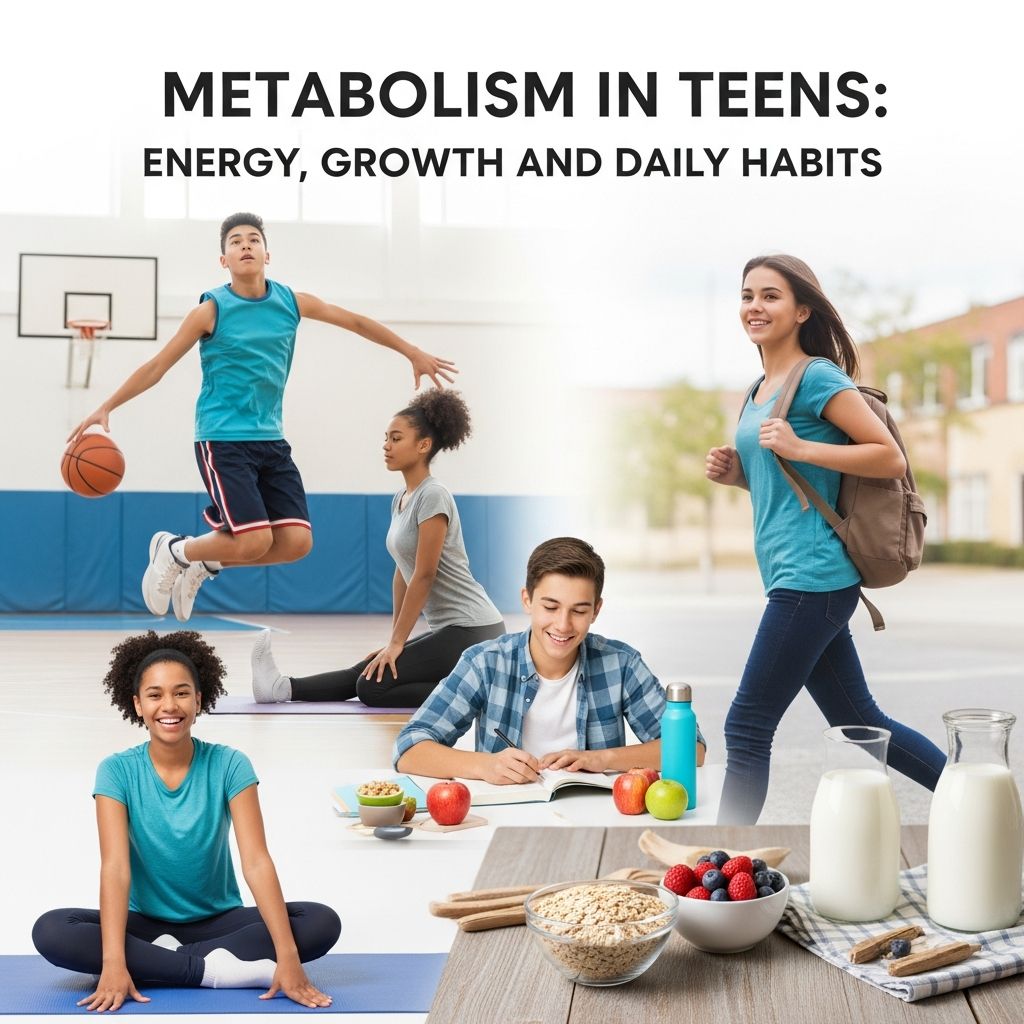
During the teen years, your body is growing, changing and using a lot of energy. All of this is powered by your metabolism, the invisible system that turns food into fuel and building blocks. Understanding how it works can help you make smarter choices about eating, moving and caring for your body.
What Is Metabolism, Really?
Metabolism is the set of chemical reactions that keep you alive, from moving your muscles to repairing skin cells and sending messages in your brain. It has two main sides that are always working together:
- Building up (anabolism): using nutrients to grow, repair tissues and store energy for later.
- Breaking down (catabolism): taking apart larger molecules from food or body stores to release energy when you need it.
Every time you eat, sleep, walk to class or study late, your metabolism is adjusting and responding.
How Your Body Turns Food Into Energy
After you eat, your digestive system breaks food into smaller pieces that your cells can use.
- Proteins are broken into amino acids.
- Carbohydrates become simple sugars such as glucose.
- Fats become fatty acids and glycerol.
These nutrients travel through your blood to your cells. Inside each cell, enzymes help control reactions that:
- Release energy and store it in molecules like ATP (the cell’s quick energy currency).
- Use energy to build or repair body tissues.
- Store extra fuel in muscles, liver and fat tissue for later.
Basal Metabolism: Energy You Use at Rest
Even when you are lying on the couch or asleep, your body is busy. The energy used just to keep basic life functions going is called your basal metabolic rate (BMR).
Your BMR powers:
- Breathing and heartbeat
- Blood circulation and body temperature
- Brain activity and nerve signals
- Cell growth and repair, especially during adolescence
For most people, BMR is the largest part of daily energy use, often more than physical activity or digestion.
Main Parts of Daily Energy Use
| Component | What It Is | Typical Share of Daily Energy |
|---|---|---|
| Basal metabolism | Energy to keep vital functions going at rest | About 50–70% in most people |
| Physical activity | All movement, from sports to fidgeting | Roughly 20–40%, depending on how active you are |
| Thermic effect of food | Energy needed to digest, absorb and process food | About 5–10% of daily energy use |
Teen Metabolism and Growth
Many people assume teens have the “fastest” metabolism of any age, but newer research gives a more detailed picture. Studies comparing thousands of people from birth to old age show:
- Babies have the highest metabolism for their body size, especially in the first year of life.
- Metabolism gradually slows from childhood until the early twenties, then stays relatively stable through midlife.
- Teens do not burn dramatically more calories than adults of similar size once growth and body composition are considered.
Even so, adolescence is still a time of high energy needs because of:
- Rapid height and muscle growth
- Hormone changes linked to puberty
- School, sports and social activities that increase movement
What Affects Your Metabolism?
Everyone’s metabolism is unique, and many factors shape how much energy you use in a day.
- Age: Metabolism tends to be highest in early life and then gradually declines after adulthood.
- Body size and composition: More muscle means a higher BMR, because muscle tissue uses more energy than fat tissue even at rest.
- Sex: On average, males have a higher BMR than females of the same age and weight, mainly due to having more lean mass.
- Hormones: Thyroid hormones, insulin and other hormones from the endocrine system help set your metabolic rate.
- Food intake and diet patterns: What and how much you eat can shift how your body uses and stores energy over time.
- Physical activity: Regular movement, especially strength-building activities, can raise your daily energy use and increase muscle mass.
- Sleep and stress: Poor sleep and chronic stress can influence hormones that affect appetite, weight and how your body uses energy.
- Health conditions and medicines: Thyroid problems, some chronic illnesses and certain medicines can speed up or slow down metabolism.
Hormones and Metabolism in Adolescence
Your hormones change a lot during the teen years, and some have a direct effect on metabolism:
- Thyroid hormones (like thyroxine) largely control how fast your cells use energy.
- Insulin helps move glucose from the blood into cells and tells the body when to store or use energy.
- Growth hormone and sex hormones (estrogen and testosterone) support growth spurts and increase the building of bone and muscle.
When thyroid hormone levels are not in a healthy range, metabolism can change noticeably:
- Hypothyroidism (underactive thyroid) can slow metabolism and may be linked to weight gain, tiredness, feeling cold or constipation.
- Hyperthyroidism (overactive thyroid) can speed metabolism and may be linked to weight loss, nervousness, feeling hot or changes in bowel habits.
Any sudden, unexplained change in weight or energy is a reason to speak with a health professional.
Metabolism Myths Many Teens Hear
Misunderstandings about metabolism are common. Here are some ideas you might hear and what research suggests instead.
- Myth: “My metabolism is ruined forever because I gained weight.”
Fact: While weight gain and loss affect energy needs, metabolism can adapt over time. Building muscle, eating regularly and staying active all support a healthier metabolic pattern. - Myth: “Skipping meals will make my metabolism speed up.”
Fact: Skipping meals may lead you to feel more hungry later and can make it harder to get the nutrients you need. Regular, balanced meals and snacks are more helpful for energy and focus. - Myth: “Thin people always have fast metabolisms.”
Fact: Body size, muscle mass, genetics and activity all play roles. Some people in larger bodies can have high metabolic rates, while some thin people may have lower ones. - Myth: “There’s a magic food that boosts metabolism overnight.”
Fact: No single food changes metabolism dramatically. Overall patterns—such as eating enough protein, staying hydrated and moving regularly—matter far more long term.
Everyday Habits That Support a Healthy Metabolism
You cannot control everything about how your body burns energy, but your daily choices still make a difference.
1. Aim for Balanced, Regular Meals
- Include a mix of carbohydrates, proteins and healthy fats at most meals to give your body steady fuel.
- Add fruits and vegetables for vitamins, minerals and fiber that support digestion and long-term health.
- EAT enough food for your age, size, activity level and growth—very low-calorie diets can leave you tired and may reduce muscle over time.
2. Move Your Body in Ways You Enjoy
- Activities that raise your heart rate (like brisk walking, dancing, cycling or team sports) increase daily energy use while you are moving.
- Strength or resistance activities (such as bodyweight exercises, resistance bands or weight training with supervision) help build muscle, which can increase BMR over time.
- Every bit of movement adds up, including walking to school, taking the stairs or playing with siblings or pets.
3. Protect Your Sleep
- Most teens need about 8–10 hours of sleep per night to support growth, brain function and hormone balance.
- Too little sleep can affect hormones that regulate hunger and fullness, which may make it easier to overeat or crave high-sugar foods.
4. Be Careful With Quick Fixes
- Supplements, “fat-burning” products and high-caffeine drinks are often marketed as metabolism boosters, but they may not be safe or effective, especially for teens.
- Some substances, like high doses of caffeine or nicotine, can increase metabolic rate temporarily but may carry significant health risks and are not a healthy strategy.
When Metabolism Is Linked to Health Problems
Most teens have a metabolism that adapts naturally to their growth and lifestyle. Sometimes, though, health conditions can affect how the body processes energy.
- Thyroid disorders: As noted above, both underactive and overactive thyroid glands can change weight, energy and mood.
- Diabetes: Problems with insulin production or response affect how your body uses glucose, which can influence energy levels and long-term health.
- Metabolic conditions present from birth: Some rare inherited disorders affect how the body handles certain nutrients. These are usually found and managed by specialists early in life.
If you notice signs like constant tiredness, unusual weight change, very frequent urination or extreme thirst, talking with a healthcare provider is important.
Listening to Your Body Instead of Just the Scale
Because metabolism is invisible, people often judge it by weight alone. But weight does not tell the whole story about how healthy or effective your metabolism is. Other signals matter too:
- How much energy you have during the day
- How well you can focus at school
- Whether you get sick often or heal slowly
- Whether your periods (if you have them) are regular and not overly painful
- How you feel during physical activity—getting stronger, less winded, more capable
Working with a trusted adult and a health professional can help you understand these signs and set realistic goals for your health, not just your weight.
Frequently Asked Questions (FAQs) About Teen Metabolism
Can I permanently damage my metabolism as a teenager by dieting?
Very strict or repeated crash diets can cause loss of muscle and change how your body uses energy in the short term. Over time, returning to regular eating, building muscle with activity and getting enough sleep can help your metabolism adjust. If you are considering changing how you eat, it is safest to involve a healthcare provider or dietitian, especially during the teen growth years.
Do certain foods speed up metabolism in a big way?
No single food can dramatically speed up metabolism. Some foods that are rich in protein require more energy to digest than high-sugar foods, and spicy or hot drinks may cause a very small, temporary rise in energy use. Overall, your total diet pattern and activity level matter much more than any one ingredient.
Why do my friends seem to eat more than I do without gaining weight?
Many factors influence weight and metabolism, including genetics, sleep, stress, hormones, growth stage, muscle mass and activity level. Your body is not exactly like anyone else’s, so comparing plate-for-plate often leads to frustration. Focusing on your own health habits is more useful than trying to match someone else’s body size.
Does exercising every day make my metabolism permanently faster?
Exercise increases the energy you use on the days you are active and can build muscle, which then burns more energy even when you rest. The benefits last as long as you maintain those habits. If you stop moving regularly, the effect on metabolism decreases over time. Consistency is more important than intensity alone.
How do I know if my thyroid is affecting my metabolism?
Signs of a thyroid problem may include unexplained weight changes, ongoing tiredness, feeling unusually cold or hot, changes in heart rate, bowel changes or mood shifts. Only a healthcare professional can diagnose a thyroid condition, usually with a physical exam and blood tests.
References
- Metabolism — Nemours KidsHealth. 2022-01-01. https://kidshealth.org/en/parents/metabolism.html
- Metabolism: What It Is, How It Works & Disorders — Cleveland Clinic. 2022-04-01. https://my.clevelandclinic.org/health/body/21893-metabolism
- When Does Your Metabolism Significantly Decline? It’s Later Than You Think — Healthline. 2021-09-17. https://www.healthline.com/health-news/when-does-your-metabolism-significantly-decline-its-later-than-you-think
- Overview of metabolism — Khan Academy. 2018-01-01. https://www.khanacademy.org/science/ap-biology/cellular-energetics/cellular-energy/a/overview-of-metabolism
- Metabolism — Better Health Channel (State Government of Victoria). 2023-03-10. https://www.betterhealth.vic.gov.au/health/conditionsandtreatments/metabolism
- Metabolism and weight loss: How you burn calories — Mayo Clinic. 2021-11-17. https://www.mayoclinic.org/healthy-lifestyle/weight-loss/in-depth/metabolism/art-20046508