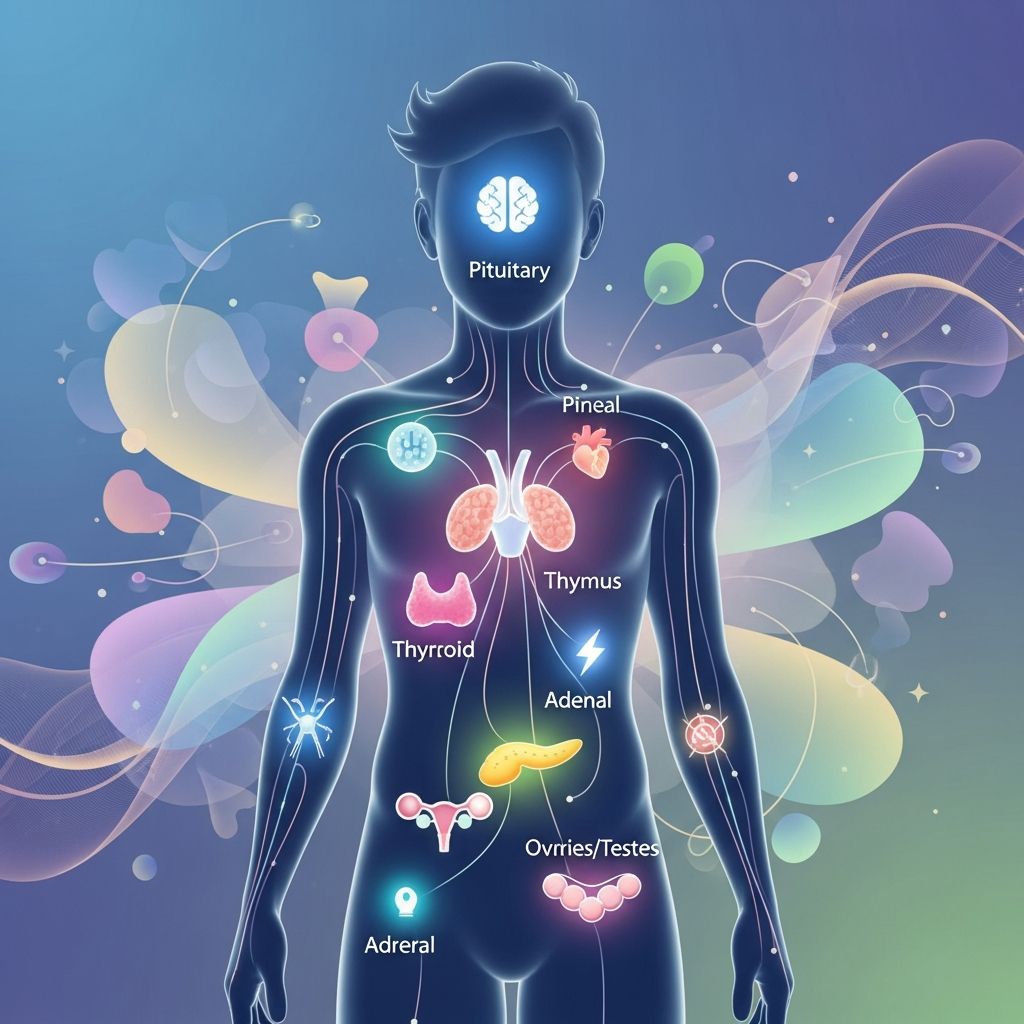
During the teen years, your body runs on a powerful chemical messaging network called the endocrine system. It quietly helps control how tall you grow, when puberty starts, how hungry or tired you feel, and even what kind of mood you are in from day to day.
What Is the Endocrine System?
The endocrine system is a group of organs called glands that release chemicals known as hormones into your bloodstream. These hormones act like text messages that travel through your blood to different parts of your body, telling cells when to grow, when to make energy, and when to perform specific jobs.
Unlike the nervous system, which uses fast electrical signals, hormones usually work more slowly but have longer-lasting effects. This is why changes like growth spurts or the start of puberty happen over months and years instead of in a single day.
- Glands are special tissues that make and release hormones.
- Hormones move through the bloodstream to reach target organs and cells.
- Receptors on cells “read” hormone messages and trigger responses.
Why Hormones Matter So Much in Your Teen Years
Childhood and adolescence are when your endocrine system is especially active. During this time, hormone levels rise and fall in new patterns, triggering growth spurts, changes in body shape, skin and hair changes, and the development of reproductive organs.
Hormones also influence how hungry you feel, how easily you fall asleep, how you respond to stress, and how your body uses food for energy. Because of this, hormone changes can affect everything from school performance to sports to friendships.
- Puberty starts when certain brain areas begin sending stronger hormone signals.
- Growth hormone peaks during adolescence, supporting rapid height and muscle gains.
- Sex hormones (like estrogen and testosterone) guide the development of adult body features.
Meet Your Hormone Control Center: Brain Glands
Two small but powerful structures deep inside the brain help coordinate almost the entire endocrine system: the hypothalamus and the pituitary gland. They constantly check what is happening in your body and adjust hormone levels to keep things in balance.
Think of the hypothalamus as the sensor and the pituitary as the main switchboard. Together, they tell other glands when to speed up or slow down hormone production.
Hypothalamus: The Body’s Sensor
The hypothalamus links your brain and your endocrine system. It responds to information about body temperature, stress, sleep, hunger, and more, and then releases tiny amounts of special hormones that tell the pituitary what to do next.
- Helps control hunger and thirst signals.
- Supports your internal clock and sleep-wake cycles.
- Produces hormones that start puberty and manage stress responses.
Pituitary: The “Master” Gland
The pituitary gland is small, about the size of a pea, but it affects many body systems. It releases hormones that signal the thyroid, adrenal glands, ovaries, and testes, as well as hormones that influence growth and fluid balance.
- Growth hormone: supports height, bone strength, and muscle development.
- Thyroid-stimulating hormone: tells the thyroid to make metabolism-controlling hormones.
- Reproductive hormones: help regulate puberty, menstrual cycles, and sperm production.
Major Glands and What They Do
Several glands located around your body work together to keep your internal environment steady. Each gland makes specific hormones that have particular jobs, but they also influence one another through feedback loops.
The table below highlights some key glands, where they are, and why they matter during the teen years.
| Gland | Location | Main Hormones (examples) | Key Roles for Teens |
|---|---|---|---|
| Thyroid | Front of the lower neck | Thyroid hormones that control metabolism | Regulates energy levels, growth rate, body temperature, and how quickly the body uses nutrients. |
| Parathyroid glands | Small glands near the thyroid | Parathyroid hormone | Helps manage calcium levels, important for strong bones and normal nerve and muscle function. |
| Adrenal glands | On top of each kidney | Stress and salt-balance hormones | Support the stress response, blood pressure control, and some early changes in body hair and body odor. |
| Pancreas | Behind the stomach | Insulin and other blood-sugar related hormones | Maintains stable blood sugar so the brain and muscles have enough energy for school, sports, and everyday activities. |
| Ovaries (in females) | Pelvic area on either side of the uterus | Estrogen and progesterone | Guide menstrual cycles, breast development, changes in body shape, and fertility. |
| Testes (in males) | Scrotum | Testosterone | Influence muscle mass, voice changes, facial and body hair, and sperm production. |
| Pineal gland | Deep in the brain | Melatonin | Helps regulate sleep patterns, especially falling asleep and waking up. |
| Thymus | Upper chest, behind the breastbone | Immune-related hormones | Supports the development of immune cells in early life and is more active in children and younger teens. |
How Hormones Change the Body During Puberty
Puberty is a series of changes that turn a child’s body into an adult body capable of reproduction. It usually begins when the brain increases release of certain signaling hormones, which then prompt the ovaries or testes to step up production of sex hormones.
These sex hormones cause visible changes like breast development, deeper voice, and growth of pubic and underarm hair, as well as internal changes such as maturation of the reproductive organs and shifts in body composition.
- In people with ovaries, estrogen and progesterone support breast growth, menstrual cycles, and wider hips.
- In people with testes, testosterone encourages greater muscle mass, taller growth, facial hair, and voice changes.
- Both estrogen and testosterone can affect mood, energy, and sex drive.
Hormones, Mood, and Mental Health
It is common to feel more intense emotions during the teen years. Changing hormone levels can make feelings stronger, but they are not the only factor. School stress, relationships, sleep habits, and social media use also play big roles.
Because hormones interact with brain areas that handle emotions, teens may notice more frequent mood shifts, especially around menstrual periods, stressful events, or major life changes.
- Fluctuations in stress hormones can lead to feeling wired, restless, or drained.
- Shifts in sex hormones may affect irritability, sadness, or anxiety.
- Stable routines for sleep, food, and activity can help even out some hormone-related emotional swings.
Common Endocrine Issues in Teens
Most hormone changes in adolescence are normal, even if they feel dramatic. However, sometimes glands do not make enough hormones or produce too much. When this happens, symptoms may show up in growth, weight, energy, mood, or body development.
Only a trained health professional can diagnose an endocrine problem, often with a physical exam, questions about symptoms, and lab tests like blood work or imaging.
Possible Signs Something Might Be Off
- Growing much slower or faster than expected for age and family history.
- No signs of puberty starting by the mid-teens, or changes starting extremely early.
- Unexplained weight loss or weight gain along with fatigue or feeling unwell.
- Very frequent urination and constant thirst.
- Irregular or very painful menstrual periods, or periods that suddenly stop for several months (not due to pregnancy).
- Extreme mood changes, especially when combined with physical symptoms like increased heart rate or tremors.
Healthy Habits That Support Hormone Balance
Teens cannot control every hormone change, especially those linked to growth and puberty, but everyday habits can influence how smoothly the endocrine system functions. Small, consistent choices often matter more than big, occasional efforts.
Supporting hormone health is not about perfection or strict rules. It is about giving your body what it needs to handle growth, school, activities, and stress.
Smart Sleep Habits
- Aim for a steady sleep schedule, even on weekends, to keep melatonin and other hormones in a regular rhythm.
- Reduce bright screens before bed so your brain can tell that it is night and start winding down.
- Create a relaxing pre-sleep routine such as reading, stretching, or deep breathing.
Balanced Eating
- Include a mix of carbohydrates, proteins, and healthy fats at meals to help keep blood sugar steady.
- Eat enough calcium- and vitamin D–rich foods such as dairy products or fortified alternatives to support strong bones.
- Drink water regularly and limit heavily sweetened drinks to protect the pancreas and blood sugar balance.
Movement and Stress Management
- Regular physical activity can improve how the body responds to insulin and stress hormones.
- Stretching, walking, or breathing exercises can help calm the stress response when life feels overwhelming.
- Talking with trusted adults or friends about worries can reduce the pressure that ongoing stress puts on the endocrine system.
When to Talk to a Health Professional
If something about growth, puberty, periods, or energy levels seems very different from peers or changes suddenly, it is worth bringing up with a doctor, nurse, or other healthcare provider. Early evaluation can make many endocrine problems easier to manage.
Sharing honest information about menstrual patterns, sexual development, body image, and mood can feel awkward, but it gives health professionals the details needed to help.
- Ask a parent or caregiver to schedule a visit if there are ongoing concerns.
- Prepare questions in advance, such as “Is my growth on track?” or “Are my periods normal?”
- Remember that health professionals are used to these topics and discuss them every day.
Quick Myths and Facts About Hormones
There are many myths about hormones that can be confusing, especially online. Sorting fact from fiction helps you understand what is truly happening in your body.
- Myth: Hormones are always to blame for bad moods. Fact: Hormones can influence mood, but sleep, stress, and environment are also major factors.
- Myth: Everyone should start puberty at the same age. Fact: The timing of puberty varies widely and can still be healthy.
- Myth: Once a hormone problem starts, nothing can be done. Fact: Many hormone issues can be treated or managed with medical care and lifestyle support.
FAQs About the Endocrine System for Teens
1. Do hormones make me a different person?
Hormones can affect your energy and emotions, but they do not change your personality or values. They are one influence among many, including your experiences, relationships, and choices.
2. Is it normal that my friends hit puberty before or after me?
Yes, the timing of puberty is different for everyone. Some people develop earlier, some later, and many fall somewhere in the middle. Health professionals look at the overall pattern of growth and development rather than a single age.
3. Can what I eat really affect my hormones?
Food choices cannot control every hormone, but consistent meals with enough nutrients help your body keep blood sugar, growth, and energy-related hormones in better balance. Extreme dieting or skipping many meals, on the other hand, can disrupt some hormone patterns.
4. Are severe acne and body odor always hormone problems?
Acne and stronger body odor are common during puberty as glands respond to new hormone levels. Sometimes they can be intense but still considered part of normal development. If skin problems are painful, scarring, or very upsetting, a healthcare provider can offer treatments and check for underlying concerns.
5. When should I be worried about growth or height?
If there is almost no height change over several years, or if you suddenly stop growing while most peers are still catching up, it might be worth a checkup. Bringing a record of past heights to the appointment can help show whether growth is on track.
6. Do I need hormone tests if I feel moody?
Not usually. Mood shifts are very common in teens and often relate to sleep, stress, and normal puberty changes. A health professional may suggest tests only if mood changes appear with other symptoms like major weight shifts, unusual heart rate, or big changes in energy.
Understanding the endocrine system can make the teen years feel a little less mysterious. By learning how hormones work, paying attention to your body’s signals, and asking questions when something seems off, you take an active role in your own health.