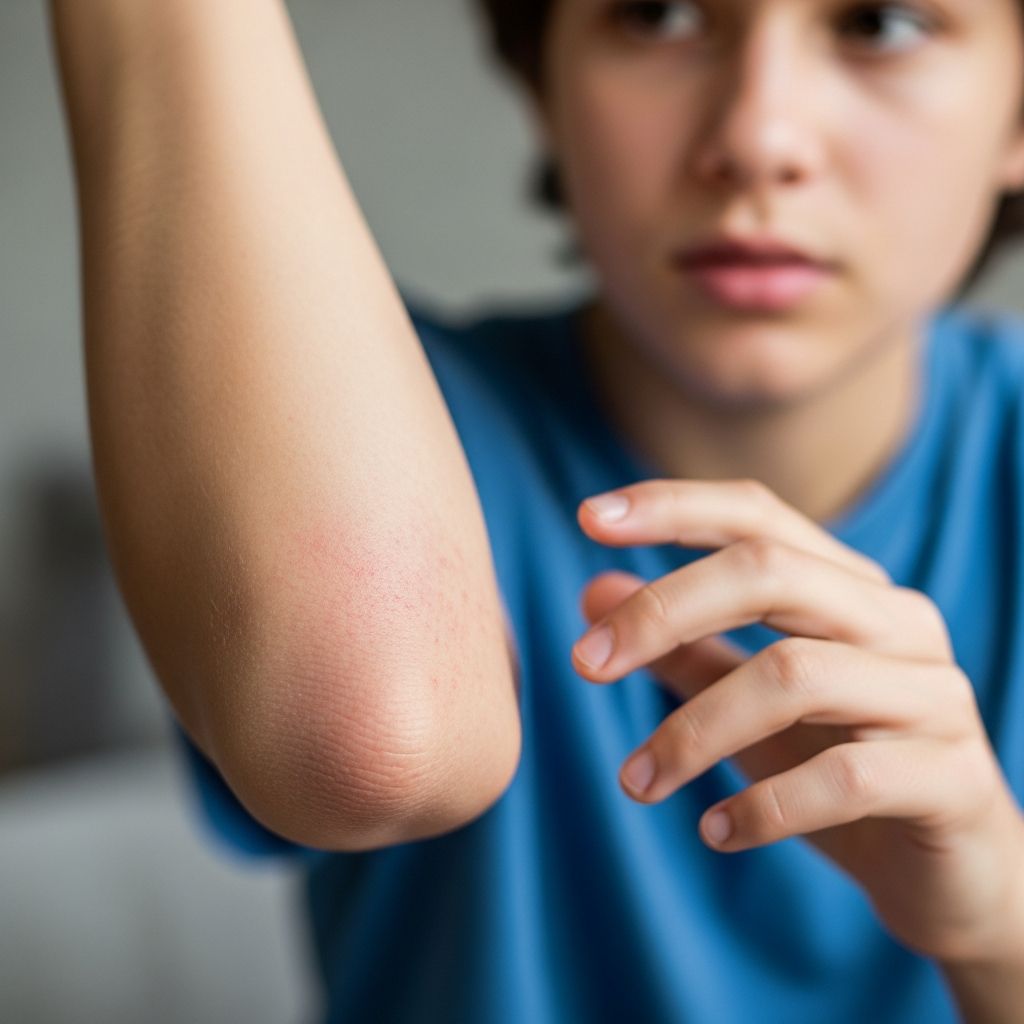
Eczema can make your skin feel itchy, dry, and uncomfortable at exactly the time in life when you care a lot about how you look and feel. This guide explains what eczema is, why it happens, and what you can do every day to keep flare-ups under control.
What Exactly Is Eczema?
Eczema, often called atopic dermatitis, is a long-lasting (chronic) skin condition where your skin gets dry, itchy, and easily irritated. It is not contagious, so you cannot catch it from or give it to someone else by touching.
In eczema, the outer layer of your skin does not work as well as it should. It lets water escape too easily and allows irritants and germs in more easily. This can lead to:
- Dry, rough, or flaky skin
- Red or darker patches (depending on skin tone)
- Intense itching that may feel worse at night
- Rashes that come and go over time
Many teens with eczema also have, or have family members with, allergies, hay fever, or asthma.
Why Do Some Teens Get Eczema?
Doctors do not know a single exact cause, but research points to a mix of genes and the environment.
Genetic and immune system factors
- Family history: Eczema is more likely if a parent or close relative has eczema, asthma, or hay fever.
- Skin barrier genes: Some people have changes in genes that affect skin proteins (such as filaggrin) that help seal in moisture. A weaker barrier lets moisture out and irritants in.
- Immune system sensitivity: The immune system in eczema tends to overreact, causing inflammation and itchy rashes when triggered by irritants or allergens.
Common triggers that can set off a flare
Even though these things do not cause eczema by themselves, they can make it suddenly worse (a flare-up):
- Very dry air or cold, windy weather
- Heat and sweating from sports or hot showers
- Harsh soaps, strong detergents, cleaning products
- Fragrances in lotions, deodorants, or laundry products
- Rough fabrics like wool or some synthetics
- Dust mites, pet dander, pollen, or mold
- Skin infections (bacterial or viral)
- Emotional stress or lack of sleep
How Eczema Shows Up on Teen Skin
Eczema does not look the same on everyone, and it can change over the years. In teens, it often appears on flex areas and exposed skin.
Typical symptoms
- Very itchy skin (often the most noticeable symptom)
- Dryness, scaling, or rough patches
- Red or pink areas on lighter skin; purple, brown, or gray areas on darker skin
- Small bumps that may ooze clear fluid, then form a crust when scratched
- Thickened, leathery skin from frequent rubbing or scratching
Common locations in teens
| Body area | How eczema may appear |
|---|---|
| Inner elbows & backs of knees | Itchy, dry, sometimes thickened folds that may crack or sting when you move |
| Wrists & ankles | Red or darker patches that may become scaly or bumpy |
| Face & neck | Dry, irritated areas; may be very visible, which can feel embarrassing |
| Hands | Dry, cracked skin from washing, sanitizer, or cleaning products |
| Any other area | Patches can appear almost anywhere and may move over time |
When a Flare-Up Becomes an Infection
Scratching may feel good for a second, but it can break the skin and let germs in. This raises the risk of skin infections.
Contact your healthcare provider quickly if you notice:
- Yellow or honey-colored crusts over eczema patches
- Swollen, painful areas or warm, tender skin
- Pus-filled bumps or blisters
- Sudden spreading redness or streaks
- Fever or feeling generally unwell
Infections usually need medical treatment, such as antibiotic or antiviral medicine, in addition to your usual eczema care.
Getting a Diagnosis
If you think you have eczema, a healthcare professional (usually a doctor, nurse practitioner, dermatologist, or allergist) can usually diagnose it by looking at your skin and asking questions.
They may ask about:
- When your symptoms started and how they have changed
- Family history of eczema, allergies, hay fever, or asthma
- What seems to trigger your itching or rash
- Products you use on your skin, hair, and clothes
Sometimes they may also:
- Check for infections
- Rule out other conditions that can look similar, such as psoriasis, fungal infections, scabies, or contact dermatitis
- Refer you to an allergist or dermatologist for further testing if needed
How Eczema Is Treated
There is no permanent cure yet, but many teens can keep symptoms under good control with the right routine. Treatment usually combines daily skin care, avoiding triggers, and medicines when needed.
Daily moisturizing: the foundation of care
Keeping your skin hydrated helps repair the barrier and reduces itching.
- Apply a fragrance-free moisturizer at least once or twice a day, even when your skin looks okay.
- Use thicker creams or ointments (in tubs or squeezable tubes) rather than thin lotions, which can be less hydrating.
- Put moisturizer on within a few minutes after bathing, while skin is still slightly damp.
Medicines for flares
Your provider may prescribe stronger treatments for bad flare-ups or sensitive areas:
- Topical corticosteroids: Anti-inflammatory creams or ointments that reduce redness and itching. They come in different strengths for different body parts.
- Topical calcineurin inhibitors: Non-steroid creams for sensitive areas like the face, neck, or skin folds.
- Other newer topical medications: Such as phosphodiesterase-4 (PDE4) inhibitors for moderate eczema.
- Antihistamines: Sometimes used at night to help with itch and sleep, though they do not fix the underlying skin problem.
- Antibiotics or antivirals: If your skin is infected.
- Phototherapy or systemic treatments: For severe eczema that does not respond to usual care, specialists may suggest light therapy or medicines that work on the immune system.
Always use prescription medicines exactly as directed and talk to your provider before stopping or changing them.
Building a Teen-Friendly Skin-Care Routine
Consistency matters more than perfection. A simple routine you can stick with is better than a complicated one you avoid.
Smart bathing habits
- Keep showers short (about 5–10 minutes).
- Use warm, not hot, water to avoid drying your skin.
- Choose a gentle, fragrance-free cleanser instead of regular soap.
- Pat your skin dry with a soft towel instead of rubbing hard.
- Put on moisturizer right after you gently dry off.
Clothing and laundry choices
- Pick soft, breathable fabrics like cotton.
- Avoid rough wool, stiff synthetics, or anything that feels scratchy against your skin.
- Wear loose layers when it is hot to prevent sweating and chafing.
- Use fragrance-free, dye-free laundry detergents.
- Skip fabric softeners or dryer sheets with fragrance, which can irritate skin.
Managing sweat, sports, and activities
- Before exercise, apply moisturizer to areas that usually flare.
- Wear breathable workout clothes that wick sweat away from the skin.
- Shower or rinse off sweat soon after sports and moisturize again.
- On very hot days, take breaks, drink water, and cool down when your skin starts to itch.
Dealing With Triggers in Everyday Life
You cannot avoid everything that bothers your skin, but you can learn which triggers matter most for you and plan around them.
Environmental triggers
- Use a humidifier during very dry, heated winter months if recommended by your provider.
- Keep your bedroom cool at night to reduce sweating and itching.
- Keep pets out of your bed if dander is a problem.
- Dust and vacuum regularly if dust mites bother you.
Products that quietly irritate skin
- Choose skincare, makeup, and hair products labeled fragrance-free (not just “unscented”).
- Avoid products with strong alcohols, scrubs, or exfoliants on eczema-prone areas.
- Patch-test new products on a small area before using them everywhere.
Stress, sleep, and your skin
Stress and poor sleep can make eczema worse, and eczema can also make sleep harder, creating a cycle.
- Try calming activities before bed, like reading, stretching, or listening to music.
- Set a regular sleep schedule as much as school and activities allow.
- Talk to someone you trust or a counselor if stress or anxiety feels overwhelming.
Emotional Side of Living With Eczema
Eczema is more than just a skin issue; it can affect confidence, body image, and mood. Visible rashes on the face, neck, or hands may make you feel self-conscious, especially around peers.
Things that can help include:
- Talking openly with friends or family about what eczema is and is not (for example, that it is not contagious).
- Asking your healthcare provider about safe ways to use makeup or concealer if that matters to you.
- Connecting with others who have eczema through trusted organizations or support groups.
- Letting your school nurse or coach know about your condition so they can support you during flares.
When to Call Your Doctor
Contact a healthcare professional if:
- Your itching or rash is getting worse even with your usual treatments.
- You are losing sleep often because of itching.
- You see signs of infection (crusting, pus, rapidly spreading redness, or fever).
- Your eczema is affecting your mood, school, or social life.
- You are interested in newer treatments such as light therapy or biologic medicines.
Frequently Asked Questions (FAQs)
Will my eczema ever go away?
For many people, eczema improves as they get older, especially from the teen years into adulthood, but it can also come and go throughout life. Even if it does not disappear completely, most teens can find a routine that keeps symptoms much milder.
Can I still play sports and work out?
Yes. Movement is good for your overall health. You may need to manage sweat by wearing breathable clothes, rinsing off after activity, moisturizing afterward, and taking breaks if your skin starts to itch.
Is eczema caused by poor hygiene?
No. Eczema is related to genetics, the immune system, and a weak skin barrier, not to being dirty. In fact, over-washing or using harsh soaps can make eczema worse.
Do certain foods cause eczema?
Some people with eczema also have food allergies, but food is not the main cause of eczema. Do not cut major food groups without speaking to a healthcare professional; if a food seems to trigger flares, ask your doctor or an allergist about safe testing.
Is it okay to scratch if it itches a lot?
Scratching is tempting but can damage your skin, increase inflammation, and raise the risk of infection. Try gentle pressure, tapping the area, using a cool compress, or applying your prescribed medicine and moisturizer instead.
References
- Atopic eczema — NHS. 2020-12-11. https://www.nhs.uk/conditions/atopic-eczema/
- Eczema (Atopic Dermatitis) — StatPearls/NCBI Bookshelf. 2023-07-10. https://www.ncbi.nlm.nih.gov/books/NBK538209/
- Atopic dermatitis (eczema) – Symptoms and causes — Mayo Clinic. 2023-04-19. https://www.mayoclinic.org/diseases-conditions/atopic-dermatitis-eczema/symptoms-causes/syc-20353273
- What is Eczema? — Allergy & Asthma Network. 2023-05-01. https://allergyasthmanetwork.org/what-is-eczema/
- Eczema (Atopic Dermatitis) — Cleveland Clinic. 2022-09-01. https://my.clevelandclinic.org/health/diseases/9998-eczema
- Eczema (Atopic Dermatitis) — Boston Children’s Hospital. 2023-02-15. https://www.childrenshospital.org/conditions/eczema
- Eczema (Atopic Dermatitis) in Teens — Skinsight. 2021-08-01. https://skinsight.com/skin-conditions/atopic-dermatitis-eczema/teen/