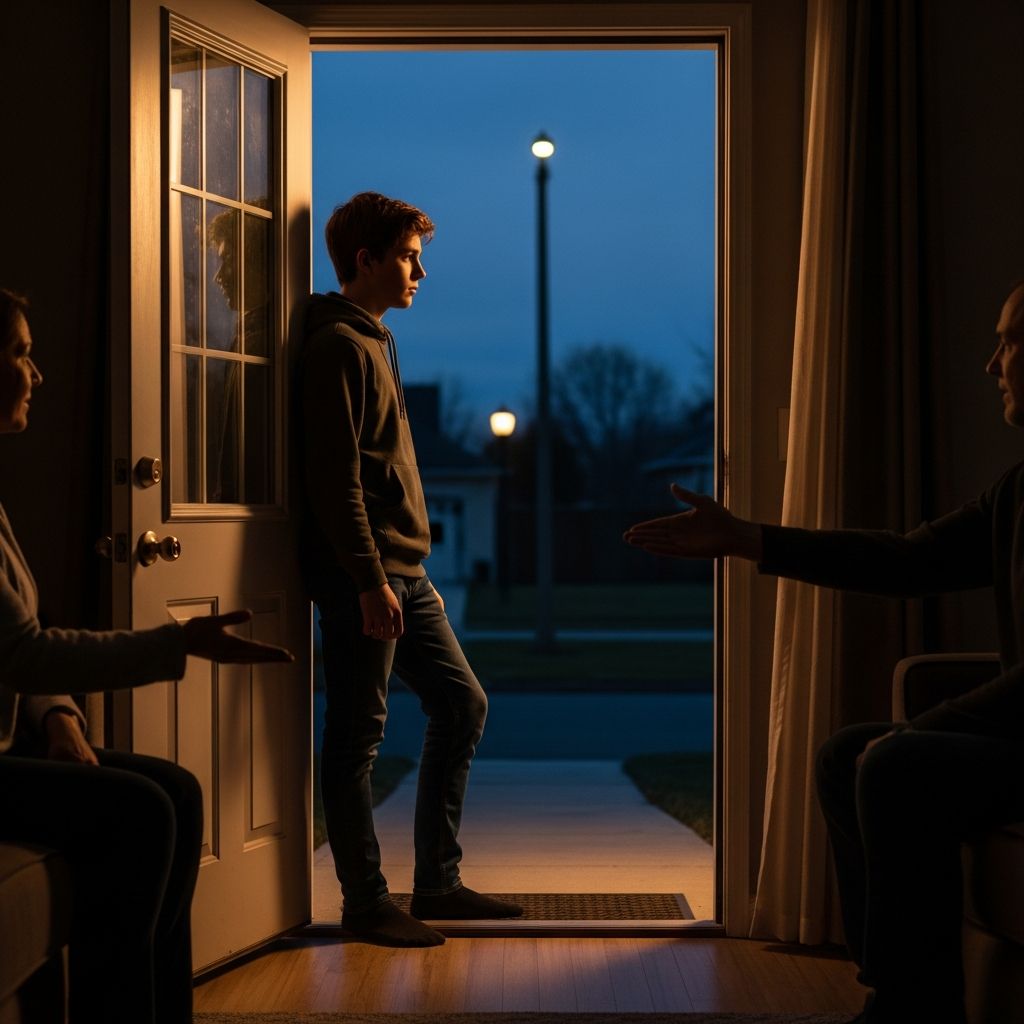
Curfews are one of the first big “grown-up” conflicts many parents have with their teenagers. Your teen sees a curfew as a symbol of freedom or control, while you see it as a matter of safety and responsibility. The good news is that curfews do not have to turn into nightly battles. With clear communication, realistic expectations, and a bit of flexibility, they can become a useful tool for teaching self-discipline and mutual respect.
Why Curfews Matter More Than Just the Time
On the surface, a curfew is simply a time on the clock. Underneath, it represents how your family balances three powerful forces: your teen’s safety, your need for peace of mind, and their growing desire for independence. When curfews are handled thoughtfully, they become a way to teach boundaries, time management, and accountability instead of just a rule to argue about.
Thinking about curfews as part of your long-term parenting strategy rather than just a reaction to a specific night out helps you avoid power struggles and focus on raising a responsible adult.
Common Reasons Parents Set Curfews
Most parents do not set curfews because they distrust their teenager personally. They set them because teen years are full of real risks, shifting schedules, and incomplete judgment. Naming your reasons out loud makes your rules feel less arbitrary and easier for your teen to respect, even when they do not like them.
- Safety after dark: Many risky situations for teens happen late at night, when it is harder to get help and easier to hide poor choices.
- Sleep and school success: A predictable time home usually means a predictable time to sleep, which matters for mood, learning, and health.
- Family rhythm: Parents and siblings also need to sleep, relax, and use shared spaces without waiting up until all hours.
- Practice for adult life: Jobs, college classes, and future roommates will all require being on time; curfews are an early training ground.
- Peace of mind: Knowing when to expect your teen home eases anxiety and reduces the urge to constantly text or call them when they are out.
The Hidden Message Behind Curfew Fights
Arguments about curfew often are not really about whether your teen comes home at 10:30 or 11:00. They are usually about feeling heard, trusted, and respected. If one side feels controlled and the other side feels ignored, the time itself becomes a symbol of a bigger problem.
When you respond to curfew conflicts, it helps to listen for the deeper message: Is your teen asking for more independence? Are you reacting to a past scare or broken rule? Understanding the emotional layer helps you respond calmly instead of escalating the conflict.
Factors to Consider Before You Choose a Time
There is no universal “correct” curfew that fits every family. A good curfew is specific to your teen, your neighborhood, and your household values. Before you decide on times, take a moment to think through a few practical questions.
- Age and maturity: A responsible 17-year-old with a job may earn more freedom than a 13-year-old just starting middle school.
- Transportation: Is your teen driving, taking public transit, using rideshares, or relying on you for pickup?
- Community norms: Some communities have official youth curfew laws or very quiet neighborhoods; others are active later at night.
- School and activity schedule: Early morning practices and demanding coursework might require earlier nights.
- History of behavior: Teens who consistently check in and come home on time often earn more flexibility than those who push limits or avoid communication.
Sample Curfew Levels by Stage of Teen Years
The table below is not a strict formula. It is a starting point to help you think about ranges that might make sense. You will still adjust based on your family, your culture, and your teen’s personality.
| Stage | Typical Age Range | Weeknight Curfew (example) | Weekend Curfew (example) | Notes |
|---|---|---|---|---|
| Early teen | 13–14 | 8:30–9:30 pm | 9:30–10:30 pm | Often limited to close friends’ houses or supervised events. |
| Middle teen | 15–16 | 9:30–10:30 pm | 11:00 pm–12:00 am | More social events, movies, and games; communication becomes crucial. |
| Older teen | 17–18 | 10:30–11:00 pm | 12:00–1:00 am | Often driving, dating, and working; curfew may adjust by situation. |
Creating a Curfew Plan With Your Teen
A curfew that your teen helps design is more likely to be followed than one handed down with no discussion. The goal is not to negotiate away every boundary, but to invite your teen into a real conversation about expectations, safety, and consequences.
Step 1: Start With Values, Not Times
Instead of opening with “You must be home by 10,” start with what matters most to your family. Talk about safety, respect, school responsibilities, and trust. When both of you agree on the “why,” it is easier to settle on the “when.”
- Ask your teen what they think the purpose of a curfew is.
- Share what worries you most when they are out (for example, driving, strangers, lack of sleep).
- Agree that both of you want them to be safe and trusted, even if you disagree on the details.
Step 2: Set Default Times and Make Room for Exceptions
Having a “usual” curfew makes life simpler, but rigid rules can backfire when there is a special event. Define a standard time for school nights and weekends, then outline how to request an exception ahead of time.
- Create one regular weeknight curfew and one regular weekend curfew.
- Decide how much notice your teen must give to ask for a later time.
- Clarify that last-minute changes need a phone call or text, not silent lateness.
Step 3: Agree on Check-In Rules
Curfews work best when you are not left wondering where your teen is and who they are with. A few simple check-in rules can reduce anxiety for everyone without feeling like constant surveillance.
- Require your teen to share where they are, who they are with, and how they are getting home before they go out.
- Ask for a quick message if the location, group, or ride changes.
- Decide in advance how often you will check in (for example, only if plans change or if it is getting close to curfew).
When to Bend the Rules (and When Not To)
Real life does not always fit neatly inside a set time. A safe, respectful curfew system has room for flexibility when circumstances truly call for it, but also has firm boundaries around safety and integrity. Clear criteria keep your teen from expecting exceptions every weekend.
Good Reasons to Extend Curfew
- A special event such as a school dance, concert, tournament, or birthday celebration planned in advance.
- Unpredictable ending times like sports playoffs or theater productions.
- A genuinely safer option, such as staying a bit later to get a ride with a sober driver instead of pressuring someone to leave early.
Times to Keep Curfew Firm
- When your teen has an early exam, work shift, or commitment the next morning.
- When the request is last-minute, vague, or clearly tied to peer pressure.
- When there is a pattern of pushing limits, dishonesty, or ignoring prior agreements.
Natural Consequences for Missed Curfews
Enforcing curfew is not about punishing your teen; it is about teaching that choices have consequences. Calm, predictable responses are more effective than angry lectures or extreme punishments. Ideally, your teen should be able to predict what will happen if they are late before it ever occurs.
- First minor slip (a few minutes late): A conversation the next day about what happened and how to prevent it, with a reminder of expectations.
- Repeated or longer lateness: Temporary earlier curfew, loss of driving privileges, or staying in the next weekend to rebuild trust.
- Lying or disappearing: Stronger restrictions, such as limiting social outings until your teen can demonstrate reliability again.
Always connect the consequence directly to the behavior. Emphasize that the goal is to help your teen earn more freedom, not to control them indefinitely.
Handling the Most Common Curfew Arguments
Some pushback is normal. It is part of how teens stretch their wings and test boundaries. Preparing for typical objections ahead of time helps you stay calm instead of getting pulled into a shouting match.
“No One Else Has to Be Home This Early!”
Your teen may insist that all of their friends stay out much later. Even if that is true, you still get to decide what works for your household. Acknowledge their feelings while standing by your own judgment.
- Validate: “It is frustrating when you feel like you are the only one leaving early.”
- Clarify: “Different families have different rules. Our job is to choose what keeps you safe and rested.”
- Offer hope: “If you show you can handle this time responsibly, we can revisit it in a few months.”
“You Don’t Trust Me!”
Many teens interpret any boundary as a sign of distrust. You can reduce this sting by separating your trust in their character from your concern about real-world risks and other people’s choices.
- Communicate that you do trust their intentions, but not every situation or stranger they may encounter.
- Explain that boundaries are part of caring, not punishment.
- Point out examples where they have earned and kept your trust to show you notice their good decisions.
“You’re Just Trying to Control My Life!”
If your teen throws this line at you, it may be a sign that they need more say in how rules are created. Involving them in planning does not mean giving them everything they want, but it does mean listening to their perspective.
- Invite them to suggest a reasonable curfew and explain why it would work.
- Compare their suggestion with yours and look for a middle ground that still protects their health and safety.
- Remind them that as responsibility grows, so does freedom.
Special Curfew Situations to Plan For
Some events bring unique challenges and temptations. Thinking through these situations in advance helps prevent misunderstandings and last-minute battles. It also signals to your teen that you understand their world, not just the clock.
- Prom, dances, and late-night school events: Talk ahead of time about after-parties, transportation, and whether curfew will be slightly extended for that night only.
- Parties with alcohol present: Make clear that you would rather pick them up late and safely than have them accept a dangerous ride to meet curfew.
- Jobs and shifts: If your teen works evenings, tailor curfew to their schedule while keeping sleep and safety in mind.
- Driving curfews: If your area has specific rules for new drivers, build those into your expectations so your teen respects both family and legal limits.
Using Curfews to Build, Not Break, Trust
Done well, curfews can become a shared project rather than a constant tug-of-war. The goal is not to hold the tightest line for as long as possible. The goal is to gradually hand over responsibility as your teen proves they can handle it. When both of you see curfews as a stepping-stone toward adulthood, not a cage, the tone of your conversations changes.
Trust grows when you are consistent, reasonable, and open to revisiting rules as your teen matures. When they feel that their effort and honesty actually matter, they have more motivation to follow the rules you set.
Frequently Asked Questions About Teen Curfews
How old should my child be before having a real curfew?
Many families start with informal limits in the preteen years (such as being home before dark) and move toward a specific, clock-based curfew around ages 13–14. The exact age depends on your teen’s maturity, your neighborhood, and how often they go out without you.
What if my ex-partner has completely different rules?
It is common for separated or divorced parents to have different curfews. While total consistency is ideal, it is not always realistic. Focus on being clear about the rules in your own home, explain the reasons behind them, and avoid turning your teen into a messenger or referee between adults.
Should curfews be different for sons and daughters?
Many parents instinctively tighten rules more for daughters than sons, often out of concern for safety. However, teens quickly notice gender-based double standards. When possible, base curfews on age, behavior, and situation instead of gender. If you do treat them differently, be prepared to offer a thoughtful explanation and listen to their feedback.
What if my teen refuses to come home on time?
A pattern of defiance is different from occasional forgetfulness or poor time management. In those cases, you may need stronger, consistent consequences and possibly support from a counselor or trusted professional. Curfews work best as part of a broader relationship that includes communication, respect, and clear expectations in other areas of life.
How often should we revisit our curfew rules?
Revisit curfews at natural transition points: new school year, a birthday, a new job, or after several months of consistent responsibility. Regular check-ins help your teen see curfews as evolving guidelines instead of permanent sentences.
Key Takeaways for Parents
Curfews can either become a nightly fight or a useful tool for teaching responsibility. The difference often lies in how they are created, explained, and enforced. When you involve your teen, stay calm, and focus on safety and respect, you lay the groundwork for peaceful evenings—and for a young adult who knows how to manage time and boundaries.
- Start with values and reasons, not just a number on a clock.
- Adjust for age, maturity, and circumstances rather than copying other families.
- Use consistent, predictable consequences instead of emotional reactions.
- Review and update curfews as your teen proves they can handle more independence.