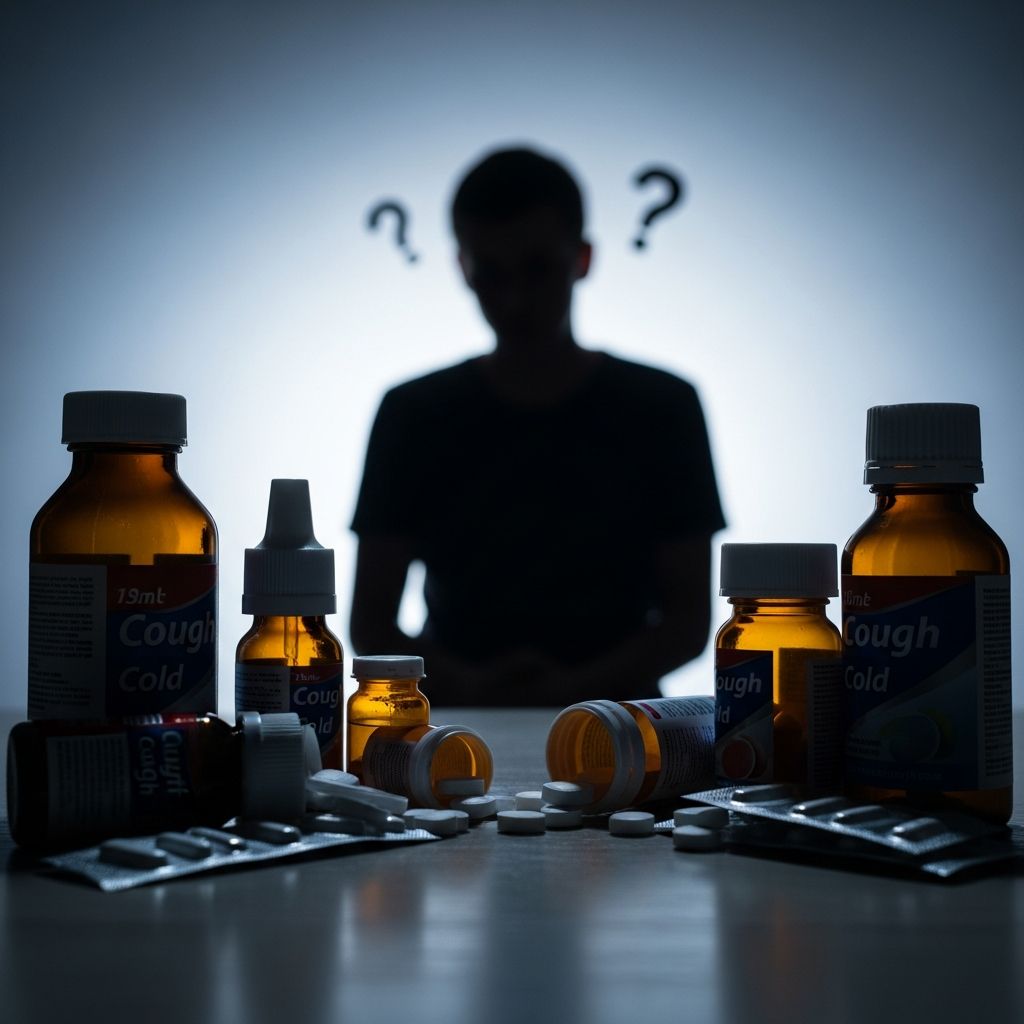
Over-the-counter (OTC) cough and cold medicines are staples in many households. Used correctly, they ease symptoms and help kids rest. Misused, especially in large doses or for the purpose of getting high, they can cause serious health problems for teens and preteens.
This guide explains why some young people misuse these medicines, what the risks are, how to recognize warning signs, and how parents and caregivers can respond.
What Parents Should Know First
Parents often underestimate OTC medicines because they do not require a prescription. Yet many widely available cough and cold products contain ingredients that affect the brain and heart at high doses and can be dangerous when mixed with alcohol, other medications, or drugs.
- OTC does not mean risk-free – safety depends on dose, frequency, and how the product is used.
- Teens are the main age group at risk for intentional misuse of cough medicines to get high.
- Most teens do not misuse these products, but even a small percentage represents many young people nationwide.
- Early, honest conversations between adults and kids substantially lower the risk of misuse.
Key Ingredients Linked to Misuse
Not every cough or cold medicine can cause a high. The concern centers on a few specific active ingredients that, at high doses, affect the brain in ways similar to other drugs of abuse.
Dextromethorphan (DXM)
Dextromethorphan, often abbreviated as DXM, is a cough suppressant found in more than 100 OTC cough and cold products, including syrups, gels, lozenges, and capsules.
- At recommended doses, it safely reduces cough.
- At very high doses, it can cause euphoria, hallucinations, distorted perception, and loss of coordination.
- Because it is easy to obtain and relatively inexpensive, it has been a common target for teen misuse.
Combination Products and Other Risks
Many cough and cold medicines combine several active ingredients in one product. When a teen takes far more than the recommended amount to get high from DXM, they also ingest dangerously high amounts of other drugs in the bottle or blister pack.
These may include:
- Acetaminophen (pain and fever relief) – overdose can severely damage the liver and may require emergency treatment.
- Antihistamines – high doses can cause severe drowsiness, agitation, confusion, fast heart rate, and seizures.
- Decongestants – large doses can raise blood pressure and heart rate and may cause heart rhythm problems.
Some prescription cough medicines also contain codeine or other opioids. Because of their risk of misuse, addiction, and breathing problems, pediatric prescribing of opioid cough medicines in the United States has dropped substantially, although tens of thousands of prescriptions are still filled for youth each year.
How Common Is Teen Cough Medicine Misuse?
Research over the past few decades shows a clear pattern: misuse of DXM-containing cough medicines rose sharply in the early 2000s, then later declined or stabilized as awareness and prevention efforts increased.
| Study / Source | Age Group | Key Finding |
|---|---|---|
| California Poison Control review (1999–2004) | 9–17 years | DXM abuse calls increased more than 15-fold; highest among 15–16-year-olds. |
| National poison data (2000–2015) | 14–17 years | Abuse call rates tripled by 2006, then declined and plateaued through 2015. |
| National teen survey (Monitoring the Future) | 8th–12th graders | Past-year nonmedical use of OTC cough/cold medication remains low overall, under about 5% across grade levels. |
In plain language, these numbers mean:
- Only a minority of teens report misusing cough medicines.
- Nonetheless, thousands of young people in the U.S. engage in this behavior every year.
- Middle school students (especially 8th graders) are a group that prevention experts watch closely, as small increases have been seen at times.
Why Some Teens Misuse Cough and Cold Medicines
Teens rarely start misusing medicine for just one reason. Instead, several influences often come together.
Misconceptions About Safety
- Many teens believe that “if it’s sold in a pharmacy, it must be safe.”
- They may view OTC products as less risky than illegal drugs, not realizing high doses can cause overdose, injury, or hospitalization.
Curiosity and Social Pressure
- Friends may experiment and share stories about getting high from cough syrup or pills.
- Online videos and forums sometimes portray DXM misuse as a “cheap high” or a challenge.
- Teens who feel left out or insecure may join in to fit in or avoid ridicule.
Self-Medication and Emotional Struggles
- Some teens misuse medicines to cope with anxiety, depression, boredom, or stress.
- They may not have healthy coping skills and may be reluctant to ask adults for help.
Access at Home
- Unsecured medicine cabinets or bulk purchases of cough and cold products can make it easy for teens to take large amounts without being noticed.
- When parents are busy or assume “it’s just cough syrup,” changes in how fast a bottle is used may go unchecked.
Health Effects and Dangers of Misuse
The effects of cough and cold medicine misuse vary depending on the ingredients, the amount taken, and whether the teen used other substances (such as alcohol or energy drinks) at the same time.
Short-Term Effects of High-Dose DXM
High doses of DXM can cause a range of neurological and physical effects.
- Confusion, disorientation, or feeling detached from reality
- Euphoria or mood swings
- Hallucinations (seeing or hearing things that are not there)
- Slurred speech and poor coordination
- Nausea, vomiting, or stomach pain
- Rapid heartbeat and elevated blood pressure
- In severe cases, agitation, high body temperature, or seizures
Complications from Other Ingredients
Because many DXM products also contain acetaminophen, antihistamines, or decongestants, very high doses can injure multiple organs at once.
- Liver injury from acetaminophen overdose, which may not cause obvious symptoms right away but can be life-threatening.
- Abnormal heart rhythms or dangerously high blood pressure from decongestants.
- Severe drowsiness, confusion, or seizures from antihistamines.
Longer-Term Concerns
- Repeated misuse can strain the heart and liver over time.
- Teens who misuse cough medicines may be more likely to experiment with alcohol, cannabis, or other drugs later on.
- Legal or school consequences may follow if misuse happens at school or leads to disruptive behavior.
Warning Signs Parents and Caregivers Can Watch For
No single sign proves that a teen is misusing cough or cold medicine. However, clusters of changes in behavior, physical health, and surroundings can raise concern.
Behavior and Mood Changes
- Unusual secrecy about where they are going or who they are with
- Sudden drop in grades or loss of interest in usual activities
- Shifts in friend groups, especially toward peers who use substances
- Uncharacteristic mood swings, irritability, or paranoia
Physical Signs
- Unsteady walking, clumsiness, or slurred speech
- Red or glassy eyes without clear cause
- Nausea, vomiting, stomach pain, or unexplained headaches
- Periods of extreme drowsiness followed by restlessness or agitation
Clues Around the House
- Empty or quickly disappearing bottles or blister packs of cough and cold medicine
- Packages of medicine found in the teen’s room, backpack, or car that you did not buy
- Online order history showing repeated purchases of DXM-containing products
What To Do in an Emergency
If you suspect your teen has taken too much cough or cold medicine, treat it as a medical emergency.
- If they are unconscious, having a seizure, struggling to breathe, or extremely confused, call your local emergency number immediately.
- If they are awake but you suspect overdose, contact your local poison control center for guidance on what to do next. In the United States, poison centers provide 24/7 free advice by phone.
- Bring the medicine bottles or packages with you to the hospital or keep them nearby when you call, so professionals know exactly what and how much may have been taken.
Timely treatment can prevent serious organ damage from ingredients such as acetaminophen and can help manage dangerous changes in heart rate, blood pressure, and breathing.
Everyday Prevention Strategies for Families
Prevention does not mean locking every medicine in a vault. It means combining sensible storage with open communication and clear expectations.
Store and Monitor Medicines Wisely
- Keep cough and cold medicines in a place that is not easily accessible or visible to teens.
- Avoid buying more than you reasonably need for the season.
- Periodically count pills or check liquid levels in actively used products.
- Safely dispose of expired or unused medicines rather than leaving them in cabinets.
Read Labels Together
- Show your child where to find the active ingredients on the label.
- Explain that taking more than the directed dose is not just “extra help” – it can damage the body.
- Point out warnings about mixing with alcohol, other medicines, or driving.
Set Clear Rules About Medicine Use
- Tell your teen explicitly that they are not to self-dose with cough or cold medicines without talking to you first.
- Clarify that using medicine to get high is considered drug misuse and carries safety, school, and legal consequences.
- Model responsible use yourself – follow dosing instructions and avoid casual comments about “needing a pill” to get through the day.
Stay Connected and Curious
- Ask open-ended questions about stress at school, friendships, and online trends.
- Make it clear they can come to you if they see peers misusing medicines or feel pressured to try it.
- Listen more than you lecture; teens are more open when they feel heard and respected.
Talking With Your Teen About Medicine Misuse
It can feel awkward to bring up substance use, especially when your child is still in middle school. Yet research shows that straightforward, age-appropriate conversations substantially reduce risk.
Guidelines for Effective Conversations
- Start early – do not wait until there is a problem.
- Be specific – mention cough and cold medicines by name instead of talking only about “drugs” in general.
- Use real facts – explain that high doses can cause heart problems, seizures, or organ damage, not just “trouble at school.”
- Avoid scare tactics – exaggeration can undermine your credibility.
- Invite questions – ask what they have seen or heard online and correct myths calmly.
Addressing Peer Pressure
Practice responses together so your teen knows what to say if someone offers medicines to misuse:
- “My parents check our medicine cabinet – it’s not worth the trouble.”
- “I don’t mess around with that stuff. I’ve seen people get sick from it.”
- “No thanks, I’m good.” (Repeated calmly and confidently, then change the subject or walk away.)
When You Are Already Concerned
If you have noticed warning signs or found evidence of misuse, it is important to respond quickly but thoughtfully.
First Steps at Home
- Choose a calm, private time to talk rather than confronting your teen in anger.
- Share what you have observed (“I found three empty bottles of cough syrup in your backpack”) and ask for their side of the story.
- Explain your safety concerns clearly and calmly.
- Set or adjust consequences that are firm but focused on safety (such as increased supervision or limiting unsupervised time with peers who use substances).
Getting Professional Help
- Discuss your concerns with your child’s pediatrician or family doctor.
- Ask whether a mental health evaluation is appropriate, especially if there are signs of depression, anxiety, or other substance use.
- Consider counseling or family therapy to address underlying issues and improve communication.
Frequently Asked Questions (FAQs)
Can a teen get addicted to cough medicine?
DXM misuse can become a repeated behavior, especially if a teen uses it to cope with emotions or social stress. Some teens develop a pattern of compulsive use that resembles addiction, even if DXM itself is not classified like opioids or nicotine. Early intervention lowers this risk.
Are some cough medicines safer than others for teens?
When used exactly as directed and for a short time, most OTC cough and cold medicines are safe for otherwise healthy teens. However, products containing DXM, acetaminophen, antihistamines, or decongestants can all be dangerous at high doses or when combined with other substances. Always follow label directions and talk with a healthcare professional if you are unsure which product to choose.
Should I avoid keeping any DXM products in my home?
For many families, thoughtful storage and supervision are enough. In families with a history of substance use problems, or if you already suspect misuse, it may be wise to avoid keeping DXM products at home or to store them in a locked location and manage dosing directly for your child.
What age should I start talking to my child about medicine safety?
You can begin simple conversations in late elementary school by explaining that medicine is not candy and should only be taken with an adult’s help. By middle school, it is appropriate to talk about misuse of cough and cold medicines and other substances in clear, age-appropriate language.
Does the decline in DXM abuse calls mean I no longer need to worry?
No. Although national trends show that DXM abuse among teens has declined from its mid-2000s peak and overall misuse rates remain relatively low, thousands of young people are still affected each year. Awareness, safe storage, and open communication remain important.
References
- Dextromethorphan Abuse in Adolescence — Bryner JK, et al. Archives of Pediatrics & Adolescent Medicine. 2006-12-01. https://pmc.ncbi.nlm.nih.gov/articles/PMC2257867/
- Adolescent abuse of over-the-counter cold medicine soars — University of California San Francisco News. 2006-12-05. https://www.ucsf.edu/news/2006/12/97938/adolescent-abuse-over-counter-cold-medicine-soars
- Trends in dextromethorphan cough and cold products: 2000-2015 — Kamboj A, et al. Clinical Toxicology. 2017-12-18. https://pubmed.ncbi.nlm.nih.gov/29260900/
- Rates for Teen Abuse of OTC Cough/Cold Medication Remains Low According to NIDA Survey — Consumer Healthcare Products Association. 2024-12-18. https://www.chpa.org/news/2024/12/rates-teen-abuse-otc-coughcold-medication-remains-low-according-nida-survey
- National Survey Shows Slight Increase in Teen Abuse of OTC Cough Medicine — Consumer Healthcare Products Association. 2020-12-15. https://www.chpa.org/news/2020/12/national-survey-shows-slight-increase-teen-abuse-otc-cough-medicine
- Prescriptions for Codeine or Hydrocodone Cough and Cold Medications to US Children and Adolescents After US Food and Drug Administration Safety Communications — Chua KP, et al. JAMA Network Open. 2021-11-02. https://jamanetwork.com/journals/jamanetworkopen/fullarticle/2785985
- Cough Medicine Abuse by Teens — Nationwide Children’s Hospital. 2017-11-01 (updated). https://www.nationwidechildrens.org/family-resources-education/family-resources-library/cough-medicine-abuse-by-teens