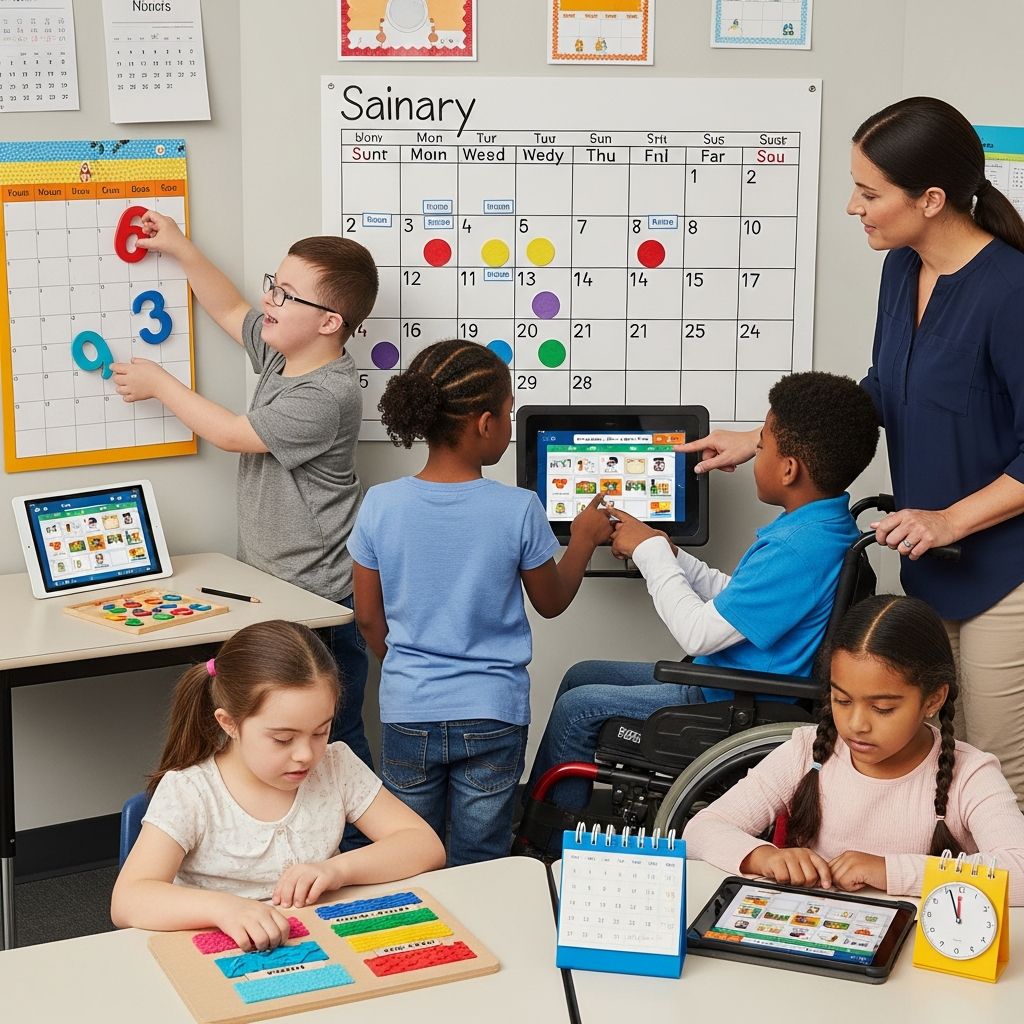
Calendar skills are a core life skill for children with special needs because they support independence, routine, time management, and participation in school, home, and community life. This comprehensive guide explains what to teach, when to teach it, and how to adapt instruction so every learner can experience success.
Why Calendar Skills Matter
Understanding how days, weeks, and months work together helps children anticipate what is coming next, prepare for changes in routine, and feel more in control of their world. For many learners with special needs, predictable calendar routines can also reduce anxiety and support smoother transitions.
- Calendar skills build foundations for time management, planning, and organizational skills.
- They connect directly to real-life tasks such as tracking appointments, school events, holidays, and family activities.
- Daily calendar review can integrate language, math, and social interaction in one structured activity.
Foundational Concepts Before Calendar Work
Before focusing on the calendar itself, many children benefit from learning basic time-related ideas in concrete ways. These foundations make abstract calendar concepts feel more meaningful and easier to understand.
Basic Time Vocabulary
Introduce and repeat simple words about time through everyday routines so children hear them in context.
- Now, later, before, after
- Morning, afternoon, evening, night
- Today, yesterday, tomorrow
Daily Routine Awareness
Help learners connect time with familiar routines long before they are expected to understand dates and months.
- Use visual schedules showing the sequence of daily activities.
- Point out changes in routine (“After breakfast we go to school,” “After school we have therapy”).
- Highlight beginning and ending of key activities (“First we read, then we play”).
Key Calendar Concepts to Teach
Calendar skills can be broken down into smaller teachable parts. This allows individualized goals and clear progress from simple recognition to functional use.
| Concept | What the Child Learns | Examples of Goals |
|---|---|---|
| Days of the Week | Names and order of the seven days; which day is today, yesterday, and tomorrow. | Identify today on a classroom calendar; sing or recite days in order. |
| Months of the Year | Names and general order of months; awareness of birthdays, holidays, and seasons. | Point to the current month; match pictures of holidays to their months. |
| Dates and Counting | Numbered days within a month; how the date changes each day. | Move a marker to the correct date; count up to today’s date. |
| Weeks and Patterns | Rows of days form weeks; repeating weekly events and schedules. | Show on which days therapy or sports occur; identify weekends vs. school days. |
| Seasons and Special Events | Connection between weather, seasons, holidays, and long-term time frames. | Sort clothing or activities by season; mark seasonal changes on the calendar. |
Step-by-Step Approach to Teaching Calendar Skills
Many children with special needs learn best with a slow, consistent, and highly visual teaching sequence. The steps below can be adjusted based on age, ability, and individual goals.
Step 1: Start With “Today”
Begin by helping the child identify “today” using a single, clear visual calendar. Focus on one element at a time rather than presenting all the information at once.
- Use a large, uncluttered monthly calendar with bold numbers and simple fonts.
- Each morning, move a marker or picture to the correct date together.
- Say and sign (if applicable) the day of the week while pointing to it.
Step 2: Add Yesterday and Tomorrow
Once “today” is stable, introduce the ideas of “yesterday” and “tomorrow” by physically pointing or moving markers on the calendar.
- Color-code yesterday, today, and tomorrow using three distinct colors.
- Ask simple choice questions, such as “Which one is tomorrow?” with visual prompts.
- Connect the words to real experiences (“Yesterday we went to the park; tomorrow is therapy”).
Step 3: Teach Days of the Week Sequence
Use songs, chants, and visual strips to help students learn the order of the days while still linking them to real-life activities.
- Create a horizontal strip showing all seven days with icons or colors.
- Have the child match removable labels to the correct positions.
- Highlight typical weekly patterns, such as weekends versus school days.
Step 4: Introduce Months and Seasons
When students recognize days and dates, gradually expand to months of the year and seasons, keeping instruction concrete and experience-based.
- Use a months-of-the-year chart with pictures representing common events.
- Mark each child’s birthday and favorite holidays on the calendar.
- Discuss seasonal changes in clothes, weather, and activities as months change.
Step 5: Build Functional Use of the Calendar
The ultimate goal is for students to use calendars meaningfully, not just recite names and numbers. Make the calendar an everyday problem-solving tool.
- Ask students to find which day an appointment, field trip, or family visit will happen.
- Practice counting how many days until a desired event.
- Encourage older learners to maintain personal calendars or digital planners with support.
Using Visual and Multi-Sensory Supports
Visual and tactile tools make abstract time concepts more concrete, especially for children with autism, developmental delays, or language disorders. Multi-sensory approaches also keep calendar routines engaging and accessible.
Types of Visual Calendars
- Wall calendars: Large whole-group calendars used during circle time or morning meeting.
- Individual calendar binders: Personalized books for students to manipulate pieces and follow along.
- Picture-based calendars: Photos or icons for non-readers and early communicators.
- Digital calendars: Simplified electronic calendars for older or more independent students.
Multi-Sensory Ideas
- Velcro pieces for days, dates, and events that students can attach and move.
- Color coding (e.g., blue for school days, green for home days, yellow for appointments).
- Auditory cues such as songs or recorded prompts for each day of the week.
- Movement activities, like stepping on floor tiles labeled with days during a game.
Everyday Activities to Practice Calendar Skills
Short, predictable activities built into daily routines often work better than long, infrequent lessons. Here are practical ways to reinforce calendar learning across settings.
Morning Calendar Routine
- Greet each student and have them check in by moving a marker to the current date.
- Chant or sing the day of the week and month of the year together.
- Review upcoming events for the day or week and let students ask or answer simple questions.
Home and Family Activities
- Mark family events such as visits, vacations, or appointments on a shared home calendar.
- Use countdowns (“Three days until your birthday”) and cross off days together.
- Link chores and rewards to certain days to highlight weekly patterns.
Therapy and Support Sessions
- Incorporate calendar questions into speech, occupational, or behavioral sessions.
- Practice answering “when” questions using visual calendar prompts.
- Use calendars to discuss coping strategies for upcoming changes or stressful events.
Adapting Calendar Instruction for Different Learners
Children with special needs vary widely in strengths, interests, and support needs. Customizing calendar tasks ensures meaningful participation for each learner.
For Non-Readers and Early Communicators
- Use pictures, objects, or symbols instead of written words whenever possible.
- Provide yes/no or simple choice questions pointing to visual options.
- Allow students to show understanding by matching, pointing, or placing pictures rather than speaking.
For Learners With Limited Fine Motor Skills
- Choose large, easy-to-grasp calendar pieces or touch-screen devices.
- Pair students with peers or adults who can move pieces at their direction.
- Consider eye-gaze boards or switch-activated choices if needed.
For Older Students and Transition-Age Youth
- Shift focus toward real-world applications, such as work schedules and public transportation timetables.
- Teach how to read appointment cards, reminder texts, and digital event invitations.
- Practice planning ahead for deadlines, social events, and independent living tasks.
Tracking Progress and Generalizing Skills
Monitoring growth over time can guide instructional decisions and help celebrate success. Equally important is ensuring students use their calendar skills in multiple contexts, not just during a single classroom routine.
- Set clear, measurable goals (for example, “Student will identify today’s date with one prompt on four out of five days”).
- Keep simple data sheets to note accuracy, level of support, and independence.
- Look for evidence of generalization, such as independently checking a calendar when curious about an event.
Frequently Asked Questions (FAQs)
1. At what age should I start teaching calendar skills to a child with special needs?
There is no single “right” age. Many children are ready for simple daily routines and basic time words in early preschool, while more formal work with days, weeks, and months usually begins in later preschool or early elementary years. Focus less on age and more on the child’s language level, attention span, and comfort with routines.
2. What if my child just memorizes the song but does not understand the calendar?
Memorizing songs about days and months can be a helpful first step, but understanding grows when songs are linked to concrete experiences. Make frequent connections between the song lyrics and real events on the calendar so that the words have meaning, not just rhythm.
3. How can I support a child who becomes anxious when routines change?
Use the calendar to prepare the child for changes ahead of time. Highlight special days with clear symbols, talk about upcoming events repeatedly, and provide social stories or visual narratives explaining what will happen. Emphasize that the calendar helps everyone know what to expect, even when the schedule is different.
4. Are digital calendars better than paper calendars for children with special needs?
Both can be effective. Paper calendars are highly visual and easy to manipulate, which is ideal for younger children or those who benefit from tangible materials. Digital calendars can support reminders, alarms, and long-term planning, which may work better for older students preparing for adult life.
5. How do I coordinate calendar goals between home and school?
Regular communication between families and educators is key. Share current goals, send home copies or photos of classroom calendars, and decide together which skills to practice in each setting. Consistent vocabulary and similar visual supports at home and at school help children feel more confident and successful.