Understanding Sleepover Anxiety in Young Children
Many children experience significant anxiety when facing their first sleepover or overnight stay away from home. This type of anxiety is developmentally normal and stems from the child’s natural attachment to familiar environments and caregivers. When children are removed from their usual routines, sleep settings, and the comfort of parental proximity, their nervous systems can become activated, leading to worry about separation, unfamiliar surroundings, and uncertainty about what lies ahead.
The intensity of sleepover anxiety varies considerably from child to child. Some experience mild nervousness that dissipates once the event begins, while others face more substantial emotional barriers that can make overnight experiences feel overwhelming. Understanding that this anxiety is a normal developmental phase—rather than a character flaw or sign of weakness—is crucial for parents seeking to support their children through this transition.
Research from child psychology perspectives suggests that children who struggle with sleepover anxiety benefit most from parents who combine empathy with gentle encouragement, allowing them to develop coping skills while feeling emotionally supported throughout the process.
Assessing Readiness and Choosing the Right Timing
Before planning a sleepover experience, parents should carefully evaluate whether their child demonstrates the developmental readiness necessary for a successful overnight stay. This assessment goes beyond age alone and involves observing behavioral cues that indicate genuine independence and comfort with brief separations from parents.
Key indicators of sleepover readiness include:
- Comfort staying with trusted caregivers other than parents for extended periods
- Ability to communicate basic needs and discomfort to adults other than parents
- Experience with shorter separations that have gone smoothly
- Expression of interest in or excitement about spending time with peers overnight
- Capacity to follow basic instructions and routines in unfamiliar settings
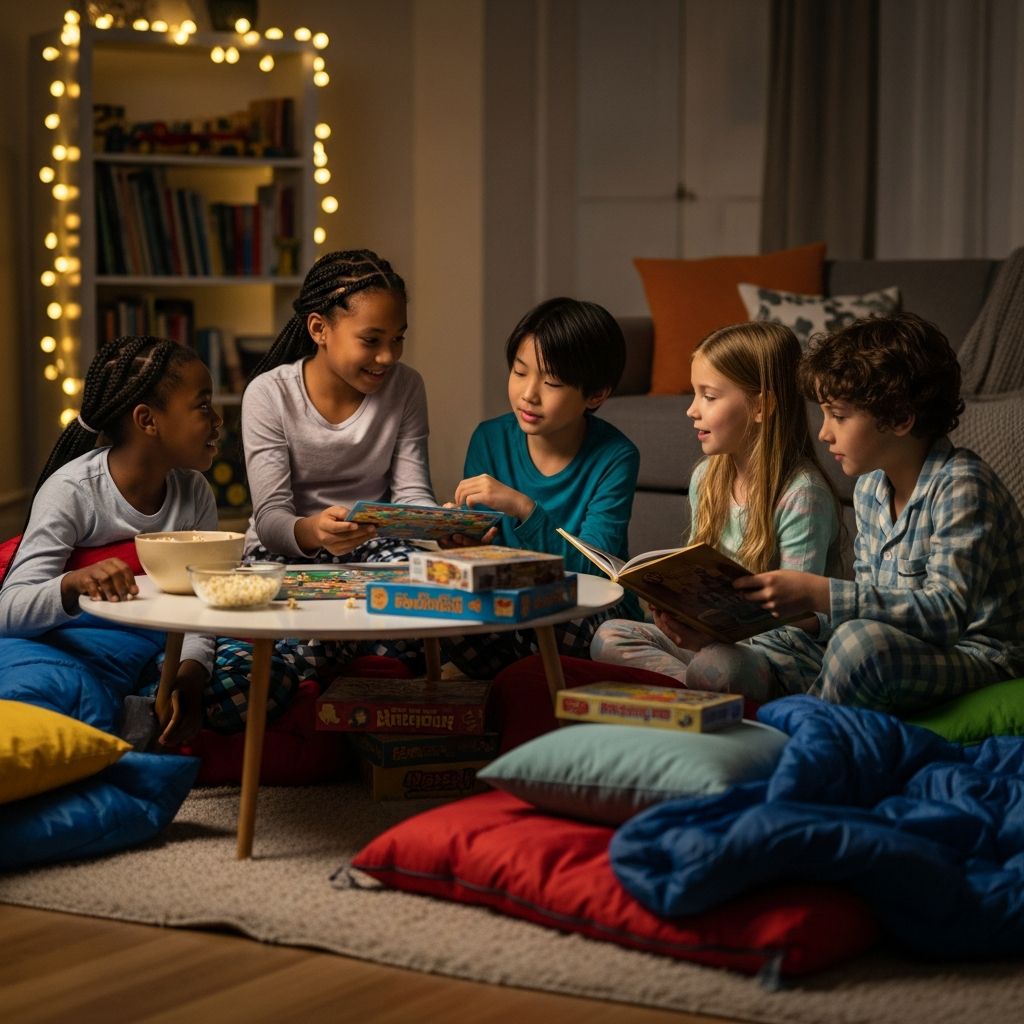
Rather than rushing into a full overnight experience at a friend’s house, consider starting with a lower-stakes introduction to sleeping away from home. Hosting a friend for a sleepover at your own house first allows your child to experience the sleepover structure—games, meals, bedtime routines, and morning activities—while remaining in the security of their familiar home environment. This intermediate step can build confidence and help both parent and child identify any specific anxiety triggers that need addressing before venturing to another home.
Some children thrive in smaller group settings with one close friend, while others find comfort in larger group sleepovers where the bustling activity provides distraction from separation anxiety. Pay attention to your child’s social preferences when planning the sleepover context, as the right group dynamic can significantly influence the experience’s success.
Creating a Foundation Through Open Communication
The most effective way to help children navigate sleepover anxiety involves establishing open, judgment-free communication channels where they feel safe expressing their concerns. Many anxious children benefit from having an adult who listens without immediately trying to “fix” the worry or dismiss it as unfounded.
Begin by asking your child direct, open-ended questions about what specifically worries them regarding sleepovers. Rather than asking yes-or-no questions like “Are you scared?” try prompts such as:
- What part of the sleepover makes you feel most nervous?
- What do you imagine happening that worries you?
- What would make you feel safer during a sleepover?
- What are you looking forward to about spending time with your friend?
Once you’ve identified specific fears, use “what if” scenarios to work through hypothetical situations together. If your child worries about homesickness, you might ask, “What if you start missing home? What could you do to feel better?” This approach helps children develop problem-solving strategies and realize that most worries have manageable solutions. By walking through scenarios in advance, children often discover that their feared situations are either unlikely or manageable, which reduces the power these worries hold.
Throughout these conversations, validate your child’s feelings without reinforcing the anxiety. Statements like “I understand this feels scary to you, and that’s okay. Let’s figure out a plan together” balance emotional acceptance with forward movement.
Preparation Strategies That Reduce Uncertainty
Much of sleepover anxiety stems from uncertainty about what to expect. Children’s brains find comfort in predictability, so providing detailed information about the sleepover experience can significantly ease their worry. Contact the host family ahead of time to gather specific details about the evening’s schedule, activities, meals, and sleeping arrangements. Share this information with your child in age-appropriate ways.
Create a visual or verbal timeline of the sleepover experience:
- Arrival and initial activities (games, snacks, unstructured time)
- Dinner and mealtime expectations
- Evening activities (movies, more games, special treats)
- Bedtime routine and sleep setup
- Morning routine and pickup time
Involve your child in preparing for the sleepover by having them pack their own overnight bag (with your guidance). This active participation gives children a sense of agency and control over the experience. Include practical necessities like pajamas, toiletries, and a change of clothes, but also allow your child to select one comfort object to bring along. Whether it’s a favorite stuffed animal, a beloved blanket, or a small toy, these transitional objects serve as tangible reminders of home and parental connection, helping children self-soothe when they feel anxious.
Consider creating a simple checklist together of everything needed for the sleepover. Having a physical checklist that your child can review provides reassurance that nothing important has been forgotten and gives them another sense of control and preparation.
The Art of Gentle Encouragement Without Pressure
One of the most delicate balancing acts for parents involves encouraging children to attempt sleepovers without crossing into coercion that backfires emotionally. Forcing a reluctant child into a sleepover situation can create negative associations with overnight experiences that persist for years, making future attempts even more difficult.
Gentle encouragement operates from a foundation of understanding that your child is ready for this developmental step, even if anxiety is temporarily overwhelming that readiness. The approach involves acknowledging your child’s fears while simultaneously expressing confidence in their ability to manage those fears.
Use language that conveys both empathy and belief in your child’s capabilities:
- “I know this feels scary, and I believe you can do this.”
- “Your body is sending worry signals, but you’re safe. Let’s practice what you can do when you notice that worry.”
- “Getting comfortable with new situations takes practice. I’m proud of you for trying.”
- “It’s normal to feel nervous about new things. The good news is that nervous feelings get smaller the more familiar something becomes.”
Many children express enthusiasm about a sleepover initially, only to experience last-minute reluctance as the event approaches. This shift reflects increased anxiety as the event becomes concrete rather than abstract. Rather than allowing this last-minute hesitation to derail the plans, help your child identify specific concerns that have suddenly emerged and problem-solve around those concerns. Remind them that this pre-event nervousness is normal and that their anticipatory worry often diminishes once the sleepover begins.
If a child absolutely refuses to proceed after reasonable preparation and encouragement, resist the urge to express disappointment or anger. Instead, frame the decision as information to learn from: “We learned that you need a bit more time before sleepovers. That’s okay. Let’s do more playdates and practice sleeping away from home in smaller steps.”
Establishing Concrete Support Plans and Expectations
Children with anxiety benefit significantly from knowing that support is available if they need it. Before the sleepover, establish clear, concrete plans for how they can access comfort if their anxiety escalates. This might include scheduling a phone call at a specific time (often before bedtime) for a brief check-in, or agreeing on texting protocols for communication during the evening.
Importantly, the availability of support often matters more than actually using it. Many children feel calmed simply by knowing they can contact a parent if necessary, yet end up not needing to because the reassurance itself reduces anxiety enough to allow them to enjoy the experience. However, set realistic boundaries around this support. Allowing unlimited phone calls or immediate pickup requests teaches children that their anxiety requires escape rather than management. Instead, agree on parameters: one scheduled call before sleep, text communication during specific windows, but no pickup unless there’s a genuine emergency.
Work with your child to identify specific coping strategies they can use when anxiety arises during the sleepover:
- Deep breathing techniques (breathing in for count of four, holding for four, exhaling for four)
- Grounding exercises (identifying five things they can see, four they can touch, three they can hear, two they can smell, one they can taste)
- Positive self-talk phrases they’ve practiced in advance
- Physical comfort strategies (holding a comfort object, wrapping in the sleeping bag, going to the bathroom for privacy)
- Reaching out to the host parent or friend when feeling overwhelmed
Practice these coping strategies during calm times before the sleepover occurs, so your child has muscle memory for implementing them when anxiety is elevated.
Recognizing and Celebrating Effort and Progress
After a sleepover experience, regardless of how it went, acknowledge the courage and effort your child demonstrated. Even if the sleepover didn’t go perfectly or your child asked to come home early, they engaged in an anxiety-provoking situation rather than completely avoiding it. This represents meaningful progress.
Avoid making praise conditional on “success” (sleeping through the entire night, not calling home, etc.). Instead, praise the process and effort: “I’m really proud of how you prepared for this sleepover, even though you were nervous. That took real courage.” This approach builds resilience by teaching children that facing fears matters more than perfect performance.
If your child did struggle significantly during a sleepover, resist the urge to say things like “Maybe you’ll try again next time” immediately after a difficult experience. Instead, allow some time to pass and recovery to occur before discussing future sleepovers. The goal is to prevent the difficult experience from becoming so emotionally significant that it creates lasting avoidance.
With each sleepover experience, children typically find the anxiety becomes more manageable. This isn’t because their fears disappear, but because they develop evidence through experience that they can tolerate the discomfort and that their worries often don’t materialize. Over time, confidence builds as children accumulate successful overnight experiences.
Understanding When Professional Support May Help
For some children, sleepover anxiety is part of a broader anxiety pattern that significantly impacts daily functioning. If your child’s sleep anxiety extends to difficulty sleeping in their own bed at home, significant school avoidance, or other signs of anxiety disorder, consultation with a mental health professional may provide additional tools and strategies. Child psychologists and therapists trained in anxiety treatment can work with children to address underlying anxiety patterns while teaching evidence-based coping techniques like cognitive-behavioral strategies.
Frequently Asked Questions
Q: At what age should children have their first sleepover?
A: There’s no universal “right” age for sleepovers. While some children are ready around ages six to seven, others may need to wait until they’re older. Focus on developmental readiness indicators—comfort with brief separations, ability to communicate needs, and expressed interest—rather than age alone.
Q: Should I let my child call home during a sleepover if they ask?
A: Yes, but with structure. Agree on a scheduled check-in call before sleep, which often satisfies the need for connection. For during-sleepover communication, establish that phone calls are for genuine emergencies only, but texting may be acceptable during specified windows. This teaches children to tolerate discomfort while maintaining a lifeline if truly needed.
Q: What if my child comes home early from a sleepover because of anxiety?
A: Avoid expressing disappointment or framing it as failure. Instead, acknowledge that your child learned something about themselves and that sleepovers require practice, just like other skills. Give adequate time before attempting another sleepover, and use the experience to identify specific triggers that can be addressed in future preparation.
Q: How can I help my child distinguish between legitimate anxiety and avoidance-seeking behavior?
A: This distinction can be subtle. Anxiety involves genuine physiological activation (fast heartbeat, difficulty concentrating), while pure avoidance-seeking is more strategic. If your child demonstrates readiness and you’ve done thorough preparation, gently encouraging them to proceed helps them learn to move forward despite discomfort. However, trust your knowledge of your child—if something seems genuinely wrong, prioritize safety.
Q: Are comfort objects like stuffed animals silly for older kids at sleepovers?
A: Not at all. Comfort objects serve legitimate anxiety-reducing functions at any age. Many older children benefit from having a familiar item that reminds them of home, even if they keep it discreet. The psychological benefit of having something that represents home and parental connection can significantly reduce anxiety.
References
- How to Support Young Children Through Sleepover Anxiety — The California Beach Co. 2024. https://thecaliforniabeachco.com/blogs/caring-for-young-children/how-to-support-young-children-through-sleepover-anxiety
- If Your Child Has Sleep Anxiety at Sleepovers, Empower Them — Let Grow. 2024. https://letgrow.org/sleep-anxiety-at-sleepovers/
- Helping Your Child Sleep Alone or Away from Home — Anxiety Canada. https://www.anxietycanada.com/sites/default/files/dealing_with_co_sleeping.pdf
- Summer Sleepovers: What to Consider — Compassionate Counseling STL. 2024. https://www.compassionatecounselingstl.com/blog/summer-sleepovers-pros-cons-amp-what-to-consider
- How to Send Your Anxious Child to Sleepaway Camp — Psychology Today. August 2022. https://www.psychologytoday.com/us/blog/emotionally-hardy-children-and-families/202208/how-send-your-anxious-child-sleepaway-camp