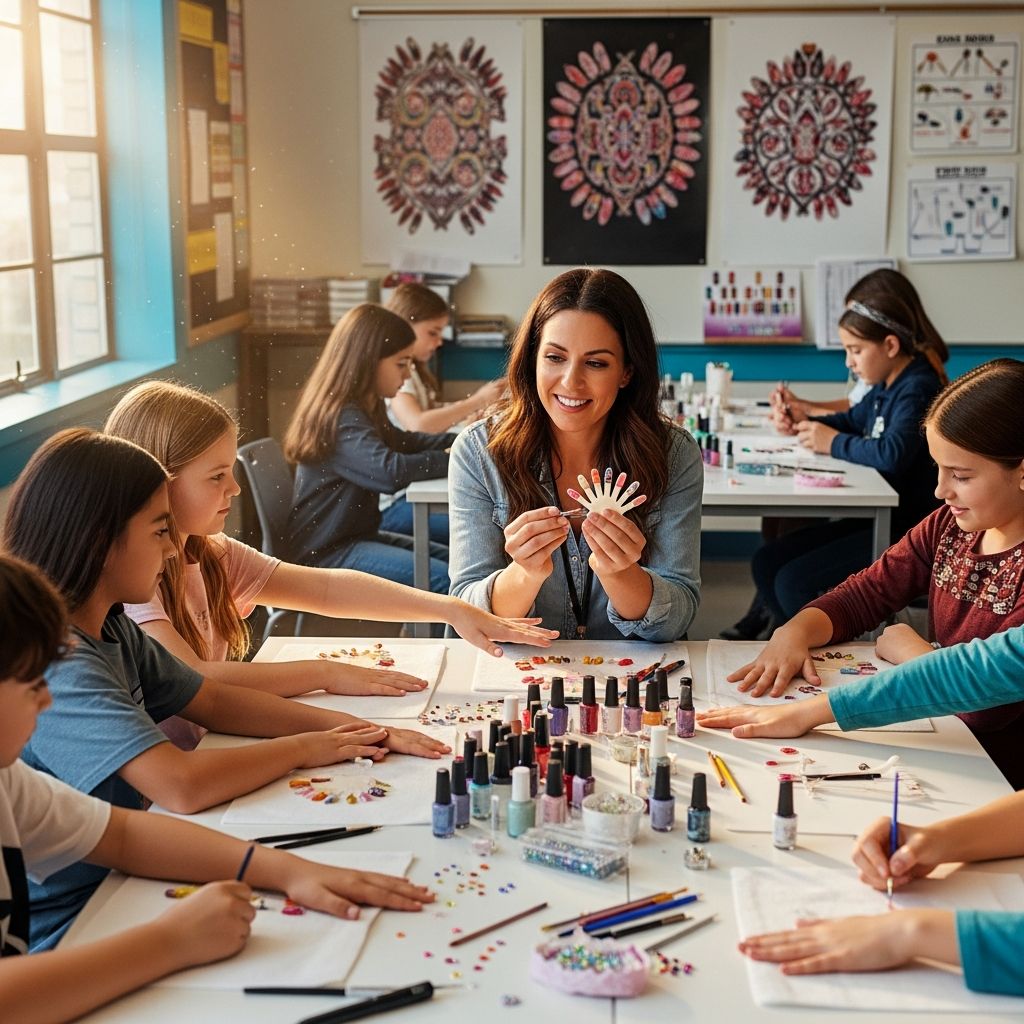
When an elementary teacher invited her students to design the artwork for her next set of nails, she turned an everyday beauty appointment into a memorable, kid-powered art assignment that captured hearts online and sparked fresh conversations about creativity in the classroom.
The Story Behind the Nail Design Assignment
In this widely shared classroom moment, a teacher decided to use her regular nail appointment as the basis of a fun art project, asking each student to create a custom nail design that her nail technician would later choose from. The idea was simple but powerful: students were not just drawing for a grade, they were creating something an adult genuinely intended to wear and celebrate. This twist gave the activity real-world relevance, helping students feel that their creativity truly mattered.
Instead of a traditional worksheet or generic art prompt, the assignment centered on the teacher herself, which made the experience feel personal and collaborative for the class. Students saw their teacher as both a canvas and a partner, and that sense of shared project helped break down barriers and build stronger relationships. As the story spread, many parents and fellow educators saw the assignment as a refreshing example of how small, thoughtful ideas can change classroom dynamics.
How the Assignment Worked
The nail design activity followed a clear but flexible structure that allowed students to be inventive while still working within meaningful constraints. Each student received a blank hand or nail template and was encouraged to treat each nail as its own miniature art space. Within this format, they could draw, color, and experiment with patterns, characters, or symbols that they felt represented their teacher or their classroom community.
- Students were given a simple visual template to guide the size and shape of their designs.
- The teacher provided basic supplies such as crayons, markers, or colored pencils, making the project accessible.
- Each student created a full set of nail art, often incorporating themes, colors, or small drawings that felt meaningful.
Once the designs were complete, the teacher collected all of the entries and brought them to her nail technician. Rather than choosing the winner herself, she asked the nail tech to select one student’s design to recreate on her nails. This outside decision-maker made the selection process feel more objective and also underscored the authenticity of the project: the final look had to be something a professional nail artist could actually implement.
Teacher, Students, and Nail Tech: A Unique Collaboration
One of the most charming aspects of this project is that it connects three different roles: students, their teacher, and the teacher’s nail technician. The students function as designers, the teacher serves as the client and canvas, and the nail tech becomes the judge and final artist who brings the winning vision to life. This structure mirrors real-world creative workflows, giving children a taste of how design and service professions collaborate.
By involving the nail technician as the one who selects the winning entry, the teacher reinforced the idea that student work can reach beyond the classroom walls. The nail tech’s choice validated the effort students put into their designs, and when the winning look was finally painted on the teacher’s nails, the child whose idea had been chosen saw very tangible evidence that their art had real impact. This sense of recognition can become a powerful motivator for continued engagement in schoolwork.
Why the Assignment Went Viral
Parents and educators are constantly looking for ways to make learning feel meaningful, and this nail design assignment struck that chord perfectly. It combined self-expression, student choice, and a real-world outcome in a way that felt wholesome, fun, and easy to replicate. When images and video clips of the students’ artwork and the finished nails circulated online, many viewers responded not only to the creativity of the designs but also to the emotional payoff when the winner saw their idea realized.
The story also resonated because it highlighted a form of self-care and individuality that many teachers already practice: getting their nails done. Instead of keeping this ritual separate from school, the teacher folded it into her teaching in a way that honored both her personal style and her students’ talents. For many families, this served as a reminder that teachers are people with lives, tastes, and hobbies, and that those personal details can be thoughtfully incorporated into classroom experiences to build connection.
Educational Value Beyond Cute Nails
While the project may look like a simple art exercise on the surface, it offers deeper educational benefits. Students work on spatial awareness by adjusting designs to fit the limited space of each nail, which is a practical form of planning and proportion work. They also practice combining colors, shapes, and themes in ways that make sense visually, strengthening core artistic skills.
- Creative thinking: Students must generate unique ideas that stand out yet remain coherent as a full set of nails.
- Audience awareness: Learners consider what their teacher might actually want to wear, which adds an empathetic dimension to their design choices.
- Resilience and sportsmanship: Only one design can be chosen, so students practice handling both disappointment and celebration in a supportive environment.
In addition, the assignment can open the door to cross-curricular connections. A teacher might integrate writing by asking students to add a short designer statement describing their inspiration, or include a brief math element by having students count and plan the number of stripes, dots, or color repeats in their pattern. This flexibility makes the activity more than just a one-off art project; it can become a multifaceted learning experience.
Emotional Impact on Students
Student reactions to this kind of assignment often go far beyond basic enjoyment. Knowing that their teacher might literally wear their artwork on her hands can make children feel seen, valued, and important. The possibility of winning is naturally exciting, but the deeper message is that the teacher trusts her students enough to let them influence how she will present herself to the world.
For the winning student especially, the moment of reveal can become a cherished memory: their design appears on the teacher’s nails, classmates recognize and celebrate it, and the child experiences a powerful blend of pride and belonging. Even for those who do not “win,” seeing their teacher appreciate and display the full collection of designs can foster a sense of shared ownership and classroom community. Teachers can enhance this effect by hanging the designs on a bulletin board or sending photos home to families.
What Parents Appreciated Most
Parents who learn about this assignment often respond with enthusiasm, not just because the project is adorable but because it reveals a teacher who is willing to invest extra thought into student engagement. Many caregivers appreciate that the task is accessible to a wide range of ability levels: even young or less experienced artists can participate meaningfully by focusing on bold colors or simple patterns.
Families may also see this assignment as a window into the classroom climate. A teacher comfortable enough to wear student-designed nails is likely also someone who cultivates a warm, inclusive environment where children’s ideas carry real weight. Parents who see photos or hear stories about the project gain insight into how their children are encouraged to take creative risks and how their teacher models openness and playfulness.
Ideas for Adapting the Project
While this particular assignment focuses on nail art, the underlying structure can be reused in many other ways. The key elements are student-designed visuals, an adult or community partner who chooses a final design, and a visible real-world outcome that honors the winning idea while acknowledging everyone’s contributions. Adapting these components allows teachers to tailor the project to different subjects and grade levels.
- Ask students to design a bookmark that the school librarian will choose and print for school-wide use.
- Invite learners to create a new classroom logo or mascot that will appear on newsletters or a class website.
- Have students submit T-shirt or sticker designs that a principal or parent volunteer group will help select and reproduce.
Each of these adaptations preserves the core magic of the original assignment: the chance for kids to see their ideas leave the page and truly live in the world. By swapping in different mediums or themes, educators can revisit this approach throughout the year without it feeling repetitive.
Suggested Structure for a Nail Design Lesson
| Lesson Stage | Teacher Actions | Student Experience |
|---|---|---|
| Introduction | Explain that students will design the teacher’s next set of nails and that a nail tech will choose the winner. | Students feel curious and excited by the real-world twist on an art project. |
| Demonstration | Show examples of nail styles, discuss space limitations, color choices, and themes. | Learners gather ideas and start thinking about what makes a design wearable and appealing. |
| Design Time | Provide templates and materials, circulate to offer encouragement and gentle guidance. | Students brainstorm, sketch, and refine their own unique nail sets. |
| Submission | Collect designs, label each with student names, and prepare them for sharing with the nail tech. | Children hand in their work and anticipate the final decision. |
| Reveal | Return from the appointment, show the completed nails, and announce whose design was chosen. | Class celebrates the winning design and appreciates the collection as a whole. |
| Reflection | Lead a short discussion or journaling activity on creativity, effort, and feelings about the outcome. | Students process both excitement and disappointment, learning about resilience and respect. |
Tips for Teachers Who Want to Try This
Educators inspired by this nail design assignment can benefit from a few practical tips. First, it helps to clearly explain at the outset that only one design will be fully recreated, while emphasizing that every piece of artwork will be appreciated and possibly displayed. Transparent communication prepares students emotionally and sets expectations in a healthy way.
- Offer a brief mini-lesson on patterns, symmetry, or color contrast so students have tools to draw from.
- Encourage learners to include a short written explanation or title for their design, giving quieter kids another way to express themselves.
- Consider sending photos of all the designs to families or posting them on a private classroom platform to share the joy.
It is also important to coordinate with the nail technician or any outside collaborator ahead of time, confirming that they are comfortable evaluating children’s artwork and translating it into a wearable design. A quick conversation about time constraints, difficulty levels, and favorite styles can make the final result smoother and more satisfying for everyone involved.
Frequently Asked Questions
Is this assignment appropriate for all ages?
Yes, with modifications. Younger children can work with very simple shapes and bold colors, while older students can attempt more intricate patterns or themes. Teachers can adjust instructions, time limits, and expectations so the task feels challenging but achievable for their particular group.
What if a student feels upset that their design was not chosen?
Feelings of disappointment are natural and can be handled constructively. Educators can normalize those emotions, highlight strengths in each student’s work, and focus class discussion on the idea that creative fields often involve feedback and selection. Emphasizing effort, improvement, and community celebration helps keep the atmosphere positive.
Do students need advanced art skills to participate?
No advanced skills are required. The assignment is centered on personal expression and thoughtful choices rather than technical perfection. Encouragement and reassurance from the teacher can help more hesitant students take creative risks with confidence.
How long should the project take?
The core drawing component typically fits within one or two class periods, depending on age and schedule. Additional time can be devoted to the introduction, examples, and reflective activities if a teacher wants to deepen the lesson or tie it to other subjects.
Can this be done without an actual nail appointment?
Yes. If a teacher does not wish to get their nails done, they can still display a chosen design on a poster, classroom door, or digital background. The important part is following through on showcasing student work in a visible and meaningful way.
Why This Simple Idea Matters
At its heart, the nail design assignment shows how everyday routines can become catalysts for student engagement and joy. By inviting children into a personal style decision and keeping her promise to wear the winning artwork, the teacher modeled trust, openness, and respect for student voice. Those qualities are powerful foundations for learning, no matter the subject.
Educators and parents drawn to this story can take its central lesson to heart: meaningful projects do not always require elaborate materials or complex planning. Sometimes, letting students design something as small as a set of nails can make a big difference in how they see themselves, their teacher, and the potential of their own creativity.