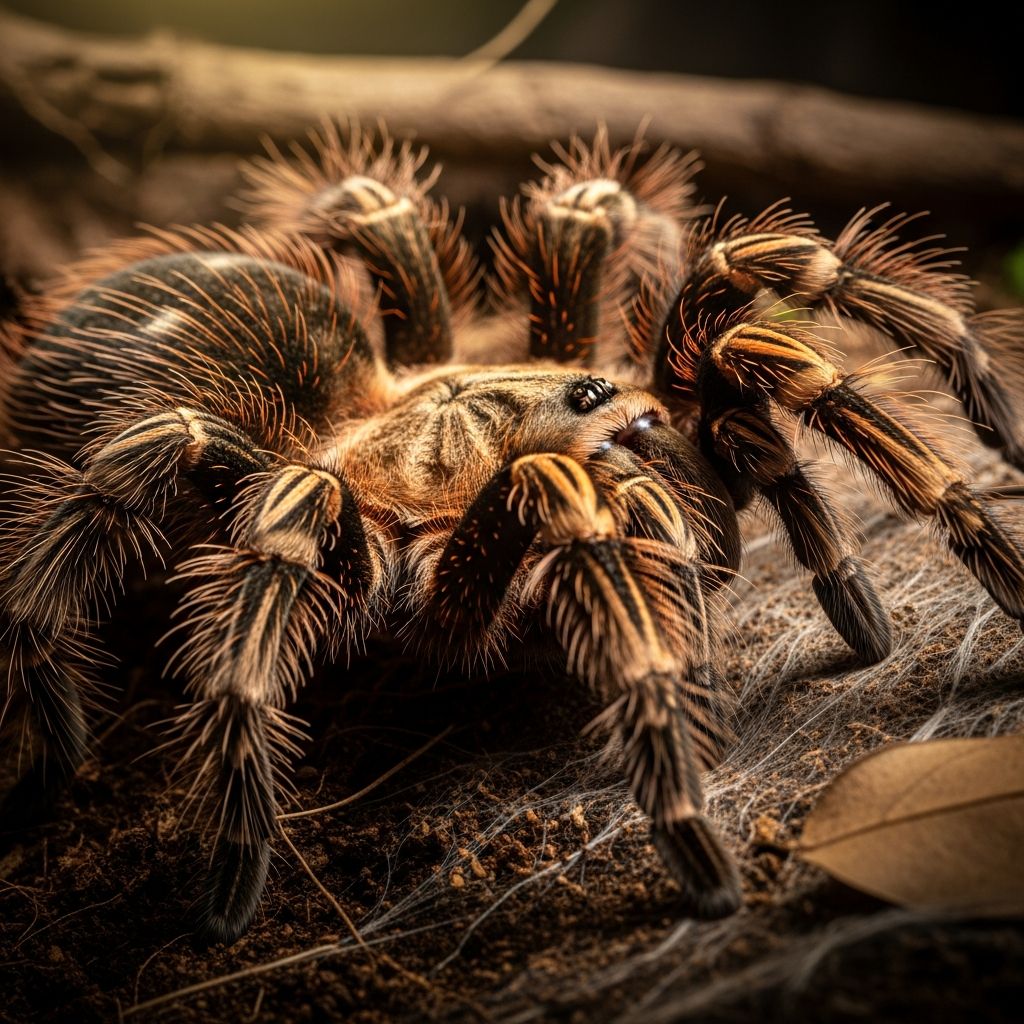
Tarantulas are some of the biggest and hairiest spiders on Earth, and they often look much scarier than they really are. This friendly guide explains what tarantulas are like, how they live, and why many people find them fascinating rather than frightening.
What Makes a Tarantula a Tarantula?
Tarantulas belong to a group of spiders known for their large size, thick legs, and bodies covered with noticeable hairs. Like all spiders, they are arachnids, not insects, which means they have eight legs and two main body parts instead of six legs and three body sections like insects.
- Eight legs: Tarantulas walk on four pairs of legs that help them climb, dig, and move quietly while hunting.
- Two body sections: They have a front section that holds the eyes, mouth, and legs, and a back section that holds the abdomen and spinnerets for making silk.
- Hairy bodies: Their hairs are not just for show; some help them sense the world and others act as a defense.
Where in the World Do Tarantulas Live?
Tarantulas live on several continents and can be found in a variety of warm environments. They usually prefer places where they can dig or hide easily and where the temperature does not drop too low.
- Dry deserts and scrublands with sandy or dusty soil for burrows.
- Grasslands and savannas where they can hide under rocks, logs, and roots.
- Tropical forests, where some species live in trees or in natural holes in trunks and branches.
Most tarantulas are active at night, which helps them avoid heat and larger predators while hunting for food.
Homes: Burrows, Hideouts, and Tree Nests
Instead of weaving big webs in the open air, tarantulas usually build or find safe hiding places close to the ground or up in trees. These homes help protect them from sunlight, predators, and dry air.
- Ground burrows: Many species dig tunnels in soil, sometimes with a silk-lined entrance that keeps the walls from collapsing.
- Rock and log shelters: Some hide under loose stones, fallen branches, or piles of leaves.
- Tree retreats: Tree-living tarantulas may use silk to line natural holes in branches or bark, turning them into cozy tube-like shelters.
Inside these hideouts, a tarantula spends a lot of time resting, cleaning itself, and waiting for the perfect moment to catch passing prey.
What Do Tarantulas Eat?
Tarantulas are patient hunters that prefer to grab their food instead of trapping it in webs. They eat other animals, which makes them carnivores, and many of their meals are smaller than they are.
- Insects such as crickets, grasshoppers, beetles, and moths.
- Other small creepy-crawlies like smaller spiders, centipedes, and roaches.
- For the biggest species, sometimes small lizards, frogs, or tiny mammals.
They use their strong fangs to bite and release venom that helps turn the insides of their prey into liquid. Because they cannot chew, they suck up their food like a thick soup and leave behind only the hard shell or bones.
The Tarantula Body Up Close
At first glance, a tarantula may just look like a furry ball with too many legs, but each part of its body has an important job. From the tips of its hairy toes to the small eyes on its head, every structure helps it survive.
| Body Part | Main Job |
|---|---|
| Legs (8) | Walking, climbing, and sensing ground vibrations. |
| Pedipalps | Short leg-like parts near the mouth used to handle food and explore. |
| Fangs | Biting prey and delivering venom. |
| Eyes | Detecting light, movement, and shapes, even though vision is not very sharp. |
| Spinnerets | Releasing silk for lining burrows, egg sacs, and draglines. |
| Hairs | Sensing air movements and, in some species, defending against enemies. |
Instead of having strong muscles inside their legs like people, tarantulas use fluid pressure inside their bodies to help extend and move their legs smoothly.
Colors, Sizes, and Species Variety
Not all tarantulas look the same. Some are dull brown and blend into the earth, while others have bright, almost glowing colors. These colors can help them hide or warn predators that they may be dangerous.
- Many species are brown or black, helping them stay camouflaged in soil or leaf litter.
- Some have colorful stripes or metallic shades of blue, green, or orange on their legs or bodies.
- Sizes range from small species barely longer than a fingernail to huge tarantulas with leg spans as wide as a dinner plate.
There are many different species spread across the world, each adapted to local climates and habitats.
How Tarantulas Grow: The Molting Process
Tarantulas have a hard outer shell called an exoskeleton, which does not grow the way bone does. To become larger, they must shed this outer covering in a process called molting. Molting is one of the most important and vulnerable moments in a tarantula’s life.
- The tarantula stops eating for days or weeks and usually stays hidden.
- It lies on its back or side and slowly wiggles out of the old exoskeleton.
- A fresh, soft shell underneath hardens over the next few hours or days.
Young tarantulas molt more often because they grow quickly. Adults, especially females, may still molt from time to time to repair damage or renew their body.
Defense: How Tarantulas Stay Safe
Even though they look fierce, tarantulas have many other animals that might want to eat them, including birds, reptiles, and even special wasps. To survive, they use several clever defense tricks before ever trying to bite.
- Running and hiding: Their first choice is usually to dash back to their burrow or shelter.
- Threat posture: They may raise their front legs and show their fangs to look bigger and more dangerous.
- Defensive hairs: Some New World species (from the Americas) can kick tiny, irritating hairs from their abdomen into the air to bother attackers.
Their venom is meant mainly to subdue prey, not to attack large animals, and many species are naturally shy around humans.
Are Tarantulas Dangerous to People?
Tarantulas have fangs and venom, which can sound frightening, but most species are not seriously dangerous to healthy humans. Their bites can be painful and may cause swelling or redness, but they are rarely life-threatening.
- Many tarantulas would rather run away or hide than bite a person.
- Some people can have allergic reactions to bites or hairs, so caution is still important.
- Defensive hairs can irritate skin, eyes, and lungs, so they should not be breathed in or rubbed.
With respect and proper handling, tarantulas and people can usually avoid harming each other.
Tarantulas and Their Role in Nature
Tarantulas might look like villains in movies, but in real life they are important helpers in their ecosystems. By hunting and eating many insects and other small animals, they help keep populations balanced.
- They reduce the number of plant-eating insects that could damage crops or gardens.
- They provide food for predators such as birds, reptiles, and mammals, fitting into the food web.
- Their abandoned burrows can become shelters for other small animals.
In this way, tarantulas are both hunters and prey, making them a key part of many natural communities.
Tarantulas as Pets: Things to Consider
Some people keep tarantulas as pets because they are quiet, interesting to watch, and come in many different species. However, they are not toys and require careful attention to their needs.
- Housing: They need a safe, escape-proof enclosure with the right temperature, hiding places, and ground material for digging or climbing.
- Food: Pet tarantulas usually eat live insects such as crickets or roaches.
- Handling: Many experts recommend limited or no handling, as falls can injure tarantulas and stress can cause them to defend themselves.
Before getting a pet tarantula, families should research the species, talk with experienced keepers, and be sure they can care for it for many years.
Life Cycle: From Egg to Adult
A tarantula’s life starts inside an egg sac made of silk, guarded carefully by the mother. After hatching, the young tarantulas, called spiderlings, often stay together for a short time before setting off on their own.
- Females may produce hundreds of eggs in a single sac, depending on the species.
- Spiderlings are tiny versions of adults and must molt many times as they grow.
- Females often live much longer than males, sometimes many years, while males may die not long after reaching adulthood and mating.
Because of their long lives, especially in females, some tarantulas can remain part of the same habitat or household for decades.
Fun and Surprising Tarantula Facts
- Some of the largest tarantulas are big enough to cover an adult human’s face with their legs fully stretched.
- Tarantulas do not have ears, but they can sense vibrations through the tiny hairs on their legs and body.
- They use silk not to spin classic webs, but to line tunnels, make soft floors, and wrap eggs.
- When threatened by a special kind of wasp, a tarantula can sometimes fight back, but if it is stung, it may become paralyzed.
- In some cultures, people see tarantulas as symbols of patience because of the way they wait quietly for prey.
Simple Safety Tips Around Wild Tarantulas
Most wild tarantulas want to be left alone and will not chase people. Still, it is wise to treat any wild animal with respect.
- Observe from a distance instead of trying to pick one up.
- Do not poke or throw objects at burrows or hiding spots.
- If you find a tarantula in or near a home, ask an adult to gently move it outside or call an expert instead of harming it.
Learning about tarantulas can change fear into curiosity and help people protect these useful animals.
Frequently Asked Questions About Tarantulas
Do tarantulas spin webs like other spiders?
Tarantulas can make silk, but they rarely spin large, open webs to catch flying insects. Instead, they use silk to line their burrows, make egg sacs, and create safety lines as they move.
Can a tarantula jump on me?
Most tarantulas are not powerful jumpers and do not leap at people for no reason. They are far more likely to slowly walk away or rush back to their hiding place if they feel threatened.
Why do some tarantulas kick hairs?
Certain species have special hairs on their abdomen that can irritate eyes and skin. When they feel in danger, they may quickly rub their back legs against their abdomen to flick these hairs toward the threat.
How long can a tarantula live?
Male tarantulas usually live only a few years after becoming adults, while females of some species can live for many years and may outlive many common pet animals.
Are tarantulas insects?
No, tarantulas are arachnids, like scorpions and other spiders. Insects have six legs and three main body sections, while tarantulas have eight legs and two main body sections.
Seeing Tarantulas in a New Light
Tarantulas may look like monsters from a scary story, but up close they are patient hunters, careful builders, and important members of the natural world. By understanding how they live and what they really do, it becomes easier to appreciate them as fascinating animals rather than fearsome foes.