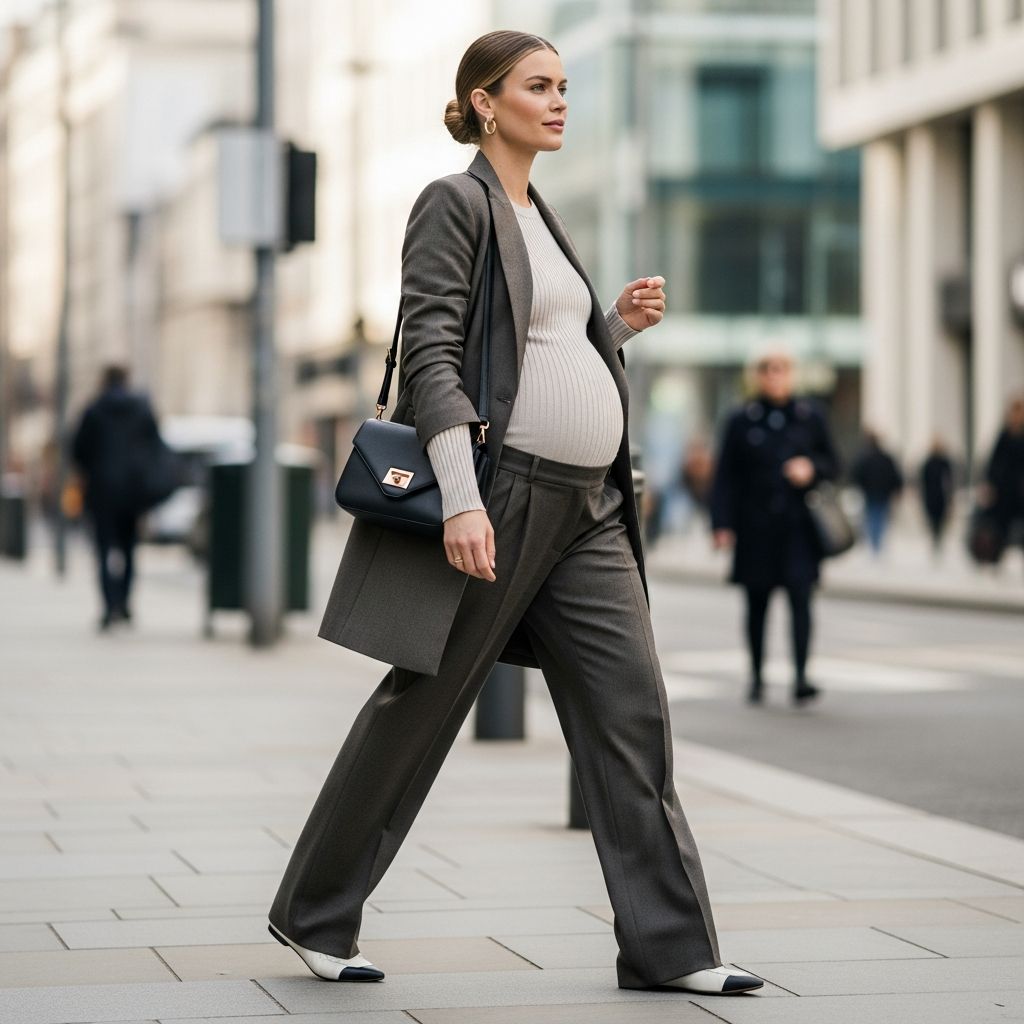
Being tall, professionally polished, and newly pregnant can make getting dressed feel like a daily puzzle. You may be used to fitted blazers, crisp shirts, and long inseams that are hard to find even when you are not expecting. Once your bump appears, it can feel like all that tailoring simply stops working. This guide offers practical, tall-focused strategies to build a maternity wardrobe that respects your height, your proportions, and your preference for a sleek, well-fitted look.
Understanding Tall Proportions During Pregnancy
Tall pregnant women face a double fit challenge: garments must accommodate both extra height and a changing midsection. Many standard maternity designs assume average height, so tops and dresses can end up too short in the torso, while pants often miss the ankle by several inches.
Beyond aesthetics, proper clothing length has comfort and health implications. Pants that are too tight or cut short may dig into the abdomen, which can be uncomfortable as the uterus expands and blood volume increases during pregnancy. Roomy waistbands, soft panels, and appropriate rise help avoid unnecessary pressure over the bump.
- Long torsos need extra body length in tops, dresses, and jackets so the bump panel is fully covered.
- Long legs often require inseams of 34–36 inches or more to achieve full-length coverage.
- Broader shoulders on tall frames may strain buttons and seams in standard maternity tops.
Recognizing these structural issues helps you shop intentionally instead of blaming your changing body for bad fit.
Rethinking Size Labels: How to Choose Maternity Sizes
Many tall women assume they should buy the same letter size in maternity that they wore pre-pregnancy. That can work for some pieces, but for tops and dresses especially, it is often more realistic to view sizes like S, M, and L as approximations of height rather than frame.
Smart Sizing Principles for Tall Pregnant Bodies
- Prioritize length over exact width: a slightly roomier top that is long enough will be more flattering than a snug top that rides up.
- Check garment measurements: some tall-focused brands publish torso length and inseam length, which is more useful than the size label alone.
- Expect your shoulders and ribcage to change: hormonal shifts and increased blood volume can make your upper body feel broader, even if your weight gain is modest.
- Use tailoring only where it pays off: minor adjustments on one blazer or dress you will wear often may be worth the investment.
| Fit Priority | What Tall Maternity Shoppers Should Look For |
|---|---|
| Torso length | Tops that stay below the widest part of the bump even when you lift your arms. |
| Shoulder fit | Seams sitting near the shoulder edge rather than pulling toward the neck. |
| Inseam | 34–36 inch inseams (or more) for long legs, especially in tailored pants and jeans. |
| Waistband comfort | Soft under-bump or over-bump panels rather than rigid waistbands. |
Building a Tall-Friendly Maternity Capsule Wardrobe
A focused capsule wardrobe allows you to stay polished without buying an entirely new closet. Aim for a small collection of long-enough basics that mix and match for work, social events, and weekends.
Core Bottoms for Tall Frames
- Tall maternity jeans: Look for explicitly labeled tall styles with inseams from 34 to 37 inches, and check product descriptions for measurements.
- Stretchy ponte or tailored trousers: These can mimic office suiting while giving the belly panel room to stretch.
- Leggings with long inseams: Many brands offer extended-length leggings which are easier to fit than structured pants and can be layered under tunics or dresses.
Tall-Smart Tops and Shirts
If your usual style revolves around crisp, tailored button-downs, pregnancy can feel like a direct attack on your closet. You can stay true to that aesthetic by adjusting what “tailored” means in this season.
- Maternity button-downs with darts or princess seams that shape the waist while allowing extra room over the bump.
- Longline blouses that reach mid-hip or lower to fully cover maternity waistbands.
- Stretch poplin or blended fabrics which move with your changing ribcage instead of tugging across the bust.
Well-placed seams and subtle shaping can keep a shirt looking sharp even when it is not perfectly snug everywhere.
Dresses That Respect Your Height
- Empire-waist and wrap dresses that define the bust while skimming over the belly without extra bulk.
- Midi and maxi lengths which are more forgiving on taller figures than above-the-knee styles that creep upward.
- Ruching at the side seams for flexibility across trimesters without distorting the hemline.
Layering: Blazers, Jackets, and Cardigans for a Changing Shape
Outer layers are the secret weapon of a tall, tailored maternity wardrobe. They bring back the structure you may feel you are losing in your button-downs and tees.
Making Blazers Work in Pregnancy
Structured blazers can still be useful, particularly in early and mid-pregnancy.
- Wear them open instead of buttoned to avoid strain across the bump and bust.
- Size up for shoulder comfort if you feel restricted when you reach forward or upward.
- Choose slightly longer cuts (boyfriend styles or longer line blazers) so they do not appear cropped against your growing belly.
Why Cardigans Are a Tall Maternity Staple
When your usual blazers start fighting your new curves, cardigans and knit jackets step in as softer, more forgiving layers.
- Waterfall and longline cardigans create vertical lines that flatter tall frames and visually lengthen the body.
- Belted cardigans let you define your shape above the bump, where your waistline has migrated.
- Open-front knit jackets give structure without rigid seaming and can transition into postpartum wear.
Using Non-Maternity Pieces Strategically
Especially early on, tall women can often stretch their existing wardrobes longer than average-height counterparts, simply because longer tops and dresses give more coverage. Still, there is a limit to how long this remains comfortable.
- Stretchy, long tanks and tees from tall ranges can act as base layers under open shirts or blazers.
- A-line and shift dresses may work into the second trimester if the fabric has some give and the hem starts sufficiently low.
- Elastic-waist skirts can be worn under the bump or slightly higher on the torso, depending on comfort.
Most people will eventually need at least a few purpose-made maternity items for comfort and support. The key is to be deliberate about which pieces you upgrade so you get maximum use from each purchase.
Shopping Strategies and Tall-Friendly Brands
The modern maternity market is far broader than it used to be, and several retailers acknowledge height differences in their sizing.
- SPECIALIZED TALL MATERNITY LINES: Some brands curate tall maternity jeans and pants with inseams up to 37 inches, designed specifically for longer legs.
- CHECK THE FINE PRINT: Look for phrases like “extra-long inseam,” “tall fit,” or “extended length torso” in product descriptions.
- READ REVIEWS FROM TALL CUSTOMERS: Reviews often mention inseam suitability for 34–36-inch leg lengths, which can be more informative than stock photos.
When possible, order multiple sizes and lengths in one shipment, then keep only what truly fits your frame and lifestyle.
Comfort, Posture, and Health Considerations
Clothes are not just about looking put-together; they also influence how you move and feel. As pregnancy progresses, posture changes because the growing uterus shifts the body’s center of gravity. Many women experience low back pain and pelvic discomfort as a result.
- Supportive waistbands can help you feel more stable without compressing the abdomen.
- Properly fitted bras and tops reduce strain on shoulders and upper back as breast size increases.
- Comfortable footwear with adequate support becomes essential, particularly for tall women whose longer lever arms can magnify balance issues.
Health organizations emphasize that pregnant women should avoid prolonged standing in uncomfortable footwear or clothing that restricts movement or circulation. Choosing soft, flexible fabrics and adjustable closures is not indulgent; it is a practical response to the physical demands of pregnancy.
Balancing Professionalism and Comfort at Work
If your normal style leans toward tailored suits and sharply pressed shirts, it is possible to maintain a professional image while accommodating your changing figure.
- Rely on structured layers (blazers, knit jackets, long cardigans) over simpler maternity shells or tees.
- Choose darker, solid colors for pants and skirts to keep the foundation of outfits sleek and elongating.
- Add polish with accessories such as scarves, minimal jewelry, or a refined bag, rather than relying solely on clothing cuts.
- Consider a “uniform” of one or two favorite silhouettes repeated in different colors, to minimize daily decision fatigue.
Frequently Asked Questions (FAQs)
How many tall maternity pieces do I really need?
Focus on a small capsule: usually 2–3 pairs of tall maternity bottoms, 4–6 tops or blouses, 1–2 dresses, and 1–3 layering pieces. You can supplement with non-maternity staples that still fit comfortably.
Can I just size up in regular clothes instead of buying maternity?
Sizing up can work for some items like cardigans or oversized shirts, but it rarely solves issues like too-short torsos, rising hemlines, or uncomfortable waistbands. Purpose-built maternity designs usually place extra fabric where you actually need it.
How do I avoid constantly tugging my shirt down over my bump?
Look for tops specifically described as longline or tall, and compare garment length measurements to a shirt you already own that feels long enough. Side ruching also helps tops stay in place as your belly grows.
Are maternity support leggings worth it for tall women?
If you stand a lot or have back or pelvic discomfort, support leggings with a long inseam can be helpful. They combine bump support with full leg coverage, provided the brand lists inseams long enough for your height.
When should I start buying maternity clothes?
Many women transition between the late first trimester and mid-second trimester, but timing varies. Once you feel tightness or pressure from waistbands or find yourself constantly adjusting your clothes, it is a good time to invest in a few key maternity pieces.
References
- Best Tall Maternity Jeans Guide — Tall Size. 2023-07-10. https://www.tallsize.com/blogs/tall-size-blog/best-tall-maternity-jeans-guide
- Tall Maternity Clothes — Long Tall Sally. 2024-02-01. https://www.longtallsally.com/tall-maternity
- Physical Activity and Exercise During Pregnancy and the Postpartum Period — American College of Obstetricians and Gynecologists (ACOG Committee Opinion No. 804). 2020-04-01. https://www.acog.org/clinical/clinical-guidance/committee-opinion/articles/2020/04/physical-activity-and-exercise-during-pregnancy-and-the-postpartum-period
- Tall Maternity Clothes You Will Love (Fall & Winter Guide) — This Giant Life. 2019-10-15. https://thisgiantlife.com/home/life/tall-maternity-clothes-will-love-fall-winter-guide
- Pregnancy – Exercise — National Health Service (NHS). 2023-08-25. https://www.nhs.uk/pregnancy/keeping-well/exercise/
- Maternity Clothes for Tall Women — OGL Move. 2023-05-12. https://oglmove.com/pages/maternity-clothes-for-tall-women