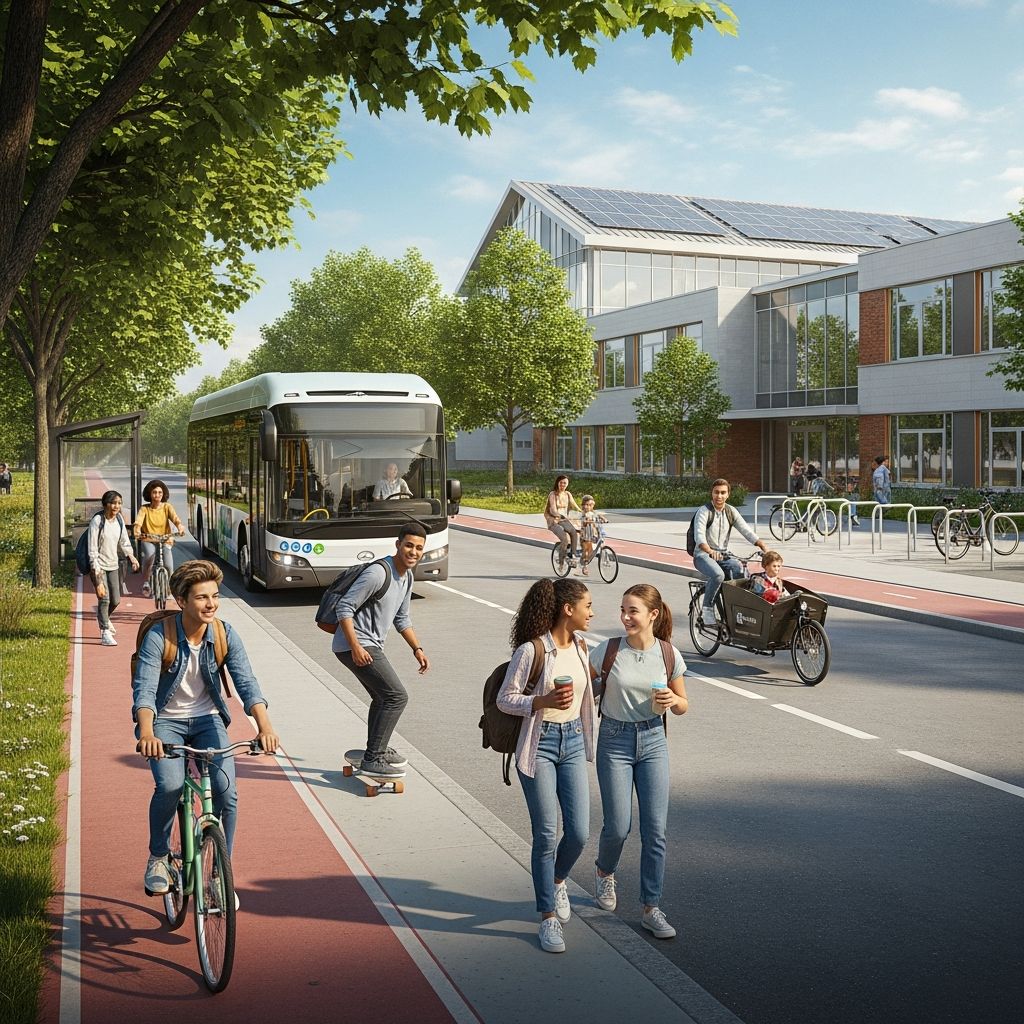
Reimagining How Students Travel to School
The daily journey to school represents one of the most frequent trips that young people undertake during their formative years. While many families default to private vehicles as their primary mode of transportation, there exists a diverse array of alternatives that offer tangible benefits for student health, environmental sustainability, and community well-being. Modern innovations combined with traditional active transportation methods create opportunities for schools and families to fundamentally reshape their approach to student commuting. These alternatives address concerns about air quality, sedentary lifestyles, traffic congestion, and educational equity while fostering a sense of independence and responsibility among young people.
The Case for Collective Movement: Community-Based Commuting
One of the most effective strategies for transforming school commuting involves organizing students into coordinated groups that travel together. These collective approaches provide safety through numbers while reducing the overall number of vehicles needed to transport students. The concept capitalizes on the principle that children are more likely to walk or bike when they have peers joining them, creating a social experience rather than a solitary journey.
Organized group walking initiatives establish predetermined routes with designated pickup and dropoff points, similar to traditional bus systems but relying on foot traffic instead of engines. These walking groups function best in communities where schools are located within reasonable distances from residential areas. The psychological benefit of traveling with peers cannot be overstated—children develop stronger social connections before the school day even begins, and parents gain peace of mind knowing their children are supervised during transit. Over ten years, communities like Torrelodones in Madrid have successfully operated free walking transportation services for primary school children, demonstrating the feasibility and longevity of such programs.
The cycling equivalent—known as bicycle group commuting—operates on similar principles but accommodates longer distances. These organized cycles routes map out safe pathways with consistent schedules and established endpoints. Barcelona has emerged as a global leader in this space, with more than 40 bike bus routes established across 30 schools using varied models that include volunteer family members, paid monitors, and autonomous routes for older students. The safety protocol inherent in group cycling—where children are trained to follow traffic rules collectively and look out for one another—addresses one of the primary concerns parents express about independent cycling.
Public Transportation Infrastructure and Student Access
Urban areas with established public transit systems possess a significant advantage in offering sustainable commuting options for students. Buses, subways, and light rail provide reliable transportation across greater distances than walking or cycling, making them ideal for students who live farther from campus. Cities benefit from reduced traffic congestion when students utilize mass transit, as one bus eliminates dozens of individual vehicle trips.
To maximize public transit adoption among students, schools can collaborate with local transportation authorities to provide subsidized or free passes. When financial barriers disappear, more families choose public transportation. Additionally, dedicated campus shuttle services operate as an intermediate solution—students can walk or bike to transit hubs, then board school-operated shuttles that use low-emission or fully electric vehicles. This multi-modal approach combines the benefits of active transportation for short distances with efficient mass transit for longer journeys.
The infrastructure supporting public transit must be equally considered. Safe waiting areas, real-time tracking information, and reliable schedules all contribute to student confidence in using these systems. When schools promote transit options through educational materials and highlight the environmental and financial benefits, families become more willing to abandon private vehicles.
Active Transportation and Health Co-Benefits
Walking and cycling serve dual purposes: they function as legitimate transportation methods while simultaneously providing physical activity that combats childhood sedentary lifestyles. Research increasingly demonstrates that students who engage in active commuting show improved concentration, better academic performance, and reduced behavioral issues during school hours. The cardiovascular benefits of daily walking or cycling accumulate significantly when these activities become habitual parts of students’ routines.
Beyond individual health metrics, communities that prioritize active commuting experience broader public health improvements. Air quality around schools improves when fewer vehicles idle during drop-off periods, reducing children’s exposure to pollutants linked to respiratory illnesses and developmental concerns. The mental health benefits also deserve recognition—students who commute actively report lower stress levels and higher life satisfaction compared to those driven in vehicles.
Electric scooters represent a newer addition to the active transportation landscape, offering a middle ground between walking and biking for students seeking quicker transit over short distances. Regulations typically restrict these devices to riders aged 16 and older, with speed limits capped at 25 kilometers per hour in urban settings, ensuring safety considerations are incorporated.
Technology-Enabled Transportation Solutions
Modern technology has introduced unprecedented optimization capabilities to school transportation systems. Artificial intelligence platforms analyze traffic patterns, student locations, road conditions, and vehicle availability to dynamically route buses in real-time rather than following static predetermined paths. This approach reduces travel time, lowers fuel consumption, and ensures right-sized vehicles are deployed to appropriate locations. Schools implementing dynamic routing systems consistently report improved operational efficiency and reduced environmental impact.
Real-time GPS tracking provides families with precise information about vehicle locations, estimated arrival times, and the ability to communicate directly with drivers and administrators. Mobile applications enable families to receive alerts, access route information, and participate in carpool coordination with other families in their area. These technological tools remove friction from the decision to use alternative transportation methods by providing transparency and reliability.
Intelligent driver monitoring systems track operator behavior to identify potential hazards before incidents occur, enhancing safety across entire fleets. Vehicle assignment algorithms match drivers and vehicles to routes and students automatically, ensuring optimal service delivery. The combination of these technologies creates transportation systems that are simultaneously safer, more efficient, and more responsive to community needs than traditional fixed systems.
The Emerging Electric Bus Revolution
The electrification of school buses represents one of the most significant recent developments in sustainable student transportation. Traditional diesel buses expose children to harmful emissions during their commute, but electric alternatives dramatically reduce environmental impact. Research demonstrates that switching from fossil fuel-based buses to electric models cuts carbon emissions by 92% while simultaneously reducing harmful air pollutants concentrated around school zones.
Beyond environmental benefits, electric school buses deliver substantial financial advantages. Schools adopting electric fleets realize savings averaging $2,000 per year in fuel costs and $4,400 annually in maintenance expenses. As battery technology improves and electric bus infrastructure expands, these savings increase while capital costs continue declining. California has led the nation in this transition, with Oakland operating a fully electric fleet of school buses while thousands more are scheduled for deployment across the state.
Electric buses serve additional community functions beyond student transportation. Some districts coordinate routes to serve mixed passenger populations, including community members and reduce overall vehicle traffic during peak commute hours. This shared model maximizes utilization of vehicle assets while extending sustainable transportation benefits beyond schools to entire municipalities.
Infrastructure Investment as Foundation for Success
Sustainable transportation alternatives cannot succeed without corresponding physical infrastructure investments. Communities must prioritize wider sidewalks that accommodate pedestrian traffic, dedicated bike lanes that connect residential areas to schools, secure bike racks for parking, and clear signage indicating school zones and pedestrian crossing areas. Schools should designate qualified staff to supervise group movements and maintain oversight of departure and arrival points.
The built environment directly influences transportation choices. When families observe protected bike lanes, wide sidewalks, and active pedestrians, they gain confidence in alternative commuting methods. Infrastructure improvements signal community commitment to sustainable transportation and create positive feedback loops where increased usage leads to improved maintenance and expanded facilities.
Shower facilities and lockers enable students arriving via active transportation methods to refresh before classes, addressing practical concerns about perspiration and comfort. Secure bike parking removes theft concerns that otherwise deter cycling. These supportive amenities transform theoretical alternative commuting options into practical realities that families actually utilize.
Shared Transportation Models and Equity Considerations
Shared transportation systems expand access for students living in rural or lower-density areas where individual bike routes or walking paths may not be feasible. These services coordinate pickups across multiple municipalities, utilizing empty seats on school buses to serve community members while covering wider geographic areas. Rural Galicia demonstrates the success of integrated shared transport systems, with more than 43,000 students from approximately 500 schools utilizing coordinated pickup and dropoff arrangements.
Innovative mobile school programs, such as the “buses of hope” operating in New Delhi, bring education directly to children in disadvantaged communities. These programs recognize that transportation barriers often prevent vulnerable populations from accessing educational opportunities and addresses the root issue by moving the school to students rather than expecting families to solve complex commuting challenges.
Building Community Culture Around Sustainable Commuting
Successful transportation transformation requires cultural shifts within school communities. Educational initiatives explaining the environmental benefits, health advantages, and cost savings associated with alternative commuting methods help families understand the rationale beyond simple instruction. When schools highlight these benefits through newsletters, websites, and social media campaigns, more families engage thoughtfully with transportation choices rather than defaulting to automatic vehicle usage.
Competitive programs and reward systems incentivize sustainable commuting habits, particularly effective for engaging older students who appreciate recognition and achievement. Celebrating milestones—such as the first time a student independently uses public transit or completes a full week of bike commuting—reinforces positive behaviors and creates social momentum. Peer influence becomes a powerful tool when schools harness it intentionally through recognition programs and community celebrations of sustainable transportation achievements.
Professional development for staff ensures consistent messaging and modeling of sustainable transportation values. When teachers and administrators demonstrate commitment by walking, biking, or using transit themselves, students absorb powerful lessons about authentic commitment rather than mere institutional messaging.
Multi-Modal Flexibility and Individual Circumstances
Not every student can use identical transportation methods due to varying distances, physical abilities, weather conditions, and family circumstances. Comprehensive transportation systems accommodate this reality by integrating multiple methods—combining walking to a transit hub, riding public transportation, then biking to final destinations. This flexibility ensures transportation options exist for virtually every student rather than forcing families into single solutions incompatible with their circumstances.
Flexible scheduling policies that allow staggered start and end times reduce peak-hour congestion while enabling families to choose commuting methods that work for their specific schedules. Students with different school start times can use shared transportation more efficiently, and parents benefit from reduced peak-hour traffic stress.
Frequently Asked Questions
At what age can children safely use public transportation independently?
This varies by location and individual maturity, but many transit systems recommend children aged 10-12 and older can manage public transportation with proper training. Schools should evaluate individual competence rather than applying rigid age cutoffs, and supervised group travel can introduce younger students to transit systems safely.
How do schools address safety concerns with walking and biking groups?
Group commuting benefits from consistent routes, trained adult supervision, traffic safety education, and designated meeting points. Visibility clothing, helmet use for cyclists, and clear communication protocols with parents all contribute to safe group transportation practices.
What happens during bad weather or when students are ill?
Comprehensive programs include flexible options allowing families to use vehicle transportation on adverse weather days or when circumstances warrant. The goal is maximizing sustainable commuting on feasible days rather than achieving 100% compliance in all conditions.
How can rural communities implement sustainable transportation given limited density?
Shared transportation models, consolidated pickup points, and technology-enabled routing maximize efficiency in lower-density areas. Regional coordination across multiple schools allows vehicle sharing that wouldn’t be economical for individual schools operating independently.
Are electric buses significantly more expensive than traditional buses?
While initial capital costs may be higher, lower fuel and maintenance expenses quickly offset the premium. Many schools find total cost of ownership lower over 10-year periods, plus available grants and incentives reduce upfront expenditures.
References
- Sustainable school transport: eco-friendly alternatives — Moeve Global. 2024. https://www.moeveglobal.com/en/planet-energy/sustainable-mobility/sustainable-school-transport-alternatives
- Guides #50: Transportation Support — Green Schools Alliance. 2024. https://www.greenschoolsalliance.org/guides-50-transportation-support
- 7 Trends Shaping the Future of School Transportation — Share Mobility. 2025. https://www.sharemobility.com/blog/7-trends-shaping-the-future-of-school-transportation