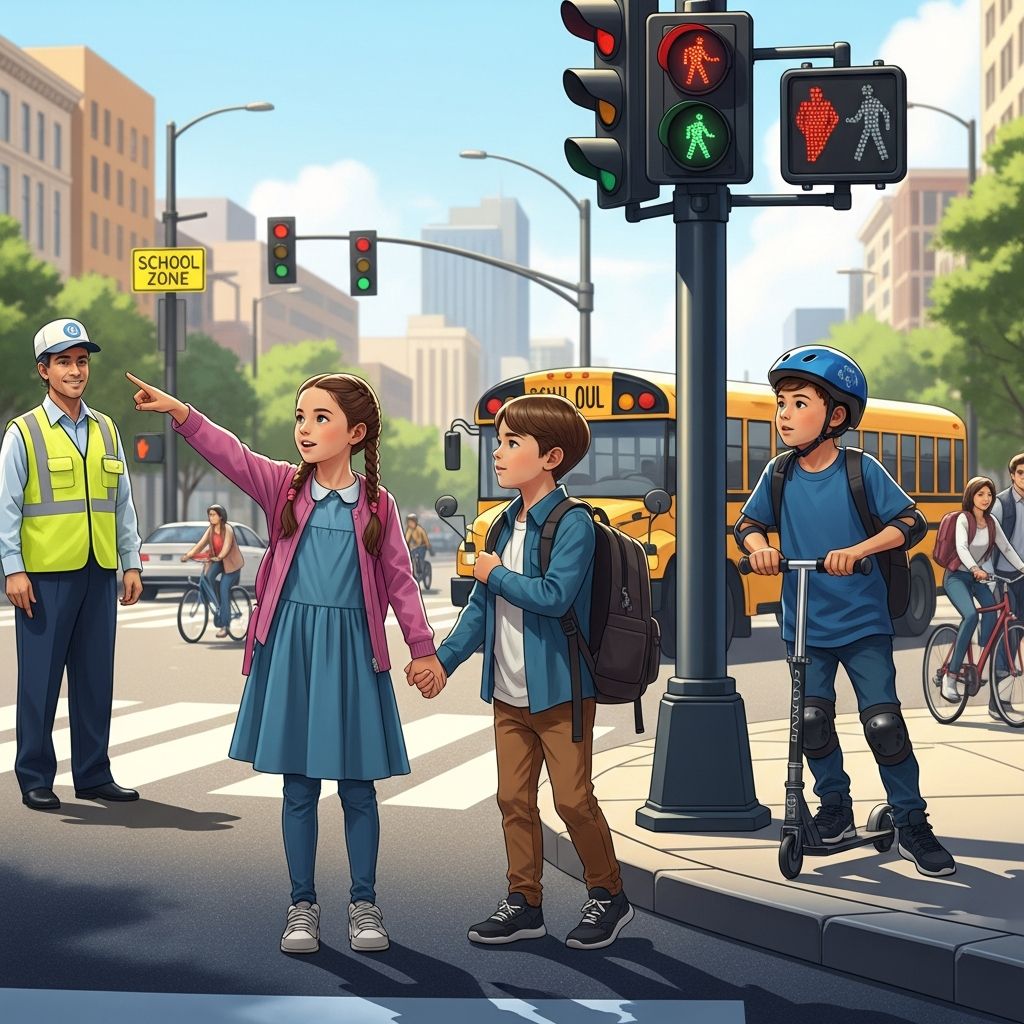
Being street smart means using your head, noticing what is happening around you, and knowing what to do to stay safe when you are not right next to a parent or caregiver. It is not about being scared all the time. It is about being prepared, confident, and aware.
This guide is written for kids, but parents, caregivers, and teachers can read it too and use it to start calm, helpful conversations about safety.
What Does “Street Smart” Really Mean?
When someone says you are street smart, they mean you:
- Notice people, cars, and situations around you.
- Spot danger early and move away from it.
- Know simple rules to keep your body and information safe.
- Ask for help from safe adults when you feel unsure.
Safety groups explain that learning to recognize unsafe situations and respond quickly is a key part of injury prevention for kids, especially in public places and near roads.12
Understanding Strangers, Safe Adults, and Familiar People
People you meet out in the world usually fall into three groups. Knowing the difference helps you make smart choices.
1. Strangers
A stranger is anyone you do not know well. They might be kind, or they might not be. The important rule is: you cannot tell if a person is safe just by how they look or talk.
- They may smile, wave, or try to start a friendly conversation.
- They can be young or old, neatly dressed or messy.
- They might offer you treats, toys, money, or ask for your help.
Because you do not know them, you never have to answer personal questions, go anywhere with them, or accept gifts.
2. Familiar Adults
These are people you and your family know well and see often, such as:
- Parents, grandparents, and other close relatives
- Trusted neighbors your parents know well
- Regular babysitters, teachers, and coaches your parents approve
Your parent or caregiver should tell you who is on your “safe adult” list. If you are not sure, treat the person as a stranger and check with your parent or caregiver.
3. Helpers in Uniform
Sometimes you need help quickly. Certain adults are trained to help in emergencies, such as:
- Police officers
- Firefighters
- Paramedics
- Security guards in stores or at events
If you are lost or scared and cannot find a trusted adult you know, going to a uniformed helper in a busy public place (store, library, school, or community center) is often a safe choice.3
Letting Adults Know Where You Are
One of the most important parts of being street smart is not being a mystery. An adult taking care of you should know where you are and when to expect you back.
Simple Rules for Checking In
- Always tell a grown-up where you are going, who you are with, and when you plan to return.
- Ask before you change plans or go to a new place.
- If you have a phone, send a quick text or call if you will be late.
- If you do not have a phone, use a friend’s phone (with permission) or ask to use a store or school office phone.
Safety organizations encourage regular communication between kids and caregivers, especially when children are walking or biking in their neighborhoods.1
Why It’s Safer to Stick With Friends
Going places with a buddy or a group is usually safer than being alone. People who want to cause trouble are less likely to bother a group of kids.
- Walk to school, the bus stop, or the park with a friend when possible.
- Join groups or clubs, like sports teams or after-school programs, when you can.
- If you are alone and something feels wrong, head toward a busy, public place like a store, school, or library.
Choosing Safe Places and Avoiding Risky Spots
Where you spend your time makes a big difference in how safe you are. Some places give you lots of choices and people to help. Others make it harder to get help if something goes wrong.
| Safer Places | Riskier Places |
|---|---|
|
|
If a place feels lonely, dark, or out of sight, it is better to stay away or pass through quickly with an adult.
Stranger Safety: Clear Rules That Are Easy to Remember
Experts in child safety often teach simple, repeatable rules so kids can react quickly without needing to think through every detail in the moment.3
If a Stranger Tries to Talk to You
- Keep a safe distance. You do not have to walk closer.
- If they ask for help (finding a pet, directions, carrying something), it is OK to say, “I need to ask my adult,” and walk away.
- Never agree to go anywhere with a stranger, even if they seem nice.
- Do not share your name, address, phone number, or school with strangers.
If a Stranger Offers You Something
- Do not accept candy, toys, money, or rides from someone you do not know well.
- Do not lean into their car, look into a trunk, or reach through a car window.
- If they insist or try to tempt you, leave right away and go where other people are.
If a Stranger Tries to Grab or Follow You
- Shout loudly so others know you need help. You can yell, “Help! I don’t know you!” or “Help! This is not my parent!”
- Run toward people, such as into a store, toward other families, or into a school.
- If you can, call 911 or ask an adult nearby to call for you.
Emergency phone numbers like 911 in the United States are designed for kids and adults to reach police, fire, or medical help quickly when they are in danger.4
Traffic and Walking Safety for Street Smart Kids
Being street smart is not only about strangers; it also includes knowing how to stay safe around traffic. Road injuries are one of the leading causes of serious harm for children, so learning smart walking and biking habits is very important.5
Walking Near Roads
- Use sidewalks whenever they are available.
- If there is no sidewalk, walk facing traffic so you can see cars coming.
- Stop at the edge of the curb, look left, right, left again, and keep looking as you cross.
- Cross at crosswalks or corners instead of between parked cars.
- Put phones and headphones away while crossing the street so you can see and hear traffic clearly.
Riding Bikes or Scooters
- Always wear a helmet that fits properly.
- Follow the rules of the road and traffic signs.
- Be extra careful at driveways and intersections; drivers may not see you right away.
- Wear bright or reflective clothing if you are outside when it is dim or dark.
Using Your Instincts: When Something “Feels Off”
You have a built-in alarm system called your gut feeling or instinct. Sometimes your body notices danger before your brain has the words for it.
You might feel:
- A tight feeling in your stomach
- Suddenly nervous or shaky
- Like you really want to get away from someone or some place
When that happens, you can:
- Move to a place with more people, like a store or school.
- Go to a trusted adult and explain what is happening.
- Call your parent, caregiver, or 911 if you feel in real danger.
Child protection and emergency services encourage kids to act on these feelings by moving to safety and then getting adult help.34
Planning Ahead With Your Family
Being street smart works best when you and your family make a plan together. Talking ahead of time helps everyone stay calm in real situations.
Things to Decide as a Family
- Which adults are on your safe adult list.
- Where your safe meeting spots are (near home, school, and favorite places).
- What you should do if you are lost, late, or plans suddenly change.
- Who you can call if your parent or caregiver does not answer right away.
Practice Makes These Skills Easier
- Walk usual routes together and point out safe places along the way.
- Role-play what you would say if a stranger offers you a ride or asks for help.
- Practice saying “No” in a strong voice, even if it feels awkward at first.
- Quiz each other on important phone numbers and addresses.
Many safety education programs recommend repeated practice so children remember what to do in stressful moments.15
Street Smart Do’s and Don’ts (Quick Checklist)
- Do tell an adult where you are going and who you are with.
- Do walk with friends when you can.
- Do trust your instincts and move toward safety if something feels wrong.
- Do look and listen carefully near streets and driveways.
- Don’t go anywhere with someone you do not know well.
- Don’t accept gifts, treats, or rides from strangers.
- Don’t keep secrets that make you feel scared or uncomfortable.
Frequently Asked Questions (FAQs)
What should I do if I get lost in a store?
Find a worker who has a name tag or go to the cash register or customer service desk. Tell them you are lost and give them your parent or caregiver’s name. Stay where you can be seen until your adult arrives.
Is it ever OK to help an adult stranger?
Adults should ask other adults for help, not kids. If a stranger asks you for help, you can say, “I need to ask my adult,” and move away to find a parent, caregiver, or store worker.
What if a stranger knows my name?
Some people may read your name from a backpack, jersey, or badge, or they may have heard someone else say it. Knowing your name does not mean they are safe. Follow the same safety rules and do not go anywhere with them without checking with your parent or caregiver.
How loud should I be if I need help?
You should be as loud as you can. Yell words that tell others you are in danger, like “Help! I don’t know you!” Making noise can bring adults to you quickly and may scare away someone trying to hurt you.
When should I call 911 or the emergency number in my country?
Call only if you or someone else is in real danger, very hurt, there is a fire, or someone is trying to take you. Stay calm, say your name, where you are, and what is happening. Do not use 911 for jokes, games, or small problems.
References
- Street Smarts: Teaching Children to Be Safe Pedestrians — Today’s Kids. 2023-04-10. https://www.todayskids.ca/featured-carousel/street-smarts-teaching-children-to-be-safe-pedestrians/
- Street Smarts – Pedestrian Safety — Safe Kids Wisconsin / Children’s Wisconsin. 2022-06-01. https://www.safekidswi.org/Safe-Kids/Resources/Street-Smarts
- Talking to Your Child About Safety — HealthyChildren.org (American Academy of Pediatrics). 2021-08-23. https://www.healthychildren.org/English/safety-prevention/at-home/Pages/Talking-to-Your-Child-About-Safety.aspx
- 9-1-1: What Is an Emergency? — National 911 Program, U.S. Department of Transportation. 2020-05-15. https://www.911.gov/about-911/whats-a-911-emergency/
- Preventing Child Pedestrian Injuries — Centers for Disease Control and Prevention. 2022-09-30. https://www.cdc.gov/transportationsafety/pedestrian_safety/children.html