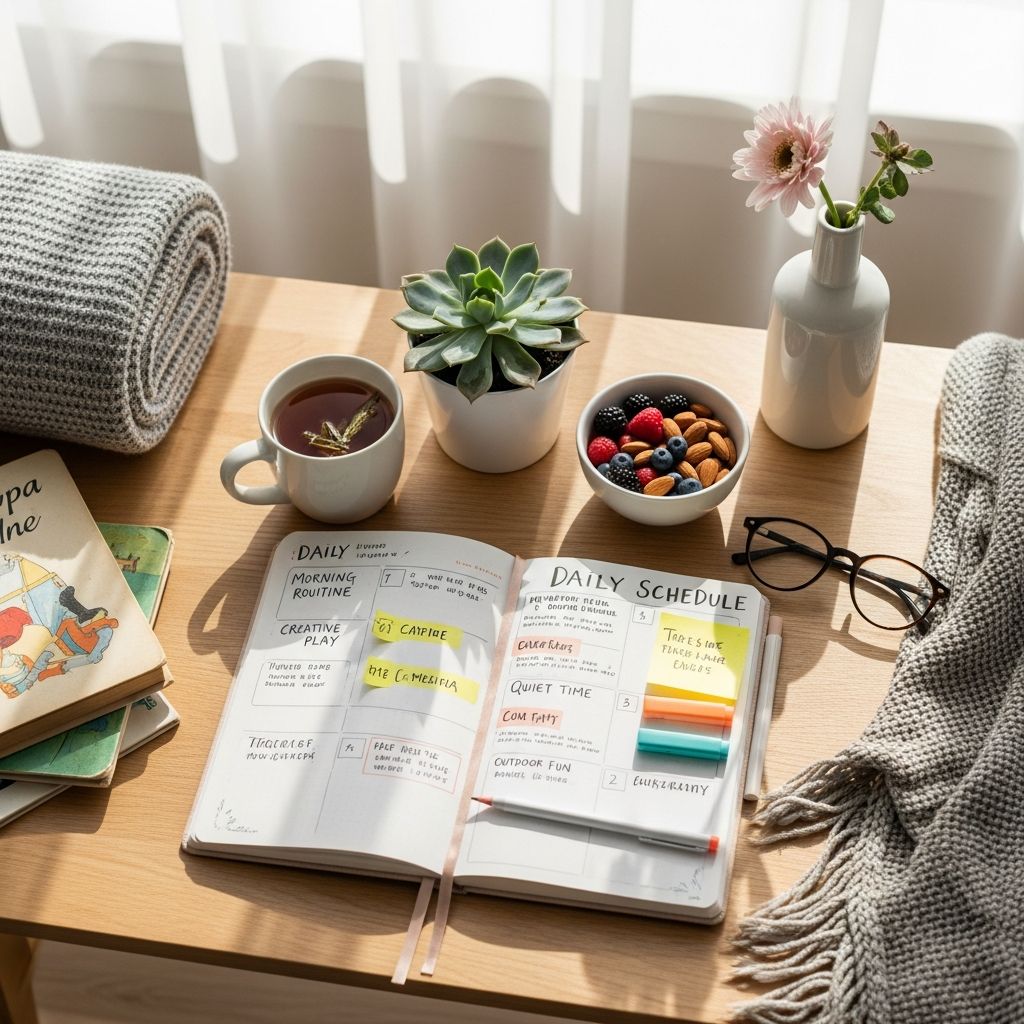
Being a stay-at-home mom often feels like juggling a dozen jobs at once: caregiver, chef, house manager, playmate, and sometimes even part-time earner. A well-thought-out daily rhythm doesn’t make life perfect, but it does make it calmer, more predictable, and far less overwhelming.
Why A Flexible Rhythm Works Better Than A Strict Schedule
Many stay-at-home moms discover that rigid, hour-by-hour schedules often collapse the first time a toddler refuses a nap or a doctor’s appointment runs long. Instead of trying to control every minute, it’s more practical to build a flexible rhythm around consistent blocks of the day: mornings, mid-day, afternoons, and evenings.
This rhythm-based approach helps kids understand what comes next, reduces tantrums caused by surprise transitions, and gives you mental space to move things around without feeling like the day is ruined. The goal isn’t perfection; it’s predictability with room for real life.
Core Building Blocks Of A Stay-at-Home Day
Before crafting a detailed plan, it helps to think in terms of “building blocks” rather than minute-by-minute tasks. These blocks become the anchors of your day, and everything else can float between them as needed.
- Wake-up and morning reset: Getting everyone dressed, fed, and ready to start the day.
- Active play or outings: Time for movement, fresh air, errands, or activities.
- Meals and snacks: Reliable eating times that keep energy stable and meltdowns lower.
- Rest time: Naps or quiet play, plus your chance to reset.
- Home care block: A predictable space for laundry, dishes, and light cleaning.
- Evening wind-down: Dinner, connection, and bedtime routines.
When you know which blocks matter most to your family, you can design a day that supports them instead of constantly reacting to chaos.
Step-by-Step: Creating Your Personalized Daily Rhythm
Every family’s day will look different, but the process for building a workable routine is similar. Think of it as designing a template that can handle both normal days and those “everything went sideways” days.
- Identify your non-negotiables: These include naps, school drop-offs, therapies, or regular appointments.
- Place anchor times: Choose approximate times for wake-up, lunch, and bedtime to give the day a loose structure.
- Assign blocks between anchors: Decide what type of activity typically goes between, such as errands between breakfast and lunch, or outdoor play after naps.
- Batch similar tasks: Group chores or computer work together so you are not constantly switching roles every ten minutes.
- Leave “buffer zones”: Build 15–30 minute cushions so you can handle diaper blowouts, sibling drama, or last-minute changes without panic.
Think of this routine as a draft that will evolve with seasons, ages, and your own capacity. It is normal—and healthy—for the schedule to change over time.
Sample Daily Rhythm For A Mom With Young Kids
The example below is not a template you must follow but a starting point to spark ideas. Adjust wake times, nap lengths, and activities to match your children’s ages and your own energy levels.
| Time Block | Focus | Sample Activities |
|---|---|---|
| 6:30–8:30 (Morning) | Gentle start & prep | Wake-up, breakfast, get dressed, quick kitchen reset, simple kid play nearby. |
| 8:30–11:00 (Out & about) | Movement & errands | Park, walk, library, grocery pickup, stroller walk, playdate. |
| 11:00–1:00 (Midday) | Lunch & wind-down | Prep lunch, eat together, read books, transition kids to nap or quiet time. |
| 1:00–3:00 (Rest block) | Kid rest & mom focus time | Naps, quiet bins, audio stories; mom does focused task, work, or rest. |
| 3:00–5:30 (Afternoon) | Play & light chores | Snack, backyard play, crafts, rotate toys, quick laundry or tidy with kids. |
| 5:30–8:00 (Evening) | Dinner & wind-down | Cook, eat, family time, baths, stories, bedtime routine. |
Notice that each block has a theme instead of a long checklist. This keeps your day structured but still forgiving when naps run late or a playdate gets rained out.
Designing A Morning That Sets The Tone
Mornings often determine how the rest of the day feels. When the first two hours are complete chaos, everyone is tense before breakfast ends. Building a predictable, gentle morning helps both you and your kids feel more grounded.
Consider including a short “mom start” before the house wakes up, even if it is just 10–15 minutes. A quiet cup of coffee, a quick stretch, or a few deep breaths while looking at your plan for the day can make you feel more like the director of the day instead of its victim.
Simple Morning Ideas
- Lay out kids’ clothes and basic breakfast items the night before.
- Use the same short sequence most mornings: wake, bathroom, get dressed, breakfast, clear dishes, quick tidy.
- Keep screens either off or very limited in the first hour to avoid power struggles when it’s time to transition.
- Build in a few minutes of connection, such as reading a short book while everyone finishes eating.
Structuring Naps And Quiet Time
Nap and quiet-time blocks are the pillars of many stay-at-home mom days. Even if children no longer sleep, quiet time is crucial for their regulation and your sanity. Treat this block as an appointment that you protect whenever possible.
For toddlers and preschoolers who resist naps, quiet-time baskets or boxes can preserve the rest period without a power struggle. Rotate items so the basket feels fresh, and keep it away except during the designated time.
Quiet-Time Basket Ideas
- Simple puzzles and chunky blocks.
- Coloring books, stickers, and washable markers.
- Picture books or audio stories with child-safe headphones.
- Fine-motor toys like lacing cards or large beads.
- A special stuffed animal or “quiet buddy” that only comes out during this block.
Balancing Play, Learning, And Home Tasks
One of the biggest stressors for stay-at-home moms is the feeling of needing to entertain kids constantly while also keeping the house functional. Instead of treating these as competing jobs, integrate them where possible.
Children benefit from unstructured play, and they also love being included in purposeful work. Let them help with age-appropriate tasks and keep short, intentional pockets of more focused learning or crafts.
Ways To Combine Child Needs With Home Tasks
- Invite toddlers to “help” with laundry by sorting socks or putting washcloths into a basket.
- Use a low shelf for safe kitchen tools so children can stir, pour, and wash fruits or vegetables while you cook.
- Set up a small table nearby with crayons, stickers, or playdough that you only bring out during meal prep.
- Turn quick cleanups into a game with a timer or a favorite song.
Staying On Top Of The House Without Cleaning All Day
It is easy for the day to disappear into an endless loop of dishes and toy pickup. A simple structure for home tasks helps you feel productive without expecting a perfectly spotless house.
A helpful approach is to separate daily resets from deeper cleaning. Daily resets are short, repeatable routines that keep things from spiraling. Deeper cleaning can be spread across the week so that everything gets some attention eventually.
Household Task Table
| Task Type | Frequency | Example Actions |
|---|---|---|
| Daily resets | 2–3 small blocks per day | Load/unload dishwasher, wipe counters, quick floor sweep, toy pickup before dinner. |
| Weekly focus areas | One room or zone per weekday | Monday: bathrooms, Tuesday: bedrooms, Wednesday: kitchen deep clean, etc. |
| Monthly extras | Once or twice a month | Organize one closet, rotate toys, declutter a drawer or shelf. |
When you choose a simple pattern like this, you always know “what today is for,” instead of trying to clean the whole house in one exhausted sprint.
Protecting Time For Yourself Without Guilt
Self-care for stay-at-home moms does not need to be an elaborate spa day. It can be as basic as protecting 20 minutes to read, stretch, or sit quietly without being responsible for anyone else’s needs. When this time is scheduled on purpose, you are more likely to actually take it.
Consider treating your own rest as one of the non-negotiables of the day. That might mean going to bed earlier, saying no to an extra outing, or asking a partner or friend to handle bedtime once a week so you can step away.
Small, Realistic Self-Care Ideas
- Keep a book, journal, or craft project in a basket where you have nap-time or quiet-time breaks.
- Use the first five minutes of any rest block to drink water, stretch, or simply breathe before doing any tasks.
- Plan one simple “treat” each week, such as a solo walk, coffee run, or long bath.
- Give yourself permission to rest even when the house is not perfect; you are not the maid—you’re a whole person.
Adjusting Your Schedule As Kids Grow
What works for a baby and toddler will not work for a school-aged child, and that is normal. Instead of expecting one routine to last forever, view your schedule as seasonal. Every few months, pause and ask what is and isn’t working.
Look at wake times, nap needs, school schedules, and activities. You may find that the old afternoon park trip no longer fits, but an early-evening walk after dinner becomes your new anchor for connection and movement.
Signs Your Routine Needs A Refresh
- Your child consistently fights naps or bedtime at the current times.
- You always feel rushed at the same point of day, such as right before dinner.
- Activities that used to feel fun now feel like obligations or source of conflict.
- You are frequently skipping meals, showers, or sleep to “fit everything in.”
Frequently Asked Questions About Stay-at-Home Mom Schedules
How strict should I be with the times?
Think of times as ranges instead of exact minutes. For example, “morning outing” might typically happen between 9:00 and 11:00, but starting at 9:30 or shortening it on a rough day does not mean you failed. The important part is keeping the same general flow so your kids know what to expect.
What if my baby and toddler have different nap schedules?
Staggered naps are a common challenge. Try to at least overlap a portion of their rest times, even if it is only 30–45 minutes. Use the non-overlapping portions for one-on-one time with the awake child or for very light tasks that can be interrupted easily.
How do I handle days that completely fall apart?
No matter how well you plan, some days will simply unravel. When that happens, leaning on a few core rituals—like a familiar bedtime routine or a quick evening tidy—can help reset the tone and keep chaos from spilling into the next day. Give yourself credit for getting through, then start fresh tomorrow.
Can a stay-at-home mom schedule include part-time work?
Yes, many at-home parents incorporate freelance or part-time work into their rhythm. The key is choosing specific blocks, such as nap time or early mornings, for focused work and protecting them as much as possible. Clear boundaries, even if the hours are few, make you more effective and reduce resentment.
How do I keep from feeling isolated?
Intentionally adding social connection into your weekly rhythm can make a big difference. That might look like a weekly library story time, a standing walk with another mom, or an online meetup during nap time. Treat social time as just as important as chores or errands, because emotional wellbeing is part of what keeps the household running.
Putting It All Together
A sustainable stay-at-home mom schedule is less about perfection and more about gentle structure. When your day has a predictable rhythm—anchored by meals, rest, connection, and small bursts of productivity—you spend less energy firefighting and more energy enjoying your children.
Start small: choose one or two blocks to define this week, try them out, and adjust without judgment. Over time, these rhythms become second nature, giving your family a calmer, more grounded daily life and giving you the breathing space you deserve.