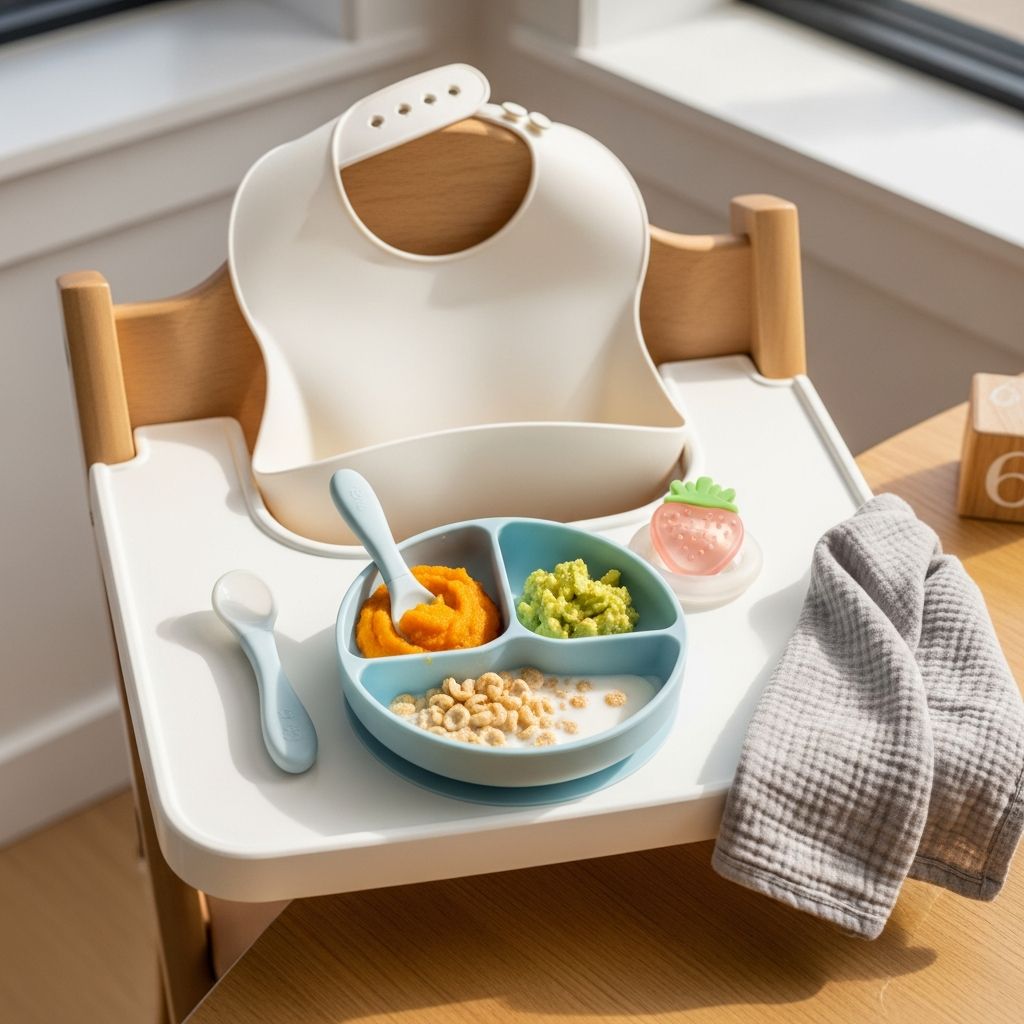
When Your Baby Is Ready for Solids
Most babies begin showing signs of readiness for solid foods between 4 and 7 months, but the exact timing depends on the individual child, not just the calendar . At this stage, breast milk or formula still provides the vast majority of nutrition, and solids are more about learning to eat than about filling the belly .
- Good head and neck control, able to sit with support in a high chair or on a lap .
- Loss of the tongue-thrust reflex, so they don’t automatically push food out with their tongue .
- Interest in food: watching others eat, reaching for the spoon, or opening the mouth when food is offered .
- Ability to swallow food rather than just dribbling it back out .
If a baby is still mostly lying flat, can’t hold their head steady, or pushes every spoonful out, it’s usually best to wait a few more weeks and stick with milk feeds . Starting too early can increase the risk of choking and may interfere with proper nutrient absorption .
What to Feed: First Foods and Nutrient Needs
The first solid foods should be simple, smooth, and rich in key nutrients like iron and zinc, which become especially important around 6 months as a baby’s own stores start to run low . Breastfed babies, in particular, benefit from iron-rich first foods since breast milk alone doesn’t provide enough iron after about 6 months .
Common first foods include:
- Iron-fortified infant cereal (single-grain, like rice, oat, or barley) mixed with breast milk or formula to a thin, runny consistency .
- Pureed meats (beef, chicken, turkey) or poultry, which are excellent sources of iron and zinc .
- Smooth purees of vegetables (like sweet potato, carrots, peas, squash) and fruits (like banana, avocado, apple, pear) .
- Well-cooked, mashed beans and lentils, which offer plant-based protein and iron .
There’s no strict order for introducing foods; many experts now suggest starting with iron-rich options like meat or iron-fortified cereal, then adding fruits and vegetables . Avoid honey, cow’s milk, and sugary or salty foods until after 12 months, and skip choking hazards like whole nuts, popcorn, and hard raw vegetables .
How to Introduce Foods Safely
Starting solids is less about how much a baby eats and more about helping them learn to accept new tastes, textures, and the mechanics of eating from a spoon . The goal is to make mealtimes calm, positive experiences that build confidence, not stress .
- Begin with one meal a day, usually after a milk feed when the baby is alert but not overly hungry or tired .
- Offer just 1–2 teaspoons of a single-ingredient food at first, gradually increasing to 1–2 tablespoons as the baby shows interest .
- Use a soft-tipped spoon and let the baby smell and taste the food; it’s normal for babies to refuse the first few spoonfuls or make funny faces .
- Always sit the baby upright in a high chair with a safety strap or in a supported position on a lap; never feed solids while lying down or in a car seat .
Introduce one new food at a time and wait 3–5 days before adding another . This makes it easier to spot any allergic reactions, such as rash, vomiting, diarrhea, or breathing problems, and to know which food might be causing them .
Portion Sizes and Feeding Schedule
At 4–7 months, solid food is a supplement, not a replacement, for breast milk or formula . Milk feeds should still happen about 5–6 times per day, providing roughly 24–32 ounces of formula or the equivalent in breast milk over 24 hours .
Typical solid food amounts for this age:
| Age | Meals per day | Amount per meal | Notes |
|---|---|---|---|
| 4–6 months | 1 meal | 1–2 tsp to 1–2 Tbsp | Start with very small amounts; focus on learning, not volume . |
| 6–7 months | 1–2 meals | 2–4 Tbsp per meal | Gradually increase as baby shows interest; still mostly milk . |
As solids increase, some babies naturally reduce their milk intake slightly, but they should still drink plenty of breast milk or formula each day . If a baby consistently refuses milk or shows signs of poor growth, it’s important to talk with a pediatrician .
Recognizing Hunger and Fullness Cues
Babies communicate when they’re hungry or full through body language and behavior, and learning these cues helps prevent overfeeding and supports healthy eating habits .
Common hunger signs:
- Rooting (turning head and opening mouth when cheek is touched) .
- Sucking on hands or fingers, making sucking motions .
- Increased alertness, fussiness, or crying that settles with feeding .
Common fullness signs:
- Turning head away from the spoon or breast/bottle .
- Slowing down or stopping sucking, closing mouth, or pushing food away .
- Playing with the spoon, throwing food, or losing interest in eating .
Respecting these signals teaches babies to eat according to their internal hunger and fullness, which supports healthy weight and a positive relationship with food .
Texture Progression: From Smooth to Lumpy
At 4–7 months, foods should be very smooth and runny, like thin purees or cereals mixed with plenty of liquid . This texture is safest and easiest for babies who are just learning to swallow solids .
- Start with single-ingredient purees that are thin enough to drip off the spoon .
- Gradually thicken purees as the baby gets used to swallowing, but keep them smooth and lump-free at first .
- Around 6–7 months, very small, soft lumps can be introduced in mashed foods (like mashed banana or well-cooked vegetables) to help develop chewing skills .
Always avoid hard, round, or sticky foods that can block the airway, such as whole grapes, hot dogs, raw carrots, popcorn, nuts, and chunks of peanut butter . Cut foods into small, soft pieces and supervise closely during every meal .
Common Concerns and Mistakes to Avoid
Many parents worry about allergies, choking, or whether their baby is eating enough, but most concerns can be managed with simple, evidence-based practices .
- Adding cereal to the bottle: This is not recommended because it can lead to overfeeding, poor weight gain, and an increased risk of choking .
- Forcing a baby to eat: Pressuring a baby to finish a bowl can override natural fullness cues and create negative mealtime experiences .
- Introducing too many foods at once: Offering several new foods in one day makes it hard to identify any allergic reactions .
- Using adult foods or seasonings: Babies don’t need salt, sugar, butter, or strong spices; plain, simple foods are safest and healthiest .
If a baby consistently gags, refuses all foods, or shows signs of distress (like vomiting, rash, or breathing problems), it’s best to pause and consult a pediatrician or feeding specialist .
FAQs: Starting Solids at 4–7 Months
When is the best time to start solids?
Most babies are ready between 4 and 7 months, once they can sit with support, hold their head steady, and show interest in food . The American Academy of Pediatrics recommends introducing solids around 6 months, but some babies may be ready a bit earlier or later .
Should I start with cereal or meat?
Either can be a good first food, but many experts now suggest starting with iron-rich options like pureed meat, poultry, or iron-fortified infant cereal, especially for breastfed babies . After that, fruits and vegetables can be added in any order .
How much solid food should my baby eat each day?
At first, just 1–2 teaspoons once a day is enough; by 6–7 months, many babies eat 1–2 tablespoons per meal, 1–2 times a day . Milk (breast milk or formula) remains the main source of nutrition at this age .
Can I give my baby water?
A few sips of water in a cup can be offered with meals starting around 6 months, but it should not replace breast milk or formula . Avoid giving large amounts of water, as it can fill the stomach and reduce appetite for milk .
What if my baby refuses solids?
It’s very common for babies to refuse or play with their first spoonfuls; it can take 10–15 tries before a baby accepts a new food . Stay calm, keep portions tiny, and continue offering milk as the main source of nutrition .