Transitioning your baby from exclusive breast milk or formula to solid foods marks an exciting milestone in their development. Around **6 months of age**, most infants show readiness for this step, which supports growth, iron intake, and oral motor skills.
Recognizing When Your Baby Is Ready for Solids
Every baby develops at their own pace, but health experts like the American Academy of Pediatrics (AAP) and Centers for Disease Control and Prevention (CDC) recommend waiting until approximately 6 months before introducing solids. Starting before 4 months is not advised due to immature digestive systems and increased choking risk.
Look for these key **signs of readiness**:
- Strong head and neck control, able to sit with minimal support.
- Interest in watching others eat and reaching for food.
- Loss of the tongue-thrust reflex, allowing them to swallow rather than push food out.
- Doubled birth weight and good overall health, as confirmed by a pediatrician.
Consult your baby’s healthcare provider to rule out any medical concerns before beginning. Breast milk or formula remains the primary nutrition source even after solids start, typically up to 24-32 ounces daily.
Building a Safe Feeding Foundation
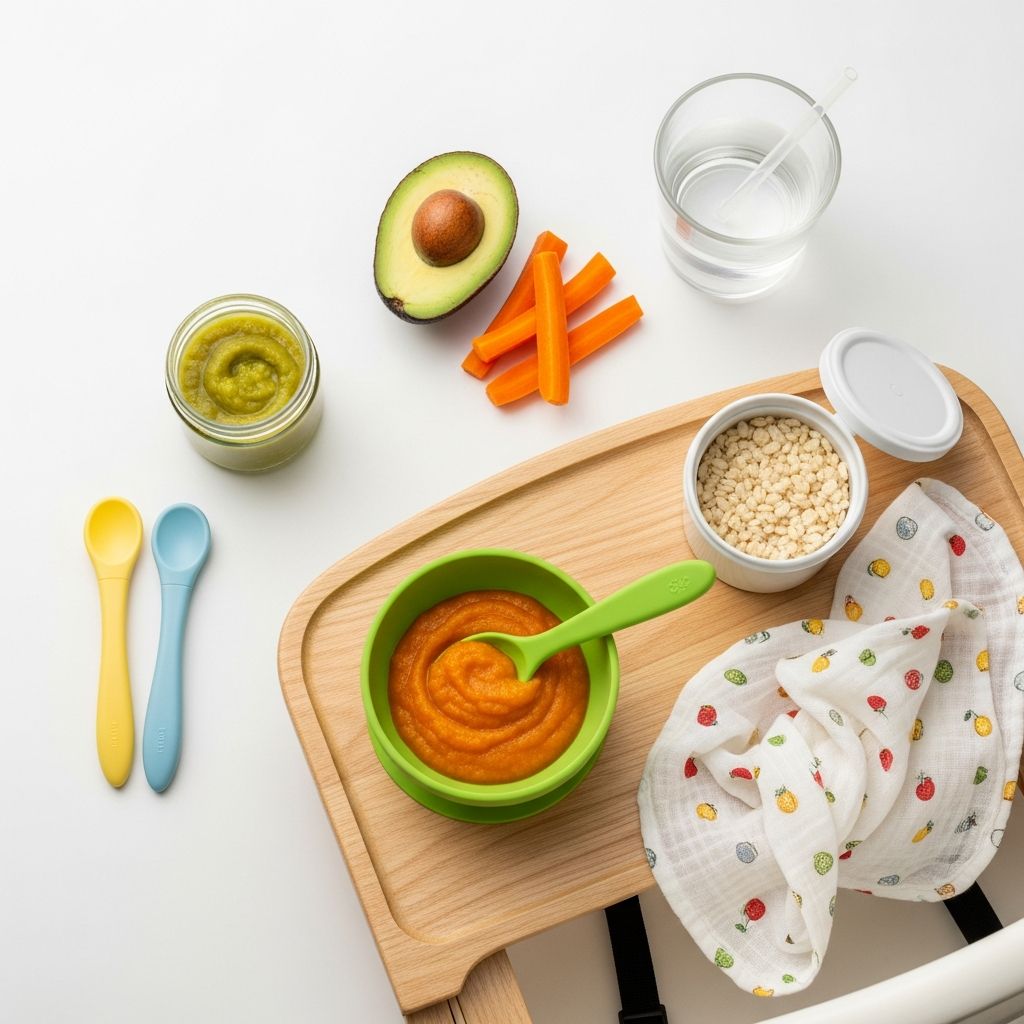
Prepare your kitchen for success by having shallow spoons, soft-tipped utensils, and high chairs with safety straps. Always supervise feedings closely to monitor cues and prevent mishaps. Start during a calm time, like mid-morning, when baby is alert but not ravenous—offer milk first to ease frustration.
Recognize **hunger signals**: leaning forward, opening mouth wide, or fist-sucking. **Fullness cues** include turning away, closing the mouth, or slowing down. Respect these to foster healthy eating habits and avoid overfeeding.
First Foods: What to Offer and Why
Begin with iron-rich options since babies’ natural stores deplete around 6 months. Single-ingredient foods allow allergy monitoring—introduce one new item every 3-5 days, starting with 1-2 teaspoons.
| Food Group | Examples | Preparation Tips | Nutritional Benefit |
|---|---|---|---|
| Iron-Fortified Cereals | Oatmeal, barley, multi-grain (avoid rice-only due to arsenic) | Mix with breast milk, formula, or water to runny consistency | Boosts iron for brain development |
| Vegetables | Sweet potato, carrots, peas, broccoli | Puree smooth; no salt/sugar | Vitamin A, C, fiber |
| Fruits | Apples, pears, bananas, avocado | Cook and mash if firm | Natural sweetness, vitamins |
| Proteins | Pureed meats, tofu, lentils | Finely ground, soft | Zinc, protein for growth |
Progress gradually: thicken purees as swallowing improves, then introduce lumps by 7-9 months.
Allergy Prevention and Early Introduction
Recent guidelines encourage introducing common allergens like peanut, egg, and fish alongside other foods around 6 months, rather than delaying. This reduces allergy risk—start with thin, smooth versions (e.g., peanut butter thinned with milk).
- Peanut: Mix 1/4 tsp smooth powder into puree if no eczema history.
- Egg: Well-cooked, mashed yolk first.
- Watch for reactions: rash, vomiting, diarrhea—stop and call doctor.
Avoid honey, cow’s milk as a drink, and choking hazards like whole grapes or nuts until later.
From Purees to Finger Foods: Texture Progression
By 8-10 months, offer **finely chopped soft foods** to encourage self-feeding and pincer grasp development. Examples include:
- Soft ripe fruits (banana slices, peach pieces).
- Cooked veggie sticks (carrots, green beans).
- Small pasta, cheese cubes, or dissolvable crackers.
Choking prevention tips:
- Cut into pea-sized pieces; avoid round/skinny shapes like hot dogs (quarter lengthwise).
- Ensure foods mash easily with gums.
- Never leave baby unattended; learn infant CPR.
Sample Daily Feeding Schedules by Age
Adjust based on your baby’s appetite—solids complement, not replace, milk feeds.
| Age | Meals per Day | Sample Schedule | Portion Guide |
|---|---|---|---|
| 6 Months | 1-2 solids | Breast/formula on demand; 2-4 Tbsp puree mid-morning | 5-15 ml (1-3 tsp) per food |
| 7-8 Months | 2-3 solids | Breakfast cereal, lunch veggies, dinner fruit; milk before/after | 30-60 ml (2-4 Tbsp) |
| 9-12 Months | 3 meals + 2 snacks | Varied full meals; finger foods encouraged | 45-120 ml grains; 30-60 ml veggies |
Overcoming Common Challenges
Baby refuses solids? Persistence pays—offer variety without pressure; it may take 10-15 tries.
Constipation or spit-up? Increase fluids and fiber-rich purees like prunes; consult pediatrician if persistent.
Messy eaters: Use bibs, trays, and let them explore—it’s part of learning.
Family meals model healthy eating; involve baby at the table from day one.
Frequently Asked Questions (FAQs)
Can I start solids earlier than 6 months?
No, the AAP and CDC advise against it before 4-6 months to protect gut health and reduce allergies.
What if my baby gags or chokes on purees?
Gagging is normal as they learn; ensure smooth texture and upright position. True choking is silent—learn signs.
Should I use baby-led weaning instead?
Both purees and baby-led (soft finger foods from start) work if safe; combine for best results.
How much should solids replace milk by 12 months?
Milk remains key (16-24 oz); solids provide ~50% calories by year one.
Are store-bought pouches okay?
Yes, for convenience, but check labels for no added sugars; homemade offers fresher taste.
Long-Term Nutrition for Thriving Toddlers
By 12 months, aim for balanced plates: half fruits/veggies, quarter grains, quarter proteins, plus dairy. Continue allergens, limit juice/sugar. This foundation prevents picky eating and supports lifelong health.
Track growth with well-visits; if concerns arise, a feeding therapist can help.
References
- Solid foods: How to get your baby started — Mayo Clinic. 2023-10-05. https://www.mayoclinic.org/healthy-lifestyle/infant-and-toddler-health/in-depth/healthy-baby/art-20046200
- Starting Solid Foods — HealthyChildren.org (AAP). 2024-01-15. https://www.healthychildren.org/English/ages-stages/baby/feeding-nutrition/Pages/Starting-Solid-Foods.aspx
- Starting Solid Foods: 6–12 Months — Healthy Parents Healthy Children (Government of Alberta). 2023-08-20. https://www.healthyparentshealthychildren.ca/im-a-parent/older-babies-6-12-months/feeding-starting-solid-foods/
- When, What, and How to Introduce Solid Foods — CDC. 2024-06-12. https://www.cdc.gov/infant-toddler-nutrition/foods-and-drinks/when-what-and-how-to-introduce-solid-foods.html
- Infant Food and Feeding — AAP. 2023-11-01. https://www.aap.org/en/patient-care/healthy-active-living-for-families/infant-food-and-feeding/