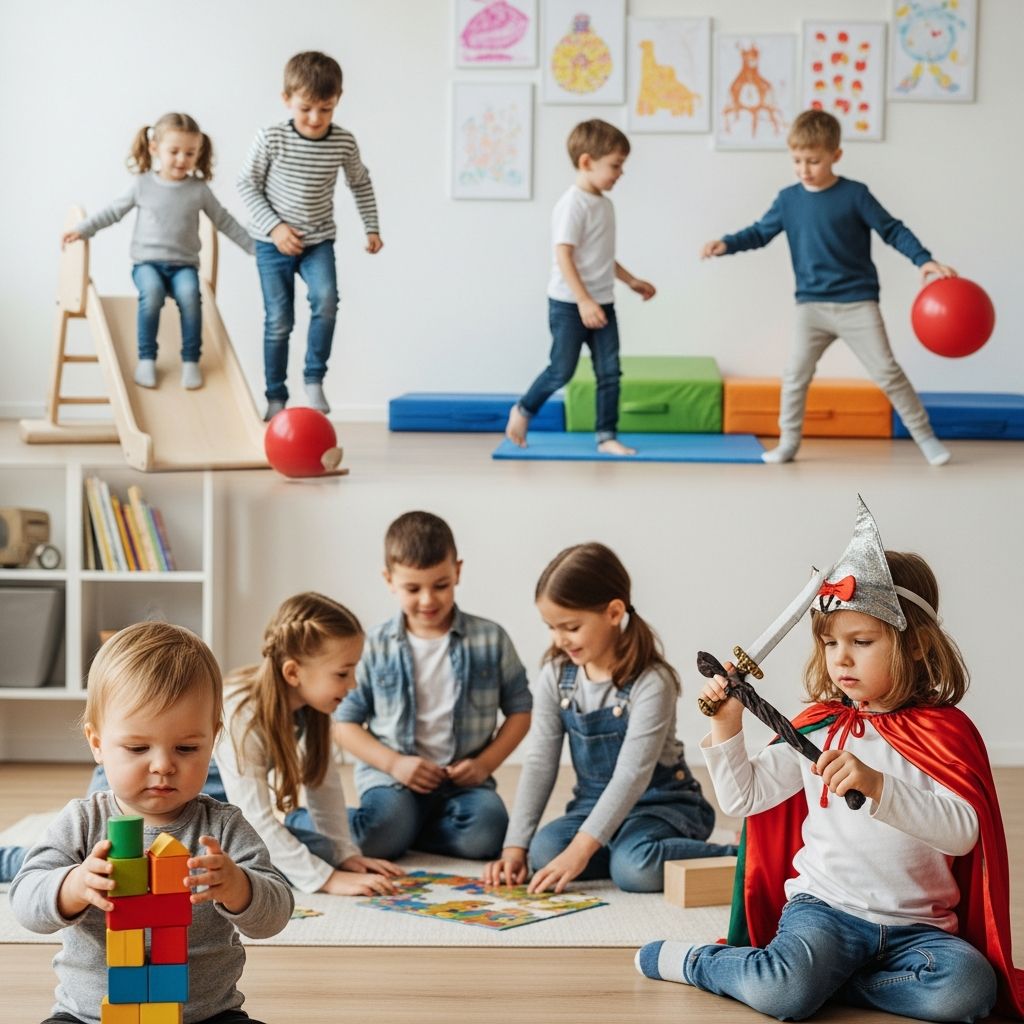
Play serves as the cornerstone of early childhood development, enabling children to explore their world, refine motor abilities, and build social connections. From the earliest reflexive movements to complex group interactions, each phase of play contributes uniquely to cognitive, emotional, physical, and linguistic growth. Understanding these stages empowers parents and caregivers to provide age-appropriate opportunities that maximize learning and joy.
Earliest Explorations: Unoccupied Play in Infancy
In the initial months of life, typically from birth to around three months, infants engage in unoccupied play. This phase involves spontaneous movements and basic sensory discoveries as babies become aware of their bodies and surroundings. They kick legs, wave arms, grasp toes, or gaze at moving objects, laying the groundwork for intentional actions.
These activities stimulate neural connections and sensory processing. For instance, during bath time, splashing water introduces cause-and-effect concepts while strengthening hand-eye coordination. Parents can enhance this stage by offering safe, high-contrast toys or mobiles that capture attention without overwhelming the infant.
- Kicking during tummy time to build neck and core strength
- Watching faces or lights to develop visual tracking
- Grasping fingers or soft rattles for tactile exploration
This foundational play fosters trust and attunement with caregivers, essential for emotional security, as supported by developmental guidelines from pediatric experts.
Independent Discovery: Solitary Play Phase
From about three to twenty-four months, children enter solitary play, entertaining themselves without reliance on others. This independent exploration hones fine and gross motor skills, problem-solving, and self-regulation. Toddlers might stack blocks, flip book pages, or scribble with crayons, fully immersed in their creations.
Solitary play builds confidence and creativity, allowing kids to experiment freely. A child knocking over a tower learns persistence by rebuilding, practicing cause-and-effect reasoning. Offer open-ended toys like wooden blocks or nesting cups to encourage prolonged focus.
| Activity | Skills Developed | Recommended Toys |
|---|---|---|
| Block stacking | Fine motor, spatial awareness | Soft blocks, shape sorters |
| Coloring or finger painting | Creativity, hand control | Crayons, washable paints |
| Page turning in board books | Cognitive sequencing, grip strength | Durable picture books |
Research from child development institutes emphasizes how this stage prepares children for more interactive forms of play by fostering autonomy.
Observing the World: Onlooker Play Emerges
Around age two, onlooker play begins as children watch peers or adults without joining in. This observational role is crucial for absorbing social norms, language patterns, and play ideas indirectly. A toddler might sit nearby as siblings build with blocks, mimicking actions mentally before participating.
This phase bridges solitary and social play, enhancing empathy and turn-taking awareness. It reduces shyness and builds vocabulary through overheard conversations. Encourage it during playdates by arranging activities in view but not forcing involvement—sandbox digging or group singing works well.
- Watching group games like ring-around-the-rosy
- Observing arts and crafts sessions
- Listening to stories during circle time
Pediatric occupational therapy milestones highlight how onlooker play supports peer relationship foundations.
Side-by-Side Fun: Parallel Play Dynamics
Between two and three years, parallel play dominates, where children engage in similar activities nearby but without direct interaction. They might push cars along parallel paths or scribble at the same table, comfortable in proximity yet focused on individual pursuits.
This stage refines motor skills and introduces subtle social cues, like glancing at a peer’s work. It eases into cooperation, teaching spatial awareness and imitation. Ideal settings include playgrounds or playgroups with duplicate toys to minimize conflict.
Benefits include boosted imagination and comfort in groups. Activities like sandbox building or dancing to music alongside others prepare cognitive pathways for collaboration.
Connecting Through Play: Associative Interactions
Ages three to four mark associative play, with increased interaction around toys and themes but without structured goals. Children share materials, chat about ideas, or merge pretend scenarios loosely—perhaps building separate block towers while discussing colors.
Social skills flourish here: negotiating toy use, expressing preferences, and practicing conversation. Emotional regulation improves amid minor disputes. Provide props for pretend play, like kitchen sets or animal figures, to spark shared narratives.
| Activity Example | Social Skill | Outcome |
|---|---|---|
| Group pretend tea party | Turn-taking | Enhanced communication |
| Shared playground equipment | Idea sharing | Flexibility in play |
| Block construction nearby | Resource negotiation | Conflict resolution basics |
Early childhood education resources note this as a pivot to true teamwork.
Teamwork Triumph: Cooperative Play Mastery
From four to five years and beyond, cooperative play fully emerges. Children organize roles, follow rules, and pursue common objectives—like constructing a fort together or playing team tag. This demands advanced negotiation, empathy, and rule adherence.
Cognitive leaps occur through planning and adaptation, while physical skills shine in group games. Conflicts teach resilience and fairness. Facilitate with board games, sports, or dramatic plays involving scripts.
- Board games teaching strategy
- Group puzzles or crafts
- Role-playing adventures
Procare child care insights affirm cooperative play’s role in holistic domain integration.
Types of Play Beyond Stages
Play transcends stages into varied forms: physical for motor growth, imaginative for creativity, constructive for problem-solving, and sensory for exploration. Integrating these ensures balanced development across domains.
For example, dramatic play with dress-up clothes boosts language and empathy, while object play with tools enhances cause-effect understanding.
Parental Guidance: Fostering Healthy Play
Parents play a pivotal role by curating environments rich in opportunities. Rotate toys to maintain novelty, model positive interactions, and limit screens to prioritize active engagement. Outdoor time amplifies benefits, combining physical exertion with natural discovery.
Monitor for milestones; consult professionals if delays appear. Safe spaces prevent injuries while encouraging risk-taking, like climbing low structures.
Frequently Asked Questions (FAQs)
At what age does social play typically begin?
Social elements emerge around age two with onlooker and parallel play, maturing into cooperative forms by four to five years.
How can I encourage solitary play in my toddler?
Provide quiet spaces with simple toys like blocks or books, allowing uninterrupted time to build focus and independence.
Is it normal for a 3-year-old to watch more than participate?
Yes, associative play includes observation; it helps them learn social dynamics before fully engaging.
What toys support cooperative play?
Board games, large puzzles, sports equipment, and pretend play sets that require group coordination.
Why is play crucial for brain development?
Play stimulates neural pathways across cognitive, emotional, and physical domains, as per child development research.
References
- Play Developmental Milestones — Lurie Children’s Hospital. 2023-10-15. https://www.luriechildrens.org/en/specialties-conditions/pediatric-occupational-therapy/developmental-milestones/play-developmental-milestones/
- Stages of Play & Their Role in Early Childhood Education — Procare Software. 2024-05-20. https://www.procaresoftware.com/blog/stages-of-play-their-role-in-child-care/
- Stages of Play from 24–36 Months: The World of Imagination — Zero to Three. 2023-08-12. https://www.zerotothree.org/resource/stages-of-play-from-24-36-months-the-world-of-imagination/
- Play and Developmental Stages — Child Development Institute. 2022-11-05. https://childdevelopmentinfo.com/child-development/play-work-of-children/pl2/
- Toddler & Preschool: 6 Stages of Play Activities by Age — Bumbu Toys (informational overview). 2024-02-14. https://www.bumbutoys.com/blog/wooden-toys/toddler-preschool-6-stages-of-play-activities-by-age