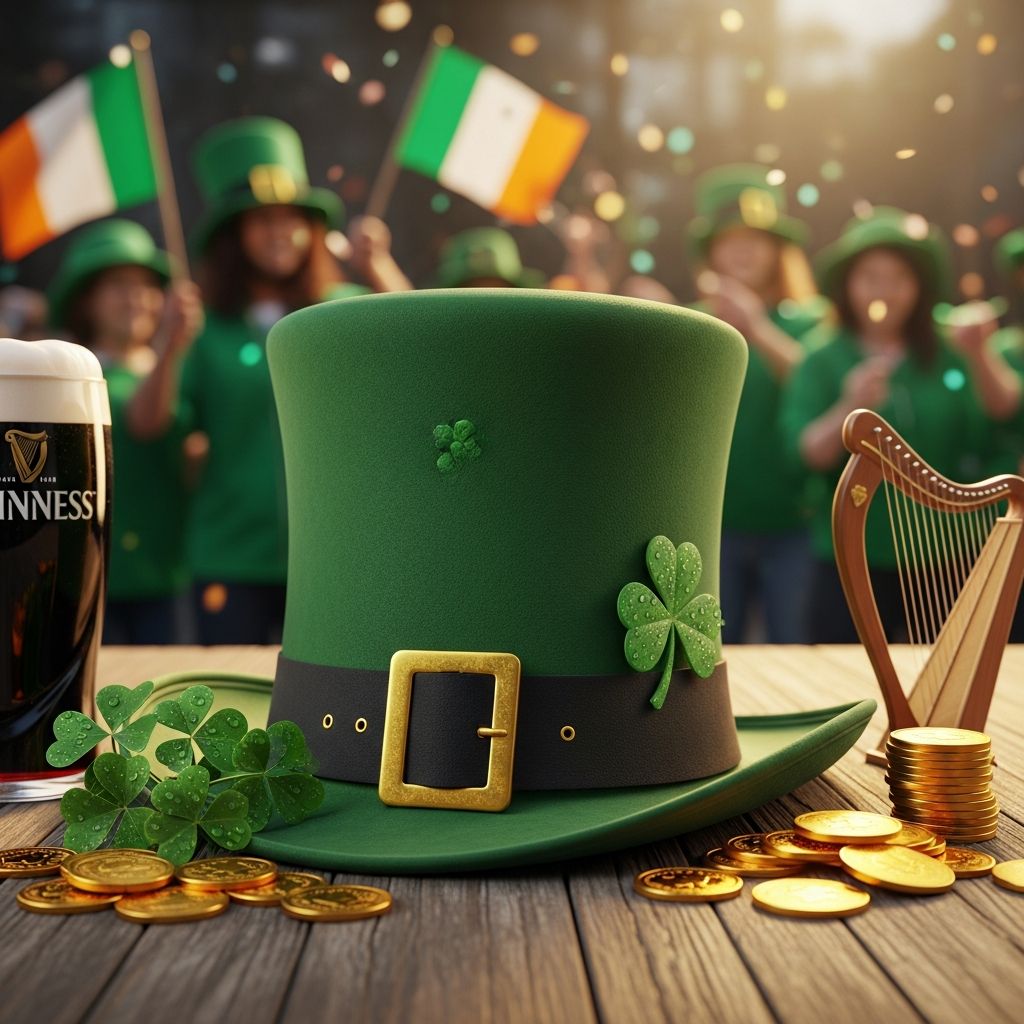
St. Patrick’s Day, observed annually on March 17, honors Ireland’s patron saint and has evolved from a religious feast into a worldwide spectacle of green attire, parades, and festivities. Rooted in 5th-century Christianity’s arrival in Ireland, the holiday blends ancient customs with modern exuberance.
The Life and Legacy of St. Patrick
Born in late 4th-century Roman Britain, St. Patrick faced enslavement in Ireland at age 16 after abduction by pirates. Following a daring escape, he trained as a priest and returned around 432 CE to spread Christianity, establishing monasteries, churches, and schools by his death in 461.
Legends amplify his impact: he reportedly used a shamrock to illustrate the Holy Trinity—Father, Son, and Holy Spirit—though this tale emerged later, as triads were already familiar in Celtic lore. Another popular myth claims he banished snakes from Ireland, symbolizing triumph over paganism, despite geological evidence showing post-glacial Ireland lacked snakes.
Patrick’s travels left enduring marks, from holy wells where his crozier struck the earth to pilgrimage sites like Croagh Patrick and Saul Church in County Down, his first church site.
Early Religious Observance in Ireland
Originally a solemn religious event, St. Patrick’s Day featured church services and feasts. The Catholic Church formalized his feast day in 1631, over 1,100 years after his passing.
Falling during Lent—a 40-day period of fasting from meat, dairy, eggs, alcohol, dancing, and weddings—March 17 offered a rare reprieve. Communities honored the saint with temporary lifts on restrictions, allowing indulgence before resuming austerity.
- Key Lenten customs: No meat or dairy; bans on celebrations.
- St. Patrick’s exception: Feasts, drinks, and gatherings permitted.
- Pilgrimages: Visits to wells and sites linked to Patrick’s journeys.
Symbolic Traditions: Shamrocks and Badges
The shamrock, a three-leafed clover abundant in Ireland, became intrinsically tied to the saint by the 1700s. Worn on clothing or hats, it symbolized luck and faith. English traveler Thomas Dinely noted in 1681 that common folk pinned shamrocks, while others sported crosses of paper or ribbon.
Children crafted badges: boys used colored paper crosses on caps, later shifting to shoulders; girls fashioned rosettes from fabric and ribbons. By 1908, Dublin streets sold silk versions, evolving into today’s green rosettes.
| Era | Badge Style | Worn By |
|---|---|---|
| 1681 | Shamrock or paper crosses | All classes, esp. commoners |
| 1700s-1800s | Ribbon rosettes, fabric crosses | Girls on shoulders |
| 1908 onward | Silk green rosettes | Everyone, commercially sold |
‘Drowning the Shamrock’ and Festive Drinks
A cherished ritual involved “drowning the shamrock”—tossing worn shamrocks into a glass of alcohol like whiskey or stout, toasting St. Patrick, then flinging it over the shoulder for good fortune. Known as “St. Patrick’s Pot” or Póta Phádraig, this custom highlighted the day’s joyful release.
Excessive revelry followed, prompting 19th-century Temperance Movements to organize sober parades with pipe bands as alternatives, laying groundwork for modern processions.
From Local Marches to Grand Parades
Ireland’s earliest parades were modest religious or temperance walks. Extravagant displays returned from Irish diaspora communities: Boston hosted one in 1737, New York in 1762.
In the 1950s, Dublin revived large-scale events influenced by overseas spectacles, featuring industry floats and bands. By 1995, a dedicated committee transformed it into a week-long festival with nationwide activities.
Today, Dublin’s parade draws millions, blending music, dance, and pageantry. Rural Ireland favors traditional music, sean nós singing, horse racing, and Gaelic games, especially in Gaeltacht regions.
Global Spread and American Influence
Irish emigrants, fleeing famine and seeking opportunity, exported traditions. U.S. cities like New York and Boston hosted parades sustaining cultural identity. Chicago’s unique river-dyeing green since 1962 epitomizes American flair.
Blue once represented Patrick—seen on ancient flags—but green prevailed amid British conflicts, popularized by “The Wearing of the Green.” Modern “global greening” illuminates landmarks worldwide, courtesy of Tourism Ireland.
- Boston: First parade, 1737.
- New York: 1762, now world’s largest.
- Chicago: Green river since 1962.
- Dublin: Revived 1950s, now multi-day festival.
Modern Celebrations: Ireland vs. Diaspora
In Ireland, authenticity reigns: no green beer or leprechaun hats, but shamrock pins, Mass, and family gatherings. Rural areas emphasize music sessions and sports over commercialization.
Abroad, festivities amplify with pub crawls, green outfits, and corned beef dinners—adaptations blending Irish roots with local tastes. The diaspora ensures Patrick’s fame surpasses even St. Nicholas.
Frequently Asked Questions
Why is St. Patrick’s Day on March 17?
It marks the saint’s death around 461 CE, formalized as a feast day in 1631.
Did St. Patrick really drive out snakes?
No, it’s a myth symbolizing pagan defeat; Ireland never had snakes post-Ice Age.
What does the shamrock represent?
Legend ties it to the Holy Trinity, but wearing it honors Patrick and brings luck.
Why green over blue for St. Patrick?
Blue was traditional, but green symbolized Irish rebellion against British red.
How do Irish people celebrate today?
Parades, music, family feasts, and sports in rural areas; avoiding over-the-top American tropes.
Preserving Authenticity Amid Globalization
As St. Patrick’s Day globalizes, Ireland balances tourism with heritage. Efforts promote genuine customs—like holy well visits and traditional music—while parades showcase culture. Families worldwide pass down badge-making and toasts, ensuring the saint’s missionary spirit endures.
Educating children on Patrick’s resilience—from slave to evangelist—inspires values of faith and perseverance. Schools incorporate history lessons, crafts, and songs, fostering pride.
In 2026, expect enhanced festivals with sustainable practices, like eco-friendly dyes and community focus, honoring roots while embracing the future.
References
- A history of St Patrick’s Day traditions and customs — National Museum of Ireland. 2023-03-01. https://www.museum.ie/en-IE/News/2023/From-shamrock-and-rosettes-to-Patricks-Pot
- The Magic of St Patrick’s Day: Traditions, Myths and Celebrations — Insight Vacations. N/A. https://www.insightvacations.com/blog/st-patricks-day/
- The True History Behind St. Patrick’s Day — Time Magazine. 2016-03-17. https://time.com/4261456/st-patrick-day-2016-history-real-saint/
- St Patricks Day in Ireland — Ireland’s Hidden Gems. N/A. https://www.irelands-hidden-gems.com/st-patricks-day.html
- Saint Patrick’s Day | History, Traditions, & Facts — Encyclopædia Britannica. N/A. https://www.britannica.com/topic/Saint-Patricks-Day
- St Patrick’s Day — Ireland.com. N/A. https://www.ireland.com/en-us/things-to-do/themes/culture/st-patricks-day/