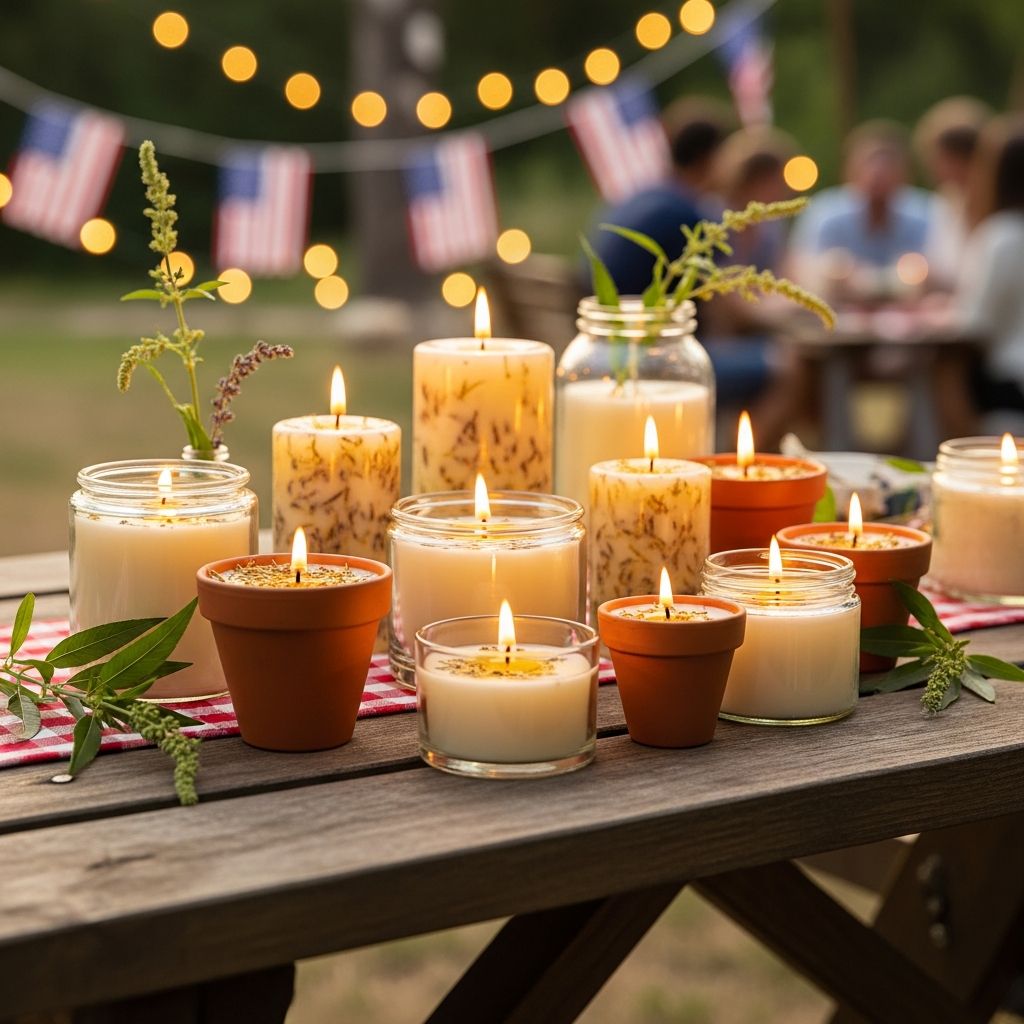
If you love hosting Fourth of July cookouts but hate the swarm of mosquitoes that comes with summer evenings, DIY citronella candles offer a simple, beautiful way to keep pests at bay while adding warm, festive light to your outdoor space.
Why Make Your Own Citronella Candles?
Store-bought bug sprays and torches can be messy, harsh-smelling, and often clash with the cozy, welcoming vibe of a summer gathering. Homemade citronella candles let you control the scent, the look, and the ingredients while doubling as décor for your July Fourth table.
- Custom style: Match your candles to your party colors, theme, or serving pieces.
- Gentler ingredients: Choose waxes and fragrances that you feel comfortable using around friends and family.
- Multi-purpose: Your candles provide both mood lighting and a mosquito-discouraging aroma.
- Reusable containers: Repurpose jars, mugs, and tins instead of throwing away disposable products.
Choosing the Right Wax and Wicks
The base of any great candle is a reliable wax and an appropriately sized wick. For outdoor citronella candles, it helps to prioritize slow, steady burning and a strong scent throw, since your candles must compete with open air and summer breezes.
| Wax Type | Pros | Cons | Best Use |
|---|---|---|---|
| Soy wax | Renewable, cleaner burn, good scent throw | Slightly softer in extreme heat | Tabletop candles in jars, moderate climates |
| Paraffin wax | Strong scent throw, budget-friendly, easy to find | Petroleum-based, may produce more soot | Large outdoor containers where performance matters most |
| Soy–paraffin blend | Balances scent throw and cleaner burn | Requires a bit more testing for wick size | Versatile choice for most outdoor candle projects |
| Beeswax | Natural, long-burning, pleasant mild scent | More expensive, can mute some fragrances | Premium centerpieces or gifts |
For wicks, look for cotton or paper-cored wicks labeled for the diameter of your container. Outdoor candles usually benefit from slightly thicker wicks, which create a broader melt pool and help release more fragrance into the air.
Citronella and Friends: Building an Effective Scent Blend
Citronella is famous for its lemony aroma that many insects dislike, but it is rarely the only note in a well-rounded outdoor candle. Blending it with complementary essential oils can create a fragrance that is both pleasant and functional.
Popular Oils to Pair with Citronella
- Lemongrass: Boosts the citrus kick and brightens the overall scent.
- Eucalyptus: Adds a fresh, cooling herbal note.
- Lavender: Softens sharp citrus with a floral base and feels relaxing.
- Peppermint: Introduces a crisp, invigorating top note.
- Cedarwood: Brings a grounded, woodsy base that pairs nicely with firelight.
For a balanced candle, keep your total fragrance load within the percentage recommended for your wax (often 6–10% by weight). Test a small batch first to make sure the aroma is strong enough outdoors without becoming overwhelming at close range.
Supplies Checklist for DIY Citronella Candles
Gather your materials before you begin so you can move confidently through each step. Many items can be reused from candle to candle, so this initial investment can support several projects.
- Wax of your choice (flakes or blocks)
- Cotton or paper-cored wicks, pre-tabbed if possible
- Citronella essential oil or candle-safe fragrance oil
- Supporting essential oils (lemongrass, eucalyptus, lavender, etc.)
- Heat-safe containers (mason jars, metal tins, ceramic bowls, or enamel mugs)
- Pouring pitcher or old heat-safe measuring jug
- Double boiler setup (pot plus heat-safe bowl or dedicated wax melter)
- Thermometer suitable for liquids
- Wick centering tools (popsicle sticks, clothespins, or purpose-made holders)
- Stirring utensil reserved for candle making
- Newspaper or parchment to protect your workspace
- Optional: candle dye chips or liquid color, decorative sand, pebbles, or shells for non-flammable accents
Step-by-Step: Pouring Your First Citronella Candle
This process is beginner-friendly but does involve hot wax, so work slowly and avoid distractions. Always watch children closely if they are helping, and reserve the handling of hot equipment for adults.
- Prepare your containers.
Clean and dry each container thoroughly. Stick the wick tab to the bottom center with a drop of melted wax or a wick sticker, then use a centering tool across the rim to hold the wick upright.
- Melt the wax.
Fill the bottom of your double boiler with a few inches of water and bring it to a gentle simmer. Place wax in the upper pot or pouring pitcher and heat until fully melted, stirring occasionally.
- Monitor temperature.
Check the temperature with a thermometer. Most waxes receive fragrance best at a specific range; common targets are between 170°F and 185°F, but follow the manufacturer’s directions for your chosen wax.
- Add fragrance.
Remove the wax from heat, allow it to cool slightly to the recommended fragrance temperature, then stir in citronella and any additional oils for at least a full minute to distribute them thoroughly.
- Add color (optional).
If you like, incorporate dye chips or liquid color suited for candle making, adding slowly until you reach your desired shade. For a patriotic theme, you might keep the wax white and decorate containers in red and blue.
- Pour the wax.
Carefully pour the scented wax into your prepared containers, leaving roughly half an inch of headspace at the top. Pour steadily to minimize air bubbles and keep wicks centered as you work.
- Secure and cool.
Check that each wick is still upright and centered. Allow candles to cool undisturbed at room temperature; rapid cooling can cause cracking or uneven tops.
- Fix the surface if needed.
If your candle top sinks slightly around the wick, re-melt a small amount of leftover wax and pour a thin second layer to smooth the surface.
- Cure before burning.
Let your candles rest for at least 24 hours (longer for some waxes) so the fragrance binds properly. Trim wicks to about 1/4 inch before the first burn.
Design Ideas for Fourth of July Gatherings
Your citronella candles can do more than repel mosquitoes; they can also help tell the visual story of your celebration. Focus on color, texture, and creative containers to turn simple wax and fragrance into charming centerpieces.
Festive Container Inspirations
- Enamel camp mugs: Evoke a relaxed picnic vibe and are sturdy enough for outdoor use.
- Striped glass jars: Wrap jars with red, white, and blue ribbon or washi tape for easy seasonal flair.
- Recycled food jars: Peel off labels, add twine or fabric scraps, and let the flame shine through the glass.
- Metal buckets or tins: For larger spaces, place multiple wicks in a wide tin to create a substantial glow.
Because these candles are for outdoor use, lean into rustic, durable, and easy-to-carry containers. Always ensure that your vessel is made from a heat-safe material and that it will not tip easily on your chosen surface.
Styling Your Outdoor Space with Citronella Glow
Once your candles have cured, it is time to integrate them into your Fourth of July layout. Think in terms of zones—dining, lounging, and pathways—and place candles where they can safely cast both light and scent.
- Dining tables: Cluster three or more candles of varying heights on a tray in the center so guests can enjoy the glow without flames sitting directly against table linens.
- Buffet line: Place candles at both ends of your food table, away from napkins and serving utensils, to create balance and discourage bugs from hovering near dishes.
- Conversation corners: Add a candle or two to side tables near seating areas so guests have cozy light for after-dark chats.
- Steps and walkways: Line sturdy jars along porch steps or the edge of a path to guide guests safely while subtly expanding your bug-repelling perimeter.
As you decorate, remember to place all open flames well away from children’s play areas and any spot where people might brush against them while mingling or dancing.
Safety Tips for Outdoor Candle Use
Even though citronella candles feel casual and decorative, they are still open flames and require careful handling. Adopting solid safety habits protects your guests, pets, and property while you celebrate.
- Never leave burning candles unattended, especially near dry plants, paper decorations, or fabric.
- Set candles on stable, heat-resistant surfaces where they cannot easily be knocked over.
- Keep flames away from overhanging branches, patio umbrellas, and outdoor curtains.
- Extinguish candles completely before heading inside or going to bed; use a snuffer or gently dip wicks into the liquid wax to reduce smoke.
- Maintain a safe distance between candles and fireworks, sparklers, or grills.
- Store leftover wax, fragrances, and finished candles out of reach of small children and pets.
Care, Storage, and Reuse After the Holiday
With a little attention, your citronella candles can serve you not just on the Fourth of July but throughout the warm-weather season. Proper storage preserves both fragrance and appearance, making each occasion easier to prepare for.
- Keep candles in a cool, dry spot away from direct sunlight to reduce fading and scent loss.
- Cover containers with lids or wrap them loosely in clean cloth to keep dust off the wax surface.
- Before each new use, trim wicks back to around 1/4 inch to minimize smoking and mushrooming.
- If a candle tunnels or burns unevenly, gently warm the top layer with a heat gun (used carefully) and level the surface, or reserve that candle for shorter, casual burns.
- Once a candle has burned down, clean out the leftover wax and reuse the container for your next batch.
Eco-Conscious Choices for Candle Makers
If sustainability is important to you, there are several ways to make your DIY citronella candles more eco-friendly. Small decisions during the planning and sourcing stage can significantly reduce waste and reliance on non-renewable resources.
- Opt for plant-based waxes such as soy or rapeseed when possible.
- Choose reusable containers and avoid single-use plastic accessories.
- Buy fragrance oils and essential oils in larger bottles to cut down on packaging.
- Use natural fiber wicks and skip metal-core options unless specifically designed for candle safety.
- Decorate with recyclable materials like glass, tin, and uncoated paper accents.
Even if you cannot change every element of your project, a few thoughtful substitutions can lead to a more sustainable and cost-effective candle-making routine over time.
Frequently Asked Questions About Citronella Candles
Do citronella candles completely prevent mosquito bites?
No single method can guarantee that you will avoid every insect bite. Citronella candles are best seen as one layer in a broader strategy that might also include appropriate clothing, fans to keep air moving, and other repellents as needed.
Are essential oils safe for everyone?
Many people enjoy essential oils without issue, but some individuals may be sensitive to strong scents. When planning a large gathering, choose moderate fragrance levels and consider checking with guests who have allergies or asthma.
Can these candles be used indoors?
These recipes are designed for outdoor use, where fresh air helps diffuse both fragrance and combustion byproducts. If you wish to burn citronella candles indoors, make smaller, lightly scented versions and ensure the space is well ventilated.
How many candles do I need for my yard?
The number will depend on your space and wind conditions. As a general guideline, placing a candle every few feet around the perimeter of your seating area and near gathering spots creates a more consistent pool of light and scent.
What if my candle will not stay lit?
If a wick keeps going out, it may be trimmed too short, buried in melted wax, or undersized for the container. Extinguish the candle, let it cool, trim the wick to the recommended length, and consider repouring into a narrower vessel or choosing a thicker wick for future batches.
Bringing It All Together for a Memorable Fourth
Handmade citronella candles are a satisfying project that combines creativity, practicality, and seasonal fun. By pairing thoughtful fragrance blends with eye-catching containers and careful styling, you can transform your backyard into a welcoming, softly lit retreat that keeps mosquitoes at arm’s length.
Whether you are hosting a big barbecue, a quiet family dinner, or an evening of fireworks watching from the porch, these candles add a personal touch that store-bought bug repellents simply cannot match. Once you master the basics, you can adapt the same techniques for other holidays and color schemes all year long.