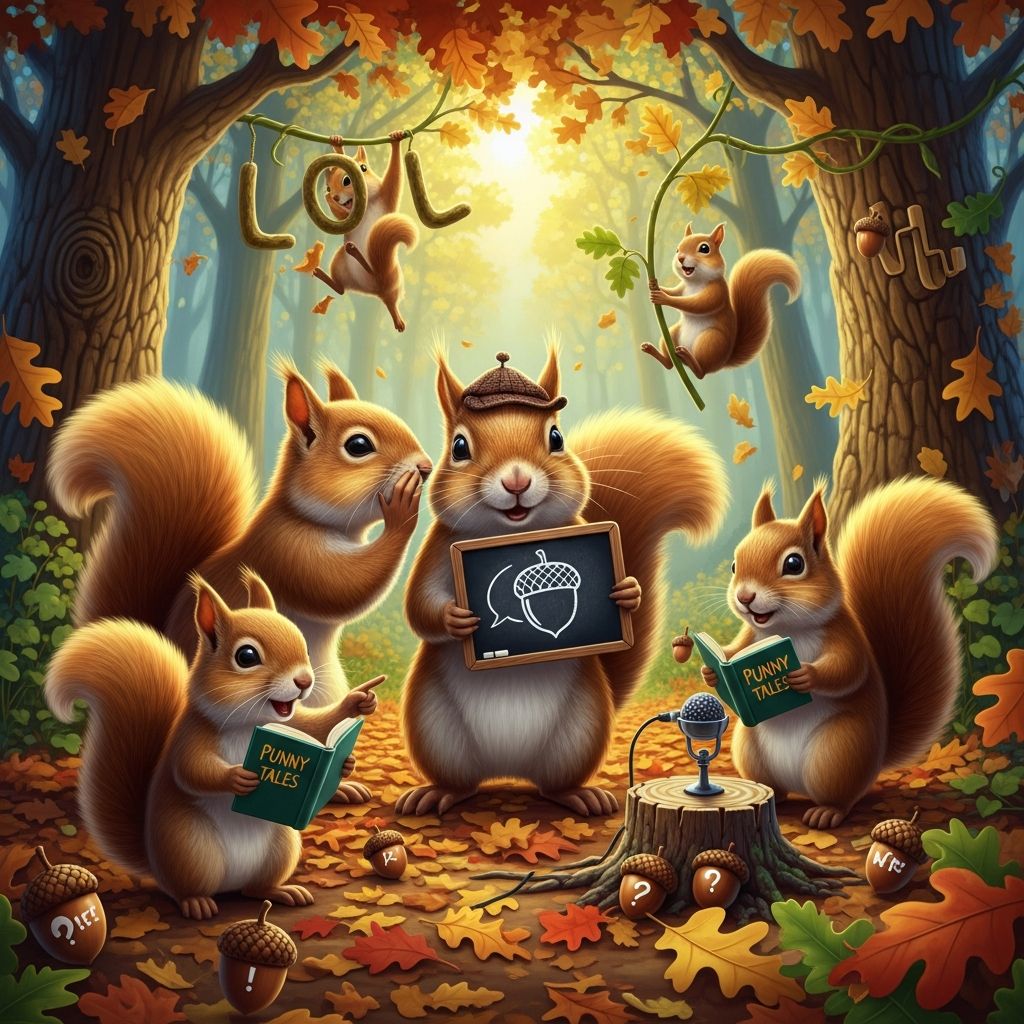
Squirrels race across power lines, spiral around tree trunks, and leap like furry acrobats, which makes them perfect little stars for kid-friendly comedy. This guide explores completely original squirrel jokes, puns, and playful ideas you can share at home, in class, or at your next birthday party.
Why Squirrels Make Everyone Giggle
Squirrels are small enough to be cute but busy enough to be funny, which gives them instant comic potential. Their twitchy noses, flicking tails, and snack-obsessed habits make it easy to imagine them as tiny, overdramatic characters in their own sitcom.
Because kids see squirrels in parks, neighborhoods, and even parking lots, jokes about these animals feel familiar instead of confusing. Animal humor built around real-life behavior – storing food, climbing trees, and zooming across lawns – helps children connect wordplay to the world they already know.
Types of Squirrel Jokes Kids Love
Not all jokes work the same way, so mixing different joke styles keeps children interested and lets them practice different kinds of thinking. Below are popular joke formats that adapt especially well to squirrel-themed humor.
Question-and-answer jokes
These jokes pose a silly question and then surprise children with a pun-filled response. They are short, easy to memorize, and perfect for car rides or snack breaks.
- Example: “Why did the squirrel bring a tiny notebook to the forest?” – “To keep track of all its nut-eworthy ideas!”
- Example: “What do you call a squirrel that loves math homework?” – “A problem-cracker!”
One-line zingers
One-liners deliver the joke in a single sentence, which works well for older kids who enjoy quick, clever humor. They also fit neatly into lunchbox notes or birthday cards.
- “This squirrel takes snacking so seriously it should have its own grocery store loyalty card.”
- “Our backyard squirrel is basically the mayor of the fence – every bird has to check in.”
Mini stories and short scenes
Story-style jokes add characters, settings, and a small plot twist at the end, helping kids practice listening and building mental pictures. These jokes can also support reading and storytelling skills.
- “A squirrel opened a tiny café in an oak tree. Customers loved the menu, but the squirrel had one rule: all orders had to be prepaid in acorns.”
- “A teacher asked the class to bring a favorite snack for show-and-tell. The squirrel showed up with a backpack full of nuts and a detailed storage chart.”
Nutty Wordplay: Clean Squirrel Puns for Families
Puns are built from words that sound alike or have more than one meaning, which makes them both funny and educational. Below is a set of original, clean puns that play with everyday language while keeping everything age-appropriate.
- “This squirrel doesn’t skip breakfast – it’s completely cereal about its nuts.”
- “Our street squirrel runs such a tight schedule that even the nuts arrive on time.”
- “The library squirrel loves the nut-thology section – collections of the greatest snacks in history.”
- “When the forecast said high winds, the squirrel called it a tail alert day.”
- “That squirrel is so organized it could teach a course called ‘Intro to Acorn Management.’”
- “The music-loving squirrel only listens to tree-mendous hits and bark beats.”
Table of Joke Styles and Uses
Parents and teachers often want to know when different kinds of jokes work best. The table below offers a quick reference for choosing squirrel humor for various situations.
| Joke Style | Best For | Example Use |
|---|---|---|
| Question-and-answer | Young kids, circle time, icebreakers | Opening a class discussion with “Why did the squirrel bring a ruler to the tree?” |
| One-liners | Older kids, lunch notes, social media captions | Adding a quick squirrel line to a birthday card or photo caption |
| Mini stories | Story time, reading practice, creative writing prompts | Asking kids to continue a tale about a squirrel starting a forest bakery |
| Act-it-out skits | Drama games, parties, cooperative play | Kids pretend to be squirrels auditioning for a “Tree’s Got Talent” show |
Original Squirrel Jokes for Kids
The following kid-approved jokes are designed to be gentle, silly, and easy to repeat. Feel free to adapt the settings and names to match your family, classroom, or neighborhood.
School and homework jokes
- “Why did the squirrel sit at the front of the classroom?” – “So it could be the first to answer any tree-ivia question.”
- “What’s a squirrel’s favorite subject in school?” – “Snack-tistics – it loves counting nuts.”
- “Why did the squirrel bring an extra pencil to the test?” – “It heard there might be a pop nut quiz.”
- “How does a squirrel do research?” – “It checks every branch of the library.”
Sports and playground jokes
- “Why is the squirrel always picked first for tag?” – “No one can catch someone who trains on tree sprints.”
- “What position does a squirrel play on the soccer team?” – “Goal-nut, because it guards the snacks.”
- “Why did the squirrel wear tiny sneakers?” – “To improve its tree-ction on the playground.”
- “How does a squirrel cool down after a game?” – “With a tall glass of lemon-tree juice.”
Home and family jokes
- “Why did the squirrel label every jar in the pantry?” – “So nobody would confuse almond butter with emergency stash.”
- “What did the baby squirrel say at bedtime?” – “Tuck me in tight; I don’t want my dreams rolling out of the tree.”
- “Why did the squirrel help clean the living room?” – “It couldn’t relax until every crumb was properly stored.”
- “How does a squirrel call its family to dinner?” – “It rings the nut-ification bell.”
Turning Everyday Moments into Squirrel Comedy
Jokes become more meaningful when they connect to real experiences, such as watching backyard wildlife or reading nature stories together. Families can use these moments as starting points for light, imaginative humor.
- During walks: Invent a “job” for each squirrel you see, like traffic director, park ranger, or snack inspector.
- At the window: Create pretend weather reports delivered by a squirrel news anchor who specializes in acorn forecasts.
- At the dinner table: Ask kids to imagine what a squirrel menu would look like if it owned a tiny forest restaurant.
How to Help Kids Create Their Own Squirrel Jokes
Children often enjoy making their own jokes even more than hearing ready-made ones. Guiding them gently through the process boosts confidence, language skills, and creativity.
- Start with a squirrel fact. For example, squirrels climb trees, bury food, and dash around quickly.
- Choose a word to twist. Take a related word, like “branch,” “tail,” or “nut,” and search for rhymes or sound-alikes.
- Build a question. Turn the word into a playful setup, such as “Why did the squirrel…?” or “What do you call…?”
- Try a few punchlines. Encourage kids to test several endings before picking the one that gets the biggest laugh.
Adults can model this process out loud so kids hear each step. Over time, children will start inventing punchlines on their own and may even correct grown-ups with funnier versions.
Using Squirrel Jokes for Learning
While jokes seem like pure silliness, they also offer useful learning opportunities across language, science, and social skills. Silly animal humor can soften new concepts and make them more approachable.
- Vocabulary building: Puns introduce synonyms, homophones, and multiple meanings of the same word.
- Science connections: Talking about how squirrels store food or adapt to seasons can support basic lessons in biology and habitats.
- Social-emotional skills: Gentle humor helps kids practice timing, empathy, and reading the room.
Positive Humor: Keeping It Kind and Inclusive
Animal jokes are safest when the humor falls on imaginary situations rather than real people. Choosing squirrels as the central characters helps keep the mood light and avoids teasing classmates or family members.
Caregivers can model kind comedy by avoiding jokes that single out individuals, groups, or appearances. Instead, focus on silly squirrel habits, exaggerated adventures, and pretend personalities like brave forest explorers or overdramatic snack collectors.
Creative Activities with Squirrel Jokes
Families and educators can extend the fun by turning squirrel jokes into crafts, games, and group challenges. These activities work well at birthday parties, scouting meetings, or rainy-day playtimes.
- Joke jar craft: Decorate a jar with acorn drawings and fill it with handwritten squirrel jokes for kids to pull during meals or car rides.
- Comic strip challenge: Ask children to draw a short comic featuring a squirrel facing a funny problem and solving it with creative thinking.
- Forest news broadcast: Let kids pretend to be wildlife reporters sharing “breaking news” from a busy park filled with acorn emergencies.
- Joke-writing relay: In groups, one child writes the setup and another writes the punchline, leading to unexpected and hilarious combinations.
Frequently Asked Questions About Squirrel Jokes
Are squirrel jokes appropriate for all ages?
Simple question-and-answer jokes and gentle puns are usually safe for young children, especially when the humor focuses on imaginary situations rather than teasing people. Adults should still read through jokes first when sharing them in classrooms or mixed-age groups.
How can I help a shy child tell jokes?
Shy kids may feel more comfortable practicing with stuffed animals or telling jokes in a small, supportive circle. Encouraging them to choose just one favorite squirrel joke and letting them rehearse it quietly first can make performing feel less intimidating.
Do jokes really help with learning?
Clean, well-chosen humor can support memory, language development, and classroom engagement. When children laugh while learning, they often remember information more easily and feel more relaxed about asking questions.
What if kids start telling jokes at the wrong time?
Adults can acknowledge the child’s creativity while gently explaining that some moments require quiet focus. Creating a special “joke time” during the day gives children a clear outlet for their squirrel stories and punchlines.
Can these jokes be used in party invitations or cards?
Squirrel jokes work especially well on birthday invitations, thank-you notes, and holiday cards. Choosing a short one-liner or simple question-and-answer joke ensures that guests of all ages can understand and enjoy the humor.
Simple SEO Tips When Sharing Squirrel Jokes Online
For bloggers, teachers, or small businesses who post squirrel jokes on websites, a few basic search-friendly habits can help more families find the content. Clear language and descriptive headings often matter more than complicated technical tricks.
- Use straightforward phrases like “squirrel jokes for kids” or “family-friendly animal puns” in headings and introductory paragraphs.
- Add short, descriptive alt text if you share drawings or photos of squirrels alongside your jokes.
- Organize jokes into sections – such as school jokes, sports jokes, or bedtime jokes – so visitors can quickly find what they want.
- End with a gentle invitation for readers to invent and share their own clean, original squirrel jokes.