Active children are prone to sprains and strains from sports, play, and everyday mishaps. Understanding these common soft tissue injuries empowers parents to respond effectively, promote healing, and prevent recurrence. This guide differentiates the injuries, outlines symptoms, details treatment, and offers prevention advice.
Defining Sprains and Strains: Key Differences
Sprains occur when ligaments—tough bands connecting bones at joints—stretch or tear. These injuries stabilize joints like ankles, knees, and wrists. Strains affect muscles or tendons, the tissues linking muscles to bones, often from overstretching during sudden movements or heavy lifting.
| Injury Type | Affected Tissue | Common Locations | Typical Causes |
|---|---|---|---|
| Sprain | Ligament | Ankle, knee, wrist | Twisting, falling, impact |
| Strain | Muscle or tendon | Back, hamstring, calf, shoulder | Overexertion, lifting, sprinting |
Both represent soft tissue damage but differ in location and mechanism, influencing treatment approaches.
Symptoms to Watch For in Children
Children may not articulate pain clearly, so observe for swelling, tenderness, bruising (more common in sprains), limited motion, weakness, or a ‘pop’ sensation. Strains often cause muscle spasms or cramping.
Grading Injury Severity
Injuries are classified into three grades based on tissue damage extent.
- Grade 1 (Mild): Minor stretching or micro-tears; pain with activity, minimal swelling, full strength preserved. Kids can often bear weight.
- Grade 2 (Moderate): Partial tears; noticeable swelling, bruising, joint instability, moderate pain, reduced function. ‘Pop’ sound possible.
- Grade 3 (Severe): Complete rupture; intense pain, significant swelling/bruising, deformity, inability to use limb, instability.
Early recognition prevents worsening; severe cases need imaging like X-rays to rule out fractures.
Immediate First Aid: RICE Protocol
Apply the RICE method promptly for optimal outcomes.
- Rest: Stop activity; avoid weight-bearing on affected area. Use crutches if needed for legs.
- Ice: Apply wrapped ice pack 15-20 minutes every 2-3 hours for 48-72 hours to reduce swelling.
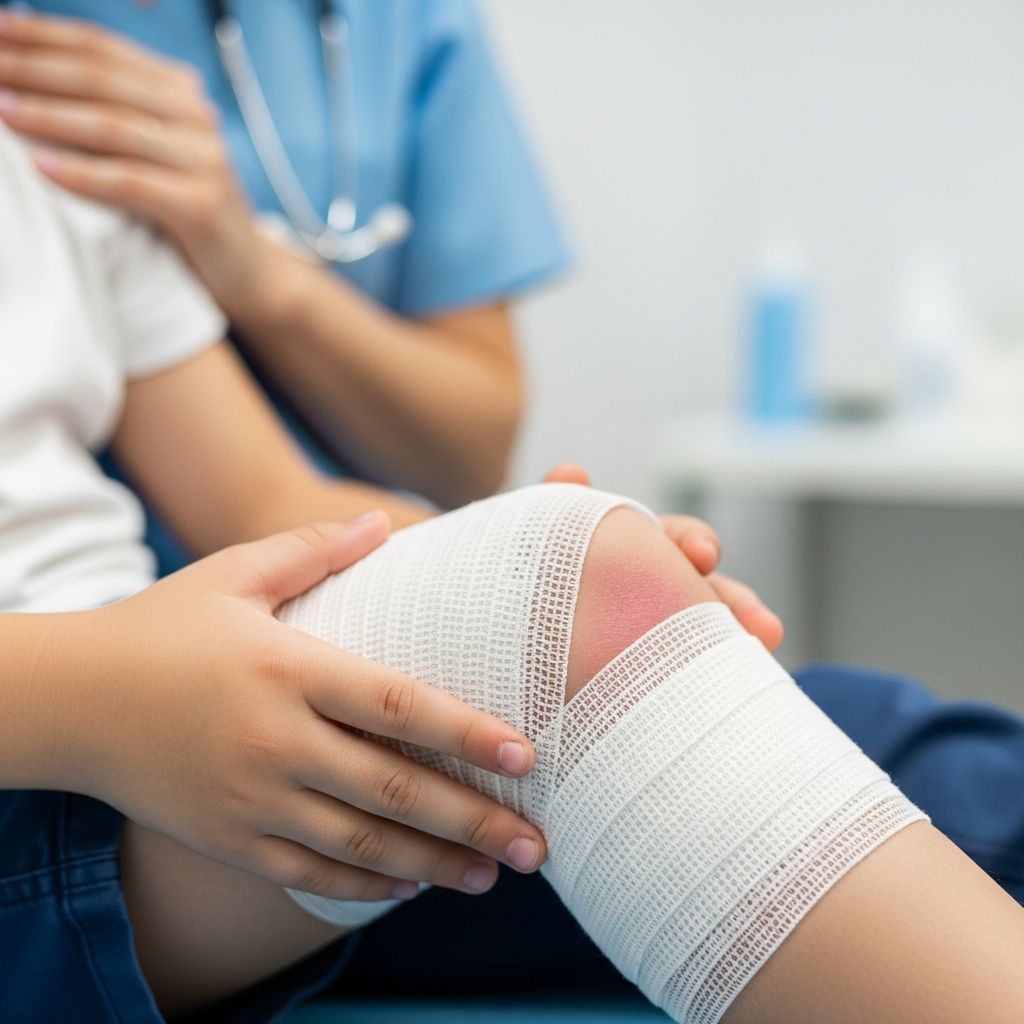
- Compression: Use elastic bandage snugly, not too tight, to minimize swelling. Check for numbness.
- Elevation: Position injury above heart level when sitting/lying to drain fluid.
Over-the-counter pain relievers like ibuprofen help with pain and inflammation; consult pediatrician for dosing.
When to Seek Medical Help
Not all injuries need a doctor, but seek care if:
- Pain severe or worsens after 48 hours.
- Unable to bear weight or use limb.
- Significant deformity, numbness, or circulation issues.
- Grade 2/3 symptoms suspected.
- Injury follows high-impact trauma.
Professionals assess via exam, possibly ultrasound/MRI for tears. Mild cases resolve in days; severe may require bracing, PT, or surgery.
Recovery Roadmap: Healing Timelines
Mild Injuries (Grade 1)
1-2 weeks: Gentle motion after 48 hours rest, gradual return to activity. Full recovery swift with protection.
Moderate Injuries (Grade 2)
3-6 weeks: Immobilization (brace/splint), PT for strength/mobility. Avoid rushing back.
Severe Injuries (Grade 3)
Months: Surgery possible for repairs; extensive rehab. Monitor for complications like instability.
Nutrition aids healing: protein, vitamin C, zinc. Encourage hydration and sleep.
Rehabilitation and Strengthening Exercises
Once acute phase passes, rehab restores function.
| Phase | Focus | Example Activities |
|---|---|---|
| Early | Range of motion | Gentle stretches, ankle pumps |
| Mid | Strength | Resistance bands, bodyweight squats |
| Late | Balance/Proprioception | Single-leg stands, wobble board |
Work with PT; premature return risks re-injury.
Preventing Sprains and Strains in Young Athletes
Prevention halves incidence.
- Warm-up dynamically 5-10 minutes before play.
- Build strength/core stability year-round.
- Ensure proper footwear/equipment fit.
- Teach safe techniques; supervise play.
- Promote flexibility via daily stretching.
- Avoid overuse; enforce rest days.
Balanced training prevents fatigue-related injuries.
Common Scenarios in Children’s Activities
Ankle sprains from soccer sidesteps; hamstring strains from sprinting; wrist sprains from falls; back strains from improper lifting. Tailor prevention to sports.
Frequently Asked Questions (FAQs)
Can kids play sports with a mild sprain?
Usually no initially; rest 48 hours, then ease in with taping if pain-free.
Does bruising always mean a sprain?
Often, but strains can bruise too; location differentiates.
How long until full sports return?
Depends on grade: 1-2 weeks mild, 4-8 weeks moderate, 3+ months severe.
Is surgery common for kids?
Rare; most heal non-surgically, but complete tears may need it.
What home remedies speed healing?
RICE, elevation, OTC meds; avoid heat/alcohol first 72 hours.
References
- Sprains vs. Strains: What’s the Difference? — Mass General Brigham. 2023. https://www.massgeneralbrigham.org/en/about/newsroom/articles/sprains-and-strains
- Is It a Sprain or a Strain? How to Tell the Difference — Yale Medicine. 2023. https://www.yalemedicine.org/news/difference-between-sprain-and-strain
- Sprains, Strains And Tears — Franciscan Health. 2023. https://www.franciscanhealth.org/community/blog/sprains-strains-tears
- Sprain vs. Strain: Key Differences, Symptoms & Recovery Tips — GetWellUC. 2023. https://getwelluc.org/blog/sprain-vs-strain-key-differences
- Sprain Vs. Strain — Center for Orthopaedic Surgery & Sports Medicine. 2023. https://www.centerfororthosurgery.com/sprain-vs-strain/
- Muscle strains – Symptoms and causes — Mayo Clinic. 2025-04-15. https://www.mayoclinic.org/diseases-conditions/muscle-strains/symptoms-causes/syc-20450507
- Sprains and Strains — MedlinePlus (U.S. National Library of Medicine). 2023. https://medlineplus.gov/sprainsandstrains.html