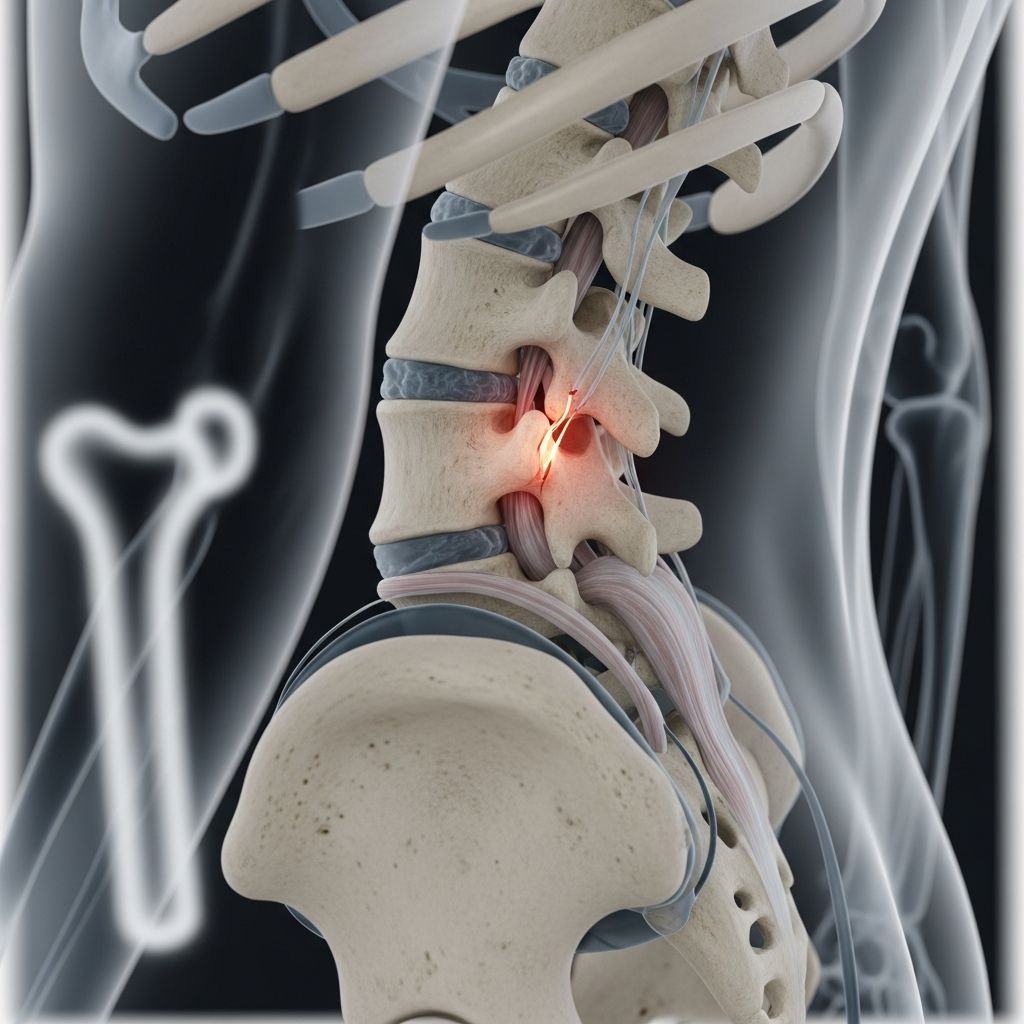
Spondylolysis is a small fracture or weakness in the back part of a vertebra, most often in the lower spine, that commonly affects active children and teenagers.
Although the word sounds complex, understanding this condition helps families respond early, reduce pain, and protect long-term spine health.
What Is Spondylolysis?
Spondylolysis refers to a crack or defect in a thin portion of the vertebra called the pars interarticularis, which connects different joints in the spine.
This area is placed under repeated stress during certain movements, especially when the lower back bends backward or twists forcefully.
Where in the Spine Does It Happen?
The condition most often affects the lower lumbar vertebrae, particularly the segment just above the pelvis, because this area carries a large share of body weight and movement forces.
Although the lumbar region is the usual site, similar defects can rarely be seen in other parts of the spine as well.
Spondylolysis vs. Spondylolisthesis
When the crack occurs on both sides of the vertebra and becomes unstable, the affected bone can slip forward in relation to the one below it, a condition known as spondylolisthesis.
Not every child with spondylolysis develops this slippage, but the risk increases when both sides of the pars are fractured.
| Feature | Spondylolysis | Spondylolisthesis |
|---|---|---|
| Basic problem | Stress fracture or defect in the pars interarticularis. | Slippage of one vertebra over another, often after bilateral pars defects. |
| Spinal stability | Usually stable, especially with a single-sided defect. | May be unstable if the slip is large or progressing. |
| Typical symptoms | Localized low back pain, often worse with extension. | Back pain plus possible leg symptoms or posture changes. |
| Frequency in youth | Common in adolescent athletes with extension-based sports. | Less common; develops in a subset of those with spondylolysis. |
Why Does Spondylolysis Develop?
In most children and teenagers, spondylolysis results from repeated stress over time rather than a single dramatic injury.
This makes it similar to other overuse injuries, where tissues fail to repair themselves fast enough to keep up with ongoing demands.
Common Risk Factors
- Repetitive spinal extension: Sports that require frequent backbending, arching, or twisting increase stress on the pars region.
- High-impact landings: Jumping and landing with an arched back can repeatedly load the same bony structure.
- Growth spurts: Rapid height changes can temporarily reduce flexibility and coordination, placing extra strain on the lower back.
- Genetic structure: Some individuals inherit thinner or more delicate vertebral structures that are more vulnerable to cracking.
- Sport specialization at a young age: Focusing on a single demanding sport year-round reduces rest time for spinal tissues.
Sports Commonly Associated With Spondylolysis
Children and teens who practice certain sports multiple times per week have a higher chance of developing pars stress injuries.
This risk is especially noted in activities that emphasize flexibility, power, and repeated hyperextension.
- Gymnastics and cheerleading with frequent backbends and flips.
- Diving and swimming strokes that arch the lower back.
- Football, especially linemen and positions requiring forceful extension.
- Wrestling, ice skating, and dance where twisting and extension are combined.
- Weightlifting with heavy loads, especially when technique is poor.
Typical Symptoms in Children and Teens
Many young people with spondylolysis feel pain in the lower back that gradually worsens over time, though some have no symptoms at all.
When pain does appear, it often limits sports performance and may change the way a child moves or stands.
Common Warning Signs
- Localized low back pain: Pain usually centers in the lower spine rather than spreading widely up or down.
- Pain worse with activity: Running, jumping, or backbending typically make symptoms stronger.
- Discomfort during extension: Leaning backward, especially on one leg, can trigger or intensify pain.
- Relief with rest: Lying down or reducing activity often leads to noticeable improvement.
- Muscle tightness or spasms: The surrounding back and hamstring muscles may feel tight or cramp easily.
Less Common but Important Symptoms
In a smaller number of cases, nerve structures near the spine may be irritated, especially if slippage develops.
These symptoms should always be reported quickly because they can signal a more advanced problem.
- Pain that radiates into the buttocks or legs.
- Tingling, numbness, or a pins-and-needles sensation in one or both legs.
- Weakness or difficulty controlling leg movements.
- Changes in walking pattern or posture, including leaning forward.
How Doctors Diagnose Spondylolysis
Diagnosis usually begins with a careful medical history and physical exam, followed by imaging tests when a stress fracture is suspected.
The goal is to confirm the presence and stage of the defect and rule out other causes of back pain.
Clinical Evaluation
- Symptom history: The clinician asks about sports, onset of pain, recent changes in training, and any previous injuries.
- Movement tests: Specific motions, such as leaning backward or standing on one leg and extending the spine, may reproduce discomfort.
- Neurologic screen: Strength, reflexes, and sensation in the legs are checked to detect nerve involvement.
Imaging Studies
When clinical findings suggest spondylolysis, imaging helps visualize the pars region and determine whether the fracture is early, progressing, or chronic.
Different techniques contribute complementary information, from basic structure to subtle stress changes.
- X-rays: Often used as the first step to look for clear breaks or alignment problems in the lumbar spine.
- CT scans: Provide detailed images of bone and can define the shape and extent of the pars defect.
- MRI scans: Useful for detecting early stress reactions, swelling, and any impact on nearby soft tissues or nerves.
- Other scans when needed: Specialized bone imaging may be considered in complex or unclear cases.
Treatment Options for Spondylolysis
Most children and adolescents improve with non-surgical care that focuses on rest from aggravating activities and targeted rehabilitation.
Surgery is reserved for a small group with persistent pain, instability, or progressive slippage despite comprehensive conservative treatment.
Conservative (Non-Surgical) Care
- Activity modification: Temporary avoidance of sports or movements that cause pain is central to allowing bone healing.
- Pain management: Cold packs, relative rest, and over-the-counter pain relievers may be recommended under medical guidance.
- Physical therapy: A structured program strengthens core and hip muscles, corrects posture, and gradually restores safe motion.
- Bracing in select cases: Some children use a supportive brace for a limited period to decrease mechanical stress on the pars while it heals.
Rehabilitation Focus Areas
Rehabilitation addresses both the local injury and any movement habits that contributed to the overload.
This approach not only eases current pain but also lowers the risk of future spine problems.
- Gentle stretching for hip flexors, hamstrings, and lower back to improve flexibility.
- Core stability exercises that teach the abdominal and back muscles to support the spine.
- Hip and glute strengthening to reduce excessive strain on the lumbar region.
- Sport-specific retraining to refine technique and avoid excessive extension or twisting.
When Is Surgery Considered?
Only a small percentage of young patients require surgery, typically those with ongoing pain, progressive slippage, or neurological symptoms despite months of appropriate conservative care.
Surgical techniques aim either to repair the pars defect directly or to stabilize the affected segment using fusion procedures.
- Direct repair of the pars can preserve more natural motion in suitable cases.
- Fusion surgery may be recommended when instability or significant slippage is present.
- Post-surgical rehabilitation remains important to restore strength, mobility, and confidence.
Outlook and Recovery Expectations
With early recognition and proper management, most children and teenagers recover well and return to their usual activities without long-term problems.
Healing time varies but often extends over several months, especially when the bone has had a long-standing defect before diagnosis.
- Many athletes resume full participation after following medical and rehabilitation advice closely.
- Some individuals with older, stable defects may remain comfortable and active even if the fracture line does not completely close.
- Regular follow-up visits help ensure that symptoms are improving and that slippage is not developing.
Practical Prevention Tips for Families
Not every case can be prevented, but families and coaches can lower risk by managing training loads and promoting safe movement patterns.
These habits also protect against other overuse injuries common in growing athletes.
- Encourage variety in sports: Alternating activities across the year reduces continuous stress on the same spinal structures.
- Promote proper technique: Qualified coaching helps children learn safe ways to bend, lift, land, and twist.
- Ensure adequate rest: Built-in rest days and off-seasons give bones and muscles time to repair.
- Support strength and flexibility training: Balanced conditioning of the core and legs improves spinal support.
- Respond early to pain: Persistent back discomfort in a child or teen, especially an athlete, warrants attention rather than being dismissed as “normal soreness.”
Frequently Asked Questions (FAQs)
Is spondylolysis dangerous for my child?
In most cases, spondylolysis is manageable and not life-threatening, but it does require proper diagnosis and treatment to avoid chronic pain or spinal slippage.
Working closely with healthcare professionals and following activity guidelines greatly improves long-term outcomes.
Can a child with spondylolysis play sports again?
Many young athletes safely return to their sport after a period of rest, rehabilitation, and gradual reintroduction of training that avoids excessive extension and twisting at first.
Return-to-play decisions should be personalized, based on symptom improvement, restored strength and flexibility, and medical clearance.
Does the fracture always fully heal?
Some early-stage stress injuries show evidence of healing on follow-up imaging, while older or chronic defects may remain visible but become painless and stable.
The main goal of treatment is symptom control, functional recovery, and prevention of progression rather than complete radiographic closure in every case.
Should my child wear a brace?
Bracing is not required for every patient and is usually considered when pain persists despite rest or when added support may help protect the healing pars.
The decision is made individually, weighing comfort, activity level, and the stage of the injury.
When should we seek urgent medical attention?
Immediate evaluation is needed if your child develops significant leg weakness, loss of sensation, difficulty controlling bladder or bowel function, or sudden severe back pain after trauma.
These signs may indicate more serious spinal involvement and require prompt assessment.
Key Takeaways for Parents and Caregivers
- Spondylolysis is a common cause of lower back pain in active children and teenagers, often related to repetitive extension-based movements.
- Most cases respond well to rest, physical therapy, and gradual return to activity, with surgery needed only in a minority of patients.
- Early recognition of persistent back pain, especially in young athletes, allows for timely treatment and protects spine health into adulthood.