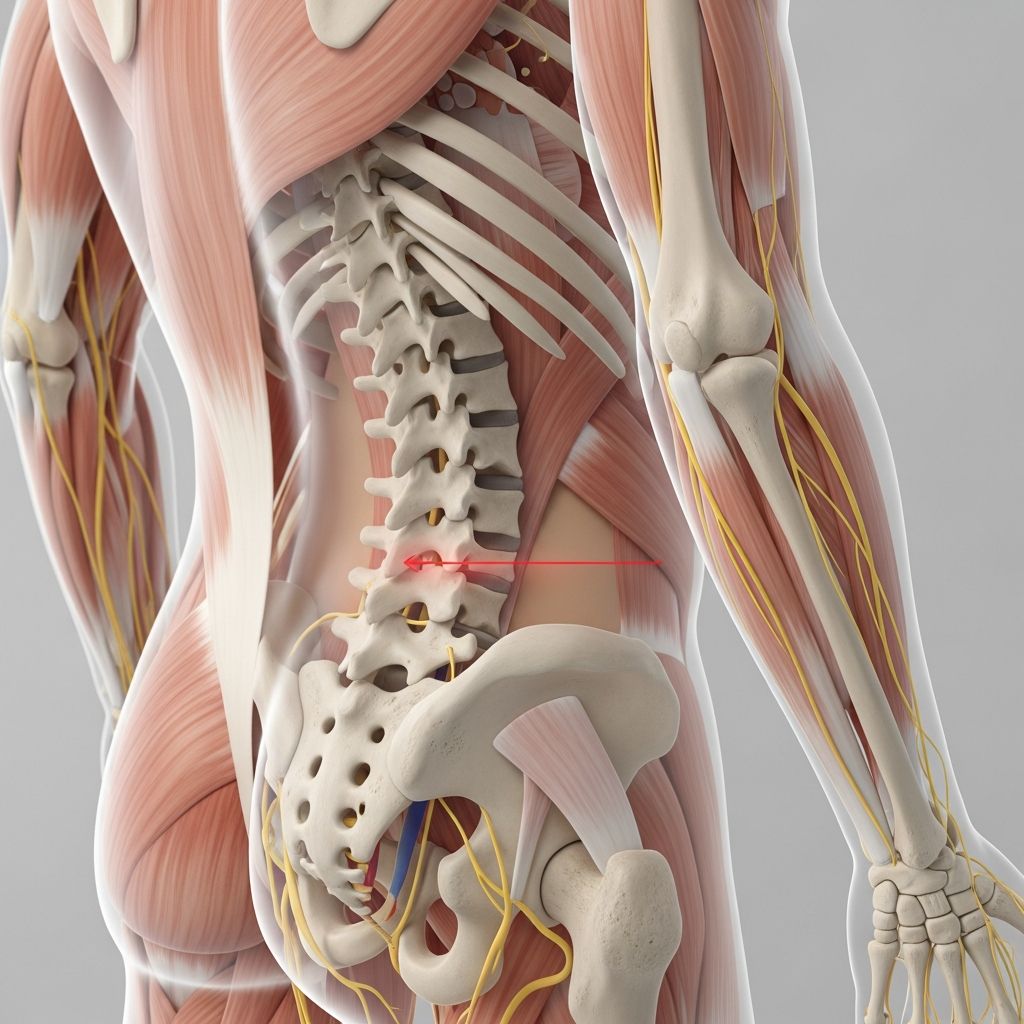
Spondylolysis is a stress fracture in the pars interarticularis, a small bony segment of the vertebra linking the upper and lower facet joints, most frequently occurring at L5 in the lumbar spine.
Understanding the Spinal Anatomy Involved
The human spine consists of vertebrae stacked to support the body and protect the spinal cord. Each vertebra has a body, arches, and processes. The pars interarticularis acts as a critical bridge between the superior and inferior articular facets, enduring significant mechanical loads during movement. In youth, this area is vulnerable due to ongoing skeletal growth and thinner bone structure.
When repetitive forces exceed the bone’s capacity, micro-cracks form, potentially leading to a complete defect. This condition affects 6-15% of adolescents, particularly those in high-impact sports.
Why Young People Are Susceptible
Adolescents and children face unique risks during growth spurts when bones elongate faster than supporting muscles and ligaments strengthen. Sports demanding lumbar extension, rotation, or hyperextension—like gymnastics, football, wrestling, and weightlifting—amplify stress on the pars.
- Repetitive Hyperextension: Activities arching the lower back repeatedly overload the pars.
- Genetic Predisposition: Some children inherit thinner pars or family histories of spinal issues.
- Biomechanical Factors: Increased lumbar lordosis (swayback) heightens vulnerability.
- Developmental Anomalies: Conditions like spina bifida occulta may contribute.
Unlike acute trauma, spondylolysis typically arises from cumulative microtrauma, with 80-95% of cases at L5.
Recognizing Early Warning Signs
Many cases remain silent, discovered incidentally on imaging. Symptomatic spondylolysis manifests as focal low back pain, often worsening with extension or rotation.
| Symptom | Description | Triggers |
|---|---|---|
| Mild Ache | Intermittent low back discomfort | Prolonged standing or mild activity |
| Moderate Pain | Sharp pain radiating to buttocks | Extension sports like gymnastics |
| Severe | Intense pain limiting daily tasks | High-impact events post-rest |
Pain may mimic muscle strain, with relief from rest. Hamstring tightness or reduced flexibility often accompanies it. Rarely, progression to spondylolisthesis causes leg symptoms or neurological issues.
Diagnostic Approaches for Accuracy
Diagnosis begins with history and physical exam, noting pain provocation in extension (e.g., one-legged hyperextension test). Imaging confirms:
- X-rays: Detect defects in 80% of cases; oblique views highlight pars.
- SPECT or Bone Scan: Identifies active fractures via increased uptake.
- CT/MRI: Assesses healing stage, slippage, or soft tissue involvement.
Early unilateral detection allows targeted intervention before bilateral involvement risks spondylolisthesis (50-81% association).
Non-Surgical Pathways to Recovery
Over 85-90% of cases resolve conservatively, emphasizing rest and rehabilitation.
Initial Rest and Activity Modification
Complete avoidance of aggravating sports for 3-6 months heals 70-80% of early lesions. Bracing (e.g., lumbar corset) stabilizes during healing, worn 6-12 weeks.
Physical Therapy Protocols
Post-rest, therapy rebuilds core stability:
- Strengthen lumbopelvic muscles to redistribute loads.
- Improve flexibility in hamstrings and hip flexors.
- Sport-specific drills for safe return.
Evidence supports biopsychosocial rehab: addressing pain fears accelerates recovery.
Monitoring Progress
Serial imaging tracks bony union. Most heal within 6 months; chronic cases may stabilize without pain.
When Surgery Becomes Necessary
Surgery is rare (9-15%), reserved for persistent pain, progression, instability, or neurology.
- Pars Repair: Wiring, screws, or hooks fix the defect, preserving motion.
- Fusion: For high-grade slips, fuses segments.
Outcomes exceed 80% success; bone stimulators show promise for nonunions.
Preventing Recurrence and Complications
Key strategies include:
| Strategy | Benefit |
|---|---|
| Core Strengthening | Reduces pars stress |
| Proper Technique Coaching | Minimizes hyperextension |
| Gradual Training Ramp-Up | Avoids overload |
| Regular Screening in Athletes | Early detection |
Avoiding overtraining and monitoring growth spurts curbs incidence.
Long-Term Outlook for Affected Youth
With prompt care, most resume full activity. Untreated progression risks chronic pain or spondylolisthesis (vertebra slippage). Parental vigilance ensures positive trajectories.
Frequently Asked Questions
Can my child play sports again after spondylolysis?
Yes, after 3-6 months rest, bracing, and rehab, 80-90% return safely with precautions.
Is spondylolysis hereditary?
Family history increases risk due to pars morphology, but environment plays a larger role.
How long does recovery take?
Acute cases heal in 3-6 months; chronic may take longer but often stabilize.
Does bracing always work?
It aids 70% healing when worn properly during rest.
What sports are highest risk?
Gymnastics, football, weightlifting due to repetitive extension.
References
- Spondylolysis: A review and reappraisal — PMC – NIH. 2010-02-18. https://pmc.ncbi.nlm.nih.gov/articles/PMC2843565/
- Spondylolysis — Physiopedia. 2025 (accessed). https://www.physio-pedia.com/Spondylolysis
- Spondylolysis — Nemours KidsHealth. 2025 (accessed). https://kidshealth.org/en/parents/spondylolysis.html
- Spondylolysis Treatment Indianapolis — Spine Indy. 2025 (accessed). https://www.spineindy.com/spondylolysis-spine-surgeon-kokomo-avon-carmel-in.html
- Spondylolysis and Spondylolisthesis — OrthoInfo – AAOS. 2025 (accessed). https://orthoinfo.aaos.org/en/diseases–conditions/spondylolysis-and-spondylolisthesis/
- Spondylolysis (Pars Stress Fracture of the Spine) — HSS. 2025 (accessed). https://www.hss.edu/health-library/conditions-and-treatments/list/spondylolysis-pars-fracture
- Diagnosing Spondylolysis — NYU Langone Health. 2025 (accessed). https://nyulangone.org/conditions/spondylolysis/diagnosis