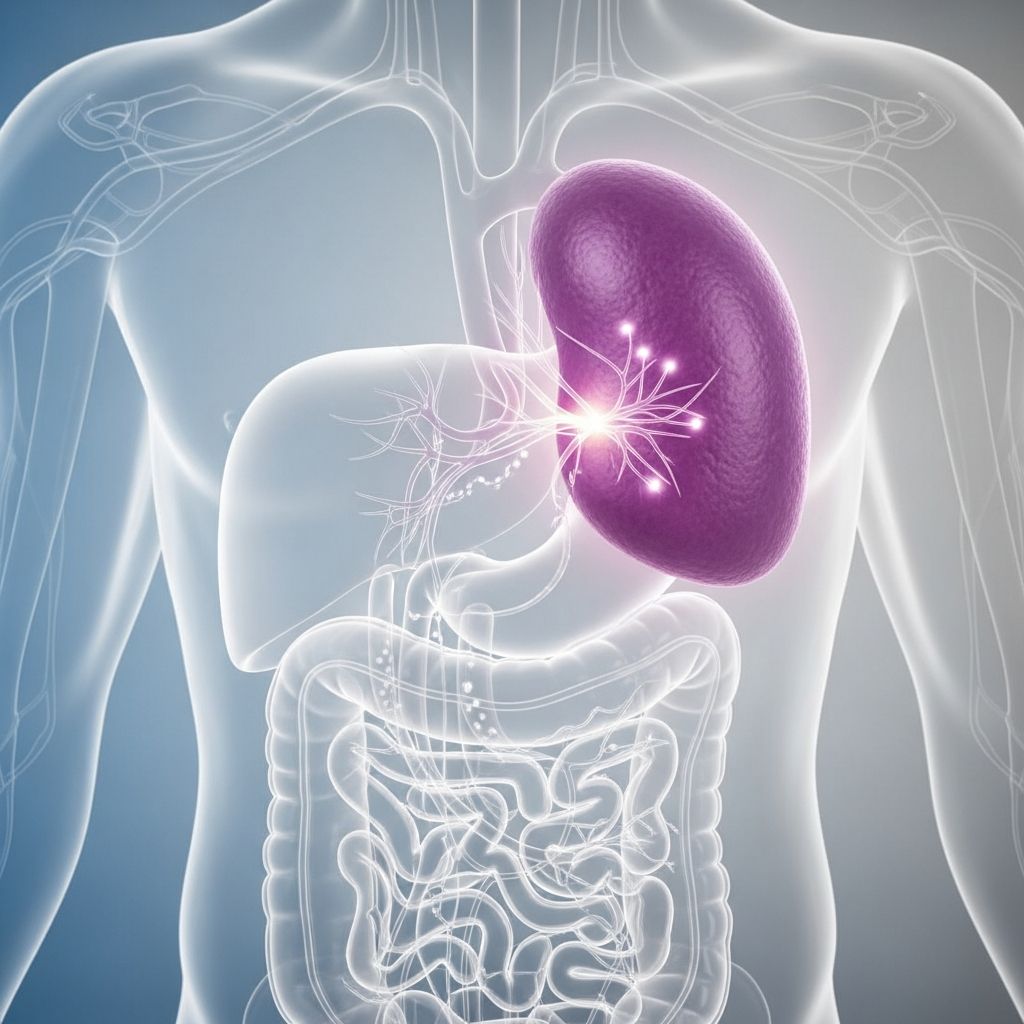
Most people rarely think about the spleen, but this small organ plays a big role in your immune system and blood health. Understanding it can help you make sense of certain injuries, illnesses, and medical tests.
Where the Spleen Lives in Your Body
The spleen sits high on the left side of your abdomen, just under the rib cage and behind the stomach. It is usually about the size of a fist, though its exact size can change depending on your health and body size.
- Location: upper left side of the belly, tucked under the ribs.
- Neighbors: lies close to the stomach, left kidney, and diaphragm.
- Protection: the rib cage helps shield it from bumps and falls, but strong blows can still injure it.
What the Spleen Actually Does
The spleen is part of both the lymphatic system and the immune system. Its main job is to filter your blood and help fight infections.
- Acts as a blood filter by removing old or damaged red blood cells.
- Stores extra blood cells, especially platelets, for emergencies like serious bleeding.
- Houses special white blood cells that recognize germs and help destroy them.
Filtering Your Blood
As blood flows through the spleen, red blood cells are tested. Healthy cells move on, while older or misshapen cells get broken down and recycled.
- Old red blood cells are broken apart so useful materials like iron can be reused.
- Unhealthy cells get removed so they do not slow down oxygen delivery.
- This constant cleanup helps keep your circulation efficient and balanced.
Helping the Immune System
The spleen is packed with immune cells that are ready to react when germs appear in the bloodstream.
- White blood cells in the spleen can recognize bacteria and viruses.
- These cells help produce antibodies, which tag germs so they can be destroyed.
- Because of this, the spleen is especially important for fighting certain serious infections.
Storing Blood for Emergencies
The spleen also works like a small blood reservoir. It holds extra blood cells that can be released quickly when the body needs them.
- Extra platelets can help form clots after an injury.
- Stored red blood cells can boost blood volume if you lose a lot of blood suddenly.
- This backup supply provides short-term support while the rest of the body responds.
Basic Spleen Facts Table
| Feature | Details |
|---|---|
| Main body system | Lymphatic and immune systems |
| Typical location | Upper left abdomen, under the ribs |
| Key functions | Filters blood, helps fight infections, stores blood cells |
| Approximate size | About the size of a fist in most healthy teens |
| Can you live without it? | Yes, but you need extra protection against infections |
Why the Spleen Matters for Teens
During the teen years, you might be more active in sports, more likely to catch viral infections at school, and more likely to be involved in accidents. All of these can affect the spleen.
- Contact sports and rough activities can lead to hard blows to the abdomen.
- Certain infections, like mononucleosis, can make the spleen swell.
- Recognizing symptoms early can prevent serious complications.
Common Spleen Problems
Most people never have a spleen problem, but when the spleen does get sick or injured, it usually needs careful attention from a doctor. Some issues are sudden, while others develop more slowly.
Enlarged Spleen (Splenomegaly)
An enlarged spleen means it is bigger than normal. This can happen for many reasons, including infections, blood disorders, or other diseases.
- May cause a feeling of fullness or discomfort on the upper left side of the abdomen.
- Sometimes leads to a sense of being full quickly when eating, because the swollen spleen presses on the stomach.
- Often discovered during a physical exam or imaging test rather than by symptoms alone.
Injury to the Spleen
A hard hit to the left side of your body, a sports collision, or a car crash can injure the spleen. Because it is full of blood, a serious tear can cause dangerous internal bleeding.
- Sudden, sharp pain in the upper left abdomen or shoulder can be a warning sign.
- Feeling light-headed, dizzy, or faint can indicate blood loss.
- These symptoms are emergencies and need immediate medical attention.
Blood Cell and Immune Disorders Affecting the Spleen
Certain blood conditions and immune system diseases can change the way the spleen works. In some cases, it becomes overactive or starts removing blood cells too quickly.
- Some disorders lead to low platelets, increasing the risk of easy bruising or bleeding.
- Inherited conditions that affect red blood cells can put extra strain on the spleen.
- Doctors may track spleen size and blood counts over time to manage these issues.
Living Without a Spleen
Sometimes the spleen is removed in a surgery called a splenectomy. This may be done after a severe injury or to treat certain diseases. You can live without a spleen, but you need to be more careful about infections.
- Other organs, like the liver and lymph nodes, take over many spleen functions.
- People without a spleen are more likely to get serious infections from certain bacteria.
- Doctors may recommend vaccines, preventive medications, and fast treatment for fevers.
Health Tips If You Do Not Have a Spleen
If your spleen has been removed, your daily life can still be very normal with a few extra steps to stay safe.
- Stay up to date on recommended vaccines and booster shots.
- Tell every doctor and dentist that you do not have a spleen.
- Seek medical care right away if you develop a high fever, chills, or feel very unwell.
How Doctors Check the Spleen
Health professionals use several methods to examine the spleen and decide whether it is healthy. These tests are usually simple and not painful.
- Physical exam: A doctor gently presses on your abdomen to feel if the spleen is enlarged.
- Blood tests: These look at red cells, white cells, and platelets to see how well your spleen might be working.
- Imaging tests: Ultrasound or CT scans can show the spleen’s size, shape, and any injuries or masses.
Protecting Your Spleen
You cannot control everything that happens to your spleen, but there are smart choices that lower your risk of problems. These steps also help protect your overall health.
- Use proper protective gear for sports, especially those with contact or risk of falls.
- Always wear a seat belt in cars and follow traffic safety rules.
- See a doctor if you have a lasting pain or fullness on your upper left side or after a hard hit to the abdomen.
Healthy Habits That Support Spleen Function
Since the spleen is part of your immune and blood systems, everyday healthy habits help it indirectly. These habits support your body’s ability to fight infections and maintain normal blood cells.
- Get enough sleep to keep your immune system strong.
- Eat a balanced diet with fruits, vegetables, protein, and whole grains.
- Avoid smoking and vaping, which can weaken your immune defenses.
- Wash your hands regularly and practice good hygiene to reduce infections.
Quick Reference Table: Spleen At a Glance
| Question | Short Answer |
|---|---|
| Is the spleen essential for life? | No, but it is very helpful; people without one need extra infection protection. |
| Biggest jobs of the spleen? | Filter blood, help immune system, store blood cells. |
| Common reason a teen’s spleen swells? | Certain infections or blood conditions. |
| Sign of possible spleen injury? | Sharp left-side or shoulder pain after a hit, plus dizziness or faintness. |
| Who should know about your spleen status? | Family members, coaches (for injury history), and health professionals. |
Frequently Asked Questions About the Spleen
Can you feel your own spleen?
In healthy people, the spleen is usually not easy to feel from the outside. Doctors are trained to gently press on specific spots in the upper left abdomen to check whether it seems enlarged. If you think you feel a lump or swelling in that area, it is safer to let a health professional check it rather than trying to examine yourself.
Does an enlarged spleen always mean something serious?
An enlarged spleen can be caused by many different things. Some are short-term, like certain infections, while others relate to chronic illnesses. It does not automatically mean something very serious, but it always deserves a medical evaluation so the cause can be found and treated appropriately.
Can the spleen grow back if it is removed?
The spleen does not usually grow back once it is completely removed. Sometimes, tiny extra pieces of spleen tissue are present elsewhere in the body from birth, and they can grow larger if the main spleen is taken out. These small bits are not usually enough to fully replace the original spleen, so people still need the same precautions after splenectomy.
Is it safe to play sports without a spleen?
Many people without a spleen can participate in sports, but they should talk with their doctor about their specific situation. Some may need to avoid high-impact or collision sports because any remaining spleen tissue or nearby organs still need protection. Protective gear, medical advice, and careful decisions about risk all matter when returning to athletics.
What should I do if I get a hard hit on my left side?
If you take a strong blow to your left abdomen or lower chest area and then feel sharp pain, dizziness, or trouble breathing, treat it as an emergency. Get medical help immediately rather than waiting to see if it goes away. Quick care can be lifesaving if there is internal bleeding or damage to the spleen or other organs.
Key Takeaways for Teens
- The spleen is a small organ with big jobs: filtering blood, helping your immune system, and storing blood cells.
- You can live without a spleen, but you must be more careful about infections and follow medical advice closely.
- Protecting your abdomen during sports, using seat belts, and getting strange symptoms checked are all smart ways to care for your spleen and overall health.
Understanding the spleen gives you one more piece of the puzzle of how your body works. When you know what this hidden organ does, you are better prepared to recognize problems, ask good questions at the doctor’s office, and make choices that support lifelong health.