What Is Spirometry and Why Should Parents Care?
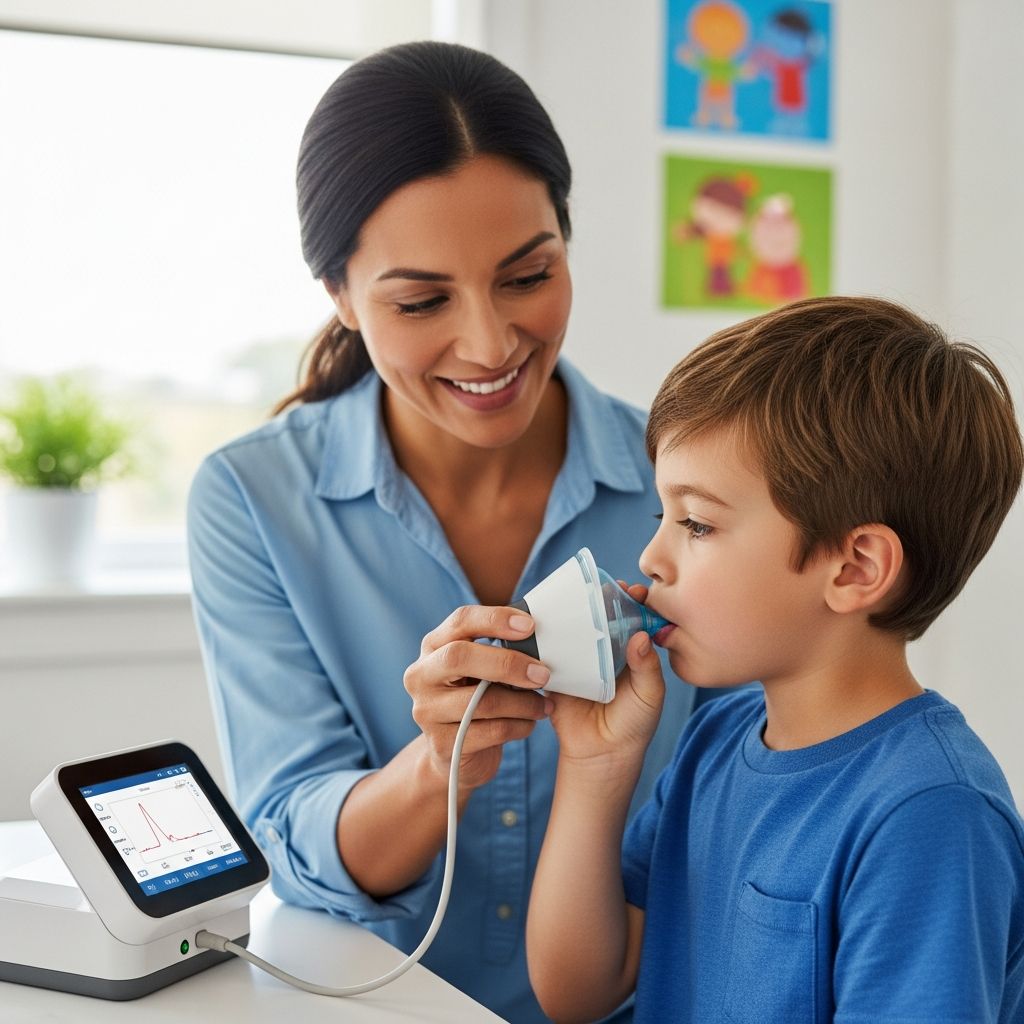
When your child experiences persistent coughing, wheezing, or shortness of breath, your pediatrician may recommend a spirometry test. Spirometry is a straightforward lung function test that measures how much air your child’s lungs can hold and how efficiently they can breathe air in and out. Rather than requiring invasive procedures or complex imaging, spirometry is a safe, non-invasive way to evaluate respiratory health by using a small handheld device called a spirometer.
The test works by having your child breathe into a mouthpiece connected to a computerized machine that records airflow measurements. These measurements provide doctors with objective data about lung capacity and breathing efficiency, helping them diagnose or monitor various respiratory conditions that affect children.
Why Doctors Order Spirometry Tests
Healthcare professionals use spirometry for several important reasons. The most common indication is to diagnose or rule out asthma and other chronic lung conditions. If your child complains of frequent chest tightness, chronic coughing, or experiences wheezing during physical activity, spirometry can help determine whether these symptoms stem from a structural breathing problem or another cause entirely.
Diagnostic Applications
Beyond asthma, spirometry helps doctors identify and evaluate conditions including:
- Chronic obstructive pulmonary disease (COPD), though less common in children, can be assessed
- Pulmonary fibrosis—scarring of lung tissue that restricts air movement
- Chronic bronchitis and recurrent bronchial infections
- Cystic fibrosis and other genetic lung disorders
- Occupational or environmental exposure-related lung damage in older children or teenagers
Monitoring Existing Conditions
If your child already has an asthma or other diagnosed respiratory condition, spirometry serves as a monitoring tool. Regular spirometry testing helps your doctor assess how well current medications are working and whether the treatment plan needs adjustment. During annual asthma reviews or when symptoms worsen despite treatment, spirometry provides measurable evidence of breathing status.
Preoperative Assessment
Before certain surgical procedures, particularly those requiring general anesthesia, doctors may order spirometry to ensure your child has adequate lung function to tolerate the surgery safely.
Recognizing When Spirometry May Be Recommended
Your pediatrician or pulmonologist might suggest spirometry if your child exhibits specific symptoms or risk factors. Understanding these triggers can help you prepare for the conversation with your healthcare provider.
Common Symptoms Prompting Spirometry
- Persistent or recurring cough—especially if lasting more than a few weeks or producing mucus
- Wheezing or whistling sounds during breathing, particularly during physical exertion
- Shortness of breath that seems unusual for your child’s age and activity level
- Chest tightness or pain during exercise or at rest
- Difficulty keeping up with peers during sports or play activities
Risk Factors
Children with a family history of asthma or lung disease, those exposed to secondhand smoke, children with allergies, or those living in areas with high air pollution may benefit from spirometry screening to detect problems early.
How the Spirometry Test Works: A Step-by-Step Overview
Understanding the procedure can help you prepare your child and reduce anxiety about the appointment. Spirometry is designed to be simple and quick, typically taking 15 to 30 minutes from start to finish.
Before the Test
Your healthcare provider will likely ask you to avoid certain medications before testing to ensure accurate results. Some rescue inhalers or other medications can artificially improve spirometry readings, so your doctor may request that your child avoid using them for a specific period beforehand. Your doctor will provide clear instructions about medication timing and any other preparation needed.
During the Test
When the test begins, your child will sit comfortably near the spirometer machine. A soft plastic clip will be placed gently on the nose to ensure all breath travels through the mouthpiece rather than escaping through the nostrils. Your child will then be instructed to:
- Take the deepest breath possible, filling the lungs completely with air
- Place lips firmly around the mouthpiece to create an airtight seal
- Exhale as forcefully and quickly as possible, emptying the lungs as completely as they can
- Continue exhaling until no more air can be released
This is called a “maximal effort” test because it requires your child to breathe as deeply and forcefully as possible. Most children repeat this cycle at least three times to ensure consistent, reproducible results. The computer records the airflow measurements during each attempt.
After the Test
Some children feel dizzy or lightheaded after spirometry due to the repeated deep breaths and forceful exhalations, but these sensations are temporary and resolve quickly. Your child can immediately resume normal activities, including eating, drinking, taking medications, and even exercising if desired. Results typically become available within a few days after testing.
Understanding Spirometry Measurements and Results
Spirometry generates two primary measurements that form the foundation of diagnosis and monitoring. These numbers are compared against expected values for children of the same age, sex, and height to determine whether results fall within normal ranges.
Forced Vital Capacity (FVC)
The FVC represents the total volume of air your child can exhale after taking the deepest possible breath. A lower-than-normal FVC reading suggests restricted breathing—the lungs cannot hold or release as much air as expected. This might indicate chest wall problems, muscle weakness, or other restrictive lung conditions.
Forced Expiratory Volume in One Second (FEV1)
The FEV1 measures how much air your child can forcefully expel in just the first second of exhalation. This measurement is particularly important for assessing airway obstruction. Lower FEV1 readings indicate greater blockages or narrowing within the bronchial tubes, suggesting conditions like asthma where airways constrict and restrict airflow.
Interpreting Results
Results are typically classified into three categories:
| Result Category | What It Means | Possible Implications |
|---|---|---|
| Normal Results | FEV1 and FVC values are 80% or greater of predicted values | Lungs are functioning as expected; no obstruction or restriction detected |
| Obstructive Pattern | FEV1 is reduced, but FVC is normal; ratio of FEV1 to FVC is low | Airways are narrowed, preventing normal airflow; consistent with asthma, COPD, or bronchitis |
| Restrictive Pattern | Both FEV1 and FVC are reduced proportionally | Lungs cannot fully expand or hold normal air volume; may indicate fibrosis or muscle weakness |
What Obstructive Results Mean for Your Child
An obstructive spirometry result indicates that your child’s airways are narrowed, slowing the speed at which air exits the lungs. Despite having normal lung capacity, the air cannot flow out quickly or completely. This pattern is characteristic of asthma, where airways constrict in response to triggers like allergens, exercise, or infections.
Importantly, spirometry does not measure inflammation directly—it only detects the functional consequence of obstruction. If your child’s airways are obstructed, inflammation may or may not be the underlying cause, but inflammation is one common possibility that doctors often address with anti-inflammatory inhaler medications.
Special Considerations for Children
Testing young children requires patience and special techniques. Children under six years old may struggle to perform spirometry correctly because the test requires understanding and following complex instructions while maintaining effort throughout the breathing maneuver. For very young children, doctors may use alternative lung function tests or wait until the child is old enough to cooperate reliably with standard spirometry.
Working with your child before the test—explaining the procedure, practicing deep breathing, and using positive reinforcement—can significantly improve test quality and reduce anxiety.
Safety and Potential Side Effects
Spirometry is an extremely safe procedure with minimal risk of serious complications. The test is non-invasive and does not expose your child to radiation or require needle sticks. The most common experience is mild lightheadedness or dizziness from repeated deep breaths, which resolves immediately after the test concludes.
Some children report temporary fatigue or mild throat irritation, but these sensations are fleeting. Your child can resume all normal activities immediately after testing without restriction.
How Spirometry Guides Treatment Decisions
Spirometry results directly influence treatment recommendations and help your doctor determine appropriate medication dosing and type. If your child receives an asthma diagnosis based on spirometry, your doctor will likely prescribe controller medications to prevent symptoms and rapid-acting rescue inhalers for acute episodes.
Repeat spirometry testing during follow-up visits allows your doctor to assess whether current medications adequately control your child’s condition or whether adjustments are needed. This objective measurement prevents over- or under-treatment of respiratory conditions.
Frequently Asked Questions About Spirometry
Q: Will spirometry hurt my child?
A: No, spirometry is painless. The test involves breathing into a mouthpiece—there are no needles, injections, or invasive procedures. Some children find the sustained effort tiring, but physical discomfort is not part of the test.
Q: How long do spirometry results take?
A: Your doctor typically receives results within a few days. Your healthcare provider will contact you with findings and discuss next steps or treatment recommendations.
Q: Can my child eat or drink before spirometry?
A: Generally, yes. Your doctor may recommend avoiding large meals immediately before testing to prevent discomfort during deep breathing, but water intake is usually fine. Follow your healthcare provider’s specific pre-test instructions.
Q: What if my child cannot complete the test?
A: Not all children can perform spirometry reliably, especially younger children under age six. If your child struggles to follow instructions or complete the breathing maneuver, your doctor may try alternative testing methods or schedule testing at an older age when cooperation improves.
Q: Does spirometry require special training to perform?
A: Yes, spirometry should be administered by trained respiratory technicians or healthcare professionals who ensure proper technique and accurate result interpretation.
References
- Spirometry — Mayo Clinic. 2024-05-14. https://www.mayoclinic.org/tests-procedures/spirometry/about/pac-20385201
- Spirometry Testing – Lung Capacity — National Jewish Health. https://www.nationaljewish.org/conditions/tests-procedures/pulmonary-physiology/pulmonary-function/spirometry
- Lung Function Evaluation: What to Expect During Spirometry Testing — Five Star Pulmonary. https://www.fivestarpulm.com/post/lung-function-evaluation-what-to-expect-during-spirometry-testing
- Spirometry and Bronchodilator Reversibility Test — Asthma + Lung UK. https://www.asthmaandlung.org.uk/symptoms-tests-treatments/tests/spirometry
- Spirometry — StatPearls, National Center for Biotechnology Information. https://www.ncbi.nlm.nih.gov/books/NBK560526/
- Spirometry Test — NHS. https://www.nhs.uk/tests-and-treatments/spirometry/
- Spirometry: Purpose, Procedure, Risks & Results — Cleveland Clinic. https://my.clevelandclinic.org/health/diagnostics/17833-spirometry