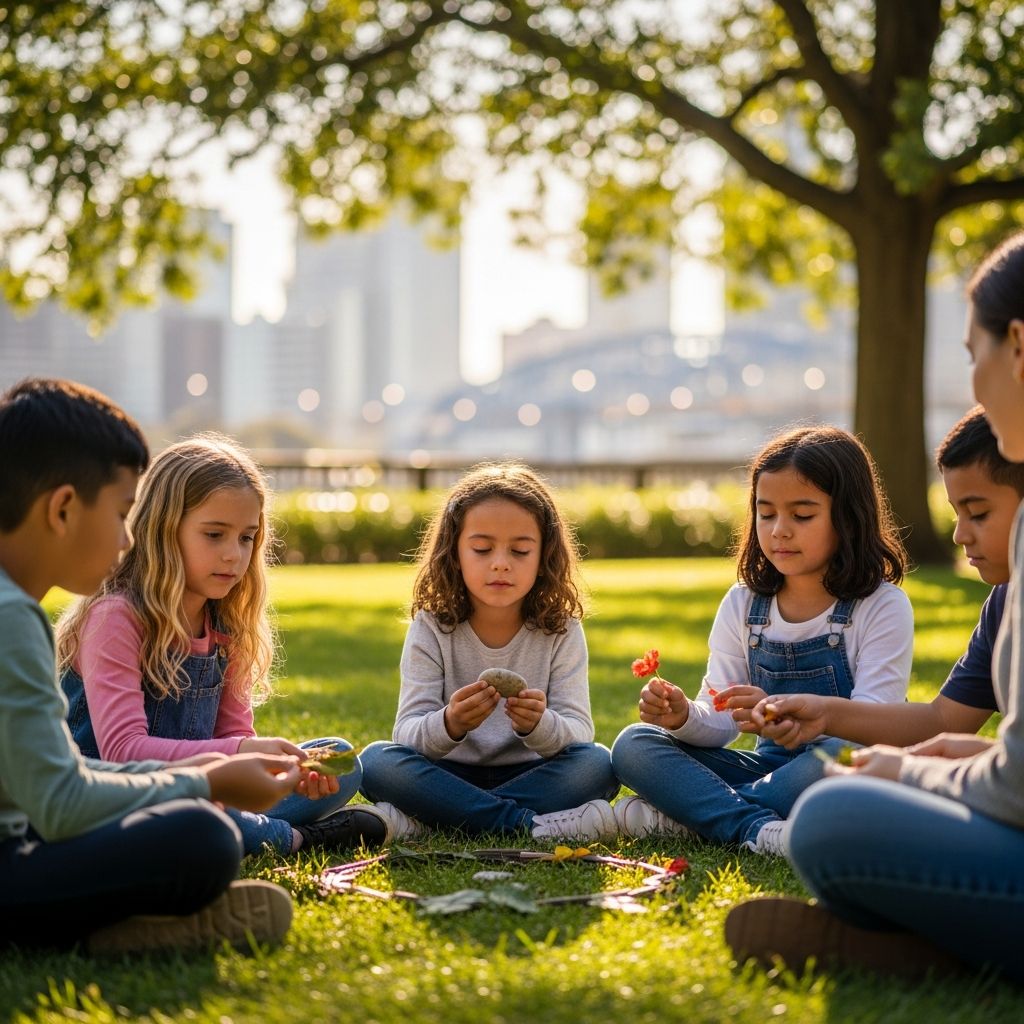
Modern parenting is often noisy, fast, and demanding, yet children thrive when adults slow down enough to offer calm, connection, and a sense of deeper meaning. Spiritual parenting is not about imposing beliefs; it is about raising children who feel rooted in love, guided by inner wisdom, and capable of meeting life with courage and compassion.
What Spiritual Parenting Really Means
Spiritual parenting is the practice of nurturing a child’s body, mind, heart, and inner life together, instead of focusing only on behavior or achievement. It invites parents to see everyday moments—bedtime, conflict, homework, laughter—as opportunities to model presence, kindness, and purpose.
Rather than centering on rules, spiritual parenting emphasizes relationships: how children feel in your presence, how safe it is for them to express emotions, and how clearly they experience that they are loved, even when their behavior needs to change. In this sense, spirituality in the home becomes less about what you say and more about how you live with one another.
- It respects your family’s unique beliefs or non-beliefs.
- It focuses on values like compassion, honesty, and inner peace.
- It treats parenting itself as a path of personal growth.
The Inner World of a Child
Every child carries a rich inner world made of sensations, emotions, thoughts, and questions about life. When parents respond only to outward behavior, this inner world can feel invisible or overwhelming to the child. When adults slow down and listen, children discover that their inner experience is understandable and manageable.
Spiritual parenting begins with honoring this inner life. That means making space for big emotions, unpredictable moods, and tough questions, and showing children that none of these things make them less lovable. Over time, children who feel seen in this way develop trust in themselves and a stable sense of worth that does not depend on performance.
Key Needs in a Child’s Inner Life
- Safety: Knowing home is a place where feelings and mistakes are allowed.
- Belonging: Feeling like an irreplaceable member of the family.
- Meaning: Having room to wonder about life, fairness, and purpose.
- Guidance: Experiencing adults as calm, caring leaders rather than unpredictable authorities.
Why Parental Presence Matters More Than Perfection
Children do not need perfect parents; they need present parents. Presence means being emotionally available and attentive enough to notice what your child is really feeling beneath the surface. This kind of presence is a spiritual practice because it asks you to return, again and again, to the present moment instead of getting lost in worry, frustration, or distraction.
When a parent pauses, breathes, and chooses curiosity over reactivity, the child receives a powerful message: “Your feelings are not too much, and we can handle this together.” Over the years, this repeated experience becomes part of the child’s inner voice, shaping how they talk to themselves in difficult moments.
- Take three slow breaths before responding during conflict.
- Make regular eye contact when your child talks.
- Offer simple acknowledgments such as, “I’m here,” or “This is hard, isn’t it?”
Core Spiritual Values to Cultivate at Home
Although families differ in religious or philosophical background, many share a common set of core values that support spiritual growth. Instead of lecturing about these values, children absorb them when they see them lived consistently in the home.
The table below offers examples of how to translate abstract values into daily family habits that children can see and feel.
| Core Value | What Children Learn | Simple Family Practices |
|---|---|---|
| Compassion | Feelings matter and everyone deserves care. | Check in when someone is upset; encourage siblings to help one another; do small acts of service together. |
| Gratitude | Life contains gifts even on hard days. | Share one thing you appreciate at meals; write thank-you notes; notice small everyday blessings. |
| Forgiveness | Mistakes are part of being human and relationships can heal. | Model apologizing as a parent; have a simple repair ritual after conflicts; avoid keeping score of past wrongs. |
| Honesty | Truth is safe and valued at home. | Respond calmly when children admit mistakes; share age-appropriate truths about your own struggles. |
| Presence | Being together matters more than doing or having. | Have device-free times; protect small daily “connection rituals” like bedtime stories or evening walks. |
Discipline with Dignity and Heart
Discipline in a spiritual home is not about fear or shame; it is about teaching, guiding, and protecting while preserving a child’s dignity. A child who feels humiliated may comply in the moment but will struggle to trust and open up later. A child who feels respected, even when corrected, learns that limits and love can exist together.
The goal is to help children understand the impact of their actions and to support them in choosing better next time. When discipline is rooted in empathy and clear boundaries, children gradually develop self-discipline instead of simply obeying to avoid punishment.
Principles of Spiritually Aligned Discipline
- Connect before correct: Acknowledge the emotion before addressing the behavior.
- Stay curious: Ask what was happening inside your child, not just what they did.
- Collaborate on solutions: Involve children in brainstorming how to repair and do better next time.
- Separate worth from behavior: Make it clear that your love is not at stake, even when rules are broken.
Everyday Rituals that Nourish the Soul
Children experience spirituality most directly through repeated, meaningful moments, not abstract explanations. Rituals give those moments a shape. They do not have to be elaborate; what matters is that they are consistent, warm, and filled with genuine presence.
Small rituals help children feel grounded in a world that often feels fast and unpredictable. They also create a sense of continuity, linking ordinary days to something larger and more meaningful.
- Morning grounding: A short hug and a phrase such as “Let’s start gently today” before leaving the house.
- Mealtime connection: A brief moment of quiet, gratitude, or reflection before eating.
- Bedtime blessing: A sentence of appreciation for something the child did or a hope for their sleep.
- Weekly pause: One time each week with no chores or screens, reserved for simple, shared activities.
Supporting Emotional Resilience through Spiritual Tools
Children today face academic pressure, social stress, and constant stimulation. Spiritual tools give them ways to come back to center when life feels overwhelming. These tools do not have to be tied to any tradition; they can be simple practices that invite stillness, reflection, and self-compassion.
When these practices are introduced gently and modeled consistently by adults, children begin to use them spontaneously during challenges. Over time, they internalize the sense that they are not helpless in the face of big feelings—they have ways to soothe and steady themselves.
Child-Friendly Spiritual Practices
- Breathing with a buddy: Place a favorite stuffed animal on the tummy and watch it rise and fall for a few slow breaths.
- Quiet corner: A cozy space with books, soft items, or calming images where children can take a break when overwhelmed.
- Gratitude jar: Write or draw one thing each week that brought joy, then revisit them on tough days.
- Compassion stories: Share short stories about kindness and talk about how the characters may have felt.
Honoring Your Own Growth as a Parent
Parenting often exposes unhealed places in an adult’s own story: old fears, impatient patterns, or beliefs about worth and success. Spiritual parenting does not pretend these struggles do not exist; it welcomes them as invitations to grow alongside your child. Each difficult moment becomes a mirror, showing where more compassion, healing, or clarity is needed.
As caregivers learn to pause, reflect, and seek support when needed, they model an essential truth for their children: growth is a lifelong process. This shifts the family culture away from perfectionism and toward honesty and shared humanity.
- Notice which behaviors trigger you most and reflect on why.
- Seek supportive communities—friends, groups, or mentors—who share your values.
- Allow yourself the same kindness you want your child to extend to themselves.
Integrating Spirituality with Daily Responsibilities
Many parents worry that adding a spiritual dimension to family life will require extra time that they simply do not have. The most sustainable approach is to integrate spirituality into what you already do—meals, car rides, chores, and transitions—rather than adding long new routines.
When spiritual values are woven into ordinary tasks, children learn that meaning is not confined to special occasions. Doing homework, feeding a pet, or cleaning up toys becomes an opportunity to practice responsibility, gratitude, and care for the world around them.
Simple Ways to Weave Meaning into the Day
- Ask reflective questions during car rides, such as, “What felt kind today?” or “What did you learn about yourself?”
- Connect chores to purpose: “We care for our space because it supports everyone’s well-being.”
- Turn conflicts into learning moments by exploring what everyone needed and how to repair.
Frequently Asked Questions about Spiritual Parenting
Do I have to be religious to practice spiritual parenting?
No. Spiritual parenting is less about belonging to a particular faith and more about how you relate to your child’s inner life. Families who are religious, multi-faith, or secular can all nurture qualities like compassion, wonder, gratitude, and integrity in ways that fit their worldview.
What if I didn’t grow up in a peaceful or spiritual home?
Many parents are trying to offer their children something they themselves did not receive. This can feel daunting, but it also means you are deeply aware of the importance of safety and understanding. Start small, choose one or two new practices, and remember that every gentle response you offer your child is also a gift to your own healing.
How do I stay calm when my child is having a meltdown?
Staying calm does not mean never feeling upset; it means noticing your reaction and choosing how to respond. Brief practices—such as stepping back for a few breaths, lowering your voice, or silently repeating a calming phrase—help the adult nervous system settle, which in turn helps the child regulate more quickly.
Won’t my child become entitled if I focus too much on feelings?
Validating feelings is not the same as allowing every wish. Children become entitled when they learn that their preferences always win, not when their emotions are acknowledged. Spiritual parenting balances empathy with clear boundaries, teaching that feelings are always welcome but certain actions are not.
How can two parents with different beliefs raise children spiritually?
Begin by identifying the values you share—such as kindness, honesty, or service—and build family practices around those. Differences in belief can become an asset if children see adults respecting each other’s perspectives and talking openly and kindly about what matters most to them.
Key Takeaways for Spiritually Grounded Families
Raising spiritually grounded children is less about getting every moment right and more about the overall tone of your relationship: warmth, respect, curiosity, and willingness to grow together. When children experience home as a place where their hearts are welcomed and their questions are heard, they carry that sense of safety and meaning into the wider world.
By combining calm presence, values-based guidance, and simple rituals of connection, parents can transform ordinary days into a living classroom of love and wisdom. Over time, both children and adults discover that the real spiritual journey of the family is not somewhere else; it is unfolding in each shared meal, conversation, and act of kindness.