Most spider bites in children are mild and heal on their own, but a small number can cause serious illness and need urgent medical care. This guide explains how to recognize possible spider bites, what to do in the first few minutes, and how to keep your child safe at home and outdoors.
Understanding Spider Bites in Kids
Spiders are common in homes, gardens, parks, and playgrounds. They usually avoid people, but may bite if they feel trapped or threatened, such as when a child accidentally presses on them with a hand, foot, or clothing.
In many cases, a spider bite looks a lot like a mosquito or other insect bite: a small red bump, mild swelling, and brief discomfort. Only a few species have venom strong enough to cause more serious symptoms, and even then, prompt medical care usually leads to a full recovery.
- Most household spiders cause only mild, local reactions.
- A few species in some regions can cause more serious skin damage or whole-body symptoms.
- Children and infants may be more affected than healthy adults because of their smaller body size.
Common Signs of a Mild Spider Bite
For most children, a spider bite is uncomfortable but not dangerous. Parents can usually manage these bites at home with simple care and close observation.
Typical mild reactions may appear within minutes to a few hours and then slowly improve over one to two days.
Typical local symptoms
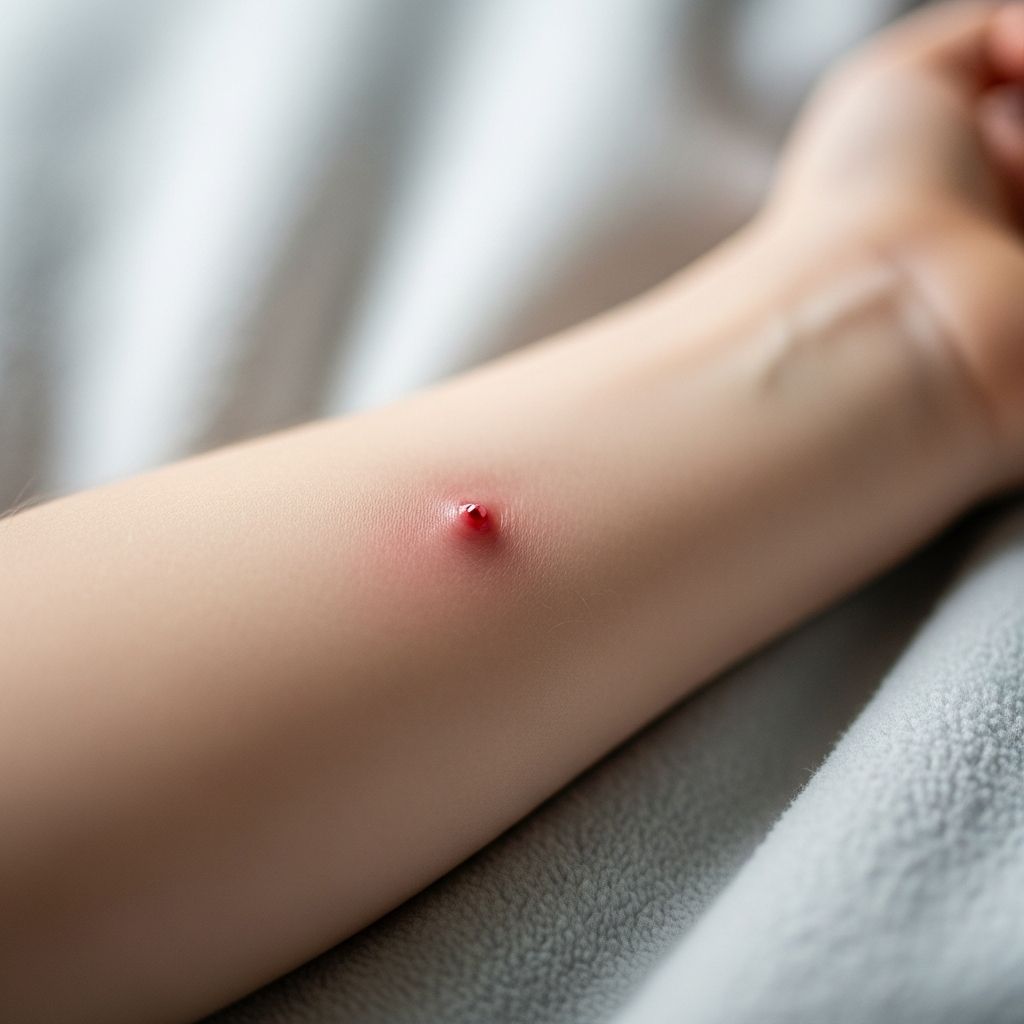
- Small red bump or patch at the bite site.
- Mild swelling around the area.
- Burning, stinging, or itching sensation.
- Sensitivity when the area is touched or when clothing rubs against it.
As long as your child is feeling well overall, breathing normally, and acting like themselves, the bite is likely mild and can be treated with home care and monitoring.
Warning Signs of a Serious Spider Bite
Occasionally, a spider’s venom can affect more than just the skin. Certain bites may cause intense pain, skin breakdown, or symptoms that involve muscles, the stomach, or the nervous system.
Contact a doctor or seek urgent medical care any time a suspected spider bite is followed by strong or rapidly worsening symptoms, especially in a child or infant.
Red flags at the bite site
- Severe or spreading pain that is much worse than a typical insect bite.
- Rapidly increasing redness or swelling extending away from the bite.
- Blistering, dark purple or blue areas, or a wound that begins to open or break down.
- Drainage of pus or yellow fluid, warmth, and tenderness suggesting infection.
Whole-body symptoms needing urgent care
- Fever, chills, or feeling very unwell.
- Severe muscle cramps, especially in the belly, back, shoulders, or legs.
- Nausea, vomiting, or intense stomach pain.
- Headache, dizziness, confusion, or unusual sleepiness.
- Fast heartbeat, sweating, or restlessness that seems out of proportion to the pain.
- Trouble breathing, tightness in the throat or chest, or swelling of the lips, tongue, or face (possible allergic reaction).
Immediate First Aid Steps for Suspected Spider Bites
Simple, calm first aid can reduce pain and help limit the spread of venom if a dangerous spider is involved. Focus on keeping your child comfortable and still while you decide whether you need medical help.
Follow these steps as soon as you notice a bite or suspect a spider bite has occurred.
Step-by-step first aid
- Stay calm and reassure your child. Speak gently and let them know you are taking care of it. Children often become more frightened by the adult’s reaction than by the bite itself.
- Move your child away from the spider. If you see the spider, gently remove your child from the area so there is no further contact.
- Wash the area. Use mild soap and cool or lukewarm water. Pat the skin dry with a clean towel instead of rubbing it.
- Apply a cold compress. Place a clean cloth soaked in cool water or wrapped around ice on the bite for 10–15 minutes, then remove for at least 10 minutes before reapplying. This helps reduce pain and swelling.
- Keep the bite elevated if possible. If the bite is on an arm or leg, gently raise it on a pillow while your child rests.
- Discourage scratching. Scratching can break the skin and invite infection. For younger children, you may need to cover the site with a light bandage.
Medicines that parents sometimes use
Always check with a pediatrician or follow your child’s medicine instructions before giving any medication, especially in children under two years of age.
- Pain relief: Over-the-counter pain relievers for children may help reduce discomfort. Use the correct dose for your child’s age and weight.
- Itch control: An oral antihistamine or topical anti-itch product may be recommended by your child’s doctor for troublesome itching.
- Topical antibiotic ointment: In some cases, your pediatrician may suggest an over-the-counter antibiotic ointment to reduce the risk of infection.
When to Call the Doctor or Emergency Services
Some symptoms can wait for a phone call or same-day clinic visit, while others require immediate emergency care. If you are unsure, it is always safer to contact a healthcare professional for advice.
Use the guide below to help decide what to do next, but always trust your instincts if your child appears seriously ill.
| Situation | Recommended Action |
|---|---|
| Mild pain, small red bump, child feels well | Provide home care and observe closely for 24–48 hours. |
| Spreading redness, increasing pain, or signs of skin infection (warmth, pus, streaks) | Call your child’s doctor the same day for advice and possible visit. |
| Severe pain, blistering, dark or purple skin changes, or open wound | Seek urgent medical care or go to an urgent care/ER. |
| Fever, vomiting, muscle cramps, or your child seems very unwell | Go to the emergency department or call emergency services. |
| Trouble breathing, swelling of face or throat, or collapse | Call emergency services immediately. This may be a severe allergic reaction. |
Why Doctors Sometimes Need to See the Spider
Parents are not expected to identify spider species accurately, but safely bringing the spider (if available) can be helpful to healthcare providers. The specific type of spider can guide decisions about observation, testing, and treatment.
If you choose to capture the spider, avoid putting anyone at further risk. Use a jar or container, and do not handle the spider directly with bare hands.
- Only attempt to catch the spider if it can be done safely.
- A clear container allows professionals to examine it without opening the lid.
- If capturing is not possible, do not worry; treatment usually focuses on your child’s symptoms, not the spider itself.
Possible Treatments in a Clinic or Hospital
Most children with mild spider bites never need hospital care. When a bite is more serious or when doctors suspect a venomous species, additional treatments may be used to control symptoms and prevent complications.
Treatment plans vary depending on your child’s age, overall health, and the severity of the bite, but may include the following.
Common medical treatments
- Pain medication: Stronger pain relievers may be given for intense pain that is not controlled with over-the-counter medicine.
- Muscle relaxants: In some cases of severe muscle cramping, doctors may use medications to help relax the muscles.
- Fluids and monitoring: Children with vomiting or more serious symptoms may receive fluids through a vein and be monitored for changes in heart rate, breathing, and blood pressure.
- Antivenom: In rare situations, special medicine may be used to counteract the venom of certain dangerous spiders when symptoms are severe and do not improve with other treatments.
- Antibiotics: If the bite area becomes infected or forms an open wound, antibiotics may be prescribed.
- Wound care or surgery: For rare bites that cause significant skin damage, wound care, dressings, or surgical procedures may be needed to promote healing.
Preventing Spider Bites Around Children
Prevention focuses on making your home and usual play areas less inviting to spiders and teaching children simple safety habits. Most changes are small, low-cost steps that fit into normal household routines.
While it is impossible to avoid spiders entirely, reducing clutter and providing protective barriers can greatly cut down on accidental bites.
Home and indoor prevention tips
- Keep storage areas, basements, and garages tidy and free of piles of boxes, clothing, and unused items.
- Shake out shoes, boots, and clothing that have been stored or left on the floor before your child puts them on.
- Seal cracks and gaps around doors, windows, and foundations to reduce entry points.
- Use well-fitted screens on windows and repair any tears.
- Avoid leaving bedding or clothing directly on the floor, especially near walls.
Outdoor safety habits
- Have children wear shoes outside instead of going barefoot.
- Use gloves for older children who are helping with yard work or handling firewood, rocks, or garden debris.
- Keep play equipment, toys, and outdoor furniture shaken out and checked regularly.
- Discourage children from exploring dark corners, woodpiles, or sheds without adult supervision.
Helping Children Cope with the Fear of Spiders
Many children feel anxious after a painful bite or even after seeing a spider. A calm, matter-of-fact approach from adults can make a big difference in how a child responds emotionally.
Parents can use the experience as a chance to teach respectful caution instead of lasting fear.
- Explain that most spiders do not want to hurt people and only bite to protect themselves.
- Let your child ask questions and answer simply, without using scary language or dramatic details.
- Focus on what your child can do: wear shoes, avoid dark corners, and tell an adult if they see a spider where they play or sleep.
- Remind them that you know how to take care of bites and when to get help from a doctor.
Frequently Asked Questions About Spider Bites in Children
Can I always tell if a bite is from a spider?
Not always. Many spider bites look just like another insect bite, and in many cases the spider is never seen. Parents often assume any unusual skin change is a spider bite, but it may actually be an infection, allergy, or bite from a different insect. A doctor can help sort out the cause if the bite looks severe or does not improve.
How long does a typical spider bite last?
Mild bites often feel sore or itchy for one to two days and then gradually fade. The redness and swelling usually shrink over several days. If the bite seems to be getting worse instead of better after a couple of days, it is a good idea to contact your child’s healthcare provider.
Is it safe to pop a blister from a spider bite?
No. Blisters should be left intact whenever possible, because the outer layer of skin protects against infection. Opening a blister on your own can make it easier for bacteria to enter and may slow healing. If a blister is large, tense, or very painful, ask a medical professional how it should be managed.
Should my child get a tetanus shot after a spider bite?
Any puncture or bite that breaks the skin can raise the question of tetanus protection. Your child’s doctor or clinic can review vaccination records and decide whether a booster is needed based on the timing of previous shots and the condition of the wound.
Can home remedies or natural products cure a spider bite?
Some home remedies may soothe itching or discomfort, but they do not remove venom or replace proper medical evaluation. Parents should be cautious about using untested products, especially on young children or open wounds. If a bite looks serious or your child is unwell, medical care is more important than home remedies.
Are deadly spider bites common in children?
Serious, life-threatening spider bites are rare, especially with modern medical care. However, severe reactions can occur, which is why it is essential to recognize warning signs and seek help promptly when symptoms are intense, unusual, or rapidly getting worse.
Key Takeaways for Parents
- Most spider bites in children are mild and can be safely managed at home with cleaning, cool compresses, and careful observation.
- Severe pain, spreading redness, dark skin changes, fever, vomiting, or breathing problems are signals to seek urgent medical care.
- Preventing bites focuses on reducing clutter, shaking out clothing and shoes, and teaching basic safety habits indoors and outdoors.
- Staying calm and reassuring your child, while knowing when to call a doctor, helps keep spider encounters from turning into long-lasting fears.