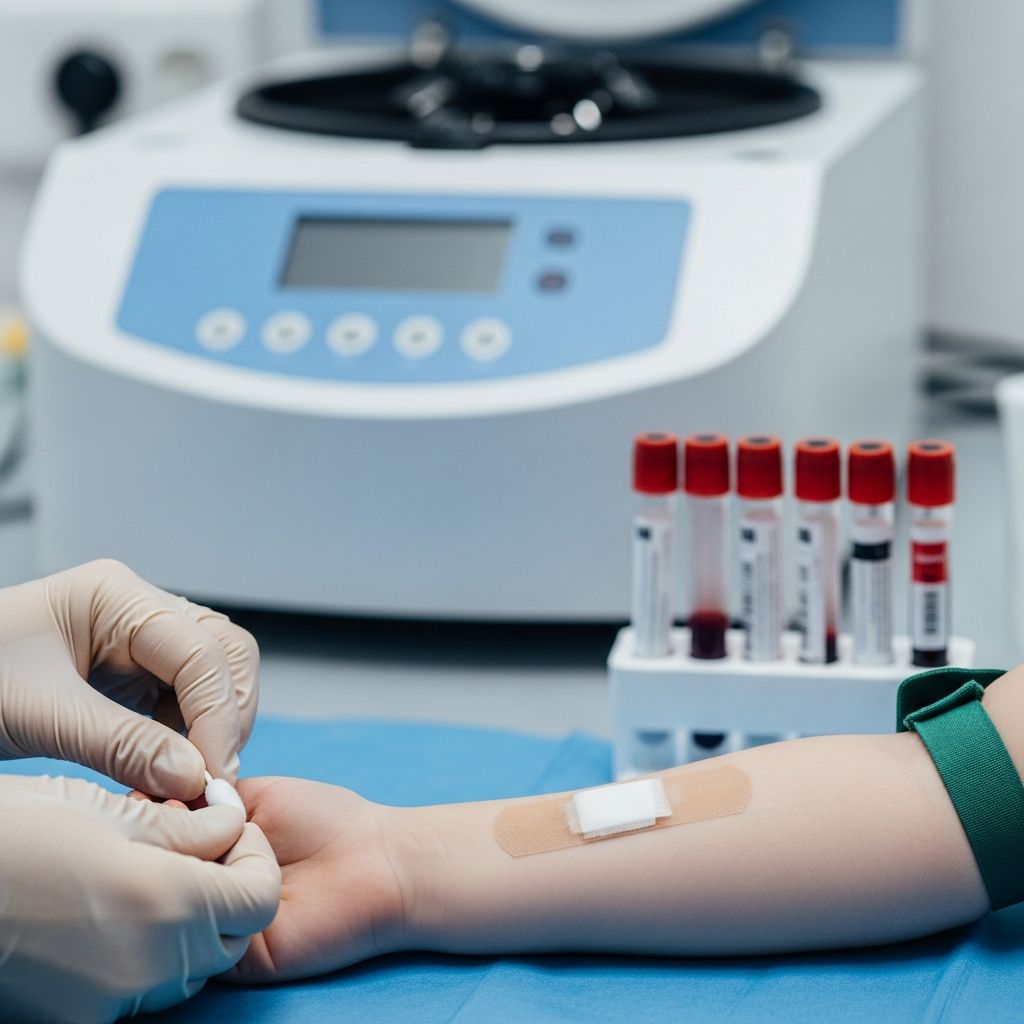
When a child is growing slower or faster than expected, or a doctor is concerned about hormone or pituitary problems, one of the key tests they may order is the somatomedin C blood test, also called the insulin-like growth factor 1 (IGF-1) test. This test gives an indirect but reliable picture of how the body’s growth hormone system is working.
1. What Is Somatomedin C (IGF-1)?
Somatomedin C, also known as IGF-1, is a hormone that circulates in the blood and plays a major role in normal growth and development.
- Produced mainly in the liver when the liver is stimulated by growth hormone (GH) from the pituitary gland.
- Structure and function are similar to insulin, which is why it is called “insulin-like growth factor.”
- Works together with GH to support growth of bones, muscles, and other tissues throughout childhood and adolescence.
Growth hormone is released in bursts and can go up and down quickly during the day, for example after sleep or exercise. In contrast, IGF-1 levels stay much steadier over time, making IGF-1 a useful marker of overall GH activity.
2. Why Doctors Order a Somatomedin C (IGF-1) Test
Pediatricians, pediatric endocrinologists, or family doctors may request an IGF-1 test to investigate a range of growth and hormone issues.
2.1 Checking for Growth Problems
The test is often done when a child’s height or growth rate raises concern, such as:
- Being much shorter than most children the same age
- Falling off their usual growth curve on the growth chart
- Growing extremely fast and becoming unusually tall for age
In these cases, the IGF-1 test helps the doctor look for:
- Growth hormone deficiency (too little GH, leading to slow growth)
- Growth hormone excess (too much GH, leading to unusually rapid growth, gigantism, or acromegaly in adults)
2.2 Evaluating the Pituitary Gland
The pituitary gland, a small gland at the base of the brain, makes growth hormone and many other hormones. If it is not working properly, IGF-1 levels can be abnormal.
- Low IGF-1 can suggest an underactive pituitary or GH deficiency.
- High IGF-1 can suggest a pituitary tumor producing excess GH (causing gigantism in children, acromegaly in adults).
2.3 Monitoring Treatment
Doctors also use the IGF-1 test to monitor therapy:
- To see how well growth hormone treatment is working in children with GH deficiency
- To follow children or adults with gigantism or acromegaly being treated for GH overproduction
2.4 Assessing Nutrition and General Health
Severe malnutrition and some chronic medical conditions can lower IGF-1 levels, even if GH production is normal. In this way, IGF-1 can give the doctor extra information about a child’s overall health and nutritional status.
3. When Might a Child Need an IGF-1 Test?
Your child’s provider may suggest an IGF-1 test when certain signs or symptoms appear.
3.1 Possible Signs of Too Little Growth Hormone
- Growth that is much slower than peers on repeated measurements
- Height and weight far below average for age and sex
- Proportionally small arms and legs compared with age-matched children
- Delayed puberty compared with peers
- In infants or toddlers: poor growth, small size, or low blood sugar episodes
3.2 Possible Signs of Too Much Growth Hormone
Too much GH is much less common in children, but when it occurs, it can lead to:
- Very rapid height gain and excessive overall size
- Unusually large hands and feet
- Coarse facial features or jaw enlargement (more typical if overproduction continues into adulthood)
3.3 Other Situations
- Evaluation of known or suspected pituitary disorders
- Follow-up of abnormal results on other hormone tests
- Monitoring a child who is already on growth hormone therapy
4. How the Somatomedin C (IGF-1) Test Is Performed
The IGF-1 test is a standard blood draw, usually done in a laboratory, hospital outpatient department, or clinic.
4.1 Step-by-Step Overview
- Check-in: You and your child register at the lab or clinic. Staff confirm your child’s name, date of birth, and the ordered test.
- Preparation of the arm: A tourniquet (elastic band) is wrapped around the upper arm to help the veins fill with blood.
- Skin cleaning: The skin over a vein on the inner elbow or back of the hand is cleaned with an antiseptic wipe.
- Blood draw: A thin needle is placed into the vein and blood is drawn into a collection tube.
- Needle removal: After enough blood is taken, the needle is removed and pressure is applied with gauze or cotton.
- Bandage: A small bandage or adhesive strip is placed on the site.
The entire process usually takes only a few minutes. Many children say it feels like a quick pinch or sting.
4.2 Fasting and Other Instructions
Most IGF-1 tests do not require fasting, but instructions can vary by lab. Always follow your provider’s directions, which may include:
- Whether your child should avoid food or drink for a short time before the test
- Whether any medications need to be paused (only if a doctor says it is safe)
- Arriving at a particular time of day, especially if other hormone tests are being done together
5. Safety and Possible Risks
Taking blood with a needle is generally very safe, and serious complications are rare.
5.1 Common, Mild Effects
- Slight stinging or burning when the needle enters the skin
- A small bruise or tenderness at the site
- Feeling briefly lightheaded or faint
5.2 Less Common Risks
- Prolonged bleeding (more likely in children with bleeding disorders or on blood-thinning medicines)
- Very small chance of infection at the puncture site, minimized by proper cleaning and sterile technique
Tell the staff if your child has any bleeding problems, takes blood thinners, or has fainted with needles before.
6. Understanding IGF-1 Results
Interpreting IGF-1 levels is complex because normal values change with age, sex, and puberty stage. Doctors compare your child’s result to reference ranges for children of the same age and sex.
| Result Pattern | What It May Suggest | Next Possible Steps |
|---|---|---|
| Low IGF-1 for age | Possible GH deficiency, pituitary disorder, or poor nutrition | Additional hormone tests, GH stimulation tests, imaging, nutrition review |
| High IGF-1 for age | Possible GH excess (gigantism or acromegaly), rarely severe insulin resistance | GH suppression tests, pituitary imaging, assessment by endocrinologist |
| Normal IGF-1 | GH system may be functioning normally, but does not rule out all issues | Provider may monitor growth, repeat labs, or investigate other causes |
IGF-1 is usually interpreted alongside:
- Growth charts and previous height and weight measurements
- Other hormone levels (such as GH, thyroid hormones, and others)
- Clinical signs and symptoms, including puberty status and overall health
Because of the complexity, only a healthcare professional—often a pediatric endocrinologist—should interpret the results and explain what they mean for your child.
7. Helping Your Child Prepare Emotionally
For many children, the most stressful part of the IGF-1 test is not the blood itself but the fear and uncertainty. Parents can make a big difference in how their child experiences the test.
7.1 Talking About the Test in Age-Appropriate Terms
- Use simple language like “The nurse will take a small amount of blood from your arm to help us understand how your body is growing.”
- Avoid phrases that sound scary, such as “They’re going to stick you with a big needle.”
- Be honest that it might pinch or sting for a few seconds, but it will be quick.
7.2 Comfort Strategies During the Blood Draw
- Let your child sit on your lap or hold your hand, if allowed.
- Bring a favorite toy, book, or music as a distraction.
- Encourage slow, deep breathing or have your child blow bubbles to relax.
- Plan a small reward afterward, like extra playtime or a special activity.
8. IGF-1 vs. Direct Growth Hormone Testing
Parents sometimes wonder why doctors use IGF-1 tests instead of measuring growth hormone directly. The two tests are related but not interchangeable.
| Feature | IGF-1 (Somatomedin C) Test | Growth Hormone (GH) Tests |
|---|---|---|
| What is measured? | Average effect of GH over time via IGF-1 levels | GH directly in the blood at a specific moment |
| Level stability | Relatively stable throughout the day | Fluctuates in pulses; changes quickly with sleep, exercise, meals |
| Typical use | Initial evaluation and monitoring of GH disorders | GH stimulation or suppression tests to confirm deficiency or excess |
| Need for special procedures | Usually just a single blood draw | Often requires multiple blood samples over several hours with medications or glucose drinks |
In many cases, IGF-1 is the first step. If results and symptoms suggest a problem, the doctor may then order more specialized GH stimulation or suppression tests.
9. Common Questions Parents Ask (FAQs)
Q1: Is the somatomedin C (IGF-1) test painful for my child?
Most children feel only a brief pinch or sting when the needle goes in and out. Any soreness or bruising at the site is usually mild and fades within a day or two. Let the staff know if your child is very anxious so they can give extra support.
Q2: How long does it take to get results?Turnaround time depends on the laboratory, but IGF-1 results are often available within a few days. Some specialized labs or rural areas may take longer. Your child’s provider will tell you when to expect the results and how they will be shared.
Q3: Does an abnormal IGF-1 level always mean a serious disease?
No. Abnormal IGF-1 levels can be caused by many factors, including normal puberty changes, nutritional status, chronic illness, or medications, as well as true GH or pituitary disorders. Doctors use IGF-1 as one piece of a bigger picture that includes growth charts, symptoms, and other tests.
Q4: Will my child automatically need growth hormone shots if IGF-1 is low?
Not necessarily. A low IGF-1 level may prompt further evaluation, such as GH stimulation tests, review of nutrition, and imaging of the pituitary. Growth hormone therapy is only recommended when there is clear evidence that it is needed and beneficial, and the decision is made with a pediatric endocrinologist.
Q5: Can I improve my child’s IGF-1 level with diet or supplements?
For children with low IGF-1 due to poor nutrition, improving calorie and protein intake can help levels move toward normal. However, for true GH or pituitary problems, diet alone is not enough. Do not give hormone supplements or performance products without medical supervision, as they can be unsafe for children.
Q6: How often will my child need this test?
The frequency depends on the reason for testing. Children on growth hormone therapy or being treated for GH excess may have IGF-1 checked several times a year to adjust doses and monitor safety. For children being evaluated for the first time, one or a few tests may be enough.
10. Key Takeaways for Parents
- The somatomedin C (IGF-1) test is a simple blood test that reflects how the growth hormone system is working.
- It is commonly used to investigate slow or rapid growth, evaluate pituitary function, and monitor treatment for GH-related conditions.
- Results must be interpreted by a qualified healthcare provider, because normal ranges vary greatly with age, sex, and puberty stage.
- You can help your child by explaining the test calmly, staying with them if possible, and using distraction and comfort strategies during the blood draw.
- If results are abnormal, your child’s doctor may order additional tests before making any decisions about treatment.
References
- IGF-1 (Insulin-like Growth Factor 1) Test — MedlinePlus (U.S. National Library of Medicine). 2024-04-15. https://medlineplus.gov/lab-tests/igf-1-insulin-like-growth-factor-1-test/
- Insulin-Like Growth Factor — University of Rochester Medical Center Health Encyclopedia. 2023-06-01. https://www.urmc.rochester.edu/encyclopedia/content?contenttypeid=167&contentid=insulin_like_growth_factor
- Insulin-like Growth Factor-1 (IGF-1) — Testing.com. 2022-10-10. https://www.testing.com/tests/insulin-growth-factor-1-igf-1/
- Overview: Insulin-Like Growth Factor-1, Mass Spectrometry, Serum — Mayo Clinic Laboratories. 2023-02-01. https://www.mayocliniclabs.com/test-catalog/overview/62750
- Insulin-like growth factor 1 — National Center for Biotechnology Information (NCBI), Gene ID: 3479. Accessed 2024-06-01. https://www.ncbi.nlm.nih.gov/gene/3479