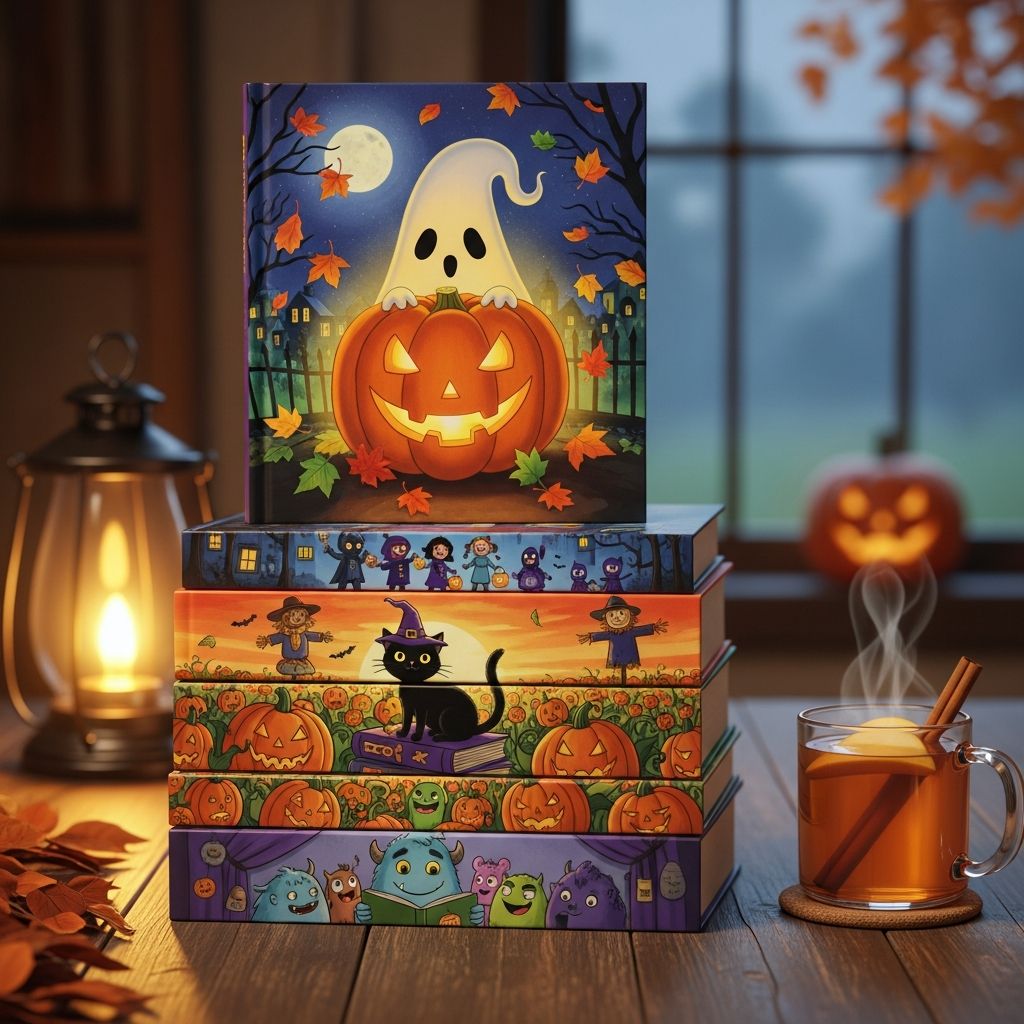
Halloween does not have to be all jump scares and nightmares; with the right books, it can become a season of giggles, warm blankets, and just-right goosebumps shared together on the couch.
Why Halloween Reading Matters More Than Candy
For many families, Halloween begins and ends with costumes and candy, but stories are what quietly shape how children feel about all those shadows and strange sounds outside the window. A thoughtful stack of Halloween books can turn a potentially overwhelming holiday into a playful, manageable adventure your child looks forward to every year. Stories help kids practice being brave in safe, imaginary worlds long before they walk up to a dark doorstep for trick-or-treating.
Seasonal reading also slows down a hectic month. When you bring home the same beloved Halloween books each October, you create a cozy ritual that gently marks the passage of time. Children begin to associate the rustle of leaves and pumpkins on the porch with evenings where the whole family gathers, turns pages, and laughs together at friendly ghosts instead of fearing them.
Matching Spook Level to Your Child’s Age
The biggest factor in choosing Halloween books for kids is not how popular a title is, but how it lines up with your child’s stage of development and sensitivity. A story that delights a third grader might send a preschooler scrambling under the blankets, while a simple pumpkin book may bore an older child who wants a twisty mystery.
Think about your child along two lines: chronological age and temperament. Some five-year-olds happily roar at cartoon monsters, while others replay one slightly spooky scene for weeks in their dreams. When in doubt, start with lighter, silly books and gradually increase the creep factor only if your child seems curious and comfortable.
Age-by-Age Spooky Guide
| Age Range | Ideal Spook Level | Common Themes | Example Book Style (Not Specific Titles) |
|---|---|---|---|
| Babies & Toddlers (0–3) | Gentle, almost no fear | Pumpkins, costumes, friendly animals, bedtime | Sturdy board books with bright art and simple Halloween words |
| Preschoolers (3–5) | Very mild thrills, mostly silly | Trick-or-treating, dress-up, cute ghosts, counting | Rhyming picture books where any scare turns funny within a page |
| Early Elementary (6–8) | Light suspense, quick resolution | Friendship, problem solving, school parties, magic | Short, illustrated stories with small mysteries and brave main characters |
| Tweens (9–12) | Moderate spook, deeper themes | Urban legends, haunted houses, loyalty, courage | Chapter books or graphic novels with eerie settings but reassuring endings |
Core Themes in Kid-Friendly Halloween Stories
Halloween books for children succeed when they wrap familiar fears inside subjects kids already enjoy. Instead of dwelling on horror, the best stories use costumes, candy, and make-believe to explore big feelings in miniature. You can think of these books as practice runs for handling everyday worries.
Here are some of the most helpful Halloween themes to look for when browsing the shelves:
- Facing fears gradually: Stories where a character thinks something is terrifying, then discovers it is just a neighbor, a cat, or a pile of laundry in costume.
- Friendship and teamwork: Tales about kids, monsters, or animals working together to solve a problem, throw a party, or rescue a lost pumpkin are ideal for nervous readers.
- Misunderstood monsters: Books that show gentle vampires, shy ghosts, or clumsy skeletons help children question their assumptions about what is scary.
- Costumes and identity: Many Halloween stories quietly explore the idea of trying on different versions of oneself, a concept that interests both preschoolers and tweens.
- Humor over horror: Puns, visual gags, and absurd situations turn creaky doors and dark hallways into safe, shared jokes.
Types of Halloween Books and When to Use Them
Not all Halloween books are meant to do the same job. Some are perfect for winding down at bedtime, while others are designed to energize a classroom party or spark costume ideas. By understanding the basic categories, you can pick the right book for the right moment instead of trying to make one story do everything.
1. Gentle Board Books for the Littlest Pumpkins
For babies and toddlers, the best Halloween books are practically chew-proof, heavy on pictures, and light on plot. Look for thick pages, rounded corners, and high-contrast artwork that showcases pumpkins, friendly black cats, smiling ghosts, and children in simple costumes. Many little ones love flaps to lift, tabs to pull, or textures to touch as they explore this new holiday.
- Stick to familiar objects: pumpkins, moons, stars, and cheerful faces.
- Use these books to introduce basic words like “costume,” “candy,” and “boo” without any actual scares.
- Read them during daytime play or right before nap, keeping the tone upbeat and calm.
2. Playful Picture Books for Preschoolers
Once children are old enough to follow a simple story, picture books become the backbone of a family’s Halloween library. Preschoolers are usually fascinated by costumes, decorations, and the idea of going door to door, so seek out stories that center on these experiences rather than on ghosts jumping out of closets. Rhyming text, repeating phrases, and bold illustrations help young listeners stay engaged.
- Choose stories where any tension is quickly followed by a silly reveal or a hug.
- Count pumpkins, bats, or trick-or-treaters together to add a learning element.
- Look for books that show diverse families and neighborhoods to mirror real life.
3. Short, Spooky Adventures for Early Readers
Children who are starting to read on their own often want “real” spooky stories, but they still need a safety net. Early chapter books, heavily illustrated stories, and graphic early readers can deliver a dose of suspense without crossing into nightmare territory. Think creaky floorboards, strange noises, and mysterious costumes that all lead to reassuring explanations by the final chapter.
- Prioritize books with clear, generous font and plenty of pictures to break up text.
- Seek plots involving school Halloween parades, sleepovers, or neighborhood legends.
- Invite your child to read dialogue aloud in character voices to build confidence.
4. Chilling (But Not Crushing) Reads for Tweens
Older kids may gravitate toward darker covers, haunted mansions, or ghost stories told around a campfire. At this age, Halloween books can start to tackle more complex emotions like guilt, loyalty, and courage in the face of real danger. The key is to pick stories that respect their growing maturity while still ending on a note of hope or resolution.
- Consider spooky mysteries, paranormal adventures, or lightly gothic fantasies with strong, relatable protagonists.
- Check for content by browsing the middle of the book and the climax before handing it over.
- Use these stories as a springboard for conversations about peer pressure, dares, and online “urban legends.”
How to Preview Halloween Books for Sensitivity
Every child has a unique threshold for fear, so what feels silly to one kid might feel overwhelming to another. Instead of relying only on age labels, develop a quick preview routine for new Halloween books. A few extra minutes before storytime can prevent a tear-filled bedtime later.
Quick Screening Checklist
- Flip through the pictures first: Skim all the illustrations and notice any images that might be especially intense for your child, such as realistic spiders, menacing faces, or dark, cluttered pages.
- Scan the climax: Read the few pages right before the ending to see what the biggest scare is and how it resolves.
- Check the language: Look for repeated words like “terrifying” or “horrifying” that might cue a stronger tone than you want.
- Watch for themes your child struggles with: For example, kids with separation anxiety may find plots about getting lost on Halloween night especially stressful.
If you are unsure, read the book alone first and then decide whether to share the whole story, skip a page, or paraphrase a specific scene. There is no rule that says every word on every page must be read out loud, especially when you are tailoring the experience to a sensitive listener.
Building a Halloween Book Basket Tradition
One simple way to make reading feel as special as choosing a costume is to create a dedicated Halloween book basket that appears each year when pumpkins start showing up in the grocery store. This visible, seasonal collection turns reading into part of the decor and reminds everyone to reach for a story along with the candy.
You do not have to buy twenty new books at once. Start with a handful of titles from the library or a used bookstore, then add one or two new favorites every October. Over time, your children will look for specific covers the way they look for old ornaments in the holiday box.
Ideas for What to Include
- 1–2 sturdy board books for visiting babies or younger siblings.
- A mix of funny monster stories, pumpkin tales, and trick-or-treat adventures.
- At least one book that reflects your family’s cultural background or traditions.
- A slightly more advanced title for your oldest child to grow into each year.
- Nonfiction picture books about bats, owls, or the history of Halloween for curious kids.
Making Storytime Extra Spooky (But Still Safe)
How you read Halloween books matters just as much as what you read. With a few easy tweaks, you can transform ordinary bedtime stories into memorable mini events that make your child feel brave and excited rather than overwhelmed. The goal is atmosphere, not terror.
Atmosphere Tips for Younger Kids
- Dim the lights slightly and use a small lamp or string lights shaped like pumpkins instead of complete darkness.
- Invite your child to read in costume or hold a favorite stuffed animal as a “monster protector.”
- Use playful sound effects for creaking doors and rustling leaves but keep your voice calm during scarier moments.
- End with a familiar, non-Halloween bedtime book if your child seems wired or worried.
Story Sessions for Older Kids
- Host a family “spooky book club” where everyone brings a Halloween story to share, from picture books to graphic novels.
- Alternate between one slightly creepy chapter and something light, like a comic strip or joke book, to balance the mood.
- Encourage kids to create soundtracks using simple household items — tapping on a table can become thunder, and crinkling paper can mimic rustling leaves.
Using Halloween Books to Talk About Big Feelings
Children often have trouble naming their fears, but they are good at spotting them in characters. Halloween stories offer a non-threatening way to talk about worry, embarrassment, peer pressure, and bravery. When your child points to a nervous ghost or a kid afraid to knock on a door, you gain an opening to discuss similar feelings in real life.
Try pausing after key moments in the plot to ask open-ended questions:
- “Why do you think that character is scared right now?”
- “What would you do if you were in this story?”
- “Have you ever felt that way on Halloween or at night?”
- “Who helped the character feel better? Who helps you when you feel that way?”
These gentle conversations build emotional vocabulary and reassure your child that feeling nervous or spooked is normal, especially during a holiday that plays with fear for fun.
Sample Halloween Reading Plans for Busy Families
If life already feels crowded with school events and costume planning, a simple reading plan can keep Halloween books from gathering dust. You do not need elaborate crafts or themed snacks to make an impact; even ten minutes a day in October can create lasting memories.
One-Week Countdown Plan
- Day 7: Read a cozy pumpkin patch or fall harvest story to set the seasonal mood.
- Day 6: Share a silly monster book that emphasizes humor over fear.
- Day 5: Choose a book about costumes and let kids sketch or describe their dream outfits.
- Day 4: Read a Halloween friendship story and talk about trick-or-treat safety buddies.
- Day 3: Pick a counting or alphabet book with ghosts, bats, or treats for younger readers.
- Day 2: Enjoy a slightly spooky mystery or haunted house story for older kids.
- Day 1 (Halloween): Return to a favorite not-too-scary picture book as a comforting finale before bed.
Weekend-Only Reading Plan
- On the first October weekend, take a family trip to the library and let each child choose two Halloween books.
- On subsequent weekends, reread favorites plus one new title, then vote as a family on which book felt the funniest, coziest, or spookiest.
- At the end of the month, take a photo of everyone holding their top pick to document that year’s Halloween reading memories.
Frequently Asked Questions About Halloween Books for Kids
1. How scary is too scary for my child?
A good rule of thumb is that a Halloween book is too scary if your child starts avoiding everyday situations (like dark hallways) or repeatedly brings up a particular image or phrase with distress. If nightmares increase after a new story, that is a clear sign to step back. It is perfectly fine to put a book away for a year and try again when your child is older or more confident.
2. Are jump-scare style books ever appropriate?
Books that build toward a loud surprise can be exciting for some children but overwhelming for others. If you do use them, preview the story first and consider reading it in a bright room during the day. Emphasize the humor around the surprise and immediately follow up with something warm and familiar, such as a favorite non-spooky book or song.
3. Can Halloween books be educational, or are they just for fun?
Many Halloween stories weave in counting, letter recognition, simple science facts about bats or owls, or brief explanations of cultural traditions. Even the most playful tale can teach storytelling structure, vocabulary, and empathy. If you want an extra educational layer, look for nonfiction picture books about nocturnal animals or the history of Halloween to pair with lighter fiction.
4. What if my child wants truly scary books at a young age?
Some children are thrill-seekers and love the idea of being scared, but their bodies may still react strongly to intense images. Instead of jumping straight into horror meant for older readers, look for stories that feel spooky through atmosphere rather than graphic scenes. You can also negotiate by agreeing on one slightly scarier book followed by a funny or comforting story.
5. How many Halloween books do we really need?
There is no magic number. A small, carefully chosen collection of five or six titles that you revisit each year can be more meaningful than a huge shelf of forgettable books. Libraries, swaps with friends, and digital borrowing apps make it easy to rotate new stories in without overwhelming your home or your budget.
When you treat Halloween books as more than a seasonal decoration, they become a gentle way to introduce courage, empathy, and humor into a holiday that is often marketed as purely dark and wild. A well-loved stack of stories can do more than any giant bag of candy to make October feel magical, safe, and delightfully spooky for your children.