Social skills are the tools that help kids make friends, solve problems, and feel confident around other people. They are not something you are born knowing; they are skills you can learn, practice, and improve over time.
What Are Social Skills?
Social skills are the ways you act, speak, listen, and respond when you are around other people. They help you understand others and help others understand you.
Some important parts of social skills include:
- Talking clearly so people know what you think and feel.
- Listening carefully so others feel heard and respected.
- Reading body language, like faces and gestures, to understand how someone might be feeling.
- Solving problems calmly when you disagree with someone.
- Showing kindness and respect, even when you are upset or disappointed.
Why Social Skills Matter for Kids
Strong social skills help children feel safer and happier at school, at home, and in activities. When kids know how to talk, listen, and share, they feel more comfortable joining games and groups.
Social skills also help kids:
- Make and keep friendships that feel fair and fun.
- Ask for help when they are confused or upset.
- Handle teasing or disagreements without hurting anyone.
- Work well with teammates in class, clubs, or sports.
Core Social Skills Every Child Can Practice
There are many kinds of social skills, but some are especially important in everyday life. Below is a simple overview of key skills kids can build with practice.
| Skill | What It Means | Everyday Example |
|---|---|---|
| Listening | Paying attention to someone’s words and body language. | Looking at a friend while they tell a story and not interrupting. |
| Communication | Sharing your thoughts and feelings in a clear, respectful way. | Explaining to a teacher that you don’t understand an assignment. |
| Cooperation | Working together and taking turns to reach a goal. | Building a project with classmates and agreeing on who does what. |
| Empathy | Noticing and caring about how other people feel. | Checking on a classmate who looks sad at recess. |
| Self-control | Managing your actions and words, even when upset. | Taking deep breaths instead of yelling when you lose a game. |
Listening: The Secret Superpower
Listening is more than just being quiet. It means showing with your body and your words that you care about what someone is saying.
Kids can become better listeners by paying attention to three things:
- Eyes: Look at the speaker or in their direction.
- Ears: Focus on their words, not on noises around you.
- Heart: Try to understand how the other person feels, not just what they say.
Helpful listening phrases include:
- “So you’re saying…” and then gently repeating their main point.
- “How did that make you feel?” to show you are curious and kind.
- “Thanks for telling me” to let them know you appreciate their trust.
Talking Clearly and Kindly
Good talking skills help kids share ideas, join games, and tell others what they need. The way something is said often matters as much as the words themselves.
To speak clearly and kindly, kids can:
- Use a calm, steady voice instead of shouting or mumbling.
- Choose words that are polite, even when they are upset or disagree.
- Use “I” sentences, such as “I feel left out when…” instead of “You always…”
Practicing short, simple phrases makes speaking up easier, like:
- “Can I play with you?”
- “I don’t like being called that.”
- “I need a turn too, please.”
Sharing and Taking Turns
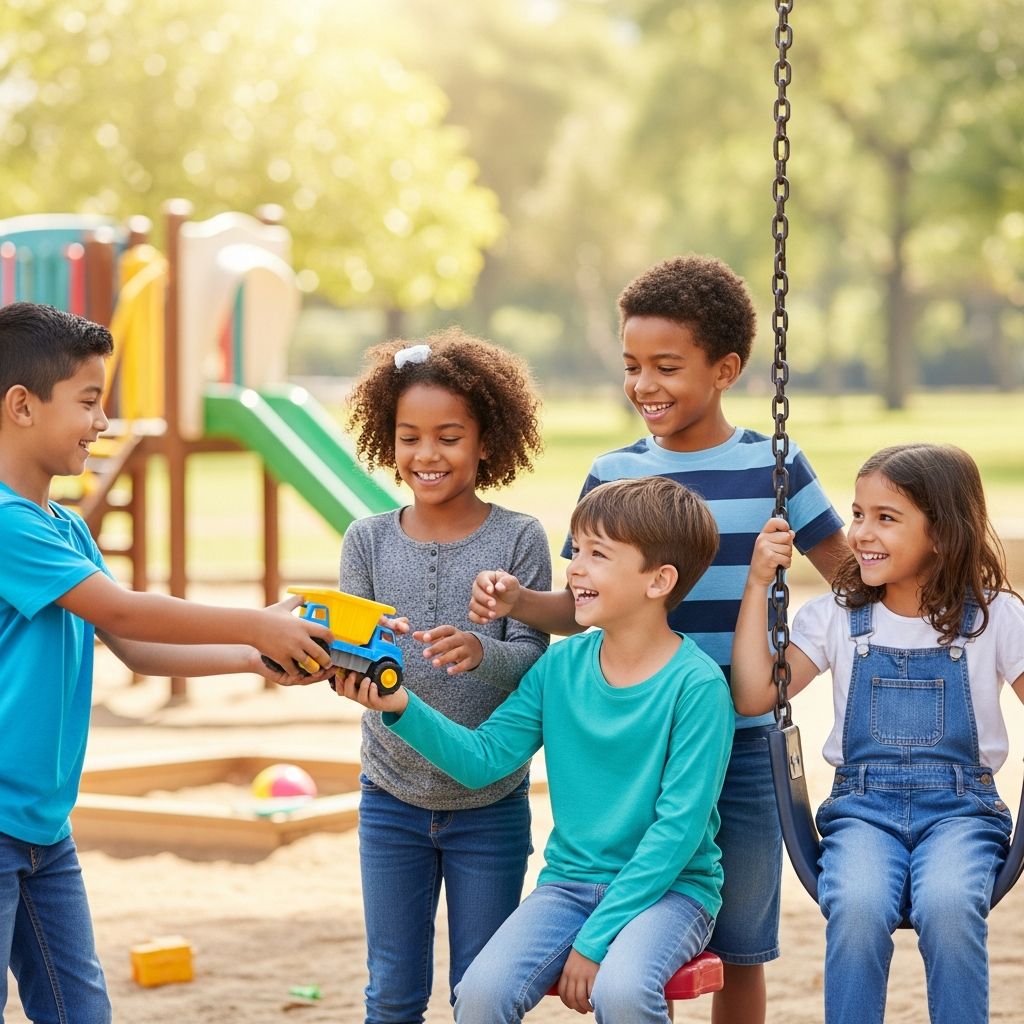
Sharing is not just about toys; it is also about time, space, and attention. Taking turns lets everyone feel included and respected.
Kids can practice fair sharing in many ways:
- Setting a timer so each person gets the same amount of time with a game or device.
- Taking turns choosing which game to play or what to watch.
- Letting someone else go first in line now and then, just to be kind.
When sharing feels hard, it helps to remember:
- The item is not gone forever; you will get it back.
- Sharing builds trust and makes it more likely others will share with you.
- Saying, “You can have it after me” is more helpful than saying “No!”
Understanding Feelings (Yours and Theirs)
Emotional awareness is a big part of social skills. Kids who can notice and name feelings can handle them better and relate more easily to others.
A simple “feelings checklist” can help:
- Ask, “What is my body doing?” (tight hands, fast breathing, heavy shoulders).
- Ask, “What might I be feeling?” (angry, excited, nervous, embarrassed, lonely).
- Ask, “What could help me calm down or feel better?” (deep breaths, talking to an adult, taking a short break).
Kids can also look for clues about how someone else feels:
- Face: Are they smiling, frowning, or looking away?
- Body: Are they relaxed, hunched over, or turned away?
- Voice: Are they speaking softly, loudly, or not at all?
Empathy: Stepping Into Another’s Shoes
Empathy means trying to imagine what it feels like to be someone else. It does not mean you must have the same feelings; it means you care about their experience.
Kids can build empathy by:
- Asking gentle questions like, “Do you want to talk about it?”
- Offering small comforts, such as a kind word, a drawing, or sitting together.
- Thinking, “If this happened to me, how would I want someone to treat me?”
Practicing empathy helps kids become better friends and makes classrooms, playgrounds, and homes feel safer and more welcoming.
Solving Conflicts Without Fighting
Arguments and disagreements happen to everyone, even to good friends. Social skills help kids handle conflicts without hurting themselves or others.
A simple three-step plan for kids is:
- Pause: Take a breath, count to five, or step back for a moment.
- Explain: Use calm words to say how you feel and what you want.
- Fix: Suggest a fair solution, like taking turns or trying a new game.
Helpful phrases include:
- “I didn’t like that. Can we try again differently?”
- “Let’s find a way that works for both of us.”
- “Maybe we can take turns or split it.”
Joining In: How to Enter a Group
It can feel scary to walk up to a group that is already playing. Social skills help kids join in without interrupting or taking over.
Kids can follow a quick “join-in” routine:
- Watch the game for a moment to understand what is happening.
- Move closer slowly, without pushing or shouting.
- Ask, “Can I help with something?” or “Is there a way I can play too?”
If the answer is “no,” kids can:
- Ask, “Maybe next round?”
- Look for someone else who is alone and invite them to play.
- Remember that a “no” does not mean “no one will ever play with me.”
Online Social Skills and Kindness
Many kids now talk, play, and learn using screens. Social skills still matter online, even if you cannot see someone’s face clearly.
Good online manners include:
- Using kind words in messages, just like in real life.
- Not sharing pictures or secrets that are not yours to share.
- Taking a break if a game or chat makes you feel angry or upset.
When something online feels wrong or scary, kids should tell a trusted adult right away so they can get help staying safe.
Everyday Ways for Kids to Practice Social Skills
Social skills grow stronger with practice, just like muscles. Kids do not need a special class; they can practice during regular daily activities.
Simple practice ideas include:
- Helping set the table and talking with family during meals.
- Playing pretend games that involve characters, feelings, and stories.
- Joining clubs, teams, or groups that require cooperation.
- Reading stories and talking about how the characters might feel.
How Adults Can Support Kids’ Social Skills
Parents, caregivers, and teachers play a big role in how kids learn to treat others. Children watch how adults talk, listen, and solve problems.
Adults can support kids by:
- Modeling calm, respectful behavior, even during disagreements.
- Coaching kids through tough moments instead of just telling them what they did wrong.
- Praising specific positive actions, such as sharing, apologizing, or waiting patiently.
- Creating chances for kids to