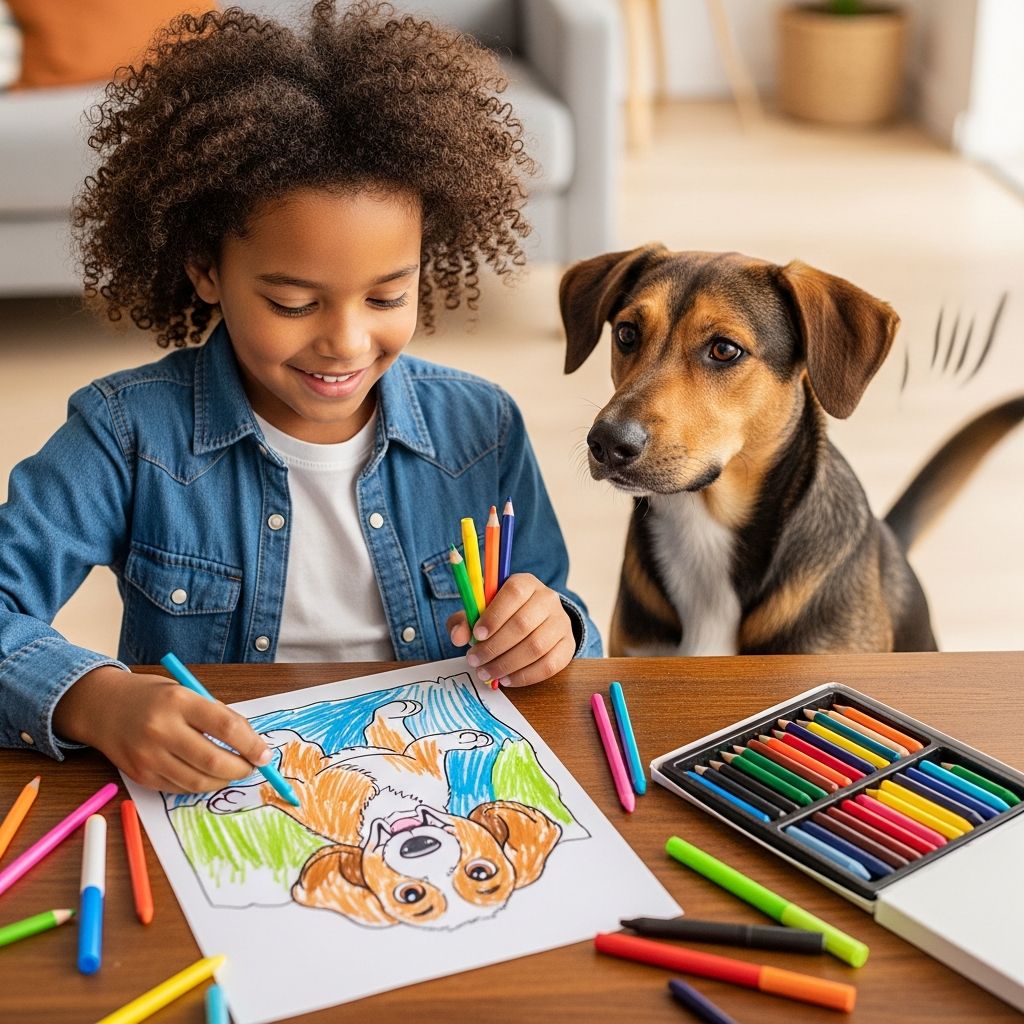
Dog coloring pages are more than cute pictures to fill with color; they can become a calm daily ritual, a quiet learning tool, and a way for kids to express big feelings in a small, safe space.
Why Kids Love Dog Coloring Pages
Dogs are naturally appealing to children: they are playful, expressive, and instantly recognizable even in simple line drawings. When a child colors a dog, they often imagine personality, stories, and relationships, which turns a simple page into a miniature world of make-believe.
Because dogs appear in daily life, books, and cartoons, children feel an easy connection with them. That sense of familiarity helps reluctant artists relax and pick up a crayon because the subject feels friendly rather than intimidating.
- Dogs can represent loyalty, friendship, and comfort in a child’s imagination.
- Dog coloring pages work well for a wide age range, from toddlers to tweens.
- Simple outlines can be enjoyed quickly, while detailed breeds and scenes challenge older kids.
Hidden Benefits Behind the Crayons
Coloring looks like play, but it also helps quietly build important skills. When a child grips a crayon and works within shapes, they practice coordination, strength, and control that support later handwriting and other school tasks.
Dog coloring pages can also act as a calming tool. Repetitive strokes, choosing colors, and focusing on small shapes encourage a slower pace, making coloring especially helpful during transitions, after school, or before bedtime.
- Improves fine motor skills and hand strength.
- Builds attention span by encouraging kids to stay with one activity.
- Supports emotional regulation by giving a quiet outlet for stress or excitement.
Picking the Right Dog Pages by Age
Matching the complexity of a coloring page to your child’s age and stage is key. A page that is too detailed can frustrate young children, while overly simple designs can bore older kids who crave a challenge.
| Age Group | Page Style | Key Features |
|---|---|---|
| Toddlers (1–3) | Very simple dog shapes | Large spaces, thick outlines, minimal background details |
| Preschool (3–5) | Playful puppies and basic scenes | Clear body parts, basic props like balls, bones, and bowls |
| Early elementary (6–8) | Dog breeds and simple landscapes | More fur details, collars, leashes, parks, and houses |
| Older kids (9+) | Detailed breeds and patterned designs | Shading opportunities, intricate fur, mandala or doodle backgrounds |
As children grow, offer a mix of pages: some easy for quick wins and some more detailed for longer, focused sessions. This balance keeps kids motivated while still gently stretching their skills.
Fun Dog-Themed Coloring Ideas and Prompts
Instead of handing over a random sheet, turn dog coloring pages into mini adventures with easy prompts. These prompts encourage imagination and storytelling, helping kids see each page as part of a bigger picture.
- “Dream Dog Day”: Ask your child to color a dog and then add the perfect day around it: favorite park, snacks, and friends.
- “Around the World Pups”: Choose different landmarks or flags in the background to show where this dog lives.
- “Weather Pups”: Color dogs in the rain, snow, sunshine, and at the beach, adding clothes or gear for each weather type.
- “Superhero Dog”: Add capes, masks, badges, and secret hideouts for a heroic pup adventure.
- “Feelings Dog”: Draw different expressions and talk about what each dog might be feeling and why.
Using Dog Coloring Pages for Gentle Learning
Dog coloring pages can easily double as simple, low-pressure learning tools. When you add words, numbers, and tiny challenges to the page, kids learn without feeling like they are doing homework.
You can write labels, questions, and small tasks around the dog picture. This makes one sheet work for reading, counting, and even early science discussions about animals and care.
- Write words like “tail,” “paw,” or “leash” near the dog and ask your child to match and color them.
- Add simple math problems in the corners and assign a color to each answer.
- Include a short fact about dog care or safe behavior around dogs and talk about it while coloring.
Creative Ways to Use Finished Pages
Instead of recycling finished pages immediately, turn them into crafts and keepsakes. This adds a sense of pride, shows that their artwork is valued, and encourages kids to put in extra effort next time.
- Home gallery: Tape a row of dog pictures at kid height down a hallway or on a bedroom door.
- Mini storybook: Fold and staple several colored pages together, then help your child write a sentence on each page.
- Party décor: Use dog coloring pages as placemats or banners for a dog-themed birthday or playdate.
- Cards and gifts: Cut out the colored dog and glue it to a blank card for thank-you notes or holiday greetings.
- Learning binder: Slide pages into plastic sleeves and collect them in a binder to watch progress over time.
Setting Up a Calm Dog Coloring Corner
A small, dedicated coloring spot can help kids settle into a quiet mindset more quickly. It doesn’t need to be a full craft room; a corner of the table or a tray with a few supplies is enough.
Keep everything your child needs in one reachable place so they can start without asking for help. When kids feel independent, they are more likely to choose coloring on their own during free moments.
- Store crayons, colored pencils, and markers in easy-to-open containers.
- Keep a small stack of dog pages ready so kids can pick their favorites.
- Use a clipboard or lap desk for coloring on the couch or during travel.
Tips for Encouraging Reluctant Colorers
Not every child loves coloring right away. Some feel self-conscious, some get frustrated by staying in the lines, and others simply prefer more active play. Gentle encouragement and flexible expectations can change the experience.
Focus more on the process than the final look. When kids hear praise for effort and creativity, they become less worried about “mistakes” and more willing to experiment.
- Offer choices: different dog pages, tools, and time limits.
- Color alongside your child to model relaxed, playful creativity.
- Avoid correcting color choices or pointing out uneven lines.
- Break big pages into small “missions,” like “Let’s color only the collar and background today.”
Safety and Kindness Lessons Through Dog Coloring
Dog coloring pages are a gentle way to talk about how to treat animals kindly and stay safe around real dogs. Children often understand and remember visual, story-based explanations more easily than spoken rules alone.
By adding simple scenes and questions to the page, you can practice what to do—and what not to do—when meeting dogs at home, in the park, or on walks.
- Draw scenes where the child asks the owner before petting the dog.
- Show a dog with a resting space, food bowl, and water, then talk about leaving dogs alone during meals and sleep.
- Color a dog on a leash and talk about staying calm and walking beside, not pulling or chasing.
Quick Ideas for Dog Coloring Themes
Planning a small set of themed pages can keep kids excited over several days, especially during school holidays or long weekends. Each theme can include different poses, backgrounds, and accessories while still feeling connected.
- Dog at Work: Service dogs, rescue dogs, police dogs, farm dogs.
- Dog at Play: Fetch at the park, beach days, agility courses, backyard games.
- Dog at Home: Nap time, bathtime, meal time, cuddles on the couch.
- Holiday Dogs: Costumes, seasonal outfits, and festive decorations.
- Fantasy Dogs: Winged dogs, underwater pups, space explorers, and magical companions.
Frequently Asked Questions About Dog Coloring Pages
How often should kids use coloring pages? There is no strict rule; a few minutes several times a week can already support creativity and focus. The key is to keep it available and enjoyable rather than forcing long sessions. Are digital dog coloring apps as good as paper pages? Digital coloring can be fun and convenient, especially for travel, but paper pages offer more direct practice for grip strength and hand control. Many families use a mix of both to enjoy the benefits of each format. What supplies work best for younger children? Chunky crayons and washable markers are ideal for small hands because they are easier to grip and less likely to break. As children grow, thinner colored pencils and fine-tip markers allow for more detailed work. How can I keep dog coloring pages interesting for older kids? Offer detailed breed illustrations, realistic shading challenges, and themed series instead of single simple pages. You can also invite older kids to design their own dog coloring pages for younger siblings or friends. Can coloring really help with stress? Many children and adults find repetitive coloring motions calming, especially when combined with a quiet environment and simple images. While it does not replace professional support when needed, it can be a helpful part of a daily wind-down routine.
Dog coloring pages can be as simple or as rich as you choose to make them. With a little imagination, they become tools for creativity, connection, learning, and calm moments that both kids and adults can share.